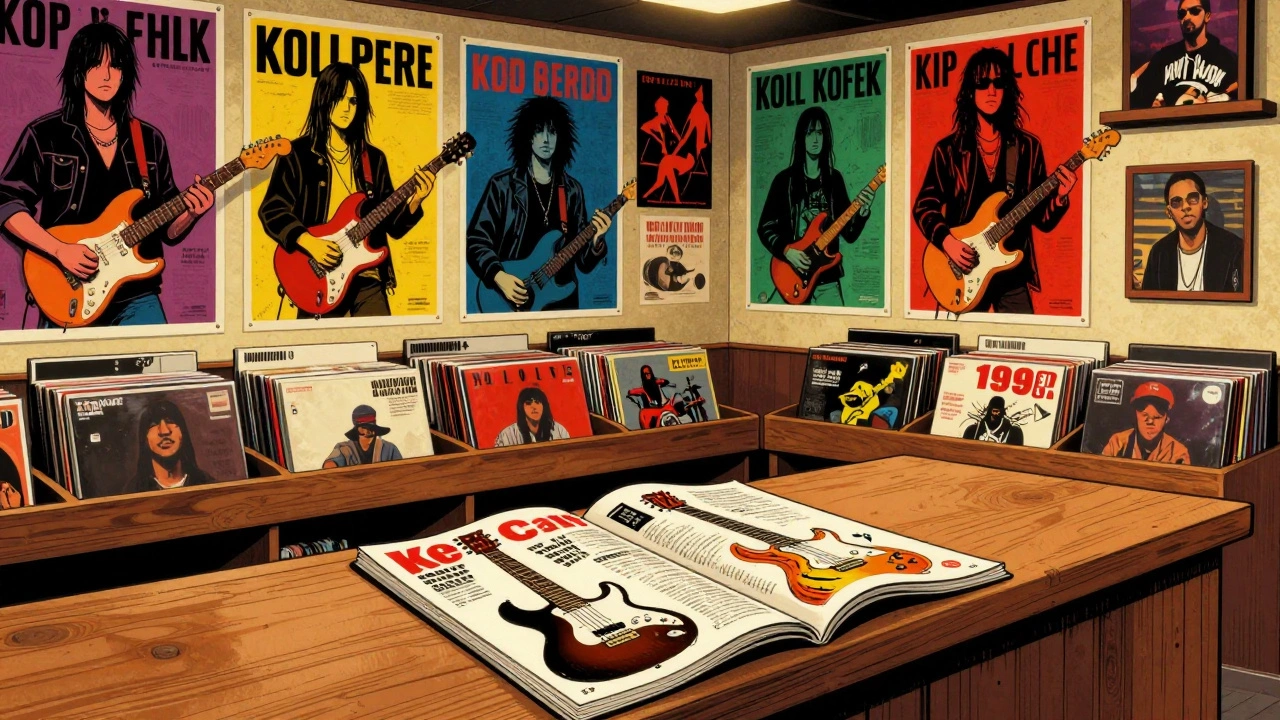

Imagine it is 1994. You walk into a record store and the walls are plastered with posters of Nirvana and Pearl Jam. You pick up the latest issue of Rolling Stone is an iconic American music and culture magazine founded in 1967 that historically served as the ultimate authority on rock music. and you notice something odd. While the streets are vibrating with the sounds of Wu-Tang Clan and Snoop Dogg, the glossy pages are still obsessed with guitar riffs and stadium anthems. This wasn't just a coincidence; it was a systemic blind spot in how the most powerful music publication in the world viewed art.
The Rockist Tradition and the 90s Wall
To understand why Rolling Stone struggled with the 90s, we have to look at "Rockism." This is the unwritten rule that rock music is the only "authentic" form of expression because it uses "real" instruments. For decades, the magazine operated on this frequency. In the early 1990s, when Grunge exploded in Seattle, the magazine felt right at home. It was loud, it was guitar-driven, and it fit the legacy of the 60s counterculture. But this comfort created a wall. While the magazine praised the raw energy of Kurt Cobain, it often treated the emerging genius of hip-hop as a passing trend or a subset of "urban music" rather than a legitimate artistic movement.
Think about the space allocation. A four-page spread on a new Eric Clapton album was standard, while a groundbreaking hip-hop release might get a three-paragraph review in the back of the book. This wasn't just a lack of interest; it was a failure to recognize that the center of gravity in popular music had shifted. The 90s were the decade where hip-hop became the dominant global youth culture, yet the editorial board was still looking for the next great guitar hero.
Hip-Hop's Fight for Legitimacy
While the editors were hesitant, the industry was moving fast. The rise of professional publicists in the 90s played a huge role in forcing the hand of mainstream media. People like Leyla Turkkan worked tirelessly to represent heavyweights like Ice Cube and Public Enemy. These publicists weren't just booking interviews; they were fighting for the same prestige and intellectual respect that rock stars had enjoyed since the 60s.
The tension was palpable. Hip-hop artists were breaking sales records and redefining poetry, but they were often framed through a lens of controversy or criminality in rock-centric publications. If a rapper was on the cover, the story was frequently about their legal battles or "the danger of the streets," whereas a rock star's cover story was about their "artistic journey" and "musical evolution." This disparity in framing is the clearest evidence of the rock bias that plagued the era.
| Attribute | Rock Coverage | Hip-Hop Coverage |
|---|---|---|
| Primary Narrative | Artistic evolution and legacy | Trend, controversy, and street culture |
| Page Allocation | Extensive features and long-form essays | Short reviews and "trending" blurbs |
| Critical Framework | Based on musicianship and instrumentation | Often dismissed as "produced" or non-musical |
| Cover Frequency | High (Standard for any major release) | Low (Reserved for massive crossover events) |
The Slow Pivot to a New Era
As the 90s bled into the 2000s, the magazine couldn't ignore the data any longer. The numbers were undeniable: hip-hop was the new pop. Slowly, the editorial philosophy shifted from "Rock is the core" to "Music is the core." This transition was rocky and often felt reactionary. The magazine began to incorporate more diverse voices into its staff, moving away from the old guard who viewed music through a strictly Anglo-American, guitar-heavy lens.
We see the fruit of this evolution in later years with retrospectives like "The 200 Greatest Hip-Hop Albums of All Time." This wasn't just a list; it was a public admission that the genre had a canon as rich and complex as any rock archive. By analyzing their own history, the publication essentially acknowledged that they had missed a massive part of the cultural conversation during the most pivotal decade of the genre's growth.
Why This Bias Still Matters Today
You might wonder why we're talking about a magazine's attitude from thirty years ago. It matters because music criticism shapes how we value art. When a publication as influential as Rolling Stone ignores or marginalizes a genre, it tells the world that that art is "lesser." This creates a ripple effect, impacting everything from Grammy nominations to the way music is taught in schools.
The 90s served as a battlefield where the definition of "greatness" was contested. The shift from the 1990 Rolling Stone Yearbook-which focused heavily on rock's cultural moments-to the comprehensive hip-hop lists of the modern era represents a broader cultural shift. It's a move from an exclusionary definition of art to one that values rhythm, sampling, and spoken word as much as a distorted amplifier.
Avoiding the Traps of Modern Criticism
Looking back, we can identify a few red flags that signal genre bias in any publication. First, look at the adjectives. If rock is "visionary" and hip-hop is "catchy," there's a bias. Second, check the placement. Is the genre always tucked away in a "specialized" section, or is it integrated into the main flow of the publication? Third, look at the depth of the interviews. Are they asking the artist about their influence on the medium, or just about their fame?
Today's digital landscape has largely solved this by decentralizing authority. We no longer rely on one magazine to tell us what is important. However, the legacy of the 90s rock bias remains a cautionary tale for any critic who thinks their personal taste is a universal standard of quality.
Did Rolling Stone completely ignore hip-hop in the 90s?
No, they didn't ignore it entirely, but the coverage was disproportionately lower than rock. Hip-hop was often treated as a novelty or a social phenomenon rather than a serious musical art form. The coverage existed, but it lacked the depth and critical respect given to rock artists of the same stature.
What is "Rockism" in music criticism?
Rockism is a critical bias that assumes rock music, and specifically the act of playing a physical instrument in a band, is the only authentic way to make music. It often dismisses electronic music, pop, and hip-hop because they rely on sampling, sequencing, or production rather than traditional songwriting.
How did publicists help hip-hop get more coverage?
Publicists like Leyla Turkkan acted as intermediaries, pitching artists to mainstream editors and demanding the same level of prestige and professional treatment as rock stars. They helped bridge the gap between the street-level energy of hip-hop and the corporate structure of major magazines.
When did the magazine's tone toward hip-hop change?
The shift happened gradually throughout the late 90s and early 2000s as hip-hop's commercial dominance became impossible to ignore. The publication of major hip-hop-specific retrospectives and "Best Of" lists in recent years marks the completion of this pivot.
Why is the 1990s era specifically important for this discussion?
The 90s were the tipping point. It was the decade where hip-hop transitioned from a subculture to the dominant global pop force, while the "old guard" of music journalism was still clinging to the values of the 1960s and 70s rock era.


