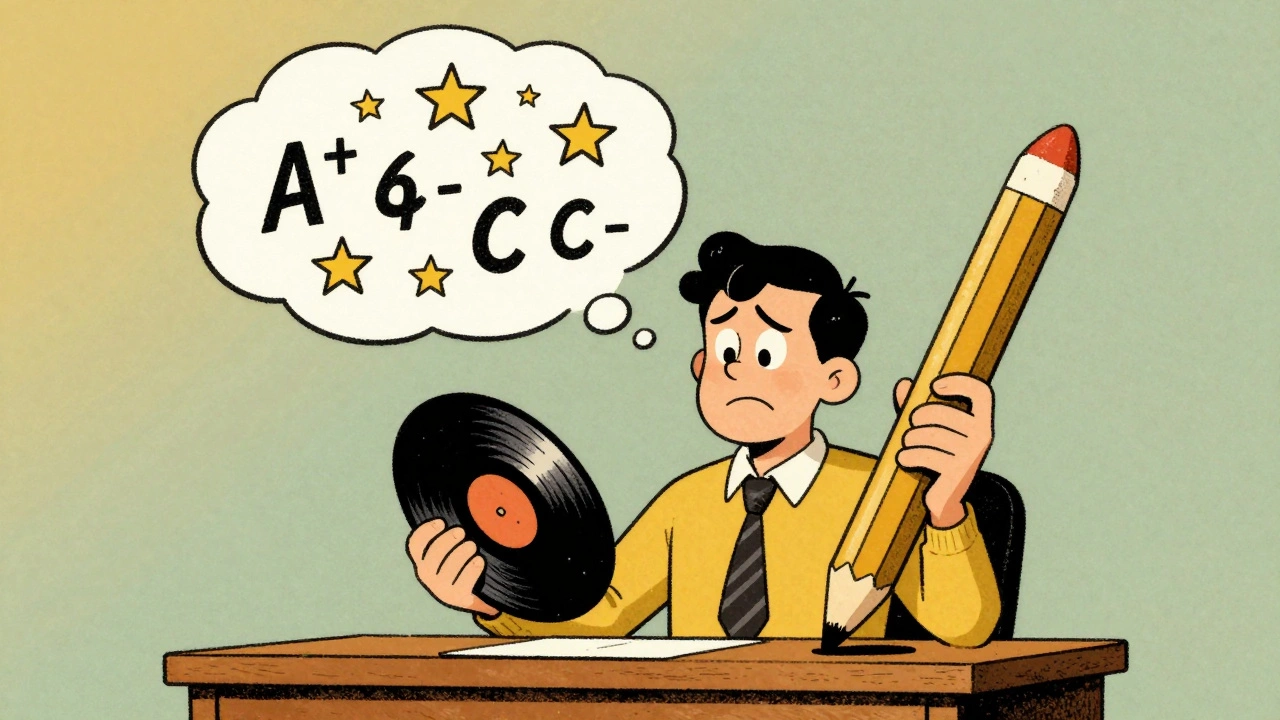

Ever wondered why one critic calls an album a "masterpiece" while giving it a 7/10, or why some magazines use letter grades while others stick to stars? It feels like a contradiction, but the way we quantify art is a messy, psychological game. For a reader, a number is a shortcut. For a writer, it's often a cage. The tension between a quick glance at a score and the nuance of a written critique is where review scales either build or destroy reader trust.
The Psychology of the Star System
Most of us are conditioned to see Star Ratings a quantitative measurement system using icons to represent quality, typically on a scale of 1 to 5 as the gold standard of efficiency. In music journalism, this system turns a complex emotional response into a data point. But the problem is that these points aren't universal. To one reviewer, a 3-star rating means "this is a perfectly fine album that doesn't offend," while to another, it's a polite way of saying "this was boring."
Take a look at how different philosophies handle a 5-point scale:
| Rating | The "Generous" Critic | The "Strict" Critic |
|---|---|---|
| 5 Stars | A great album I really enjoyed | A life-changing, flawless masterpiece |
| 4 Stars | Very good, highly recommended | Strong work with minor flaws |
| 3 Stars | Good, worth a listen | Mediocre or unremarkable |
| 2 Stars | Disappointing, few highlights | Fundamentally flawed |
| 1 Star | I didn't like this at all | Offensive or completely broken |
This variance is why a "community average" can be misleading. If a publication has a mix of "generous" and "strict" writers, the average score might be a 3.5, but that tells you nothing about whether the album is actually "good" or just "consistently okay."
Beyond the Number: The Case for Granularity
A single number is a blunt instrument. It collapses the production, the songwriting, the vocals, and the emotional impact into one digit. To fix this, some modern critics are moving toward more granular systems. Using half-star increments, for example, allows a reviewer to distinguish between a "strong" 4 and a "borderline" 4. It provides ten distinct categories instead of five, offering a bridge between the simplicity of stars and the precision of a 100-point scale.
But granularity isn't just about half-steps. The real evolution is in multi-dimensional scoring. Imagine a music review that doesn't just give one score, but breaks it down into specific attributes: Technical Production the quality of recording, mixing, and mastering of an audio track, Lyricism the artistic quality and depth of the written words in a song, and Performance. If an artist has a brilliant voice but the mixing is muddy, a single 3-star rating fails the reader. A split score, however, tells the reader exactly what to expect: a great performance trapped in a bad mix.

Building Reader Trust through Verification
Numbers mean nothing if the person assigning them hasn't actually done the work. In the digital age, "review bombing" and superficial listening have made reader trust fragile. To combat this, credible platforms are implementing verification milestones. For example, some systems require a user to mark a piece of media as "completed" before they can leave a rating. This ensures that the score isn't just a reaction to a 30-second teaser or a social media trend.
Trust is also built when the rating is supported by structured reasoning. A blank text box that says "Tell us what you think" often leads to useless reviews like "It was good." High-trust systems prompt the user for specifics. If a reviewer gives an album a 5-star rating, the system might ask, "What specifically made this a masterpiece? Was it the songwriting or the production?" This transforms the review from a subjective whim into a piece of evidence-backed criticism.
The Algorithm vs. The Human Ear
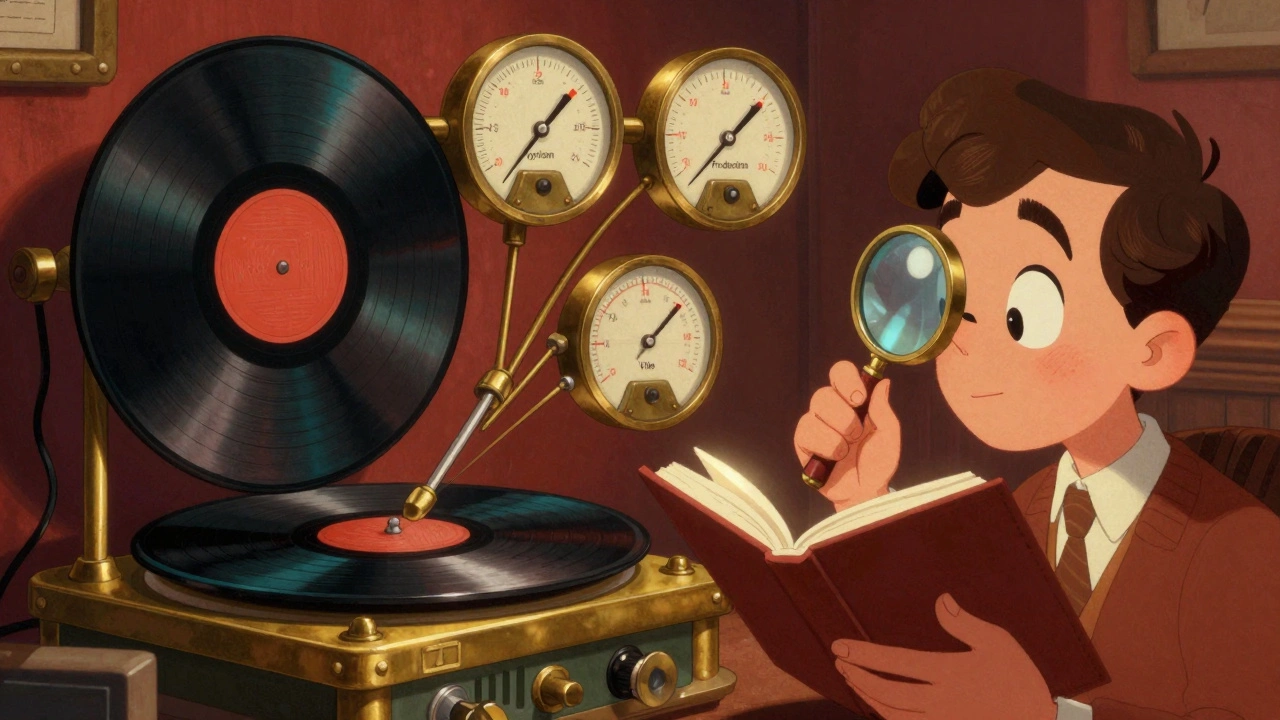
Platforms like Trustpilot a global consumer review platform that uses algorithmic scoring to aggregate user feedback have shown that simple averaging is a flawed way to measure quality. A product with five 5-star reviews isn't necessarily better than a product with five hundred 4.5-star reviews. This is known as the weighting problem.
In music journalism, this means we have to consider the "recency effect." An album's quality doesn't change, but our perspective on it does. A score given in 2020 might feel wrong in 2026 because the musical landscape has shifted. Sophisticated metrics now account for this by giving more weight to recent reviews or by allowing critics to update their scores over time. This acknowledges that art is a living thing and our relationship with it evolves.
The Trade-off: Simplicity vs. Precision
Ultimately, the design of a rating scale is a choice between user experience and accuracy. A 1-5 star system is intuitive; you don't need a manual to understand it. A complex rubric with ten different categories is precise, but it increases the "cognitive load" on the reader. Most people visiting a site for a quick recommendation don't want to analyze a spreadsheet; they want to know if they should spend their $15 on a vinyl record.
The most successful reviews balance these two needs. They provide the "headline" score for the casual browser and the deep, structured analysis for the enthusiast. By combining a simple metric with transparent criteria and verified listening, journalists can move away from being "judges" and instead become guides who help the reader navigate their own taste.
Why do some reviewers use letter grades instead of stars?
Letter grades (A-F) often feel more intuitive to people because they mimic academic scoring. They tend to create a sharper distinction between "excellent" and "good" than stars do, as an 'A' is a distinct achievement, whereas a 4-star rating can often feel like a default for anything that isn't bad.
Does a high average score always mean the music is good?
Not necessarily. Average scores can be skewed by "fan-voting," where a dedicated fanbase gives 5 stars regardless of quality, or "review bombing," where critics hate the artist personally. This is why looking at the distribution of scores (the histogram) is more important than the average number.
What is a "spice rating" or "cozy rating" in reviews?
These are supplementary metrics used to describe the vibe or content level of a work rather than its quality. While a star rating tells you if a book or album is "good," a cozy rating tells you if it's relaxing. In music, this would be similar to rating an album by its "energy level" or "mood" rather than its technical skill.
How can I tell if a review score is trustworthy?
Look for three things: verification (did they actually listen to the whole album?), transparency (do they explain why they gave that specific score?), and consistency (does the written text actually match the number given?). If a review says an album is "life-changing" but gives it a 3/5, there is a disconnect in their scale.
Why are 10-point scales less common than 5-star scales?
10-point scales often create too much noise. When you have 10 options, the difference between a 6 and a 7 becomes arbitrary. 5-star scales, especially with half-stars, provide enough nuance to be useful without overwhelming the reader with meaningless increments.


