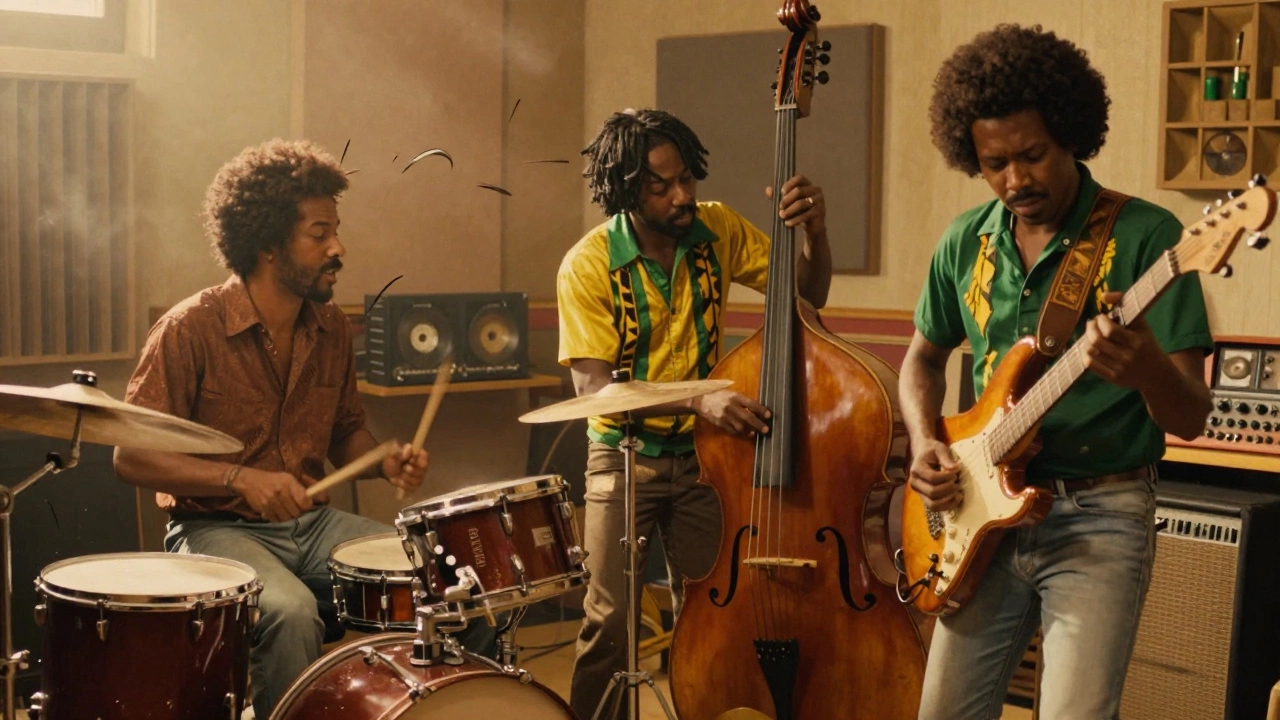

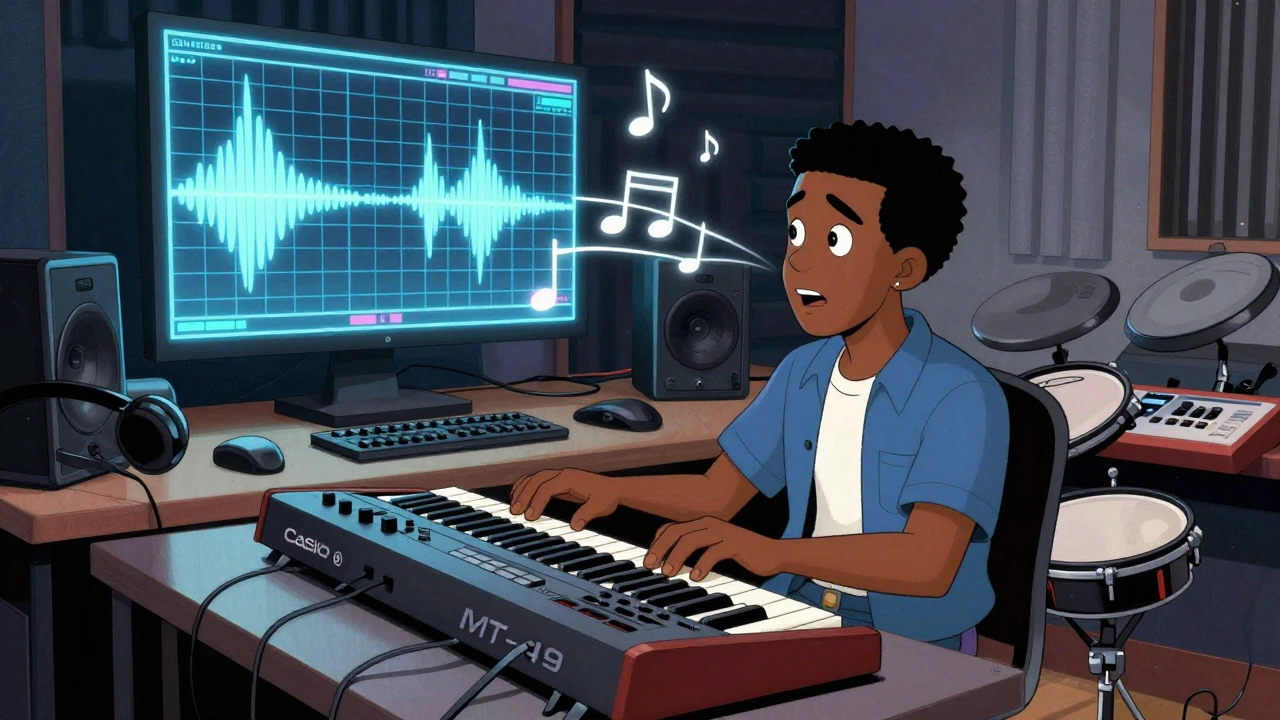
It all started with a cheap keyboard preset. In the mid-1980s, Jamaican producer King Jammy is a pioneering figure in dancehall music known for digitizing reggae production. didn’t hire a full band or book an expensive studio session. Instead, he used a Casio MT-40, a portable synth released by Casio in 1981, and slowed down one of its built-in patterns. The result was the "Sleng Teng" riddim. This single track changed everything. It marked the moment when digital dancehall is a subgenre of Jamaican music characterized by electronic instrumentation and fast-paced rhythms. was born, shifting the industry away from live instruments toward programmed beats. But this wasn't just a technological accident; it was the direct evolution of roots reggae is a style of reggae music that emerged in Jamaica in the late 1960s and early 1970s, focusing on spiritual and political themes., carrying forward its rhythmic DNA while stripping away its acoustic warmth.
The Foundation: How Roots Reggae Built the Groove
To understand where dancehall came from, you have to look at what held it together before the computers arrived. Roots reggae, which crystallized between 1968 and 1973, relied heavily on a specific rhythmic structure called the one-drop is a drum pattern central to reggae music where the kick and snare hit simultaneously on beats 2 and 4.. Unlike most Western pop music that emphasizes the first beat (the "one"), roots reggae leaves the first beat empty. The kick drum and snare crash together on beats 2 and 4. This creates a loping, relaxed feel that sits comfortably between 50 and 100 beats per minute (bpm).
But the drums were only half the story. The magic happened on the off-beats. Guitarists and keyboard players would play short, staccato chords on the "and" of every beat-these are known as skanks. If you count along, you’re hitting the skank on the spaces between the main pulse. Organ players added another layer, using a shuffle technique that accentuated sixteenth-note boxes around those upbeats. Together, these elements created a dense, swinging groove. Basslines followed the chord progression, often emphasizing the root note and the fifth, creating a heavy, filtered low-end sound that you felt in your chest more than you heard with your ears.
This setup required a full band. You needed a drummer, a bassist, a guitarist, an organist, and often horns. It was expensive, time-consuming, and limited by the physical presence of musicians. Yet, this modular approach-where each instrument played a distinct, interlocking part-laid the groundwork for how producers would later program these parts into machines.
The Riddim Economy: A Shared Musical Infrastructure
In Jamaica, a song isn't just a melody and lyrics; it's built on a riddim is a reusable instrumental backing track in Jamaican music over which multiple artists record vocals.. Think of it like a template. Once a producer records a solid rhythm track-drums, bass, and chords-they sell the rights to that track to various vocalists. Deejays and singers then write their own verses and hook lines to fit over the same backing. This practice predates digital technology but became the economic engine of the industry.
Databases like Riddims World document this massive ecosystem, listing over 24,156 distinct riddims spanning from the 1960s to new releases in 2026. This number shows that the riddim concept is not a fleeting trend but a continuous cultural infrastructure. Whether it’s a live-band recording from 1975 or a synthesized beat from 2025, the logic remains the same: create a compelling rhythmic foundation, then let multiple artists version it. This system allowed for rapid experimentation. If a riddim worked in the dance hall, producers would immediately commission dozens of versions, keeping the momentum high and the costs relatively low compared to producing unique arrangements for every single song.
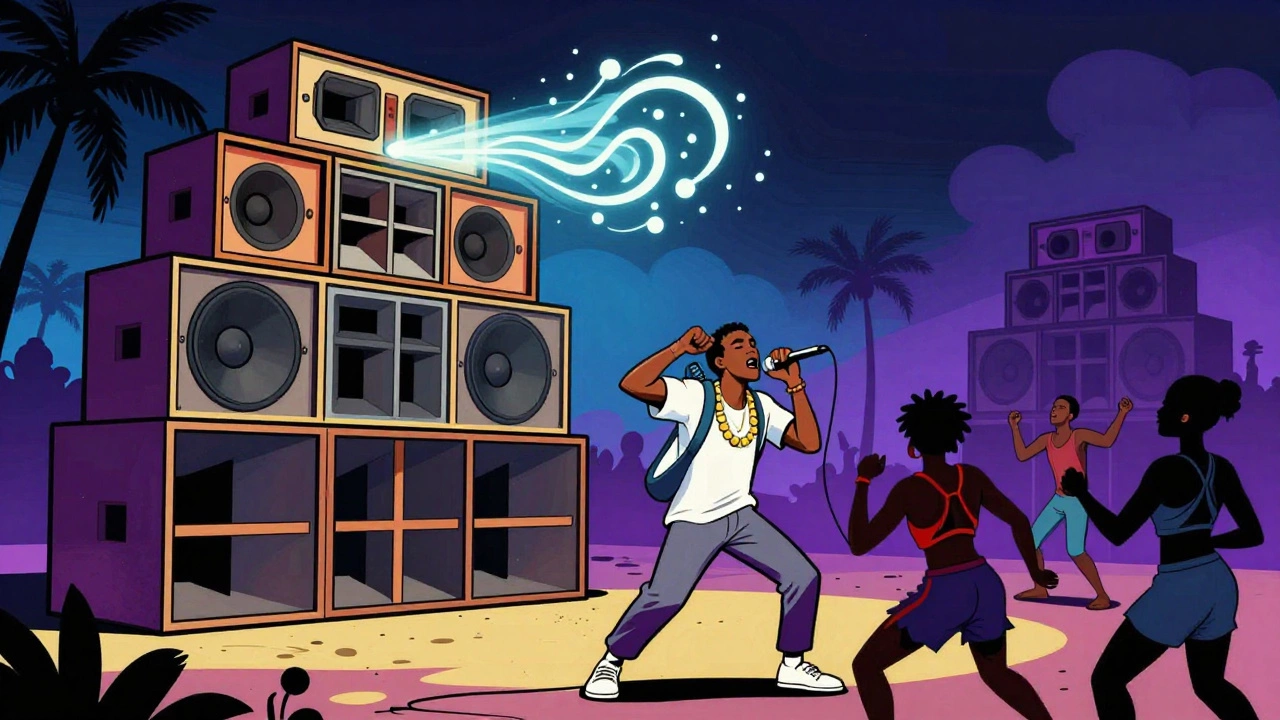
The Shift: Sound Systems and the Rise of Toasting
By the late 1970s, the focus of Jamaican music began to shift from the studio album to the sound system. Mobile DJ setups, operated by legends like King Tubby and Prince Jammy, dominated the nightlife. These weren't just parties; they were competitive events. Sound systems clashed against each other, trying to outdo one another with exclusive tracks and powerful basslines.
In this environment, the role of the vocalist changed. Instead of singing melodic songs, deejays began to "toast"-rapping or chanting live over the instrumental B-sides of records. This performance style demanded a different kind of backing track. The complex horn sections and lush harmonies of roots reggae sometimes got in the way of the deejay’s flow. Producers started stripping back the arrangements, focusing on heavy bass and driving drums. This era, often called "rub-a-dub" or early dancehall, kept the live band but simplified the texture. The lyrics also shifted, moving away from the Rastafarian spirituality and political protest of roots reggae toward everyday life, social commentary, and sometimes explicit content. This demand for minimal, punchy backings created the perfect opening for electronic instruments to step in.
Sleng Teng: The Day Reggae Went Digital
The watershed moment arrived around 1984-1985 with the release of the Sleng Teng riddim. King Jammy’s team discovered that the Casio MT-40 had a preset, originally created by Japanese engineer Okuda Hiroko, that sounded interesting when slowed down. They looped this preset, adding a Simmons electronic drum kit for percussion. The result was sparse, synthetic, and incredibly catchy. It lacked the human micro-timing of a live drummer, but it had a precision and energy that resonated with dancers.
Unlike previous hits that relied on famous session musicians like Sly & Robbie, Sleng Teng was entirely digital. It proved that you didn’t need a band to make a hit. You just needed a good idea and some affordable gear. Within months, other producers rushed to buy Casios and drum machines. The mainstream sound of dancehall shifted overnight. Acoustic drums and electric bass guitars were replaced by synthesized waveforms and sequenced patterns. This transition lowered production costs significantly, allowing smaller producers to compete with established studios. It also changed the sonic landscape: the warm, filtered tones of analog equipment gave way to brighter, sharper digital sounds.
Continuity in Change: What Stayed the Same
Even though the tools changed, the rhythmic soul of reggae persisted. Digital dancehall didn't abandon the one-drop; it translated it. Programmers still placed snares and claps on beats 2 and 4. They still emphasized the off-beat skank, even if it was now generated by a synthesizer rather than a guitar. Producers used delay effects to create echo patterns that mimicked the polyrhythmic feel of traditional dub mixes.
Tempo remained a key factor. While some digital riddims pushed faster, many stayed within the 50-100 bpm range that defined roots reggae. The basslines, though synthesized, still outlined chord progressions and emphasized low frequencies. The difference was in the execution. Where a live bassist might add subtle variations in timing and dynamics, a sequencer provided rigid quantization. However, savvy producers learned to offset hi-hats and add slight asymmetries to shaker patterns to reintroduce a sense of swing. The goal was to capture the "feel" of the one-drop while embracing the efficiency of the grid.
The Modern Landscape: Digital Reggae Today
Fast forward to 2026, and the legacy of that Casio preset is everywhere. Platforms like Bandcamp feature a dedicated tag for "digital reggae," where artists sell vinyl, cassettes, and downloads. This niche market thrives on the intersection of old-school aesthetics and modern production. Collectors value physical formats like 12-inch singles and limited-run tapes, mirroring the historical importance of sound-system branding and record-shop culture.
Producers today use sophisticated software DAWs (Digital Audio Workstations) instead of standalone keyboards, but the principles remain identical. They build distinctive riddims, often starting with simple two-chord progressions, and invite multiple vocalists to version them. The database of riddims continues to grow, with new entries added annually. The connection between the roots era and today’s digital scene is unbroken. Every time a producer programs a kick drum on beat 2 and adds an off-beat chord stab, they are participating in a tradition that started decades ago, proving that while the technology evolves, the rhythm endures.
| Feature | Roots Reggae (1970s) | Digital Dancehall (1980s+) |
|---|---|---|
| Instrumentation | Live band (drums, bass, guitar, organ, horns) | Synthesizers, drum machines, samplers |
| Key Gear | Analog tape recorders, microphones, amplifiers | Casio MT-40, Simmons drums, sequencers |
| Rhythm Feel | Human micro-timing, swing, dynamic variation | Quantized grid, precise timing, consistent volume |
| Bass Sound | Filtered electric/acoustic bass, warm tone | Synthesized waveforms, sharp attack, deep sub-bass |
| Vocal Style | Melodic singing, harmony vocals | Toasting (rap-style), chanted lyrics, solo focus |
| Production Cost | High (studio time, musician fees) | Low (home studio, affordable electronics) |
What is the Sleng Teng riddim?
The Sleng Teng riddim is a foundational track in dancehall history, produced by King Jammy around 1984-1985. It was the first major hit to be created entirely using digital instruments, specifically a preset from a Casio MT-40 keyboard and Simmons electronic drums. Its success launched the era of digital dancehall, replacing live bands with synthesized beats.
How does the one-drop drum pattern work?
The one-drop is a drum pattern where the kick drum and snare drum hit simultaneously on beats 2 and 4 of a 4/4 measure, leaving the first beat empty. This creates a distinctive, relaxed groove that defines roots reggae and influences much of modern dancehall and digital reggae production.
What is a riddim in Jamaican music?
A riddim is a reusable instrumental backing track consisting of drums, bass, and chords. Multiple vocalists can record different songs over the same riddim. This practice allows for efficient production and has been a central part of Jamaican music economics since the 1960s, continuing through both the analog and digital eras.
Why did dancehall move to digital instruments?
Dancehall moved to digital instruments primarily due to cost and convenience. Hiring a full live band for every recording session was expensive. Digital keyboards and drum machines were affordable and allowed producers to create complex, precise beats quickly in home studios. Additionally, the stripped-down, bass-heavy sound of digital riddims suited the emerging style of deejay toasting better than fuller live arrangements.
Is digital reggae still popular today?
Yes, digital reggae and dancehall remain vibrant genres. As of 2026, databases like Riddims World continue to catalog thousands of new riddims annually. Artists release music on platforms like Bandcamp, offering both digital downloads and physical formats like vinyl and cassettes. The core principles of riddim-based production established in the 1980s continue to shape contemporary Jamaican music and global electronic subgenres.