
It’s easy to forget that the bass-heavy beats defining modern British club culture didn’t start in London or Manchester. They started on the decks of Caribbean migrants who arrived with little more than hope and a suitcase full of records. When you hear the deep, rolling sub-bass in grime or drum’n’bass today, you’re hearing the direct descendant of reggae, a genre that transformed from an immigrant community staple into a dominant force in UK popular culture. This wasn’t just a musical shift; it was a cultural takeover driven by resilience, identity, and raw talent.
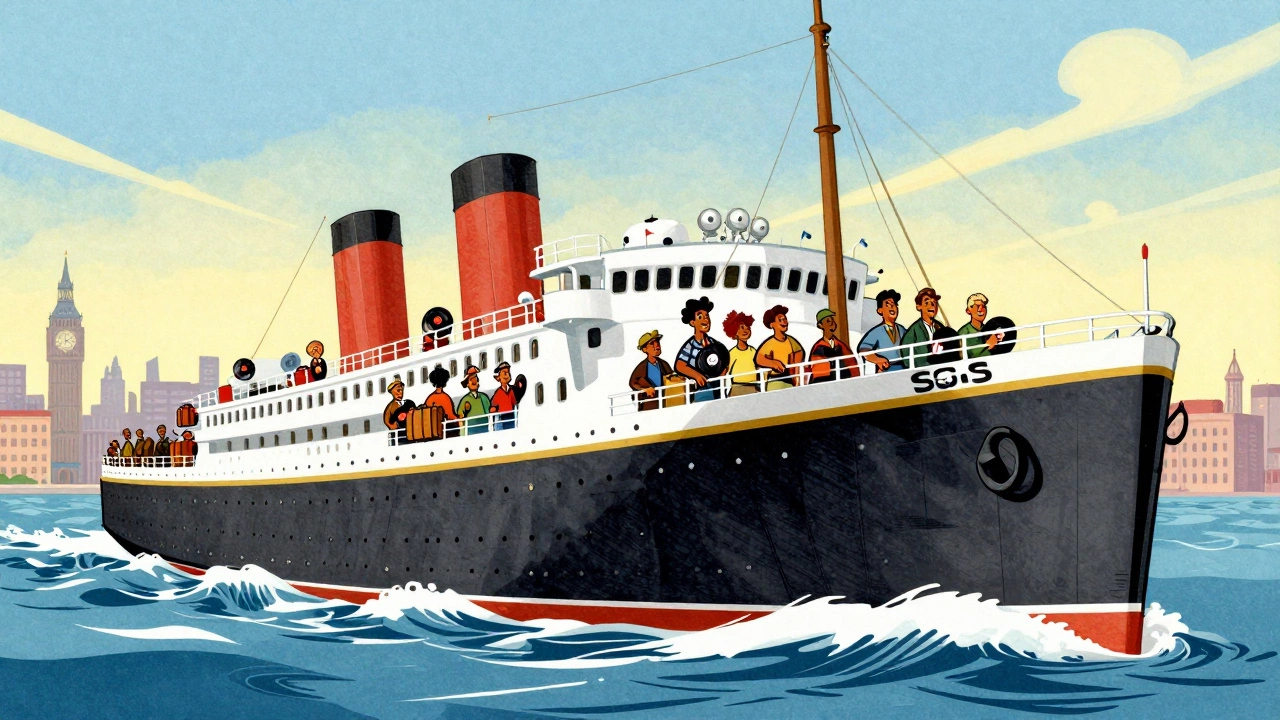
The story begins long before the charts. It starts with the arrival of the SS Empire Windrush in June 1948. These weren’t just passengers; they were the architects of a new sonic landscape. As thousands of Jamaicans and West Indians settled in cities like London, Birmingham, and Bristol, they brought their music with them. But they didn’t just play it for themselves. They built the infrastructure-sound systems, record shops, and carnivals-that would eventually force the mainstream to listen.
The Sound System: The Backbone of UK Reggae
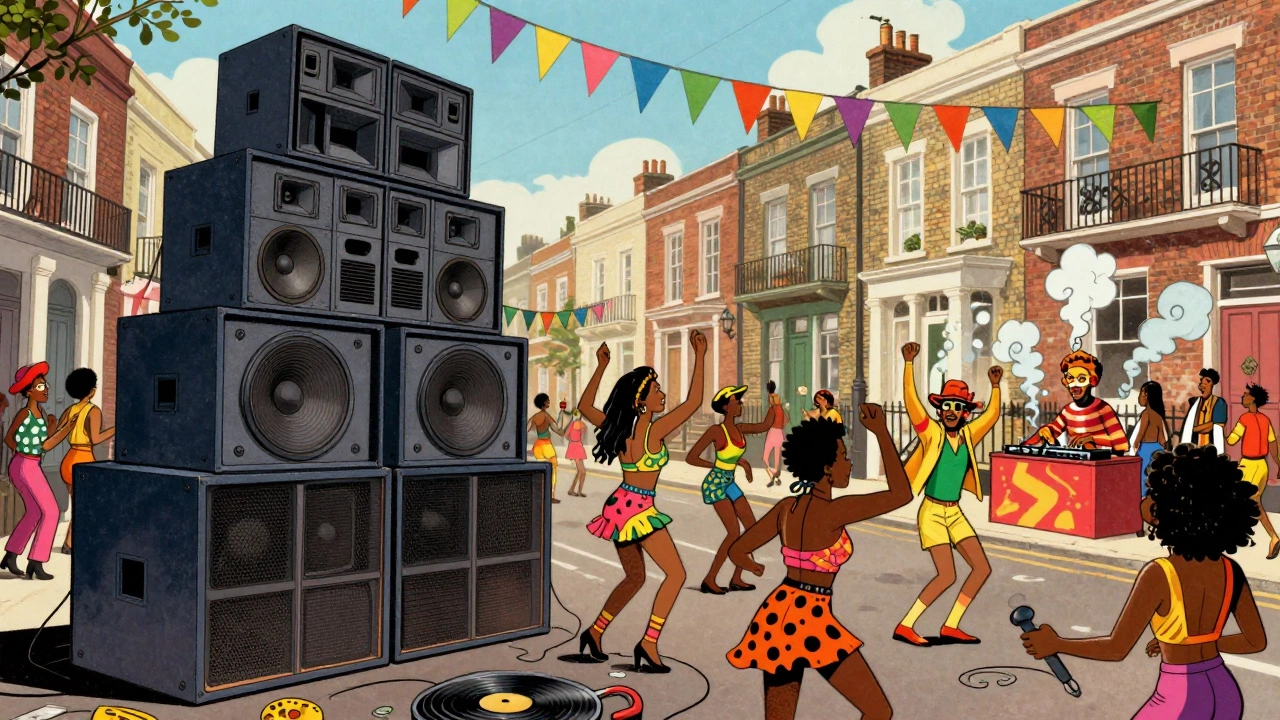
If you want to understand how reggae conquered Britain, you have to look at the speakers. In Jamaica, sound system culture was already a massive social phenomenon. Migrants transplanted this directly to the UK. Imagine massive stacks of speakers, powerful amplifiers, and DJs spinning rare grooves in community halls and later, on the streets.
These weren’t small parties. By the mid-1960s, specialist shops like Peckings’ Studio 1 in West London were distributing the latest releases from Jamaica’s Coxsone Dodd. This created a self-sustaining ecosystem. The music stayed within the community first, building a loyal fanbase and refining the sound. Dr. Kenny Monrose of Wolfson College, Cambridge, points out that while the roots were in Jamaica, the "business end" of the music happened in England. Diasporic networks turned what could have been niche folk music into a commercial industry.
This infrastructure reached its peak expression at the Notting Hill Carnival, which evolved from informal gatherings into one of Europe’s largest street festivals. In 1973, organizer Leslie Palmer introduced static sound systems to the carnival. This changed everything. Instead of moving through crowds, these systems anchored specific streets, broadcasting reggae, dancehall, and later jungle to tens of thousands. It proved that this music wasn’t background noise; it was the main event.
Breaking the Charts: From Niche to Number One
For years, British radio ignored this vibrant scene. That changed abruptly in April 1969. Desmond Dekker & The Aces released "Israelites," a song sung in Jamaican patois about biblical themes and social struggle. Many British listeners couldn’t even understand the lyrics, yet it shot to number 1 on the UK Singles Chart. It was the first Jamaican-produced song to top the chart, staying there for a week and selling millions worldwide.
This wasn’t a fluke. Just two years later, Dave & Ansel Collins topped the charts with "Double Barrel." This track sold around 300,000 copies after only 33 radio plays-a testament to the sheer power of word-of-mouth and community support. These hits signaled a transition. Reggae was no longer just for the diaspora; it was competing head-to-head with rock and pop on equal commercial terms.
| Artist | Song | Year | Chart Peak | Significance |
|---|---|---|---|---|
| Desmond Dekker & The Aces | Israelites | 1969 | #1 | First Jamaican-produced #1 in UK |
| Dave & Ansel Collins | Double Barrel | 1971 | #1 | Second reggae #1; massive sales |
| Steel Pulse | Jah Live | 1979 | #1 (Reggae) | First British band to top reggae charts |
| UB40 | Red Red Wine | 1983 | #1 | Crossed over to global pop mainstream |
The Second Generation: Homegrown British Reggae
By the mid-1970s, the children of the Windrush generation were growing up in places like Brixton in South London and Handsworth in Birmingham. They faced racism, police harassment, and economic exclusion. Their response wasn’t silence; it was music. But this wasn’t just copied Jamaican reggae. It was distinctly British.
Steel Pulse, formed in Handsworth, Birmingham, became the voice of this struggle. Their 1978 debut album, Handsworth Revolution, was dedicated to their neighborhood. Tracks like "Ku Klux Klan" attacked far-right racism explicitly. The band members had little formal training but possessed a fierce political consciousness. They became the first non-Jamaican act to win a Grammy for Best Reggae Album in 1985, proving that British reggae could achieve critical acclaim globally.
Then there was UB40, another Birmingham-based group. While Steel Pulse focused on militant politics, UB40 blended reggae with pop sensibilities. Their cover of Neil Diamond’s "Red Red Wine" became a signature hit, topping charts in the UK and beyond. With over 50 singles in the UK Top 40, they made reggae accessible to white suburban audiences who might never have entered a black-owned record shop. This duality-political resistance versus commercial crossover-defined the era.
London also gave birth to Aswad, a band that navigated both worlds. Their 1988 hit "Don’t Turn Around" reached number 1 on the UK Singles Chart, transforming a Tina Turner B-side into a reggae-pop anthem. Later, "Shine" peaked at number 5 in 1994. These successes showed that British-born artists could dominate the mainstream without losing their cultural roots.
Dub Poetry and Cultural Identity
Music wasn’t the only outlet. Linton Kwesi Johnson, born in Jamaica and raised in London, pioneered "dub poetry." He recited politically charged verse in Jamaican patois over reverb-drenched reggae tracks produced by Dennis Bovell. Albums like Dread Beat An' Blood (1978) documented police brutality and urban uprisings, such as the 1981 Brixton riots. Johnson reframed media narratives, calling these events "insurrections" against oppression rather than mere criminality.
In 2002, Penguin Modern Classics published his collection Mi Revalueshanary Fren, making him the only Black poet included in that prestigious series at the time. This validated reggae-influenced art as high literature, not just street culture. Dub poetry provided a literary backbone to the musical movement, articulating the complex identity of being Black in Britain.
From Reggae to Grime: The Sonic Legacy
You can trace a direct line from those early sound systems to the genres dominating the UK today. In the early 1990s, the rhythmic influence of reggae merged with house music to create jungle. Jungle featured sped-up breakbeats combined with dub-style basslines and MC chants. By the late 90s, this evolved into drum’n’bass. Later, elements of this heritage fed into UK garage, dubstep, and finally, grime.
Artists like Stormzy and Dave, who topped charts in the 2010s and 2020s, stand on the shoulders of giants. Their lyrical styles, bass-heavy production, and connection to youth culture are all inheritances from the reggae and dancehall traditions established by immigrant communities decades earlier. The MOBO Awards (Music of Black Origin), launched in 1996, played a crucial role in recognizing this continuum, promoting genres from reggae to grime and highlighting Black British talent.
Why This Matters Today
Reggae in the UK is not a relic of the past. It is a living, breathing engine of creativity. Conferences like "British Reggae: A Windrush Legacy - Past, Present and Future" scheduled for March 2026 continue to explore this impact. Documentaries like BBC Four’s Roots, Reggae, Rebellion connect 1970s roots reggae to the experiences of young Black Britons facing similar issues today.
The success of British reggae proves that immigrant communities don’t just add diversity to a culture; they fundamentally reshape it. From the streets of Brixton to the top of the Billboard charts, the journey of reggae in the UK is a story of resilience, innovation, and undeniable power. It reminds us that some of the most influential art comes from those fighting to be heard.
Who was the first artist to bring reggae to the UK charts?
While several artists contributed, Desmond Dekker & The Aces are credited with the first major breakthrough. Their song "Israelites" reached number 1 on the UK Singles Chart in April 1969, becoming the first Jamaican-produced song to top the chart.
What is the connection between the Windrush generation and UK reggae?
The Windrush generation refers to Caribbean migrants who arrived in the UK starting in 1948. They brought ska, rocksteady, and reggae with them, establishing sound system culture, record shops, and carnivals that formed the foundation of the UK reggae scene.
Which British bands are famous for reggae?
Prominent British reggae bands include Steel Pulse, known for their political lyrics; UB40, famous for crossover hits like "Red Red Wine"; and Aswad, who achieved multiple Top 10 hits. These groups were often second-generation immigrants blending Jamaican styles with British experiences.
How did reggae influence modern UK music genres?
Reggae’s bass-heavy rhythms and sound system culture directly influenced the development of jungle, drum’n’bass, UK garage, dubstep, and grime. Artists in these genres often cite reggae and dancehall as key inspirations for their production and lyrical styles.
What is dub poetry?
Dub poetry is a hybrid art form combining spoken word poetry with reggae and dub music rhythms. Pioneered by Linton Kwesi Johnson, it uses Jamaican patois to address political and social issues, serving as a "cultural weapon" for Black British identity and resistance.