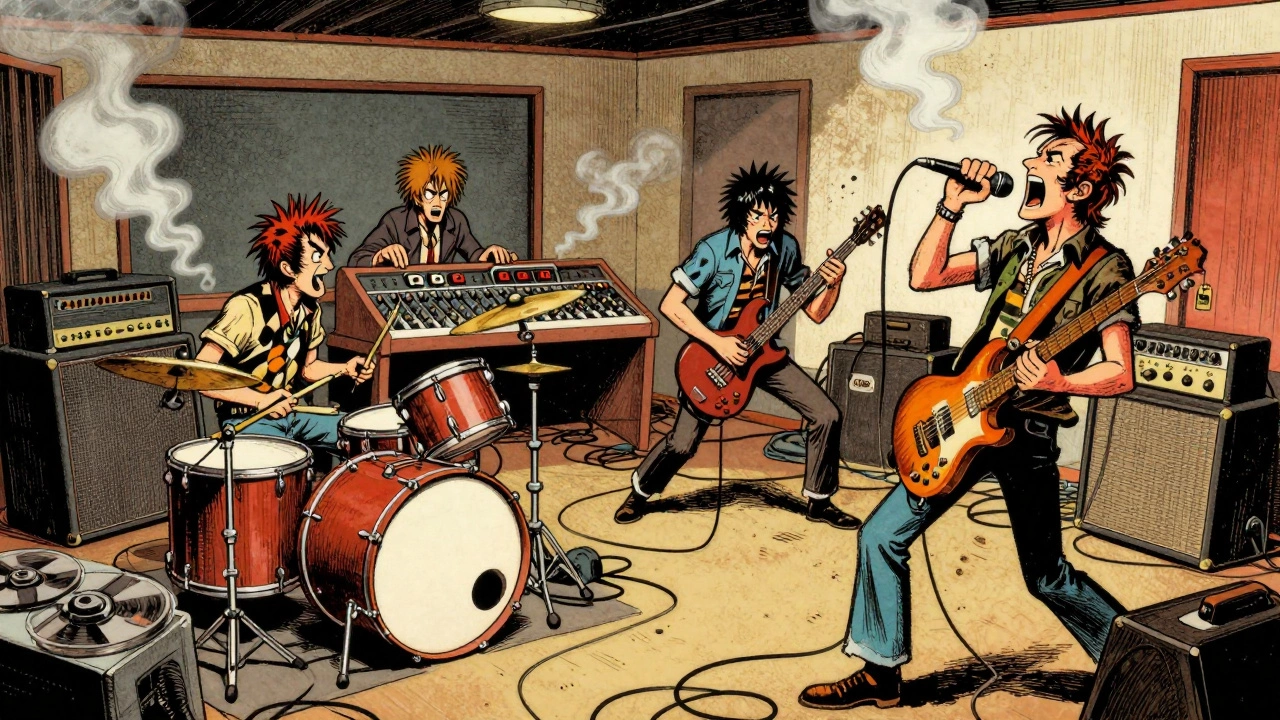

There is a myth that punk rock sounds the way it does because the bands couldn't afford better equipment or didn't know how to use a microphone. You hear that crackle on an old cassette tape, see the jagged waveforms on a screen, and assume incompetence. But look closer at the history of punk recording, which refers to the specific production philosophies and technical choices used to capture high-energy, aggressive music. The grit you love wasn't always an accident. It was often a calculated rebellion against the bloated, over-polished rock productions of the 1970s.
Today, we stand at a crossroads. On one side, you have the purists chasing the ghost of a live room with analog tape. On the other, you have modern pop-punk producers stacking fifty tracks of samples to get a radio-ready punch. If you are trying to record your own band, or just understand why that classic album hits different, you need to know the difference between raw production and studio refinement. It isn't just about gear; it's about what you value in a performance.
The Blueprint for Raw: The Ramones Effect
To understand raw production, you have to look at the blueprint. In early 1976, the Ramones walked into Plaza Sound in New York City. They had three days to track instruments and four days for vocals. Their total budget? Around $6,400. Compare that to major rock acts spending over $100,000 and months in the studio. Producer Craig Leon and Tommy Ramone didn't have time for perfection. They had a four-track setup. That’s it. Bass and guitar were panned hard left and right, while drums and vocals sat dead center.
This limitation forced a specific aesthetic. Because they couldn't layer dozens of guitars, every note counted. Because they recorded chronologically, the energy flowed naturally from start to finish. The result was an album under 30 minutes long, with songs averaging two minutes. This wasn't sloppy engineering; it was efficient aggression. The "lo-fi" sound came from using inexpensive microphones and accepting first or second takes. There was no comping-splicing together the best parts of ten different takes. You got the whole song, flaws and all. This approach set a template that prioritized speed and affordability over sonic cleanliness.
| Feature | Raw Punk (1970s Style) | Refined Pop-Punk (Modern) |
|---|---|---|
| Budget Range | $5,000 - $15,000 | $50,000 - $200,000+ |
| Tracking Time | 3-7 Days | 2-6 Weeks |
| Track Count | 4-8 Tracks (Tape/Digital) | 50-100+ Tracks (DAW) |
| Drum Processing | Live Room Mics, Minimal Compression | Sample Replacement, Heavy Bus Compression |
| Vocal Approach | Single Take, Doubling Rarely Used | Stacked Harmonies, Pitch Correction |
| Mix Loudness | -14 LUFS or lower (Dynamic) | -8 to -10 LUFS (Loud) |
The Illusion of Lo-Fi
We often lump "raw" and "lo-fi" together, but academics like Adam Harper point out they are not the same thing. Lo-fi aesthetics involve a positive appreciation for imperfections-noise, distortion, and performance flaws. However, many foundational punk albums were actually recorded in professional studios on standard tape machines running at high speeds. The "rawness" was an aesthetic choice within strict financial constraints, not necessarily a lack of technology.
In the 1990s, the lo-fi movement evolved further with home taping on 4-track cassette decks. This introduced new artifacts: limited frequency response above 10 kHz and muddy low-mid buildup around 200-400 Hz. Engineers today can simulate this easily with plugins. But here is the trap: adding tape noise to a pristine digital recording doesn't make it punk. It makes it ironic. True raw production requires the discipline to leave mistakes in if they serve the song. It means accepting that the snare might bleed into the vocal mic because you didn't have time to build isolation booths.
Steve Albini and the Art of High-Fidelity Raw
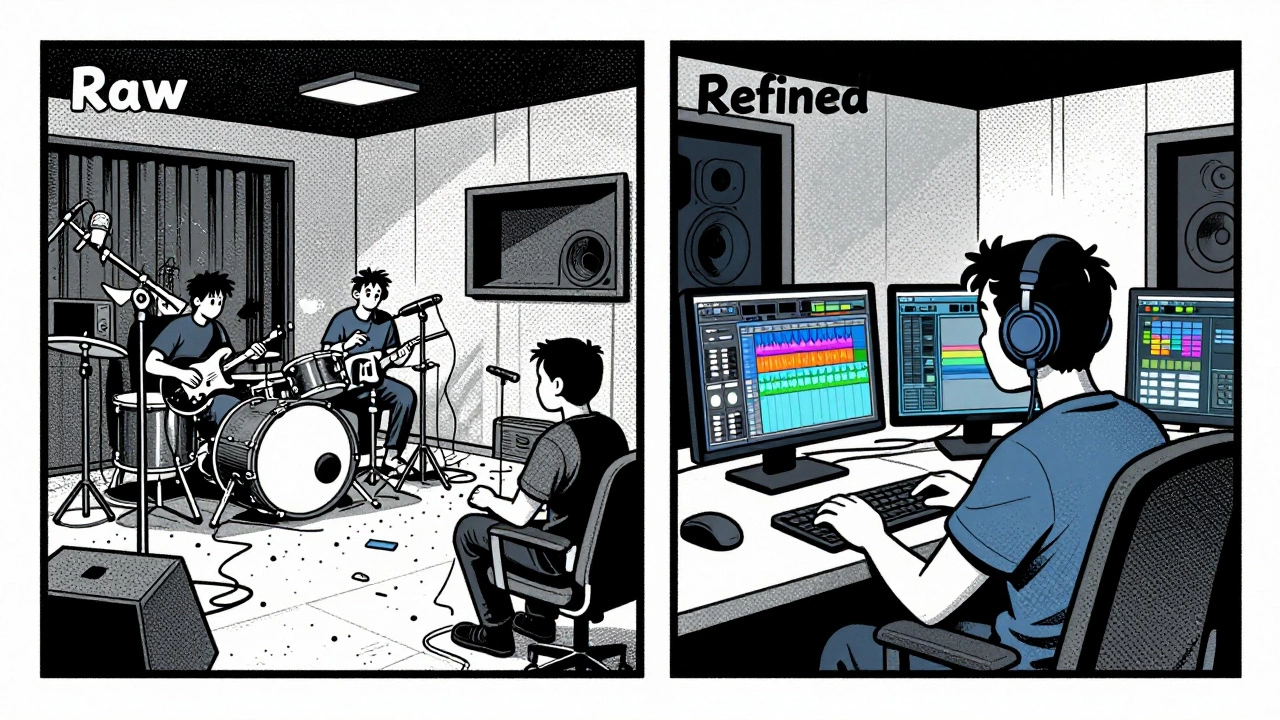
If you think raw means bad quality, you haven't listened to Steve Albini. Albini, who prefers the title "recording engineer" over "producer," represents a third path. He captures punk energy with meticulous technical precision. His method involves placing numerous microphones around the drummer to create a wide, distinct stereo image. He uses high-quality analog tape and carefully balanced levels.
Albini’s philosophy is ethical as much as it is sonic. He believes excessive production abstracts the singer’s individuality. By avoiding heavy editing and producer-led songwriting, he aims for naturalism. When you listen to an Albini mix, you feel like you are in the room with the band. The drums are echoey and present, the guitars are loud, but there is no artificial pumping from bus compression. This proves that you can have clarity and fidelity without sacrificing the raw, live energy that defines the genre. It challenges the idea that refinement always equals commercial polish.
The Modern Pop-Punk Polish
Fast forward to the mid-2020s, and the landscape has shifted dramatically. Modern pop-punk, driven by streaming algorithms and radio standards, relies heavily on studio refinement. Producers like Kyle Black, known for his work with State Champs, use dense multitrack arrangements. A single drum kit might be represented by live mics combined with sampled kicks and snares. The bass is processed with side-chain compression to duck when the kick hits, creating a tight, punchy low end that feels impossible in a live setting.
In these sessions, engineers scoop midrange frequencies around 500-2,000 Hz and boost highs above 8 kHz to cut through phone speakers. Every channel gets EQ and compression. Vocals are stacked with doubles and harmonies, then tuned. The goal is consistency and impact. While some purists hate this, it serves a purpose. It allows the music to compete in a crowded digital ecosystem where listeners scroll past anything that doesn't grab them instantly. The trade-off is losing the human wobble-the slight timing variations that give raw punk its urgency.
Choosing Your Path: Hybrid Approaches
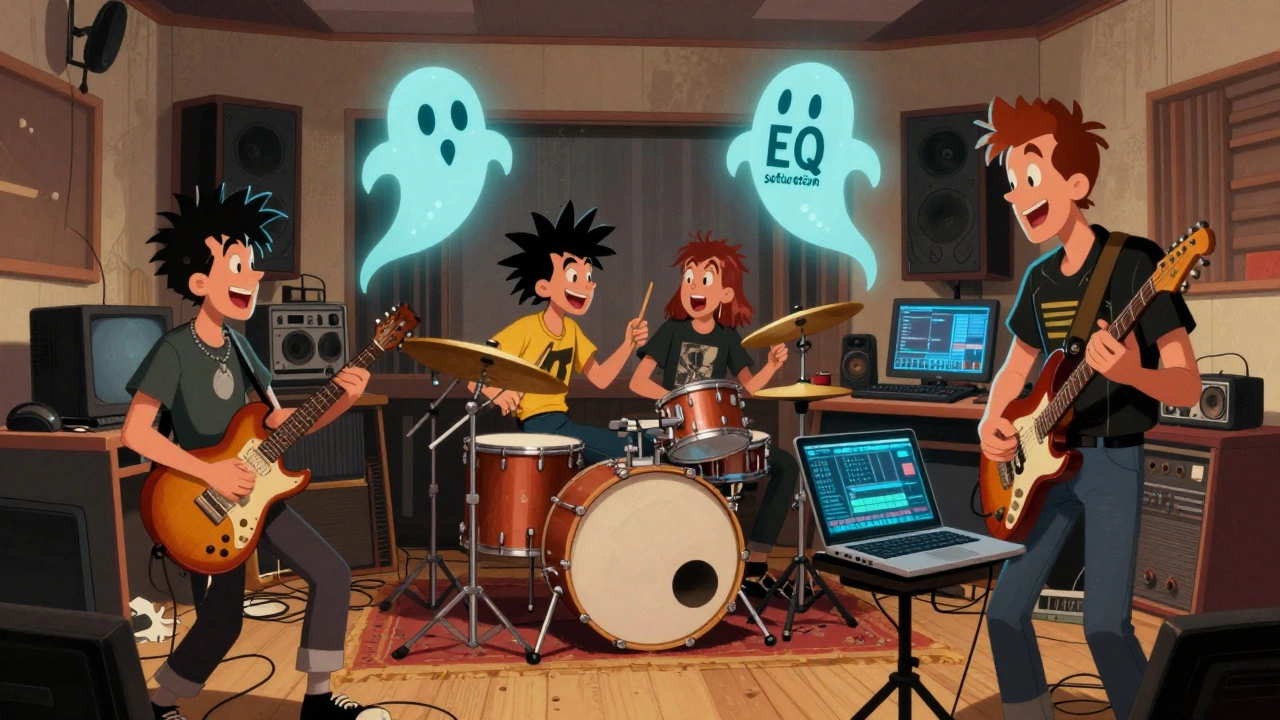
You don't have to pick a side. The most exciting records today often blend both worlds. DIY communities on Reddit and YouTube show bands using budget interfaces under $500 and DAWs like Reaper or Logic to achieve hybrid results. They might record the drums and bass live in the same room to capture the energy (the raw part) but then re-amp the guitars through amp simulators and add subtle saturation plugins during mixing (the refined part).
This approach lets you keep the soul of the performance while ensuring the mix translates well on modern systems. For example, you can leave the hum in the guitar tracks to maintain authenticity but use precise EQ to remove problematic room resonances. You can compress the vocals lightly to control dynamics without squashing the life out of them. The key is intentionality. Are you adding polish to enhance the emotion, or to hide a lack of skill?
Practical Steps for Your Next Session
If you are planning to record, start by defining your goal. Do you want the immediacy of the Ramones or the sheen of a modern chart-topper? Here is how to execute either style:
- For Raw Production: Limit your track count. Use fewer microphones. Put the band in one room. Record full takes. Avoid pitch correction. Embrace bleed between instruments. Keep the session under five days.
- For Studio Refinement: Isolate each instrument. Track to a click. Use sample replacement for drums if needed. Layer guitars and vocals. Apply bus compression and limiting to reach competitive loudness levels (-8 to -10 LUFS).
- For Hybrid Balance: Capture the core rhythm section live. Overdub guitars and vocals separately. Use analog-style saturation plugins to glue the mix. Leave minor performance imperfections if they add character.
Remember, the best punk record is the one that communicates the message effectively. Whether that comes from a $6,400 budget in 1976 or a polished digital session in 2026 depends entirely on what your band wants to say.
Is raw punk production just lazy engineering?
Not necessarily. While some early punk recordings suffered from poor technique, many were deliberate aesthetic choices. Bands like the Ramones worked with skilled producers who used limitations (like 4-track tape) to force a specific energetic sound. Raw production prioritizes performance energy and immediacy over technical perfection.
How much does it cost to record a raw punk album today?
A raw punk album can be recorded for $5,000 to $15,000 if you book a mid-tier studio for 3-7 days. DIY home recordings can cost significantly less, often under $1,000 for basic interface and microphone setups, though they require more self-engineering skill.
What is the role of Steve Albini in punk recording?
Steve Albini bridges the gap between raw energy and high fidelity. He uses meticulous microphone placement and analog tape to capture a band's live sound without heavy processing or producer interference. His work proves that raw punk doesn't have to sound "bad" technically.
Why do modern pop-punk producers use sample replacement?
Sample replacement ensures consistent punch and clarity across different playing intensities. In a refined mix, it helps the drums cut through dense layers of guitars and vocals, meeting the loudness and impact standards expected by streaming platforms and radio.
Can I mix a raw punk record using modern software?
Yes. Many modern engineers use DAWs like Logic or Pro Tools to emulate raw sounds. They use saturation plugins, limit dynamic range processing, and avoid pitch correction to maintain the authentic feel of older recordings while benefiting from digital convenience.


