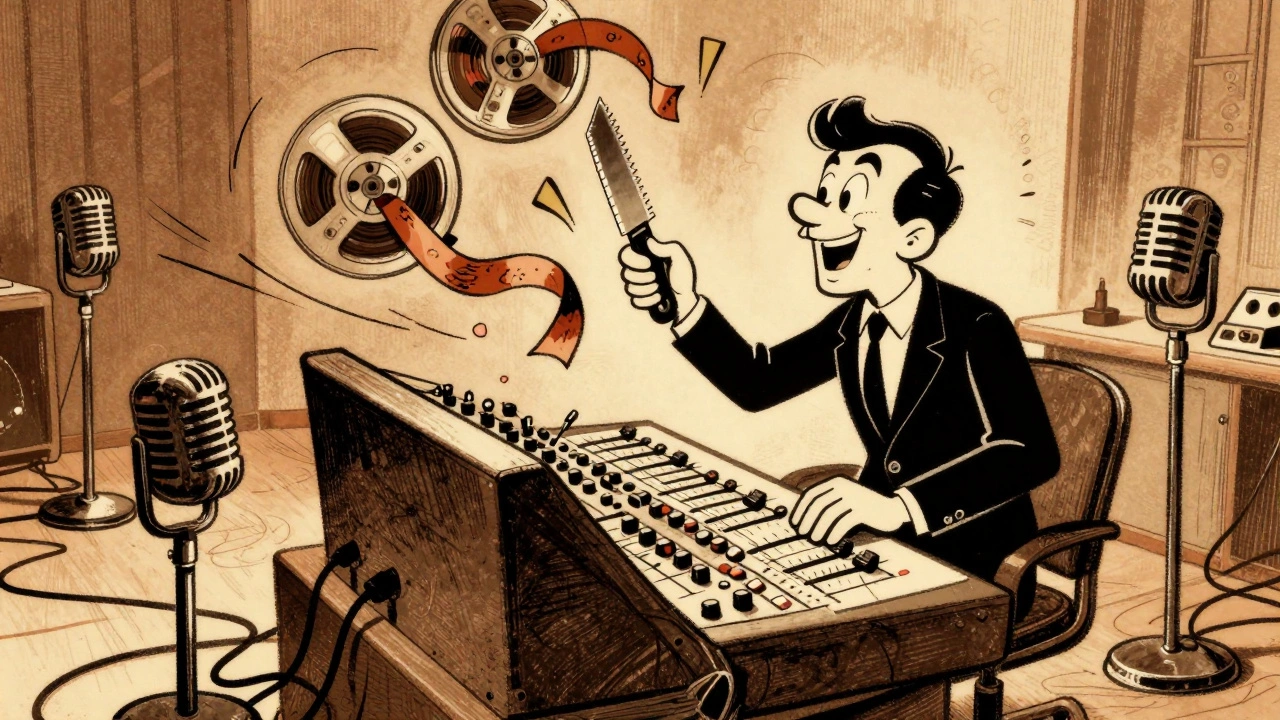

Forget the idea that a jazz record is just a snapshot of what happened on stage. If you’re looking at jazz fusion, that mindset won’t get you anywhere near the truth. This genre was born in the control room, not the concert hall. It’s about using the studio itself as an instrument-cutting, pasting, looping, and layering sounds until they form something entirely new. We aren't talking about capturing a live performance with minimal interference; we are talking about constructing a sonic architecture that could never exist in physical space.
The Birth of Studio Consciousness
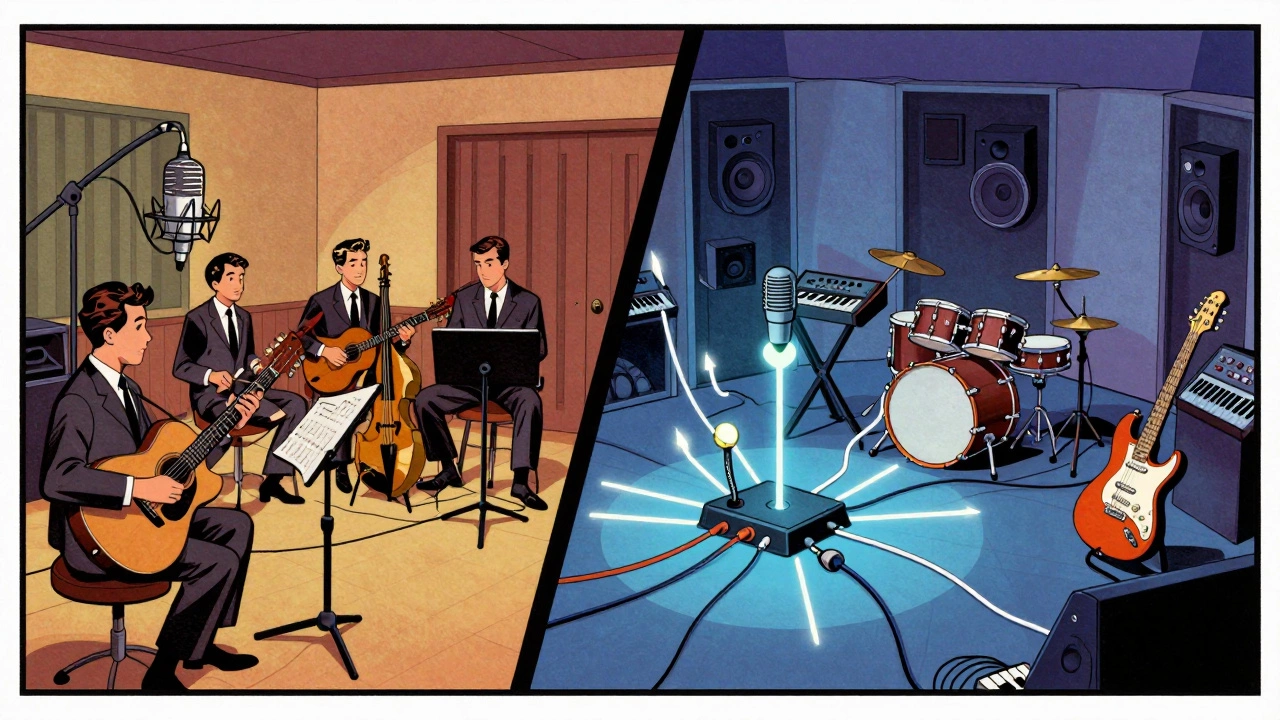
To understand why jazz fusion sounds the way it does, you have to look at the shift in philosophy that happened in the late 1960s. Traditional jazz production aimed for "concert realism." The goal was transparency. You wanted the listener to feel like they were sitting in the front row, hearing the air move around the saxophone without any technological noise getting in the way. Overdubbing was often viewed with suspicion by purists who believed spontaneous interaction between musicians was the only authentic way to create jazz.
Jazz fusion rejected this completely. It embraced what scholars call studio consciousness. This means the recording draws attention to its own artificiality. You hear headphone cues bleeding into the mic. You hear effects processing that creates impossible spaces. You hear edits that splice together different takes to create a rhythm or melody no single human could play in real-time. This wasn't a mistake; it was the point. The technology became part of the composition.
Teo Macero, the producer for Miles Davis, is the father of this approach. When working on albums like In a Silent Way (1969) and Bitches Brew (1970), Macero didn’t just hit record. He took hours of improvisation, cut them up with razor blades, rearranged them, added tape loops, and applied heavy reverb. He acted less like an engineer and more like a co-composer. This radical editing technique allowed musicians to explore ideas without worrying about perfect timing during the initial take, knowing the structure would be built later in the edit suite.
The Technical Architecture of Fusion
The sound of jazz fusion relies on specific technical choices that differ sharply from acoustic jazz recording. One of the biggest differences is the use of multi-track recording. While traditional jazz might record a whole band onto two or four tracks simultaneously, fusion utilizes extensive overdubbing. A guitarist might lay down a rhythm track, then go back and add solo layers, harmonies, and texture passes separately. This allows for precise control over each instrument's volume and spatial placement.
Microphone selection also shifts dramatically. In acoustic jazz, large-diaphragm condensers are often used to capture the warmth and body of horns and upright basses. In fusion, engineers frequently reach for small-diaphragm condensers. These mics offer superior transient response and precision, which is crucial when dealing with fast, complex electric guitar lines, synthesizer attacks, and tight drum grooves. They capture the detail and clarity needed to distinguish individual notes in dense mixes.
Furthermore, the role of amplification changes the game. Electric instruments don’t just need to be heard; they need to interact with their environment. Studios designed for fusion, like Idee und Klang Studio in Switzerland, often feature multiple isolated rooms. A guitarist might record through a vintage tube amp placed in a small, acoustically treated booth, while the drummer records in a larger live room. This separation prevents bleed, allowing the engineer to process each source independently during mixing. It enables the creation of a wide, three-dimensional soundstage where every element has its own distinct place.
Analog Warmth vs. Digital Precision
There is a ongoing debate in modern fusion production regarding equipment. Many producers still swear by analog gear, particularly mixing consoles like the CADAC console. Famous for being used on Queen’s A Night at the Opera, these consoles provide a specific type of harmonic saturation and glue that digital plugins struggle to replicate perfectly. The "warmth" isn't just nostalgia; it’s the subtle distortion and compression inherent in analog circuitry that helps instruments sit together in the mix.
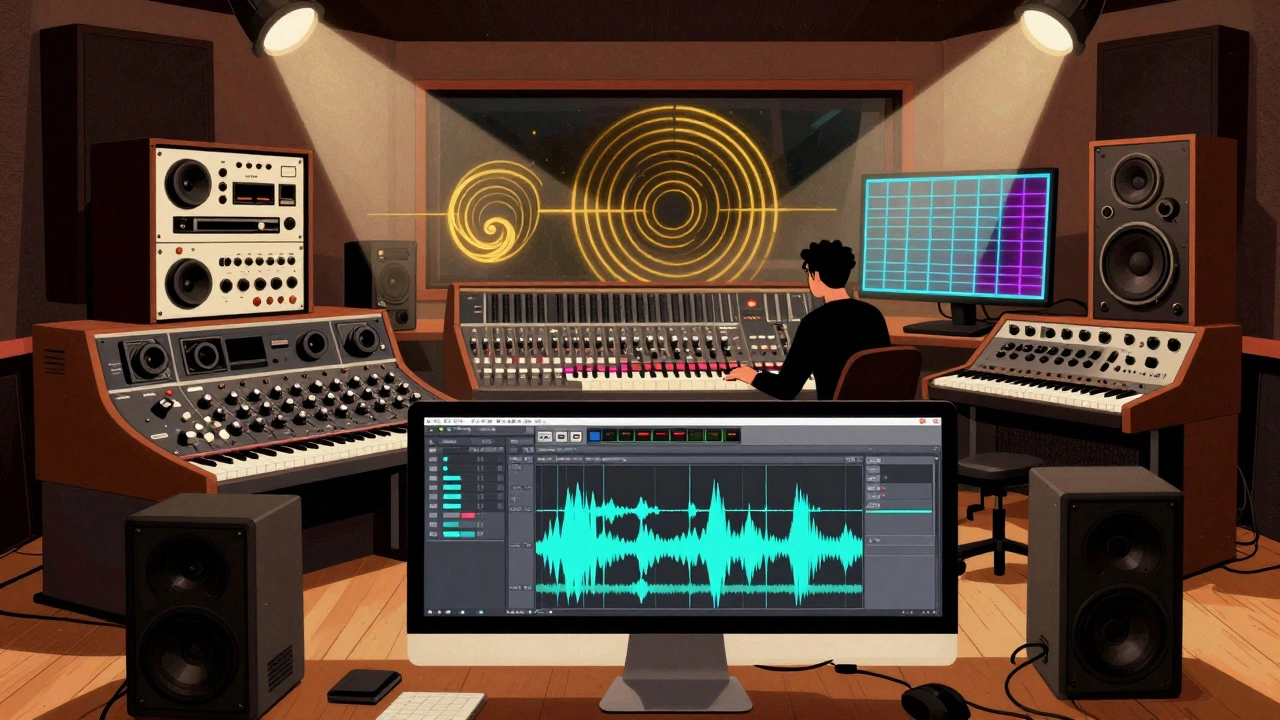
However, modern studios often use a hybrid approach. They might record through preamps and compressors with high-end outboard gear to capture that analog character, but rely on Digital Audio Workstations (DAWs) for editing and arrangement. This combination gives you the best of both worlds: the tonal richness of vintage hardware and the infinite flexibility of digital non-linear editing. You can move a snare hit by milliseconds, tune a vocal pitch, or automate effects with surgical precision, things that were nearly impossible or incredibly tedious in the tape era.
Reverb and delay are also compositional tools in fusion. Instead of trying to simulate the natural ambience of a room, producers often use synthetic reverbs to create abstract spaces. A trumpet solo might be drenched in a long, ethereal plate reverb that places it in a void, while the drums remain dry and punchy. This contrast creates depth and interest, guiding the listener’s ear through the complex textures of the music.
| Aspect | Traditional Jazz | Jazz Fusion |
|---|---|---|
| Primary Goal | Capture live performance authenticity | Create studio-based composition |
| Editing Approach | Minimal; select best complete take | Extensive; comping, splicing, looping |
| Instrumentation | Acoustic instruments primarily | Electric instruments, synths, electronics |
| Microphone Choice | Large-diaphragm condensers for warmth | Small-diaphragm condensers for precision |
| Spatial Design | Natural room ambience | Synthetic, processed environments |
| Producer Role | Engineer/Observer | Co-composer/Editor |
Modern Challenges and AI Integration
As technology evolves, so do the challenges. One significant issue is maintaining dynamic expression while achieving technical perfection. Jazz fusion demands high energy and complexity, but excessive compression or limiting can squash the life out of a performance. Engineers must balance the loudness wars with the need for musical breathing room. Additionally, room acoustics play a critical role. Too much absorption makes the space sound sterile and dead, killing the vibe. Too little treatment leads to muddy reflections that obscure the intricate details of the music. Finding the sweet spot requires careful acoustic design.
Another emerging trend is the use of AI in vocal production. Jazz vocals require exceptional pitch accuracy and emotional delivery. New AI voice transformation tools allow producers to enhance performances subtly, correcting pitch issues or adding harmonies without losing the singer’s unique character. This technology is controversial but increasingly common, offering a way to achieve professional results even when the initial take isn’t perfect. However, the key is restraint. The goal is to support the artist, not replace them.
Accessibility is also changing the landscape. With high-quality DAWs and affordable interfaces, semi-professional producers can now attempt fusion recordings from home. But there’s a catch. The nuance of great fusion production often lies in the sum of many small decisions: the choice of microphone, the placement of the amp, the character of the preamp. Home setups often lack the monitoring accuracy and acoustic treatment needed to make these decisions confidently. This is why premium studios with experienced engineers still hold significant value for serious artists.
Conclusion: The Studio as Instrument
Recording jazz fusion is not about documenting a event; it’s about creating a artifact. It requires a deep understanding of both music and technology. From the pioneering edits of Teo Macero to the hybrid analog-digital workflows of today, the core principle remains the same: the studio is a creative partner. By embracing studio consciousness, producers can craft sounds that defy physical reality, pushing the boundaries of what jazz can be. Whether you’re using a vintage CADAC console or a laptop plugin, the goal is to serve the music, using every tool available to bring the vision to life.
What is studio consciousness in jazz fusion?
Studio consciousness refers to the deliberate inclusion of recording artifacts and processes in the final mix, such as audible edits, effects, and artificial spaces. Unlike traditional jazz, which aims for transparency, jazz fusion uses these elements to highlight the constructed nature of the recording, making the studio itself a compositional tool.
Why did Teo Macero change how jazz was recorded?
Teo Macero moved away from capturing single live takes by using extensive tape editing, splicing, and looping. This allowed him to shape compositions post-performance, enabling Miles Davis and other musicians to experiment freely without worrying about structural perfection during the initial recording session.
What microphones are best for jazz fusion?
Small-diaphragm condenser microphones are often preferred for jazz fusion because they offer high precision and fast transient response. This is essential for capturing the detailed attack of electric guitars, synthesizers, and complex drum patterns, ensuring clarity in dense mixes.
Is analog gear necessary for jazz fusion?
While not strictly necessary, analog gear like CADAC consoles and vintage outboard processors provides harmonic saturation and warmth that many producers find difficult to replicate digitally. Hybrid approaches, combining analog tone with digital editing flexibility, are very common in modern fusion production.
How does jazz fusion recording differ from traditional jazz?
Traditional jazz recording focuses on capturing a live performance with minimal interference, aiming for realism. Jazz fusion recording treats the studio as an instrument, using extensive overdubbing, editing, and effects processing to create sounds and structures that could not exist in a live setting.