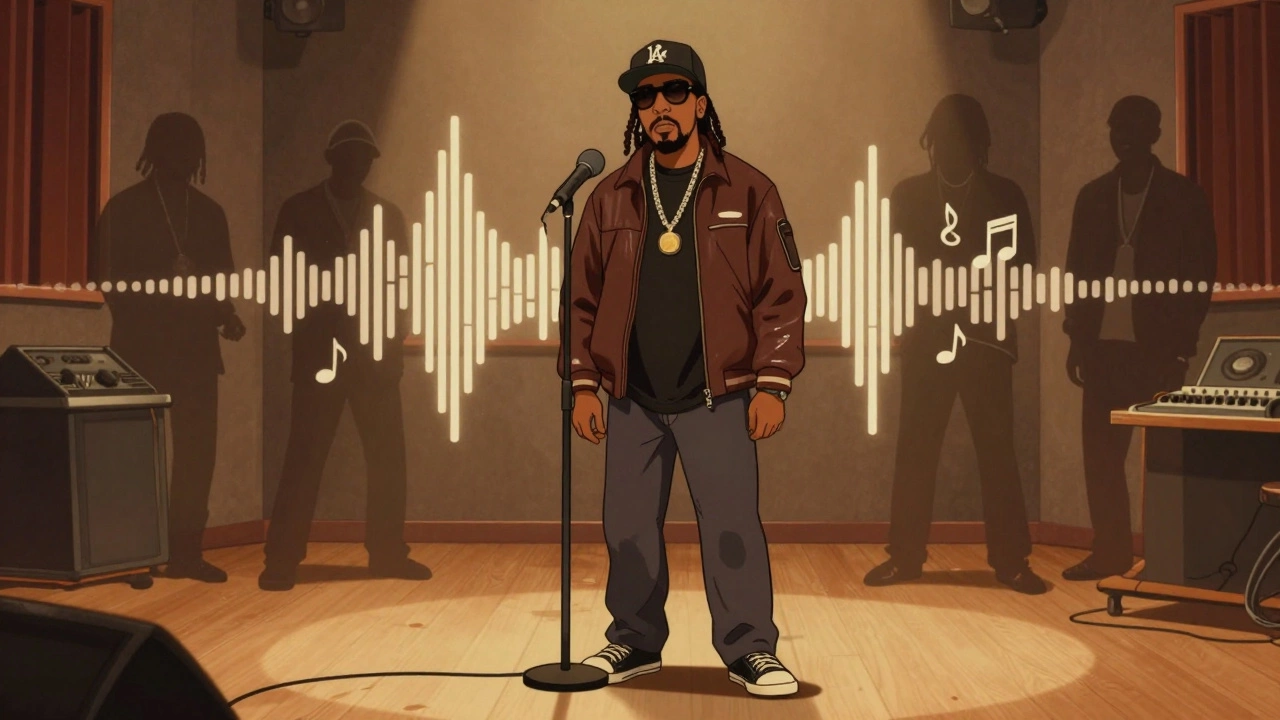

Rakim didn’t just rhyme-he reprogrammed how rap worked. Before he stepped into the booth in 1986, hip-hop lyrics were mostly about parties, punchlines, and simple call-and-response hooks. Rappers like Kurtis Blow and LL Cool J laid the groundwork, but they were still working with a basic structure: one rhyme per bar, straightforward delivery, and a focus on energy over complexity. Then Rakim came in-and everything changed.
The Birth of a New Flow
Rakim’s first official single, "Eric B is President," dropped in 1986. It wasn’t flashy. No sirens, no crowd chants, no goofy ad-libs. Just a slow, heavy beat from Eric B., and Rakim’s voice-calm, precise, like a monk reciting scripture. He didn’t shout. He didn’t dance. He spoke in measured, staccato bursts that landed like punches. Each word had weight. Each rhyme had a purpose.
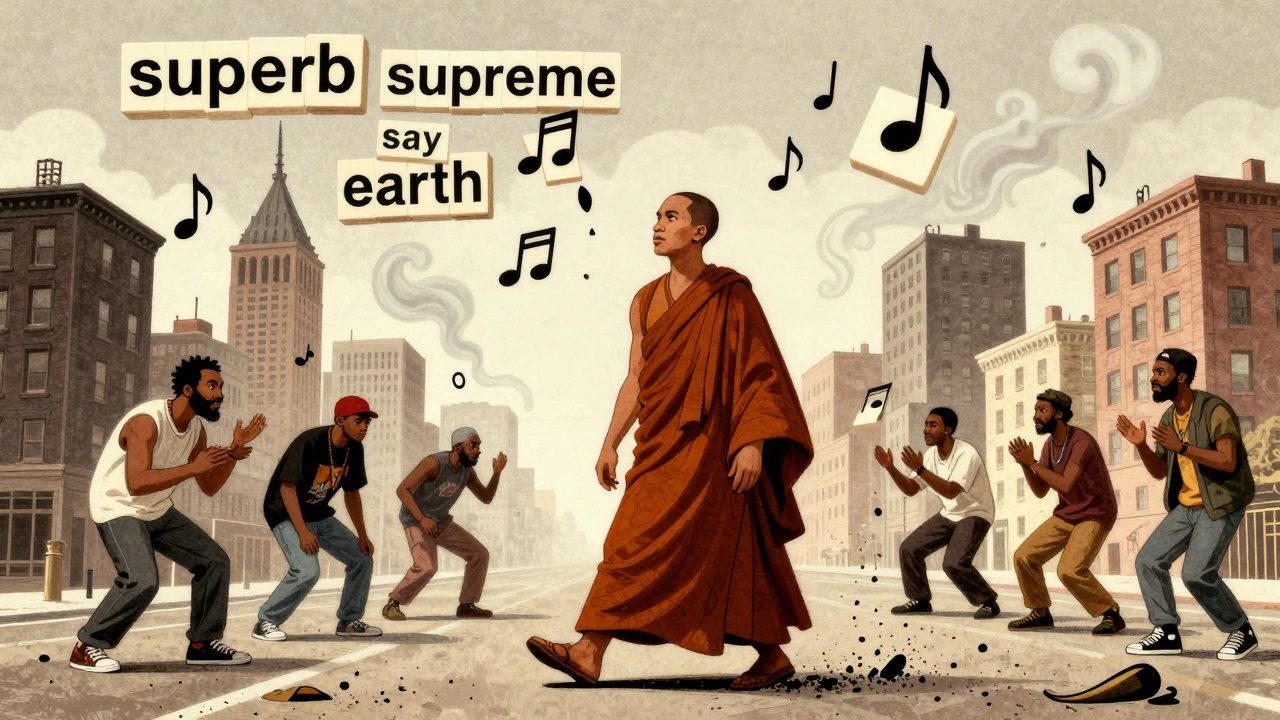
His delivery wasn’t just slow-it was calculated. He’d stretch a single phrase across two bars, letting the last syllable hang just long enough to make you lean in. He used internal rhymes like no one before him. Take this line from "I Ain’t No Joke": "Self-esteem makes me super/superb/supreme." Three words, one rhyme, stacked like bricks. It wasn’t just clever-it was architectural. He was building entire rhyme schemes inside single lines, not just at the end of them.
The Jazz of Rhymes
Rakim didn’t write rhymes like a poet. He wrote them like a jazz musician. He’d lay out sixteen dots on a piece of paper-each dot representing a bar. Then he’d fill each one with layered patterns: consonant echoes, vowel shifts, half-rhymes that only clicked when you heard them with the beat. He didn’t just rhyme words-he rhymed sounds.
In "Lyrics of Fury," he rhymes "say" with "earth," then "furth" with "way," and "small" with "ball" and "clay." It’s not random. It’s a chain reaction. Each rhyme triggers the next, creating momentum that pulls you through the verse. Music theorists later called this an ABBACCA scheme. But Rakim didn’t study theory-he felt it. He said he wrote to the beat like a saxophone solo: no notes wasted, no breaths wasted.
Production That Matched the Mind
Rakim didn’t do this alone. Eric B. gave him the perfect canvas. Where earlier producers used simple drum loops and scratchy samples, Eric B. layered James Brown breaks, jazz horns, and deep basslines that had room to breathe. The beats weren’t just background-they were conversation partners. Rakim’s voice danced around the snare, slipped under the hi-hat, and locked into the bass like a hand in a glove.
On "Follow the Leader," the title track, the beat pulses like a heartbeat. Rakim doesn’t overdeliver. He doesn’t rush. He lets the space between the notes do the work. That’s why his lyrics hit harder. He knew the beat was already doing half the job. His job was to make every word count.
Lyrics That Thought Deeper
Before Rakim, raps were about being cool. After Rakim, raps were about being sharp. He brought in metaphors that felt like movie scenes. "I ain’t the devil and this ain’t the exorcist"-not just a line, but a whole film. He compared his rhymes to a gladiator with a seven-prong trident, taking out twenty rappers at once. He didn’t brag-he painted.
He referenced film, religion, and philosophy without ever sounding pretentious. "Reaching for the city, a Mecca, visit Medina"-that’s not just a rhyme. It’s a spiritual map. He tied hip-hop to ancient oral traditions, the griot stories of West Africa, where the storyteller wasn’t just entertaining-he was preserving history. Rakim made rap feel like a sacred duty.
How He Changed the Game
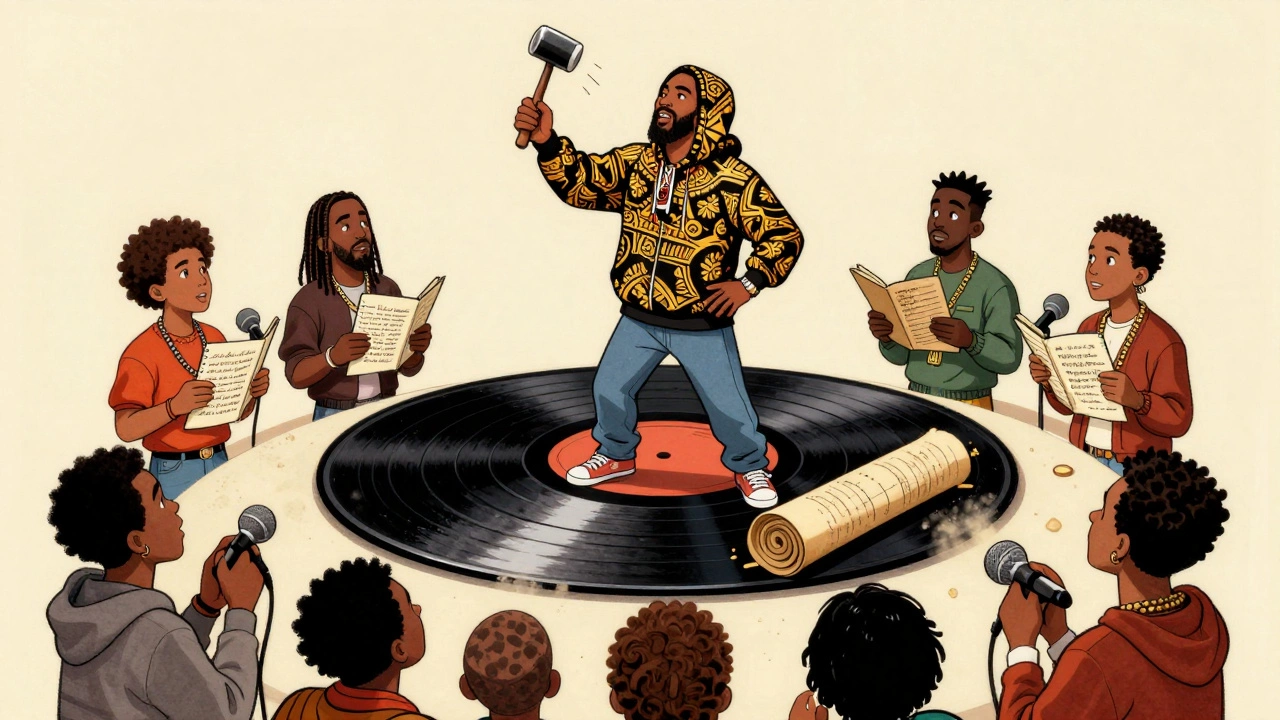
You can hear Rakim’s shadow everywhere in hip-hop after 1988. LL Cool J’s "Jack the Ripper" (1987) suddenly got darker, denser. Run-D.M.C.’s "Run’s House" (1988) dropped the party vibe and started rapping like they had something to prove. Even Big Daddy Kane, known for his speed, started weaving in internal rhymes after Rakim blew the doors open.
Rakim didn’t just influence rappers-he changed the rules. Before him, being an MC meant moving the crowd. After him, it meant moving minds. He said MC stood for "Move the Crowd," but he redefined what that meant. It wasn’t about hype. It was about precision. About control. About making people feel something deeper than a beat.
He rejected comedy. "I’m no comedian," he declared. "Jokers are wild if you wanna be tame." He treated rap like a craft, not a carnival. He demanded deep concentration. He made you listen with your brain, not just your feet.
The Lasting Blueprint
Today, when Kendrick Lamar layers metaphors like tiles in a mosaic, when J. Cole builds verses that unfold like novels, when Drake blends vulnerability with technical skill-he’s following a path Rakim carved in 1987. Rakim didn’t just invent a new style. He invented a new standard.
His influence isn’t just in the rhymes. It’s in the attitude. The belief that rap could be intellectual without being dry. That it could be spiritual without being preachy. That it could be quiet and still shake the world.
On "Follow the Leader," Rakim didn’t say "I’m the best." He didn’t need to. He showed it. With every syllable. With every silence. With every rhyme that landed like a hammer.
He didn’t just elevate hip-hop lyricism-he made it a language.
What made Rakim’s flow different from other rappers in the 1980s?
Before Rakim, most rappers used one rhyme per bar, often at the end, with a high-energy, party-focused delivery. Rakim introduced multi-syllabic internal rhymes, offbeat phrasing, and a calm, staccato cadence that matched complex beats. He didn’t rush-he controlled the space between the notes, making each word feel intentional and heavy. His rhymes weren’t just at the end of lines-they were woven into the middle, creating a layered, almost musical texture that no one else had done at that scale.
How did Eric B.’s production help Rakim’s style?
Eric B.’s beats were slower, deeper, and more layered than the minimal drum loops common in early hip-hop. He used samples from James Brown, jazz records, and soul tracks to create rich, breathing instrumentals. This gave Rakim room to stretch his phrases and let rhymes echo. The production didn’t compete with his voice-it supported it. The beat became a partner, not just background. That synergy made Rakim’s complex lyrics land with more power than they could have over a simple boom-bap.
Did Rakim influence other rappers directly?
Yes. Within two years of their debut, even established stars like LL Cool J and Run-D.M.C. changed their approach. LL’s "Jack the Ripper" (1987) went from playful to menacing, with tighter, more intricate rhymes. Run-D.M.C.’s "Run’s House" (1988) dropped its party energy for a more serious, layered delivery. Rakim raised the bar so high that to stay relevant, rappers had to evolve. He didn’t just inspire-he forced a generational shift.
What’s the connection between Rakim and African griot traditions?
Rakim saw himself not just as a rapper, but as a modern griot-a West African oral historian and storyteller. His lyrics carried cultural memory, spiritual imagery, and philosophical depth. Lines like "Reaching for the city, a Mecca, visit Medina" tied urban life to ancient traditions. He didn’t just entertain; he preserved identity through rhythm and metaphor. His work echoed the griot’s role: to speak truth, carry history, and challenge listeners to think deeper.
Why is "Follow the Leader" considered his most important album?
"Follow the Leader" (1988) was the moment Rakim’s style fully matured. Every track was a masterclass in rhyme construction, flow control, and lyrical depth. He didn’t just show off-he refined his craft. The album proved that rap could be both cerebral and powerful. It wasn’t just popular-it became a textbook. Rappers after this album had to match his level, or get left behind. The title itself was a statement: if you wanted to be taken seriously, you had to follow his lead.


