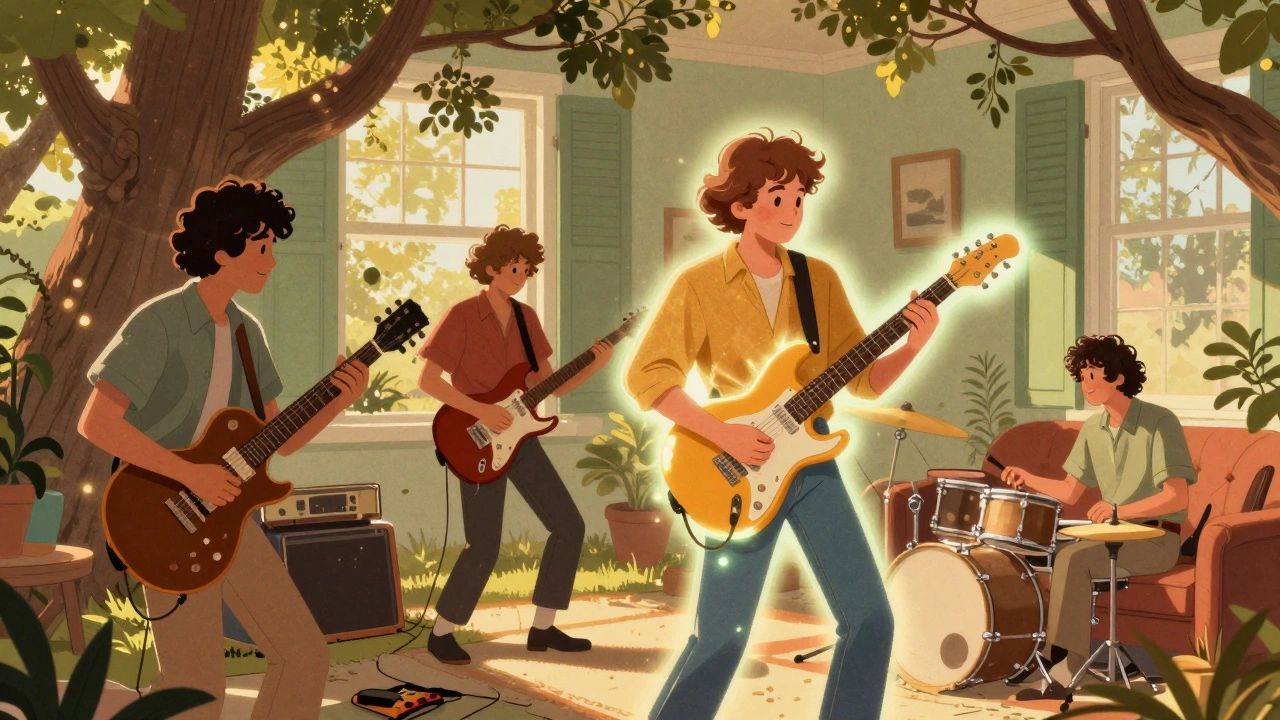

Ever wonder how a group of four college kids from Athens, Georgia, managed to change the course of rock music without following the standard industry playbook? Before the grunge explosion of the 90s, there was a sound that felt like sunlight filtering through trees-bright, melodic, and slightly mysterious. That sound was jangle pop, and no one did it better than R.E.M. is an American rock band formed in 1980 that bridged the gap between underground post-punk and mainstream alternative rock.
They didn't start with a flashy record deal or a huge marketing budget. Instead, they grew through a grassroots network of college radio stations and endless touring. By the time they hit the mainstream, they hadn't just found success; they had built the blueprint for every "alternative" band that followed.
The Athens Alchemy: How the Sound Was Born
In 1980, four University of Georgia students-Bill Berry, Peter Buck, Mike Mills, and Michael Stipe-came together to play parties. They weren't trying to revolutionize music; they were just becoming competent musicians. But as they tightened their chemistry, they created something that felt entirely different from the aggressive punk scene of the time. While punk was all about anger and raw power, R.E.M. leaned into a "smart, elegant jangle" that traded bile for a sense of inscrutable mystery.
The magic lay in how the members' individual styles locked together. Peter Buck is the guitarist whose arpeggiated playing style defined the jangle pop sound. His guitar didn't just play chords; it shimmered. Meanwhile, Michael Stipe brought a vocal style that was often cryptic, making the lyrics feel like a puzzle the listener had to solve. This was balanced by Mike Mills, who provided countermelodic bass lines and soaring backing vocals, and Bill Berry, whose drumming was tight and economical, keeping the songs grounded without overplaying.
The Engine of College Radio
Long before Spotify algorithms or MTV rotations, there was the college radio is a network of non-commercial radio stations run by students that championed underground and independent music network. This was the lifeblood of the 1980s underground. R.E.M. leaned heavily into this circuit, releasing their first single, "Radio Free Europe," in 1981 on Hib-Tone Records.
The track became an anthem for a generation of listeners who were tired of the polished pop of the era and looking for something more authentic. Because college radio DJs were more willing to take risks than corporate stations, R.E.M. was able to build a loyal fanbase one campus at a time. They spent years touring in vans, playing small clubs, and treating the underground as their primary laboratory for sonic experimentation.
| Member | Core Attribute | Impact on Sound |
|---|---|---|
| Peter Buck | Arpeggiated Guitar | Created the shimmering, "jangle" texture |
| Michael Stipe | Cryptic Vocals | Added mystery and emotional depth |
| Mike Mills | Counter-melodic Bass | Provided harmonic complexity and depth |
| Bill Berry | Economical Drumming | Maintained a steady, unobtrusive rhythmic base |

The Leap to Mainstream Alternative
The jump from underground darling to household name didn't happen overnight. It was a slow burn. By 1987, after seven years of relentless touring and organic growth, the band hit a tipping point with the single "The One I Love." This track proved that their sound could be polished enough for the radio without losing the spirit of the Georgia underground.
This success led to a pivotal partnership with Scott Litt is the producer who helped R.E.M. refine their sound for mainstream accessibility in the late 80s and 90s. Litt understood how to capture the band's live energy while cleaning up the production values. This collaboration coincided with their move to Warner Bros., a major label that provided the distribution power needed to take them global.
This transition was more than just a business move; it was a cultural shift. R.E.M. effectively bridged the gap between the jaggedness of post-punk is a genre of rock music that followed punk rock, typically characterized by more experimental structures and the wide-open appeal of the upcoming alternative rock is a style of rock music that emerged from the independent underground to challenge mainstream pop movement. They proved that a band could remain an "alternative" entity while selling millions of records.

Why Their 80s Era Still Matters
If you look at the DNA of modern indie rock, you'll find R.E.M.'s fingerprints everywhere. They weren't just playing songs; they were establishing a new way to be a rock star. They rejected the leather-and-studs cliché of the early 80s in favor of a more cerebral, folk-influenced approach. By mixing the energy of rock with the songwriting sensibilities of folk and the experimentation of new wave, they created a timeless sound.
Their trajectory shows us that building a foundation-through touring and niche community support-is often more sustainable than chasing a quick hit. They didn't just enter the mainstream; they dragged the mainstream toward them, forcing the industry to acknowledge that there was a massive audience for music that was a bit more mysterious and a lot less manufactured.
What exactly is "Jangle Pop"?
Jangle pop is a subgenre of indie and alternative rock characterized by clean, bright, and ringing guitar sounds. It usually relies on arpeggiated chords (playing notes of a chord individually) and often draws influence from 1960s folk-rock, like The Byrds. In R.E.M.'s case, this sound was used to create a melodic but mysterious atmosphere.
How did college radio help R.E.M. succeed?
During the 1980s, college radio stations were independent of commercial interests. This allowed them to play music that didn't fit the narrow pop mold. R.E.M. used this network to build a dedicated grassroots following, which eventually created enough demand for major labels to take notice.
Who was the most influential member of the band's sound?
It was a collective effort, but Peter Buck's guitar style and Michael Stipe's vocal delivery were the most distinct. Buck provided the "jangle" that defined the genre, while Stipe's cryptic lyrics and unique stage presence gave the band an intellectual and mysterious edge.
When did R.E.M. officially transition to the mainstream?
The turning point was 1987 with the release of "The One I Love." This single achieved significant commercial success and paved the way for their partnership with producer Scott Litt and their signing to Warner Bros.
Is R.E.M. considered the start of alternative rock?
Many music critics believe so. They are often cited as the bridge that turned post-punk into what we now call alternative rock, proving that underground, independent-sounding music could be commercially viable on a global scale.
Next Steps for Music Explorers
If you're new to this sound, start with their early 80s singles like "Radio Free Europe" to hear the raw college rock energy. Once you've got that down, move toward their late 80s work to hear how Scott Litt polished that sound for the masses. For those interested in the broader movement, exploring other "Athens, Georgia" bands from that era will give you a better sense of the community that fostered this revolution.