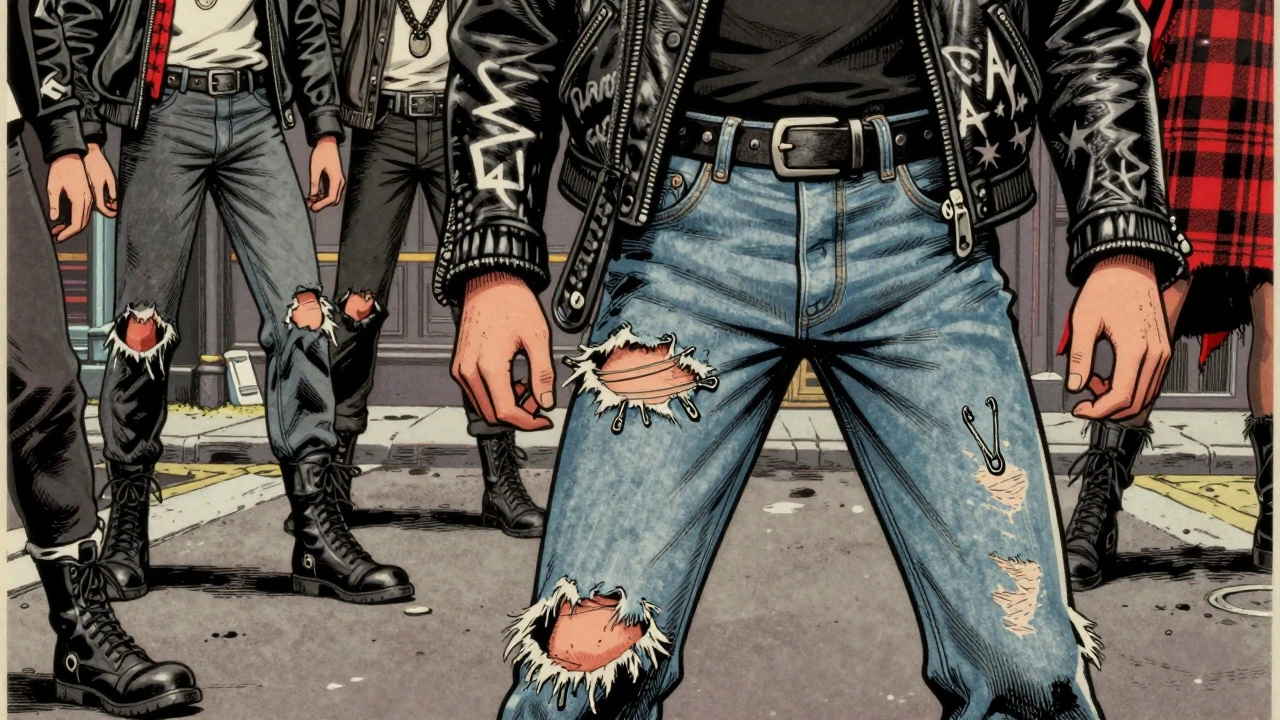

Imagine walking down a London street in 1976. You see torn jeans held together by safety pins, leather jackets covered in aggressive slogans, and hair spiked into defiant mohawks. Now fast forward just five years. The same streets are filled with people wearing neon blazers, frilled shirts, and dramatic makeup. It looks like a completely different world, doesn't it? Yet, these two styles share the same DNA. The shift from punk fashion to new wave wasn’t a sudden break; it was an evolution of rebellion.
This transformation tells the story of how underground subcultures moved from raw, anti-establishment anger to polished, media-friendly aesthetics. It’s a journey that changed not only how musicians dressed but also how mainstream fashion viewed gender, color, and self-expression. Let’s look at how this wardrobe shift happened, who drove it, and why it still matters today.
The Architects of Chaos: Punk’s Origins
To understand where new wave came from, we first need to look at its parent. Punk fashion didn’t emerge fully formed; it was crafted by specific people in specific places. In mid-1970s Britain, Vivienne Westwood is a designer who redefined punk aesthetics through her King's Road boutique. She worked alongside manager Malcolm McLaren at their shop on King’s Road in Chelsea. This shop changed names several times-starting as Let It Rock in 1971, then becoming Sex in 1974, and finally Seditionaries in 1976.
At Seditionaries, Westwood and McLaren took elements of sexual fetish wear-straps, zips, latex, and bondage harnesses-and turned them into everyday clothing. They created bondage trousers and aggressively printed T-shirts. These designs directly shaped the stage image of bands like the Sex Pistols between 1975 and 1978. The goal was confrontation. Every stitch was meant to offend conventional sensibilities.
In the United States, the scene looked slightly different. Bands like the Ramones, formed in Queens in 1974, adopted a simpler uniform: black leather jackets, faded T-shirts, and ripped blue jeans. While less theatrical than the British version, this American punk look established a parallel wardrobe based on accessibility and toughness rather than elaborate construction.
From Destruction to Bricolage: The DIY Ethos
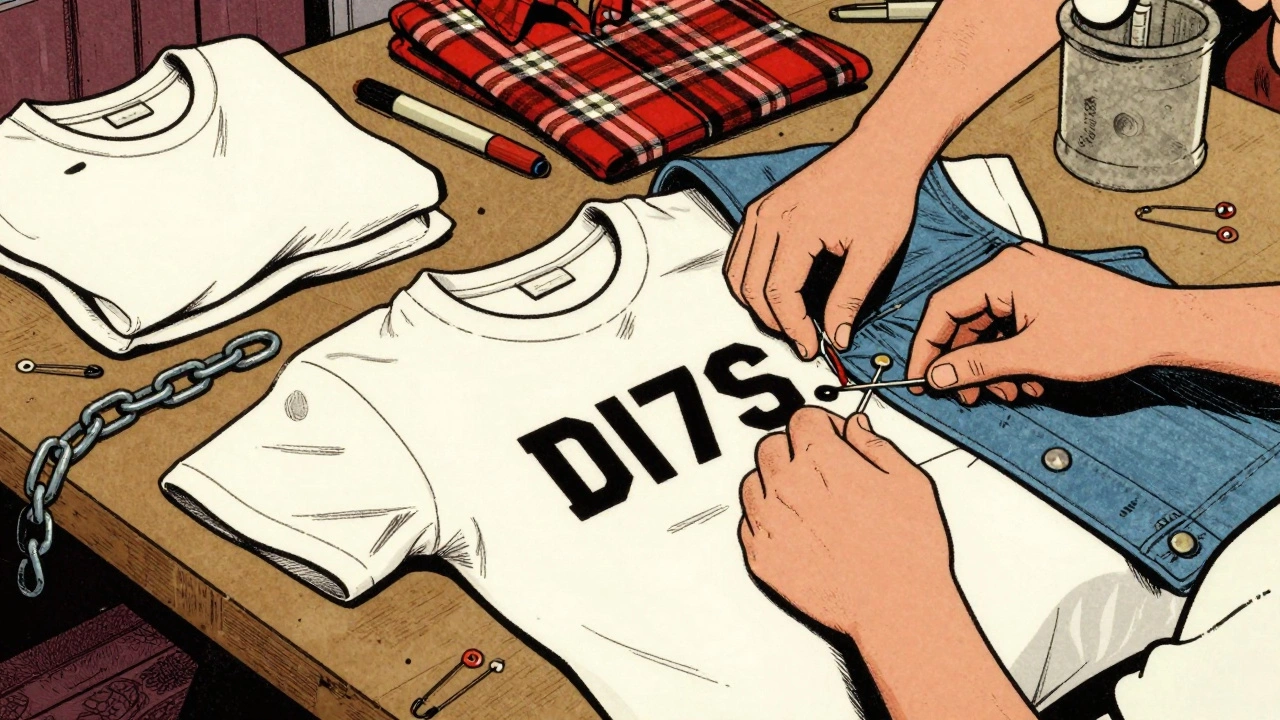
Punk wardrobes were defined by what fashion historians call "bricolage." This term describes assembling something from whatever materials are available. For teenagers in the mid-1970s with limited budgets, this meant raiding thrift stores. They bought cheap clothes and destroyed or modified them using safety pins, marker pens, and household chains.
The technical process was simple but effective:
- T-shirt customization: Taking plain white tees or plaid flannels and writing political slogans or band names with markers or homemade silkscreen prints.
- Jacket modification: Adding studs with screw-backs or hammering them into leather jackets and denim vests.
- Improvised accessories: Using metal chains as belts or shoulder straps, and turning bullet belts into statement pieces.
This approach meant anyone could create a recognizably punk outfit over a weekend. The learning curve was short because perfection was the enemy. Inside-out seams, ripped hems, and visible safety pins were features, not bugs. This anti-professional aesthetic encouraged imperfection and made the style highly accessible.
The Shift Begins: Enter New Wave
By 1978, the mood began to change. Music started incorporating synthesizers and art-school influences. Visually, the harsh edges of punk softened. This gave rise to new wave fashion, which translated subcultural sensibilities into wardrobes that were more colorful, polished, and commercially adaptable.
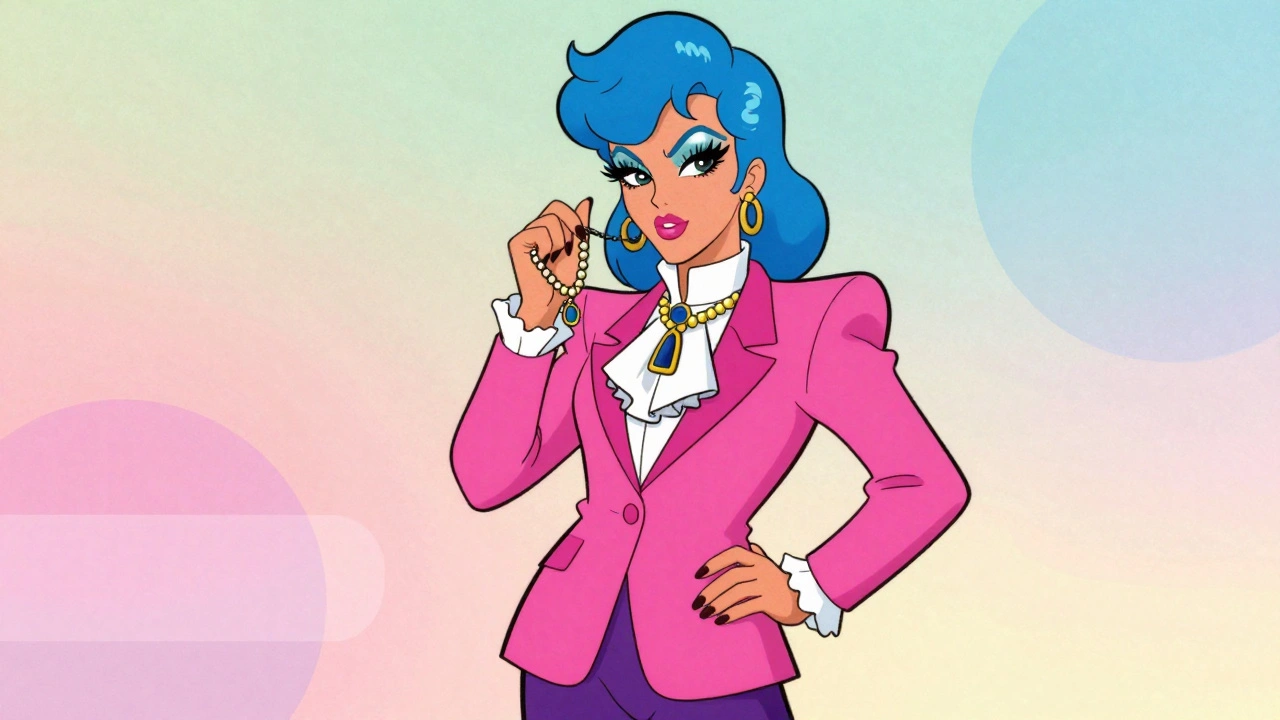
New wave didn’t reject punk entirely; it refined it. Instead of raw aggression, the focus shifted to theatricality and androgyny. Men and women alike began wearing frilled shirts, colored hair, vintage jewelry, and futuristic makeup. This look was heavily influenced by the emerging New Romantic movement, which embraced historical references and romantic silhouettes while keeping a transgressive attitude.
Key changes in the wardrobe included:
- Color palette: Moving from black, dark reds, and tartan to bright pinks, electric blues, and neon greens.
- Fabrics: Shifting from worn denim and leather to satin, taffeta, and synthetic blends that took color and shine well.
- Silhouettes: Trading narrow cuts for boxy, padded-shoulder blazers and volume-generating skirts.
Designers like Vivienne Westwood played a crucial role here too. By the early 1980s, she was producing historically referenced, romantic pieces that carried punk motifs but were shown on catwalks rather than just in underground clubs. This helped bridge the gap between street-level anti-fashion and high fashion.
Comparing the Aesthetics: Punk vs. New Wave
| Feature | Punk (Late 1970s) | New Wave (Early 1980s) |
|---|---|---|
| Core Materials | Denim, leather, wool, recycled fabrics | Synthetic blends, satin, taffeta, spandex |
| Color Scheme | Black, dark red, tartan patterns | Neon, pastels, high-contrast hues |
| Key Items | Ripped jeans, bondage trousers, combat boots | Frilled shirts, power blazers, biker shorts |
| Hair & Makeup | Mohawks, shaved heads, minimal makeup | Colored hair, teased styles, metallic makeup |
| Gender Expression | Androgyny through aggression and utility | Androgyny through flamboyance and decoration |
| Production Method | DIY destruction and customization | Styling commercial items with vintage finds |
Symbolically, the difference is stark. Punk communicated anger through explicit imagery-swastikas used as insults, sexually explicit graphics, and anti-monarchy slogans. New wave encoded rebellion in more ambiguous forms. Through androgynous styling and eclectic mixing of historical references, the message became accessible to broader audiences. It was acceptable for MTV and fashion magazines, whereas punk was often banned or censored.
Practical Aspects of Building the Looks
If you want to recreate these styles today, understanding the practical differences helps. Punk wardrobes relied on low-cost materials and accessible modification techniques. You didn’t need formal training. You needed creativity and a willingness to ruin clothes.
New wave wardrobes required a somewhat higher level of access to commercial fashion. Many key pieces-frilled shirts, tailored blazers with exaggerated shoulders, metallic makeup-were produced by fashion brands responding to 1980s trends. However, new wave dress still incorporated DIY elements. Colored hair could be achieved through home dye kits. Vintage jewelry and secondhand lace shirts were sourced from thrift shops.
Building a new wave look involved combining at least one statement top (like a frilled shirt), visually striking accessories (layered chains or vintage brooches), and bold makeup or hair color. The skill requirement shifted from manual customization to styling ability-coordinating colors, silhouettes, and references. This paralleled the increasing role of professional stylists and magazine editors in shaping the era’s visual culture.
Cultural Impact and Legacy
The punk-to-new wave shift marks a move from almost purely DIY anti-fashion to a hybrid economy where subcultural styling interacted with commercial fashion houses. By the early-to-mid 1980s, adoption patterns showed punk persisting most strongly in hardcore music scenes (exemplified by bands like Black Flag and Minor Threat), while new wave circulated through mainstream pop acts and television exposure.
This evolution helped normalize visually experimental clothing in commercial settings. Staples now recognized as iconic-biker shorts, bold-shoulder blazers, and taffeta eveningwear-intersect with new wave’s fascination with futurism and performance. The movement proved that rebellion could be stylish, profitable, and widely accepted without losing its edge.
Today, both styles undergo cyclical revivals. Designers reintroduce 1980s-style biker shorts, tartan skirts, and slogan T-shirts into contemporary collections. Ongoing interest in gender-fluid and androgynous dress draws heavily from the new wave emphasis on frilled shirts, colored hair, and jewelry for all genders. The legacy of this wardrobe shift continues to influence how we view fashion as a tool for identity and expression.
Who is credited with creating punk fashion?
Vivienne Westwood and Malcolm McLaren are primarily credited with architecting punk fashion through their boutique on King’s Road in London, which evolved from Let It Rock to Sex and finally Seditionaries between 1971 and 1976.
What is the main difference between punk and new wave clothing?
Punk clothing emphasized destruction, DIY customization, dark colors, and aggressive anti-establishment messages. New wave clothing focused on polish, bright synthetic colors, tailored silhouettes, and theatrical androgyny, making it more commercially viable and media-friendly.
How did punk fashion influence mainstream fashion in the 1980s?
Punk introduced concepts like deconstruction, gender fluidity, and the use of unconventional materials. As it evolved into new wave, these ideas were refined and adopted by high fashion designers, leading to trends like shoulder pads, bold patterns, and the acceptance of experimental styling in mainstream retail.
Why did punk fashion become more polished in the early 1980s?
The shift was driven by the rise of synthesizer-based music, the influence of art-school aesthetics, and the desire for styles that could be broadcast on emerging media platforms like MTV. Designers like Vivienne Westwood also began presenting punk-inspired looks on runways, bridging the gap between subculture and commerce.
What role did DIY play in both punk and new wave wardrobes?
In punk, DIY was central, involving the physical destruction and modification of thrift-store clothes using safety pins and markers. In new wave, DIY persisted but shifted toward styling-combining commercial items with vintage finds, home-dyeing hair, and layering accessories to create a curated, theatrical look.