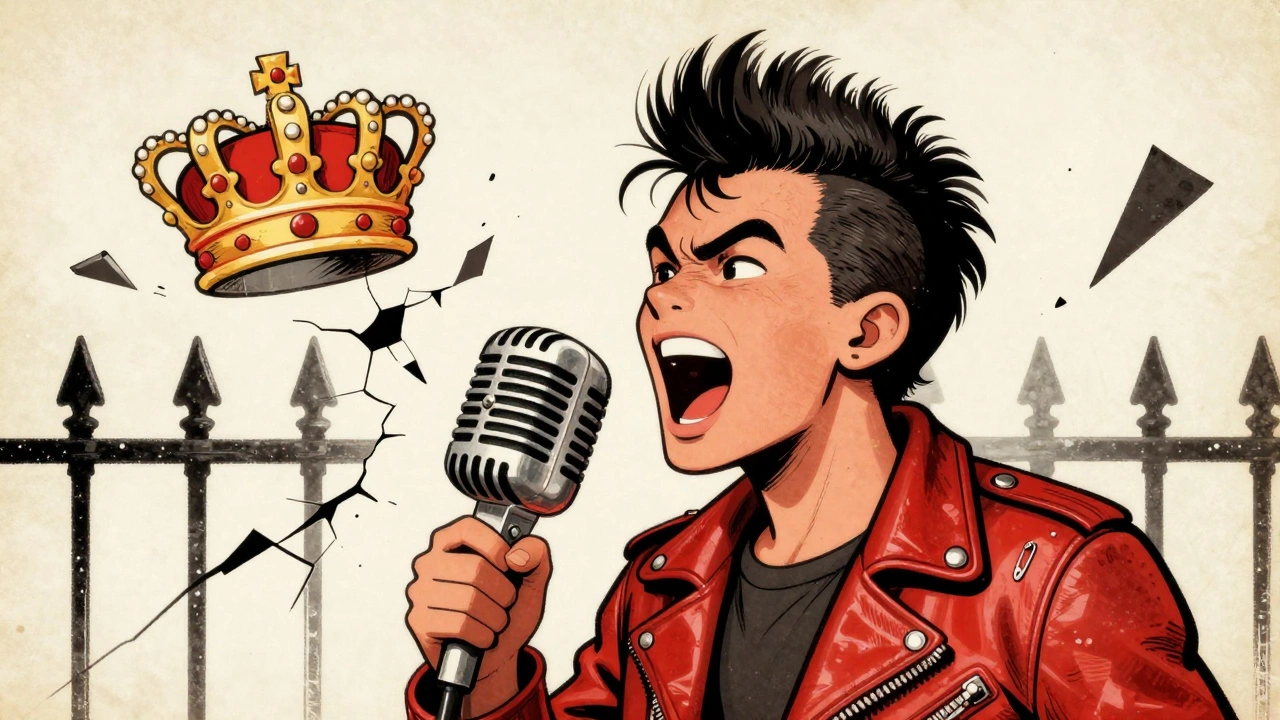

Most people remember punk for the safety pins, the mohawks, and the loud, distorted guitars. But if you strip away the fashion, the real engine of the movement was the words. Punk didn't just change how music sounded; it changed what musicians were allowed to say. It took the polished, poetic approach of 1960s rock and threw it out the window, replacing it with raw, confrontational, and often ugly truths. This wasn't just about being loud-it was about a visceral need to scream against a world that felt like it was closing in on a generation of disillusioned youth.
The Core of Anti-Authority Sentiment
At its heart, punk rock lyrics is a vehicle for anti-authority sentiment and personal expression that challenges societal norms and institutional power structures. In the 1970s, this manifested as a direct attack on the status quo. While previous generations of rebels might have used metaphor, punk used a sledgehammer. The lyrics were designed to provoke, offend, and disrupt. They targeted the people with the most immediate power over young lives: parents, teachers, and the police.
Take The Sex Pistols, for example. Their 1977 track "God Save the Queen" didn't just criticize the government; it attacked the very symbol of British identity during Queen Elizabeth II's Silver Jubilee. By singing "she ain't no human being," they weren't just being edgy; they were dismantling the reverence given to traditional institutions. This irreverence turned the song into a sonic riot, proving that lyrics could function as a form of direct political activism.
From Social Protest to Personal Truth
It is easy to label punk as just "protest music," but that is a bit of an oversimplification. While politics were huge, there was an equally strong drive toward authenticity. Many punks felt that the world around them was phony and oppressive. For them, personal expression was a way to escape the mundanity and malaise of a boring, structured life. It was a cry for honesty in an era of superficiality.
This quest for authenticity led to a diverse range of lyrical themes. Some bands focused on the crushing feeling of having "no future," a sentiment that reflected a broader societal crisis rather than a specific political party. Others used their platform to advocate for specific causes. Bands like Resist and Exist pushed for feminism, animal rights, and environmentalism. In these cases, the lyrics weren't just complaining about the system; they were proposing a different way to live, rooted in self-determination and direct action.
The Evolution of Hardcore Punk
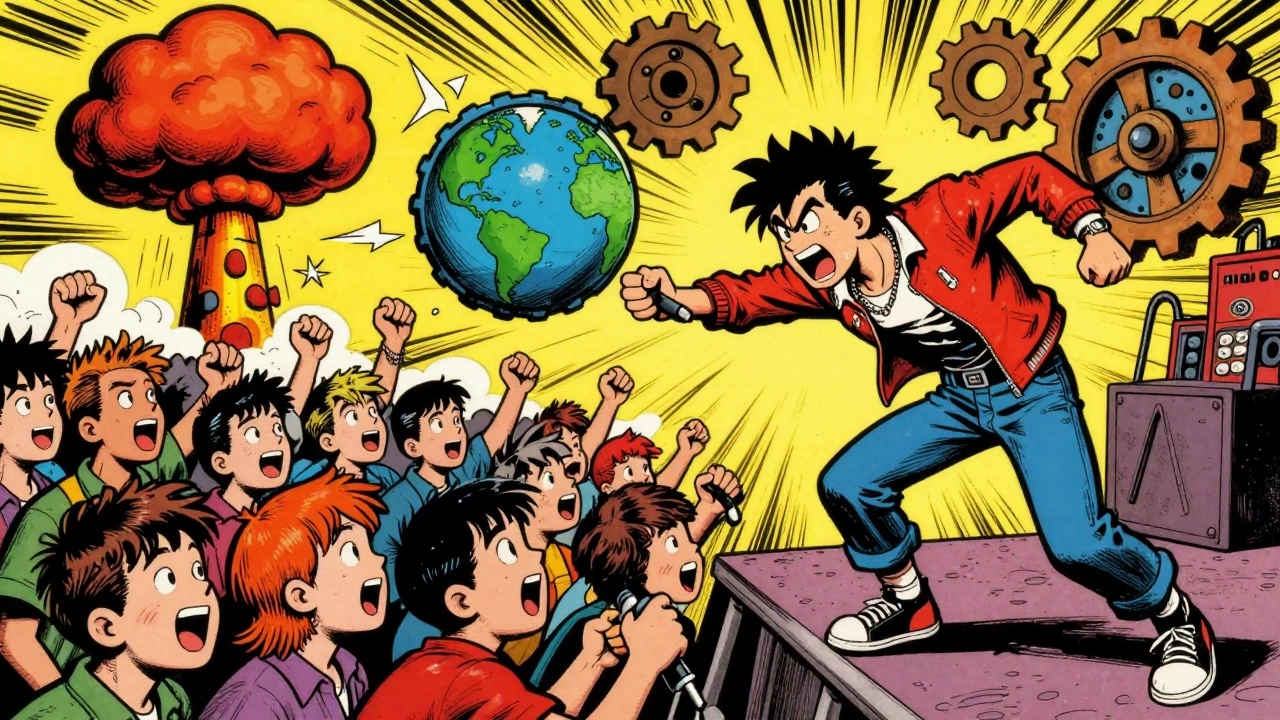
As the movement traveled across the Atlantic and moved into the 1980s, it evolved into hardcore punk. This version of the genre was faster, louder, and significantly more political. In the US, the scene became a space for generational self-determination. As Shawn Stern from Youth Brigade put it in 1982, this was music by kids, for kids, reflecting the actual frustrations of youth.
The political scope also widened. Instead of just shouting at the local cop, bands started tackling global issues. The band Discharge from the UK used their 1980 single "Decontrol" to blast capitalism and the threat of nuclear warfare. Their aggressive, stripped-down approach to lyricism was so potent that it later influenced heavyweights like Metallica. This era proved that punk could handle sophisticated political messaging without losing its raw edge.
| Feature | 1970s Proto-Punk/Punk | 1980s Hardcore Punk |
|---|---|---|
| Primary Target | Monarchy, Class Systems, Social Norms | Govt Policy, Nuclear War, Police Brutality |
| Lyrical Tone | Irreverent, Sarcastic, Provocative | Urgent, Aggressive, Direct |
| Core Philosophy | Nihilism and Shock Value | Social Critique and Political Action |
| Example Act | The Sex Pistols | Youth Brigade / Discharge |
The Contradictions of the Punk Identity
Punk was never a monolith. If you think there was one "correct" way to be a punk, you'd be wrong. The political orientation of the scene was often messy and contradictory. You had some artists embracing anarchist ideology, rejecting all forms of authority. On the other hand, some punks claimed the subculture was entirely apolitical, viewing it as a lifestyle or a fashion choice rather than a manifesto.
This tension occasionally led to internal conflict. The Dead Kennedys dealt with this head-on in their song "Nazi Punks Fuck Off." They weren't just fighting the government; they were fighting far-right elements within their own community. By condemning racist, sexist, and homophobic beliefs, they established a moral boundary: you can be against the law, but you can't be a bigot. Even those who claimed to be apolitical, like GG Allin or Charged GBH, still let socio-political frustrations leak into their lyrics, showing that it's almost impossible to be a punk and stay completely neutral.
The Lasting Impact on Modern Songwriting
Why does this still matter in 2026? Because punk broke the seal on what is acceptable in popular music. Before punk, lyrics were often designed to be pleasant or vaguely relatable. Punk introduced the idea that a song could be a mirror held up to a decaying society. It taught artists that being "uncomfortable" is a valid creative choice. Every time a modern artist writes a song about systemic injustice or raw, unfiltered mental health struggles, they are using a blueprint created by the punks of the 70s and 80s.
The movement's "do-it-yourself" (DIY) ethos extended from the garage recording to the lyrics themselves. It empowered people who weren't "poets" to tell their stories. You didn't need a degree in literature to express anger at a corrupt system; you just needed a microphone and something to say. This democratization of expression is perhaps the most enduring legacy of the genre.
What is the "no future" concept in punk lyrics?
The "no future" sentiment is a lyrical theme reflecting a deep sense of societal crisis and disillusionment. Rather than being a specific political platform, it describes the feeling that the existing social and economic systems were failing young people so completely that they had no viable path forward in life.
Was all punk music political?
No. While many bands like The Clash were explicitly political, others viewed punk as an apolitical subculture focused on personal rebellion, style, and noise. Some artists rejected political labels entirely, focusing instead on shock value or raw emotional expression.
How did hardcore punk differ from early punk lyrics?
Early punk (1970s) often relied on irony, sarcasm, and shocking imagery to attack traditional institutions like the monarchy. Hardcore punk (1980s) became more direct and urgent, focusing on specific social critiques such as nuclear war, corporate greed, and police brutality.
Which bands were key in pushing feminist or environmental themes?
Bands such as Resist and Exist were notable for incorporating themes of feminism, self-determination, and environmentalism into their lyrical content, expanding the scope of punk beyond simple anti-authority shouting.
Did punk lyrics influence other genres?
Absolutely. The raw, direct approach of punk lyrics influenced everything from heavy metal (with bands like Metallica citing Discharge as an influence) to the aggressive storytelling found in early hip-hop and grunge music.


