
Back in the 1980s, rock music didn’t just sound loud-it sounded perfect. Every snare hit cracked like a gunshot. Every guitar solo cut through like a laser. Every vocal soared like it was recorded in a cathedral built just for that one note. That wasn’t luck. It was the work of a handful of producers who didn’t just oversee sessions-they rebuilt the sound of rock itself.
At the center of it all was Mutt Lange a South African-born producer and songwriter known for his obsessive, perfectionist approach to recording rock music. He didn’t just produce albums-he engineered sonic revolutions. His work with AC/DC on Back in Black (1980) turned a grieving band into global icons. The album sold over 50 million copies, making it the best-selling rock album of all time. Lange didn’t use fancy gear. He used logic. He had Bon Scott’s vocals layered beneath Brian Johnson’s to create a ghostly echo. He recorded Angus Young’s guitar through a single amp, then doubled it with a different mic at a different distance. The result? A sound so massive, it felt like the whole stadium was in your living room.
Then came Def Leppard a British band whose 1983 album Pyromania redefined stadium rock with pristine, layered production. Lange took their raw energy and turned it into something almost robotic in its precision. He recorded 50 guitar tracks on Pyromania. Not 10. Not 20. Fifty. He layered them in stacks, panning each one slightly left or right, so when the chorus hit, it didn’t just swell-it exploded. He made Phil Collen’s rhythm parts sound like a choir of guitars. He turned Rick Allen’s one-handed drumming into a thunderous machine. Critics called it overproduced. Fans called it perfect. And the album sold 10 million copies worldwide.
Meanwhile, across the Atlantic, Bob Clearmountain an American engineer and producer who became the go-to mixer for arena rock and pop acts in the 1980s was doing something quieter but just as revolutionary. He didn’t build walls of sound-he built space. Clearmountain worked with Bruce Springsteen on Born in the U.S.A. (1984), and he made sure every instrument had its own room. The drums didn’t just thump-they breathed. The synths didn’t just buzz-they shimmered. He used early digital delays and gated reverb techniques to make drums sound huge without sounding muddy. His mix on Born in the U.S.A. had a clarity that made even the quietest guitar arpeggios feel like they were inches from your ear.
Clearmountain also mixed Highway to Hell for AC/DC after Lange, and he did something radical: he left the raw energy intact. While Lange polished the sound into diamond, Clearmountain made sure it still looked like it had been dragged through a bar. He didn’t remove the hiss. He didn’t silence the crowd noise. He let the grit stay. That’s why Highway to Hell still feels alive decades later.
Then there was Roy Thomas Baker the producer behind Queen’s A Night at the Opera and later, Journey’s Frontiers (1983). He didn’t just record instruments-he recorded emotion. On Frontiers, he made Steve Perry’s voice sound like it was singing from the top of a mountain. He used multiple vocal takes, panned them slightly, and added just a touch of analog tape saturation. The result? A voice that didn’t just hit notes-it carried weight. The album went platinum in 11 countries.
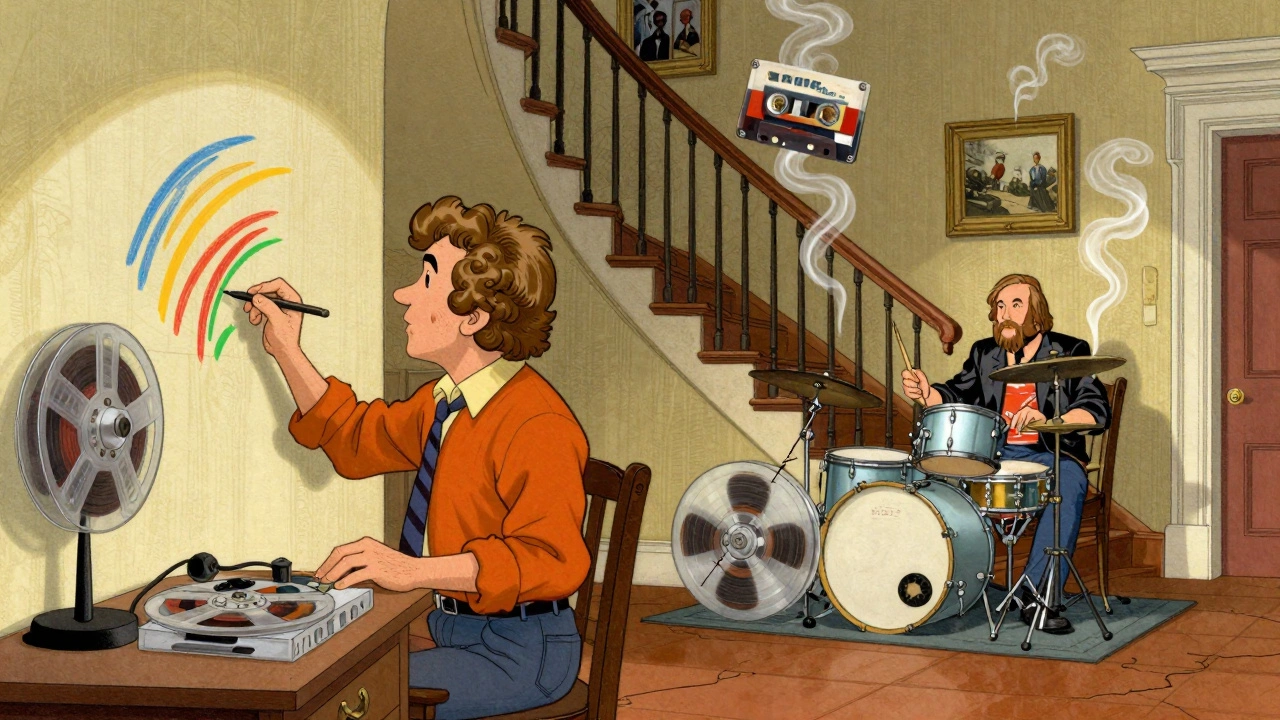
Steve Lillywhite a British producer known for his work with U2 and Peter Gabriel, who brought a natural, live feel to heavily produced rock was another key player. He didn’t chase perfection. He chased truth. On U2’s The Unforgettable Fire (1984), he recorded the band in a mansion with no isolation booths. The drums bled into the guitars. The vocals picked up the echo of the staircase. It was messy. But it was real. And it became a blueprint for how rock could be both massive and intimate.
What made these producers different wasn’t just their gear-it was their mindset. They didn’t believe in “good enough.” They believed in “impossible.” Lange would spend three weeks on a single snare sound. Clearmountain would listen to a mix for 12 hours straight, then come back the next day and change one fader. Lillywhite would force a band to play live in a single take just to capture the spark.
These producers didn’t just make records. They created sonic identities. AC/DC didn’t sound like AC/DC until Lange got involved. Def Leppard didn’t become a global phenomenon until he turned their demo into a cathedral of sound. Springsteen didn’t reach millions until Clearmountain gave his voice room to breathe. And Journey didn’t become the soundtrack to every American road trip until Baker made Perry’s voice feel like hope itself.
Today, streaming has made production feel disposable. Auto-tune fixes pitch. Plugins make drums punch. But back then, every hit, every sustain, every echo had to be earned. No undo button. No presets. Just sweat, patience, and obsession.
The 1980s didn’t just have great rock music. It had rock music built by men who refused to let anything sound ordinary.
How These Producers Shaped the Sound
Mutt Lange’s signature was layering. He didn’t just double guitars-he quadrupled them. He’d record a rhythm part, then play it again with a different pick, then again with a capo. Each layer had a slightly different tone. When mixed together, they created a sound that was thicker than anything before it. He used analog tape machines with manual speed control to create subtle pitch shifts between layers. That’s why AC/DC’s riffs feel so heavy-they’re not just loud. They’re multi-dimensional.
Bob Clearmountain mastered the art of the gate. He didn’t invent gated reverb, but he perfected it. He used a noise gate to cut off the tail of a snare drum after 200 milliseconds, then added a long reverb tail that only played when the gate opened. The result? A snare that exploded on impact but didn’t muddy the mix. You hear it on Phil Collins’ In the Air Tonight and on Def Leppard’s “Photograph.” It became the defining sound of 1980s rock drums.
Steve Lillywhite worked with ambient spaces. He’d record drums in stairwells, guitars in bathrooms, vocals in closets. He didn’t treat rooms as problems-he treated them as instruments. That’s why U2’s early 80s albums feel like they were recorded in a cathedral made of echo.
Roy Thomas Baker used vocal stacking like a painter uses color. He’d record Perry singing the same line five times, each with a different emotional inflection. Then he’d blend them so the listener felt the emotion, not the technique. You don’t hear five voices-you hear one voice that feels deeper than it should.
Why Their Work Still Matters
Modern producers chase clarity. They want every instrument isolated, every transient precise. But the 1980s producers understood something deeper: emotion lives in imperfection. The slight bleed between mics. The hum of a tube amp. The crackle of tape. Those weren’t flaws-they were texture.
When you listen to “Back in Black” today, you don’t hear a studio. You hear a band in a room, sweating, screaming, playing like their lives depended on it. That’s the magic Lange captured. When you hear “Pour Some Sugar On Me,” you don’t hear 50 guitar tracks-you hear a wall of sound that makes your chest vibrate. That’s the power of Clearmountain’s mixing.
These producers didn’t just make records. They made moments. And moments don’t need to be perfect. They just need to feel real.
What Set Them Apart From Today’s Producers
Today, a producer can download a pack of 100 drum samples and make a track sound “radio-ready” in an afternoon. Back then, they had to build everything from scratch. Lange spent weeks tuning drums. Clearmountain built custom reverb chambers out of concrete rooms. Lillywhite hauled tape machines into castles just to capture the right acoustics.
There was no Pro Tools. No automation. No presets. If a guitar solo didn’t land right, they had to play it again. If the snare didn’t crack, they changed the mic, the head, the room, the drummer’s stance. They didn’t fix it in post. They fixed it before the tape rolled.
And that’s why their work still stands out. It wasn’t engineered. It was crafted.
The Legacy Lives On
You can still hear their fingerprints everywhere. Modern rock bands like Greta Van Fleet? Their production is a direct nod to Lange’s layered guitars. Pop-rock acts like Imagine Dragons? Their huge drums owe everything to Clearmountain’s gated reverb. Even hip-hop producers sample Def Leppard’s snare hits because they still sound better than anything made with a plugin today.
These producers didn’t just make hits. They made standards. And those standards still define what great rock production sounds like.


