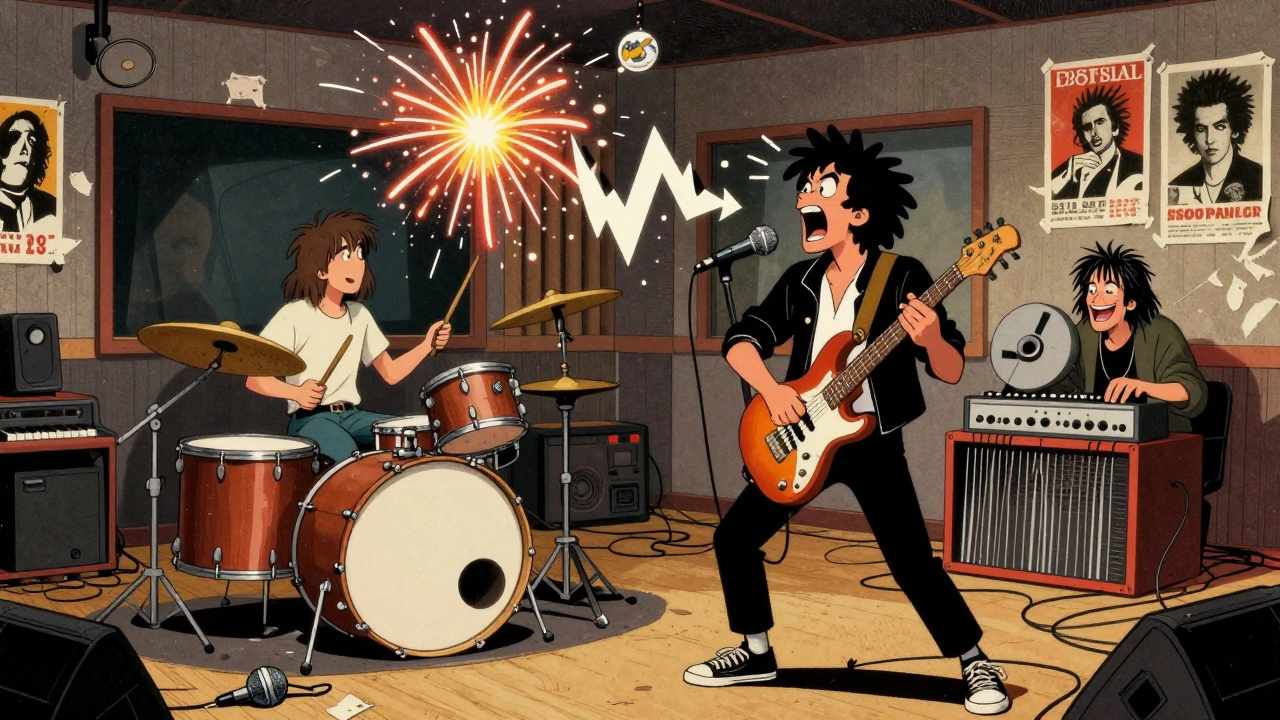

Pixies' Surfer Rosa didn’t just drop in 1988-it exploded. At a time when radio was dominated by synth-pop and hair metal, this raw, chaotic, and strangely beautiful album slipped through the cracks and became the secret blueprint for everything that came after. No one knew it then, but Surfer Rosa was the missing link between the noisy underground of the ’80s and the roaring grunge revolution of the ’90s.
What Made Surfer Rosa So Different?
Before Surfer Rosa, most indie rock albums sounded clean, polished, or at least carefully arranged. Pixies didn’t care. They recorded the album in just 12 days at Fort Apache Studios in Boston, with producer Steve Albini calling the shots. Albini, known for his no-nonsense, analog-heavy approach, didn’t fix mistakes-he kept them. Feedback squeals, distorted bass, sudden silences, and Black Francis screaming like he was trying to break through a wall? All part of the plan.
Take the opening track, “Bone Machine.” It starts with a drum hit so loud it sounds like a car crash, then drops into a bassline that slithers like a snake. The guitar? It’s not melodic-it’s jagged. And then there’s the chorus: “I’m a man, I’m a man, I’m a man.” No metaphor. No poetry. Just primal energy. That’s the whole album. It’s not about perfection. It’s about feeling.
Compare it to contemporaries like R.E.M. or The Cure. Those bands had structure. Pixies had chaos with purpose. They mixed quiet verses with explosive choruses-what later became known as the “loud-quiet-loud” formula. It wasn’t new, but no one had ever done it with this much aggression.
The Lo-Fi Sound That Changed Everything
“Lo-fi” wasn’t a style back then-it was a necessity. 4AD, the UK label that released the album, had a tiny budget. They didn’t have access to fancy studios or high-end gear. But Albini turned that limitation into a superpower. He used cheap microphones, pushed tape machines into the red, and let the room’s natural reverb do the work. The result? A sound that felt alive, not manufactured.
The drums on “Where Is My Mind?” don’t sound like they were recorded in a studio. They sound like they were recorded in a garage, with a snare that cracks like a whip and cymbals that ring out like metal pots. The bass on “Break My Body” is so distorted it sounds like it’s being played through a broken amp. And yet, it’s hypnotic. That’s the magic of Surfer Rosa: it’s messy, but every mess has a point.
Years later, when Nirvana recorded In Utero in 1993, they went straight to Pachyderm Studios-the same place where Surfer Rosa was made. Kurt Cobain didn’t just admire Pixies; he wanted to replicate their sound. He told producers: “I want it to sound like Surfer Rosa.” And he got it. The feedback, the raw vocals, the unpolished drums-it’s all there.
A Cult Record That Took Years to Go Mainstream
When Surfer Rosa dropped in March 1988, it barely registered in the U.S. It wasn’t on American shelves until August. Radio stations didn’t play it. MTV didn’t show videos. But in Europe, it took off. The UK charts gave it 60 weeks of life, peaking at number two. That’s unheard of for a band with no label backing and no radio support.
Why? Because people heard something real. It wasn’t glossy. It wasn’t safe. It was loud, weird, and emotional. College radio stations picked it up. Tape traders copied it. Fans passed it around like contraband. By the time Nirvana blew up in 1991, Surfer Rosa had already been circulating for three years. A new generation of kids were learning how to play guitar by learning Pixies songs-not because they were easy, but because they were honest.
It took 17 years, but the RIAA finally gave Surfer Rosa a Gold certification in 2005. That’s not a failure-it’s proof that real influence doesn’t happen overnight. It happens when people keep listening, keep sharing, keep believing.
The Band That Inspired a Generation
You can trace the DNA of 1990s alternative rock straight back to Surfer Rosa. Billy Corgan of The Smashing Pumpkins said it changed how he thought about songwriting. PJ Harvey called it “the sound of a band breaking open.” But Nirvana is the clearest example. Cobain didn’t just say he liked them-he copied their structure, their dynamics, their attitude.
Listen to “Smells Like Teen Spirit” and then “Debaser.” The same sudden shifts. The same childlike lyrics with violent imagery. The same mix of beauty and brutality. It’s not coincidence. It’s lineage.
Even beyond grunge, Surfer Rosa influenced bands like Radiohead, Foo Fighters, and The Breeders. Kim Deal, Pixies’ original bassist, went on to form The Breeders, and their 1993 album Pod-produced by Albini-sounds like a direct cousin to Surfer Rosa. That’s not a footnote. That’s a movement.
Why It Still Matters Today
Streaming numbers don’t tell the whole story. Surfer Rosa doesn’t have the millions of plays that modern pop albums do. But it has something more powerful: legacy. Every time a new band picks up a guitar and screams instead of sings, they’re channeling Pixies. Every time a producer says, “Don’t overproduce it,” they’re quoting Steve Albini’s work on this album.
It’s not about being loud. It’s about being real. Surfer Rosa proved you didn’t need polish to be profound. You didn’t need money to be influential. You just needed courage-and a few broken microphones.
Twenty years after its release, it was still being covered by indie bands in basements from Portland to Prague. Today, it’s on playlists alongside Nirvana, Sonic Youth, and Dinosaur Jr. It’s not a relic. It’s a living thing. And if you’ve ever screamed into a pillow because you felt too much-that song was written for you.
| Attribute | Value |
|---|---|
| Release Date | March 21, 1988 |
| Label | 4AD (UK), Elektra (US, 1988) |
| Producer | Steve Albini |
| Recording Location | Fort Apache Studios, Boston |
| Recording Time | 12 days |
| US Certification | Gold (2005) |
| UK Chart Peak | #2 |
| Chart Duration (UK) | 60 weeks |
| Key Influences | Nirvana, The Smashing Pumpkins, PJ Harvey |
Tracks That Changed Rock
- “Bone Machine” - The album’s opening salvo. It’s not a song-it’s a declaration. The drums alone could start a riot.
- “Debaser” - Inspired by Luis Buñuel’s surrealist film Un Chien Andalou. It’s about cutting open an eyeball. And yet, it’s catchy as hell.
- “Where Is My Mind?” - The quietest track on the album, and the most haunting. It became a cultural touchstone after appearing in The Secret Life of Walter Mitty and countless indie films.
- “Break My Body” - A three-minute explosion of pain and release. The bassline alone has been sampled and covered dozens of times.
- “Isla de Encanta” - A rare moment of calm, with Spanish lyrics and a dreamy guitar line. It’s the eye of the storm.
Is Surfer Rosa really a grunge album?
Not technically. Grunge as a genre didn’t exist in 1988. But Surfer Rosa contained every element that would define grunge: distorted guitars, sudden dynamic shifts, raw vocals, and lyrics that mixed violence with vulnerability. Bands like Nirvana didn’t just like it-they used it as a template. So while it’s not grunge, it’s the closest thing to a grunge blueprint from the ’80s.
Why did Steve Albini produce Surfer Rosa?
Albini was known for his anti-commercial stance and love of raw, unfiltered sound. The Pixies didn’t want slick production-they wanted power. Albini’s philosophy was simple: record the band playing live, don’t fix mistakes, and don’t hide the noise. He didn’t even use headphones during tracking. His approach gave the album its gritty, immediate feel. He later said he considered it one of the most honest records he ever made.
How did Surfer Rosa influence Nirvana?
Kurt Cobain called Surfer Rosa his favorite album of all time. He studied its structure, its dynamics, and its attitude. When Nirvana recorded In Utero, they hired Albini again and recorded in the same studio where Surfer Rosa was made. The opening track, “Scentless Apprentice,” mirrors the structure of “Bone Machine.” The vocal delivery on “Dumb” echoes Black Francis’s yelps. Nirvana didn’t copy-they absorbed.
Why didn’t Surfer Rosa sell well at first?
It was an independent release with no major label backing. U.S. distribution was handled by import distributors, so it wasn’t on store shelves. Radio stations ignored it. MTV didn’t have videos for it. It found its audience through word of mouth, college radio, and tape trading. Its success wasn’t immediate-it was earned, one fan at a time.
Can you hear the influence of Surfer Rosa in modern music?
Absolutely. Bands like Arctic Monkeys, Tame Impala, and even newer acts like Wet Leg use the loud-quiet-loud formula, distorted bass tones, and emotionally raw delivery that Surfer Rosa made famous. Modern lo-fi producers still use Albini’s techniques. The album’s DNA is in the DNA of indie rock.
Where to Go From Here
If Surfer Rosa hooked you, start with Pixies’ next album, Doolittle. It’s more polished, but it keeps the same spirit. Then listen to In Utero by Nirvana. Then go back to Surfer Rosa and hear it differently. You’ll notice things you missed before.
Or dig into Steve Albini’s other work-Pod by The Breeders, Neurosis by the band Neurosis, or Let It Be by The Replacements. They all share the same truth: great music doesn’t need to be clean. It just needs to be real.


