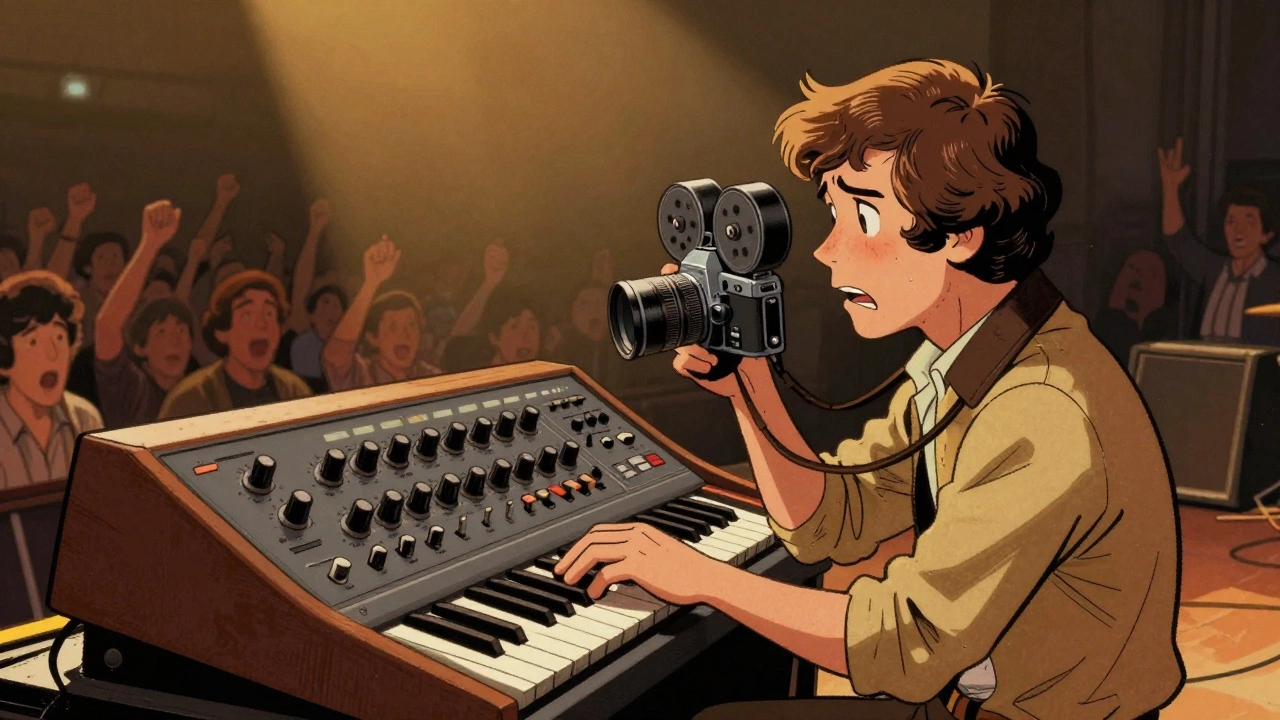

Imagine you are on stage. The crowd is waiting. You need that specific brass sound you spent hours tweaking last night. You reach for your synthesizer, turn the power on, and realize the knobs are all in the wrong positions. Before digital storage became standard, this panic was a daily reality for electronic musicians. Patch Memory is a technology in electronic musical instruments that stores and recalls specific configurations of sound parameters. It solved a massive problem for performers, but getting there was a long road filled with mechanical ingenuity and creative workarounds.
Understanding how we got from photographing control panels to pressing a single button reveals a lot about the evolution of music technology. It wasn't just about saving a sound; it was about saving time, consistency, and creative flow. This journey starts long before the first synthesizer was even plugged in.
The Mechanical Roots: Organs and Relays
Before we talk about voltage and circuits, we have to look at the pipe organ. This instrument holds the secret to the earliest form of memory in music. In the late 19th and early 20th centuries, organ builders developed systems to save registration settings. These were physical mechanisms that allowed a performer to switch between different combinations of stops instantly.
They used rows of small switches called setter boards and banks of latching relays. These relays retained their settings even when the power was cut. Hammond Organs used terminal strip connections to determine presets. A player could move connections around on these strips to modify the sound. If you unplugged the organ and plugged it back in, the connections remained. This established the core idea that an instrument's state could be stored and recalled.
This mechanical reliability was something electronic engineers desperately wanted to replicate. The problem was that early synthesizers were unstable. Temperature changes could drift the oscillators, meaning a sound you saved at 7 AM might sound completely different by 7 PM. Storing the settings was useless if the hardware couldn't reproduce them accurately.
Early Attempts at Digital Storage
As the 1970s progressed, manufacturers began experimenting with electronic memory. The Oberheim Four Voice arrived in 1976 with an add-on feature that claimed to store patches. However, this system had significant limitations. It could not store or recall all parameters of a patch. Performers still had to manually adjust knobs and switches to fully recreate a stored configuration.
This partial recall capability was better than nothing, but it didn't solve the core problem. You still had to dial in the sound. Another system, the PAiA Proteus 1, took a different approach. It could memorize knob settings, but it required the performer to manually turn each knob until a light indicator showed the knob matched the memorized value. This made full recall a labor-intensive process that broke the flow of a performance.
Some contemporary synthesizers of this era, such as the ARP Quadra, offered only limited patch memory that memorized switch settings but not knob positions. This meant you could save which filters were on or off, but not the specific cutoff frequency. These early attempts highlighted the complexity of the task. Storing a single value is easy; storing a continuous variable like a filter resonance is much harder.
The Prophet-5 Revolution
Then came 1977. The Sequential Circuits Prophet-5 achieved a transformative milestone as the first synthesizer with comprehensive patch memory. It could store and recall all synthesizer parameters automatically. The original Prophet-5 offered 40 memory locations for patch storage. This was a massive number at the time.
This innovation directly addressed the limitations of earlier systems like the Oberheim Four Voice by eliminating the need for manual parameter adjustment during patch recall. You could change sounds instantly between songs. Later versions of the Prophet-5 expanded this capacity to 120 memory locations as the cost of memory technology declined. This machine changed how musicians thought about composition. You weren't limited to the sounds you could physically dial in during a set anymore.
The evolution continued with the Yamaha CS80. This instrument provided sets of small sliders under a panel door that duplicated all settings, allowing four patches to be preset in this manner. It was a hybrid approach, combining physical controls with memory. Other companies like EML and RMI explored alternative storage methods using punch cards for patch memory. Parameters were determined by punching holes in specific locations on cardboard cards that could be inserted into a reader to recall the patch. These diverse approaches reflected the industry's experimentation with different storage and recall methodologies during the 1970s and early 1980s.
Documenting Sounds Without Memory
For many years, most synthesizers had no memory at all. Musicians had to rely on their own systems to remember their sounds. Synthesizer performers without built-in patch memory capabilities used photographic documentation. They photographed or videotaped the synthesizer control panel with all knobs, sliders, and switches in their operational positions.
This visual documentation method allowed musicians to recreate patches by referencing the photographs to manually reposition all controls to match the documented state. It was tedious. If you had 50 knobs, you had to move 50 knobs. But it was reliable. Some musicians went further and used video cameras to record the panel from different angles to ensure no switch was hidden.
For synthesizers lacking patch memory entirely, performers relied on memorization. They developed the ability to dial up patches through ear training and muscle memory without written documentation. This was a skill that separated the pros from the hobbyists. You had to know that the low-pass filter was at 10 o'clock and the resonance was at 2 o'clock for that specific bass sound.
Additionally, performers maintained written notes using adjectives and categorical systems. They would write "bright brass, high attack" or "warm pad, slow release" to organize and recall the characteristics of different synthesizer sounds. They developed personal organizational systems to track their sonic libraries. These notebooks often became more valuable than the gear itself.
Understanding Patch vs. Preset
There is often confusion about terminology in the synthesizer world. In contemporary usage, a preset is characterized as a preexisting setting established by manufacturers or default configurations. A patch comprises all the settings of a synthesizer saved for later recall. However, in actual practice, these terms are often used interchangeably.
The etymology of patch derives from modular synthesizer cable patching. A performer physically patched cables to route control voltage and audio signals into a specific configuration. This physical arrangement became known as a patch. When performers saved the state of a patched modular synthesizer setup, this saved configuration became associated with the term patch.
In contemporary synthesizer terminology, when a user loads a preset and modifies it before saving the result, the modified saved state transitions from being called a preset to being called a patch. This distinction matters because it implies ownership. A preset belongs to the factory; a patch belongs to you. Understanding this helps when reading manuals or talking to other musicians about sound design.
The Technical Challenge of Recall
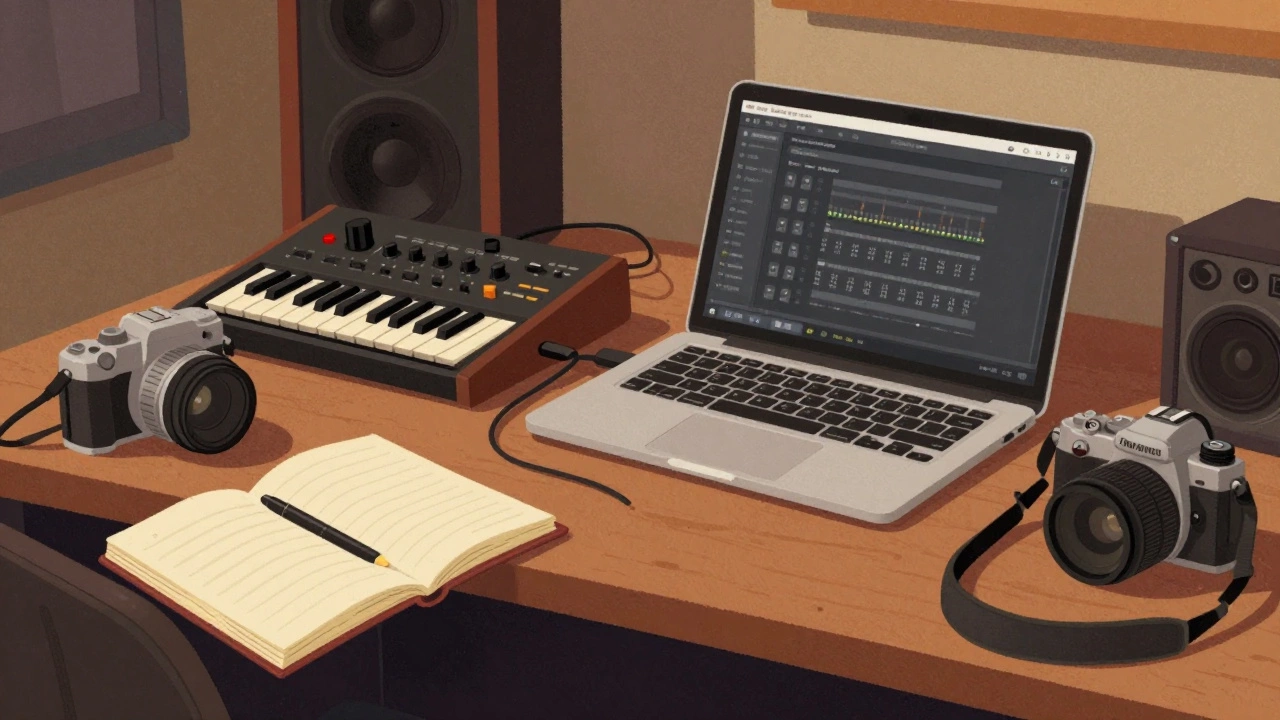
The technical implementation of patch memory involves complex interaction between stored parameters and physical control mechanisms. The fundamental challenge in patch recall involves reconciling the state of physical front-panel controls with the actual patch configuration stored in memory.
In the most common implementation method, when a patch parameter knob, switch, or button is moved, the corresponding patch parameter immediately jumps to the setting of that physical control and is simultaneously copied to an edit buffer. This approach can produce audible glitches in the sound output. This becomes undesirable when the physical control is being used for real-time performance adjustments rather than patch editing.
Edited parameters remain in the edit buffer until the performer explicitly saves the edited patch back to patch memory. Unsaved edits are lost if the performer selects a different patch without saving. An alternative implementation strategy maps the starting position of the control to the setting recalled from the stored patch. It then adds any subsequent control movement to that value. However, this approach creates a potential problem. Performers may be unable to access the full range of a parameter depending on the starting position of the physical control and the initial value of the stored parameter.
Modern patch memory implementations utilize different types of memory storage. Current synthesizers may incorporate both ROM (read-only memory), which is written at the factory and cannot be changed, and RAM (random-access memory), which permits user modification. The earliest synthesizers with patch memory offered only RAM storage with typically small numbers of patch locations. Contemporary synthesizers frequently include hundreds of patches in both RAM and ROM configurations.
Battery backup systems became necessary for retaining RAM patches when power was removed. These systems created maintenance challenges for users. You had to remember to replace batteries, transfer data before battery replacement, and restore data after installation. Losing a patch because a battery died was a common nightmare for musicians in the 1980s.
Standardization and the MIDI Era
The establishment of the MIDI standard around 1981 standardized patch memory capacity. It specified the program change message type to allow for 128 memory location numbers. This standardization proved influential across the synthesizer industry, establishing 128 as a default patch memory size across many instruments.
However, as synthesizer capabilities expanded, many modern synthesizers exceeded this capacity. This prompted the MIDI standard to add the Bank Select message type to expand available memory location numbers. This allowed for thousands of patches to be stored and recalled across multiple banks. The ability to send these messages over MIDI cables meant you could control the memory of multiple synthesizers from a single sequencer.
This connectivity fundamentally transformed synthesizer musicianship. Before comprehensive patch memory, synthesizer performances were constrained by the inability to reliably recall complex sound configurations between pieces. This limited performers' ability to prepare diverse sonic palettes for varied compositions. The Prophet-5 and subsequent instruments with full patch memory liberation enabled performers to develop extensive libraries of customized sounds. They could access these sonic configurations instantly during performances.
| System | Year | Memory Type | Limitations |
|---|---|---|---|
| Oberheim Four Voice | 1976 | Partial RAM | Did not store all parameters |
| Prophet-5 | 1977 | Full RAM | Limited to 40 locations initially |
| Yamaha CS80 | 1976 | Physical Sliders | Only 4 presets per panel |
| PAiA Proteus 1 | 1970s | Match Light RAM | Manual knob matching required |
This technological advancement directly contributed to the creative possibilities available to synthesizer musicians. It influenced the compositional approaches possible in electronic music. The evolution from mechanical storage systems in organs through Oberheim's partial memory to the Prophet-5's comprehensive system represents a crucial development in modern music technology. Patch storage and recall are now standard expectations rather than optional features.
Preserving Your Sounds Today
Even with modern technology, the lessons from the past remain relevant. Digital files can corrupt. Batteries can die. Cloud storage can go offline. It is still wise to keep a backup of your patches. Many modern synthesizers allow you to export patches as files to a computer. Treat these files like the photographs musicians used in the 1970s. They are your insurance policy against losing your work.
Some musicians still use photos. A quick picture of your control panel can save you time if you need to recreate a sound on a different unit or if you forget where a specific knob was set. The physical act of turning a knob while looking at a photo reinforces the connection between the control and the sound. This tactile feedback is something that purely digital interfaces sometimes lack.
Understanding the history of patch memory helps you appreciate the tools you use today. It also helps you troubleshoot when things go wrong. If your synthesizer is acting up, knowing how the edit buffer works can tell you if you simply forgot to save. Knowing the difference between RAM and ROM can tell you if a sound is editable or locked.
The journey from punch cards to MIDI banks shows how much effort was put into solving this problem. Musicians wanted freedom. They wanted to focus on playing rather than tweaking. The technology delivered that freedom, but it also changed the way we think about sound. We have more options now, but the core desire remains the same: to capture a moment of inspiration and bring it back whenever we need it.
What was the first synthesizer with full patch memory?
The Sequential Circuits Prophet-5, released in 1977, was the first synthesizer to feature comprehensive patch memory that could store and recall all synthesizer parameters automatically.
How did musicians save sounds before patch memory existed?
Musicians used photographic documentation of control panels, written notes with descriptive adjectives, and muscle memory to recall complex synthesizer configurations manually.
What is the difference between a patch and a preset?
A preset is typically a factory-default setting, while a patch refers to a user-created or modified configuration saved for later recall, though the terms are often used interchangeably.
Why did early patch memory systems use batteries?
Battery backup systems were necessary for retaining RAM patches when power was removed, as volatile memory would otherwise lose all stored data without power.
How did MIDI standardize patch memory?
The MIDI standard specified the program change message type to allow for 128 memory location numbers, establishing a default patch memory size across many instruments.


