
When you think of 1980s synth-pop, bands like Depeche Mode and New Order come to mind. But few groups shaped the sound of the decade as boldly-or as unpredictably-as OMD. Orchestral Manoeuvres in the Dark didn’t just ride the wave of electronic music; they built the boat, then redesigned it every few years. From the cold, mechanical pulse of "Enola Gay" to the sweeping, cinematic romance of "If You Leave," OMD’s 1980s output was a masterclass in balancing experimentation with accessibility.
The Birth of a Sound: Electricity to Enola Gay
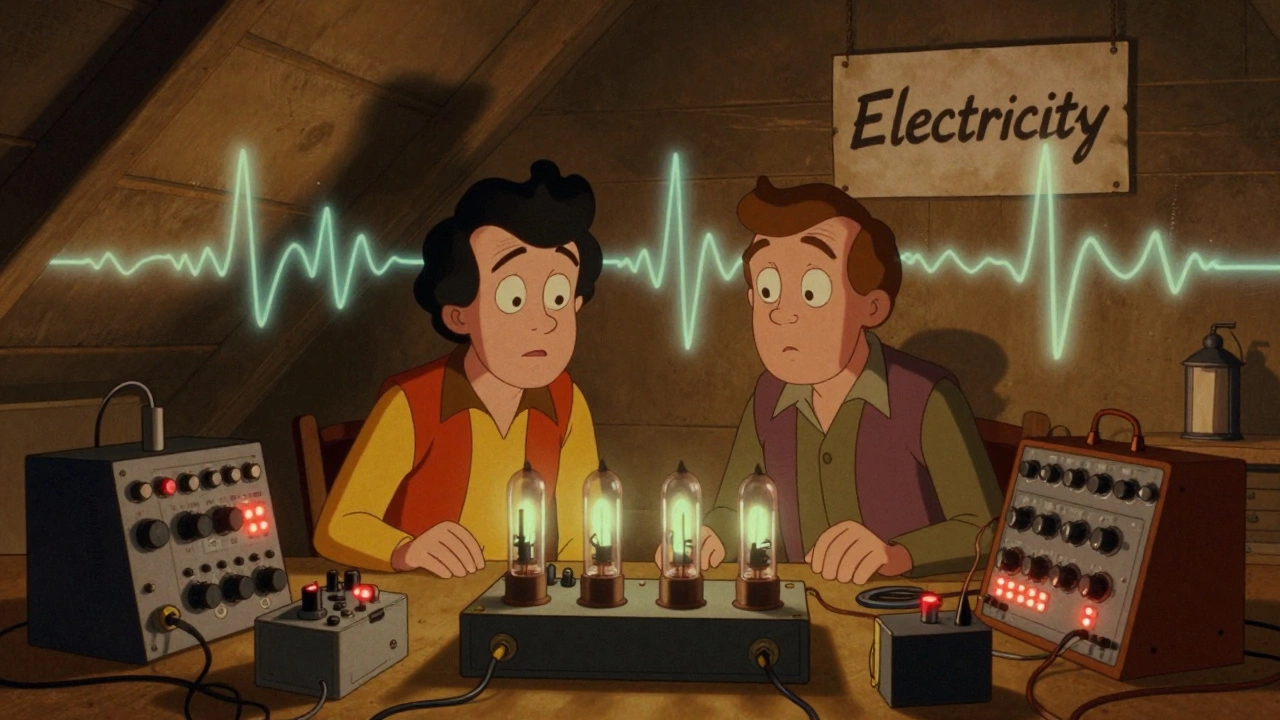
It all started in a quiet house in Merseyside. Andy McCluskey and Paul Humphreys, two friends with a love for Kraftwerk and a disdain for guitar rock, built their first synth setup from spare parts. Their debut single, "Electricity," released in 1979, was a revelation: no drums, no guitars, just pulsing synths and a bassline that felt like a heartbeat. It wasn’t a hit, but it caught the attention of Factory Records and Gary Numan’s fans. The sleeve, designed by Peter Saville, looked like a piece of art from a future museum. That was OMD’s vibe-futuristic, minimalist, intellectual, but still deeply human. By 1980, they had a full album out, self-titled, packed with tracks like "Messages" and "Almost." Then came "The Organisation," and with it, drummer Malcolm Holmes. The addition of live drums didn’t make them rock. It made them more alive. The synths still ruled, but now they had rhythm. Then came "Enola Gay." A song about the atomic bomb, set to a bouncy, almost cheerful melody. It shouldn’t have worked. But it did. The UK top ten didn’t just welcome it-they embraced it. The song was a paradox: chilling subject, infectious hook. It proved OMD could make dark themes pop.Architecture & Morality: The Peak of Emotion
If "Enola Gay" was a statement, then "Architecture & Morality" in 1981 was a declaration of genius. This album didn’t just use synths-it painted with them. The Mellotron, an old-school instrument that mimicked strings and choirs, was suddenly in their hands. Suddenly, songs like "Souvenir" had the emotional weight of a symphony, but the structure of a pop single. Paul Humphreys sang lead on "Souvenir," the first OMD single without Andy McCluskey on vocals. Andy hated it at first. Called it "too middle of the road." But it became their biggest UK hit yet. Why? Because it wasn’t just catchy. It felt like memory. Like longing. Like a love letter you never sent. The album’s range was staggering. "The New Stone Age" was cold and mechanical. "Maid of Orleans" was haunting, almost religious. "Stanlow" was a dirge for a dying power plant. OMD had turned electronic music into a storytelling medium. They weren’t just making songs-they were building worlds.Dazzle Ships: When the Experiment Backfired
In 1983, they dropped "Dazzle Ships." And the world didn’t know what to do with it. This wasn’t a pop album. It was an art project. They used tape loops of shortwave radio broadcasts. They layered static, weather reports, and military code into songs. "Radio Waves," an upbeat track written years earlier, was buried in the middle. It deserved to be a single. It could’ve been huge. But the label pulled the plug. The previous singles, "Metroland" and "The Romance of the Telescope," didn’t chart. Critics called it confusing. Fans were confused. Virgin Records started asking questions. For McCluskey and Humphreys, it was a crisis. They’d spent years pushing boundaries. Now, they were on the edge of being dropped. They had a choice: keep being pioneers or survive.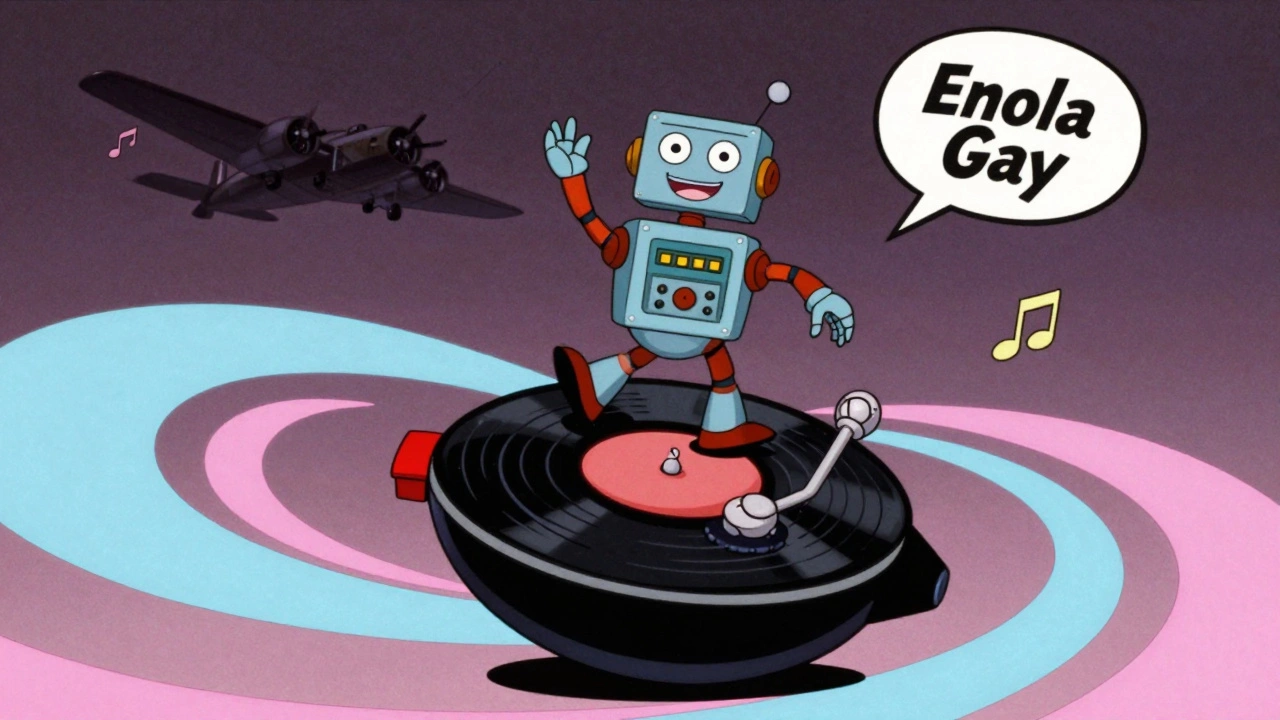
Junk Culture: The Pivot
They chose survival. But not by selling out. By evolving. "Junk Culture" in 1984 was a radical shift. They brought in the Fairlight CMI and E-mu Emulator-digital samplers that let them steal sounds from anywhere. A snare from a James Brown record. A horn stab from a funk track. A vocal chop from a TV ad. Suddenly, OMD sounded like they’d been listening to Prince and Stevie Wonder. "Locomotion" hit the UK top five. They wore bright colors on tour. Their sound got smoother, but it never lost its soul. This wasn’t a betrayal. It was a reset. They’d proven they could make art. Now they were proving they could make art that people wanted to dance to.Crush and The Pacific Age: Polished, But Still OMD
With producer Stephen Hague, they refined everything. "Crush" (1985) and "The Pacific Age" (1986) were glossy, radio-ready. But listen closer. "So in Love" still had that OMD ache. "Pandora’s Box" still had that sense of wonder. They weren’t chasing trends. They were absorbing them-and turning them into something uniquely theirs. Critic Jessica Bendinger put it best: OMD’s music moved from "Gregorian-chant-inspired anthems of love to a union of Orchestral-Motown." No other band could do that. No one else could make a song about nuclear war and then make a song that sounded like a slow dance under neon lights.
If You Leave: The American Breakthrough
In 1986, John Hughes was making movies about teenagers who felt too much. He needed a song for the ending of "Pretty in Pink." He asked OMD for "Goddess of Love." But the film’s ending changed. They had 24 hours to write a replacement. They wrote "If You Leave." A song that starts with a single synth note. Then a heartbeat. Then a voice. Then strings. It builds slowly, like a confession. It doesn’t beg. It doesn’t shout. It just says: "If you leave, I’ll be here." It hit the top five in the US. In Canada. In New Zealand. For the first time, Americans knew OMD. But most had no idea they’d been making music since "Electricity." They thought OMD was a one-hit wonder. The truth? "If You Leave" was the culmination of a decade of fearless innovation.Why OMD Still Matters
They didn’t just make synth-pop. They proved it could be intelligent, emotional, and wildly experimental-and still top the charts. They took the cold, sterile sound of early electronic music and made it feel like it came from a human heart. They used tape loops to capture the noise of the world. They turned a song about a bomb into a dance hit. They wrote a love song in a day and made it timeless. Today, you hear their influence everywhere: in the synth layers of The Weeknd, the emotional weight of CHVRCHES, the retro-futurism of M83. But no one else did it the way OMD did. They never stopped changing. And that’s why they still matter.What was OMD’s first hit single?
OMD’s first UK top ten hit was "Enola Gay," released in 1980 from their album The Organisation. Though their debut single "Electricity" (1979) was critically acclaimed and foundational to synth-pop, it didn’t chart. "Enola Gay" became their breakthrough, blending a haunting subject with an infectious synth melody.
Why was Dazzle Ships such a failure at first?
"Dazzle Ships" (1983) was too experimental for its time. It mixed synth-pop with musique concrète-using tape loops of shortwave radio, military transmissions, and static. The singles "Metroland" and "The Romance of the Telescope" failed to chart, and fans expected another "Architecture & Morality." Virgin Records was alarmed. But decades later, critics re-evaluated it as one of the most daring electronic albums of the decade.
How did OMD transition from experimental to mainstream?
After the commercial disappointment of "Dazzle Ships," OMD shifted direction with "Junk Culture" (1984). They embraced digital samplers like the Fairlight CMI and E-mu Emulator, incorporating funk, soul, and R&B rhythms. Tracks like "Locomotion" brought them back into the charts. This wasn’t a sellout-it was a smart evolution, proving they could be both innovative and accessible.
Was "If You Leave" written for a movie?
Yes. OMD originally offered "Goddess of Love" for John Hughes’ film "Pretty in Pink." But after test audiences reacted poorly to the ending, Hughes asked them to rewrite the closing song. They wrote "If You Leave" in less than 24 hours. It became a top five hit in the US and Canada, finally giving OMD major recognition in North America.
What instruments defined OMD’s 1980s sound?
Early on, OMD used analog synths like the ARP Odyssey and Roland CR-78 drum machine. By "Architecture & Morality," they added the Mellotron for orchestral textures. In "Junk Culture," they switched to digital samplers: the Fairlight CMI and E-mu Emulator. Later albums used drum machines like the Linn LM-1 and Roland TR-808. Each shift reflected their willingness to adopt new tools to serve their songwriting.
OMD never stayed still. They didn’t chase trends. They didn’t repeat themselves. They kept asking: What if we tried this? What if we made a synth sound like a choir? What if we used radio static as a rhythm? What if we wrote a love song in a day and it became a classic? That’s the legacy of OMD-not just the hits, but the courage to keep changing.


