

Think about the last time you heard a song that felt like it belonged in two worlds at once. Maybe it’s rap verses over heavy guitar riffs, or funk basslines driving a rock anthem. That blending wasn’t an accident. It was engineered. In the 1980s, Nile Rodgers is a legendary producer and guitarist who defined the sound of post-disco pop and rock crossovers. Also known as Mr. On Time, he used his signature rhythm guitar to bridge the gap between disco, R&B, and mainstream rock. and Rick Rubin is a pioneering record producer who brought hip-hop into the mainstream through minimalist production and bold genre collaborations. Recognized for founding Def Jam Recordings, he stripped away excess to let raw energy drive records from rap to thrash metal. were the architects behind these sonic collisions. They didn’t just produce hits; they broke down the walls between radio formats, proving that genre boundaries were more flexible than anyone thought.
The Rhythmic Architect: Nile Rodgers’ Pop Revolution
Nile Rodgers entered the 1980s with momentum already building. His work with Chic is a funk and disco band led by Nile Rodgers and Bernard Edwards. in the late 1970s had created templates that other artists couldn’t ignore. The bassline from “Good Times” (1979) became the backbone for early hip-hop tracks like the Sugarhill Gang’s “Rapper’s Delight” and Queen’s “Another One Bites the Dust.” But Rodgers didn’t stop there. He actively pursued cross-format success, aiming to make danceable music that could dominate rock, pop, and R&B charts simultaneously.
In 1980, Rodgers and his partner Bernard Edwards produced Diana Ross’s album diana. Singles like “Upside Down” and “I’m Coming Out” turned Ross, a Motown icon, into a global pop star again. This wasn’t just a comeback; it was a rebranding. Rodgers injected Chic-style rhythmic precision into Ross’s soulful delivery, creating a sound that appealed to club DJs and pop radio listeners alike. By 1983, this strategy reached its peak with David Bowie’s Let’s Dance. Rodgers streamlined Bowie’s complex art-rock sensibilities into catchy, radio-friendly dance-rock. The title track merged Chic-style groove with big-room rock production, appealing to audiences across MTV and global radio. It was a commercial reinvention built on Rodgers’ ability to find the common ground between disparate styles.
Rodgers’ influence expanded further in the mid-1980s. He produced Madonna’s Like A Virgin (1984), fusing his rhythmic sensibility with synth-pop arrangements. At one point in late 1984, Rodgers had three different songs in the top three spots on the Billboard Hot 100 simultaneously: Duran Duran’s “The Wild Boys,” Madonna’s “Like A Virgin,” and another hit. This feat quantified his crossover power. He also worked with INXS on “Original Sin” (1983), injecting funk into Australian new wave, and formed the supergroup Power Station, bringing together British new wave players and American soul singer Robert Palmer. Rodgers proved that a consistent rhythmic signature could travel across genres without losing its identity.
The Minimalist Disruptor: Rick Rubin’s Hip-Hop Breakthrough
While Rodgers was polishing pop sounds, Rick Rubin was operating in a completely different milieu. Starting in the early 1980s, Rubin co-founded Def Jam Recordings is an influential record label founded by Rick Rubin and Russell Simmons. Known for 1984, it played a crucial role in popularizing hip-hop and rap music globally. with Russell Simmons. Their approach was starkly different from the lush productions dominating the airwaves. Rubin favored a sparse, minimal style that foregrounded the voice and the beat. This aesthetic became the hallmark of Def Jam’s early output, helping to translate street-level hip-hop into a scalable commercial product.
Rubin’s first major releases included T La Rock’s “It’s Yours” (1984) and records for LL Cool J, the Beastie Boys, and Run-DMC. For LL Cool J’s debut album, recorded at Chung King Studios in New York City, Rubin applied drum machines and stripped-down arrangements that highlighted LL’s lyrical flow. This minimalism differentiated LL from more heavily produced R&B-leaning acts and helped radio programmers acclimate to hip-hop’s aesthetic. Rubin’s partnership with Simmons allowed him to focus on creative decisions while Simmons handled business operations, though tensions eventually arose over control and direction.
Rubin’s most famous crossover moment came in 1986 with Run-DMC and Aerosmith’s remake of “Walk This Way.” Suggested by Sue Cummings, an editor at Spin magazine, the collaboration merged classic-rock guitar riffs with rap verses. Rubin produced the track so that Steven Tyler and Joe Perry’s rock performance interlocked with Run-DMC’s rap delivery. This single did more than just chart well; it revived Aerosmith’s career and normalized rap vocals over heavy guitar riffs in mainstream contexts. It demonstrated how a hip-hop producer’s vision could bridge the gap between rock and rap, opening doors for future collaborations.
Bridging Genres: From Metal to Mainstream
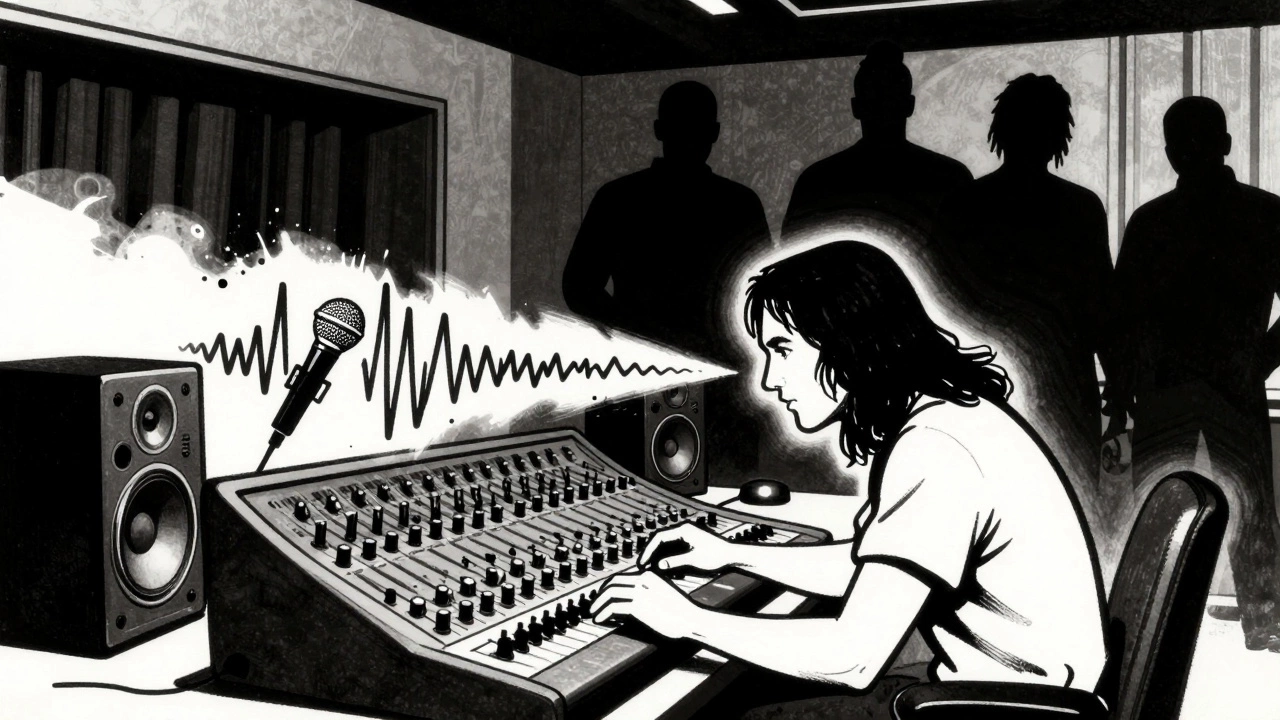
Rubin didn’t limit himself to hip-hop. He applied his high-impact, minimal production techniques to rock and metal, exporting a sense of street credibility into those communities. In 1986, he produced Slayer’s Reign in Blood, widely regarded as a classic of the heavy metal genre. Rubin brought a hip-hop producer’s sense of sonic punch and economy to thrash metal, stripping away unnecessary layers to emphasize speed and aggression. The following year, he produced The Cult’s Electric, which shifted the band from gothic rock to a lean, hard-rock approach. These records showed Rubin’s ability to enhance the core intensity of a genre rather than diluting it for mass appeal.
Meanwhile, Rodgers continued to expand his network of crossovers. He produced Thompson Twins’ Here’s To Future Days (1985), aligning his production with a British pop trio seeking mainstream relevance. He also remixed Duran Duran’s “The Reflex” and Hall & Oates’ “Adult Education,” embedding his sound into evolving synth-pop and blue-eyed soul landscapes. By 1989, Rodgers returned to Motown to produce Diana Ross’s Workin’ Overtime, modernizing her sound for the late-1980s environment. Both producers relied on strategic partnerships-Rodgers with Bernard Edwards and later Don Was, Rubin with Russell Simmons-to execute their visions. Their work illustrates how producers can act as cultural translators, making daring stylistic ideas commercially viable.
| Aspect | Nile Rodgers | Rick Rubin |
|---|---|---|
| Primary Genre Focus | Disco, Funk, Pop, Rock | Hip-Hop, Rap, Heavy Metal, Rock |
| Production Aesthetic | Rhythmic precision, layered grooves, polished sheen | Minimalist, sparse arrangements, raw energy |
| Key Collaboration Strategy | Reinventing legacy acts (Bowie, Ross) and MTV stars (Madonna) | Bold cross-genre pairings (Run-DMC/Aerosmith) and underground amplification |
| Signature Instrumentation | Syncopated rhythm guitar (“chicken scratch”) | Drum machines, stripped-down beats, vocal foregrounding |
| Impact on Radio Formats | Blended dance and pop charts; dominated Top 40 | Broke hip-hop into rock and mainstream pop radio |
The Legacy of 1980s Crossover Engineering
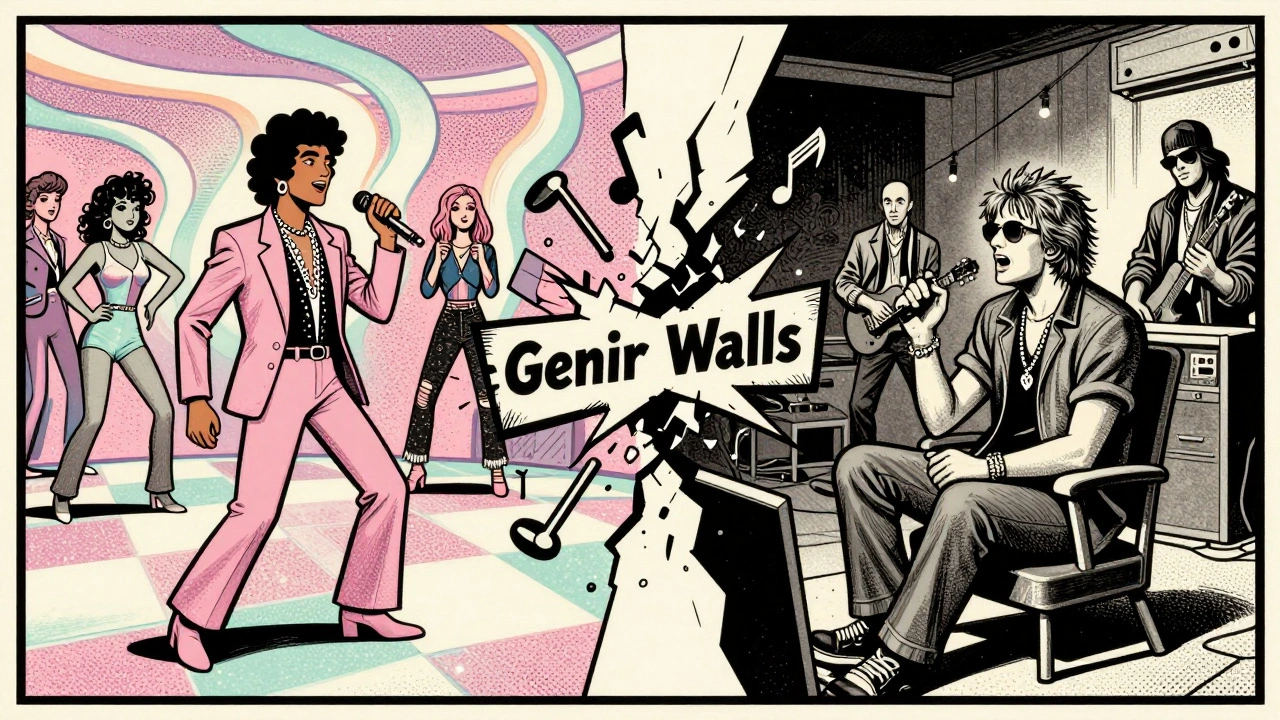
The impact of Rodgers and Rubin extends far beyond the 1980s. Their strategies laid the foundation for contemporary genre blending. Rodgers demonstrates how to embed a recognizable rhythmic and harmonic signature across different artists and genres. His work with Daft Punk on “Get Lucky” (2013) shows that the same guitar style and production intuition that guided diana and Let’s Dance could still engineer global hits decades later. He remains a reference point for current producers seeking to mix nostalgia with modernity.
Rubin’s legacy is equally enduring. His willingness to cross genre boundaries served as both a creative and business growth strategy. Def Jam grew from a small independent imprint releasing T La Rock’s “It’s Yours” to a powerhouse hosting LL Cool J, Beastie Boys, Run-DMC, Public Enemy, and Geto Boys. Today, present-day genre blending-whether in rap-rock, pop-metal, or stripped-down singer-songwriter records-owes a debt to these 1980s experiments. Both producers remain active, but their 1980s output is viewed as a series of “production victories” that reshaped industry norms. They proved that producers, not just artists, could engineer cross-format crossovers measurable in chart positions, sales milestones, and long-term genre adoption.
How did Nile Rodgers influence David Bowie’s career in the 1980s?
Nile Rodgers produced David Bowie’s 1983 album Let’s Dance, streamlining Bowie’s art-rock sensibilities into radio-friendly dance-rock. The title track merged Chic-style groove with big-room rock production, appealing to rock, pop, and dance audiences across MTV and global radio. This collaboration re-energized Bowie’s career, pushing him into the center of 1980s pop culture and resulting in massive commercial success.
What was Rick Rubin’s role in the Run-DMC and Aerosmith collaboration?
Rick Rubin produced the 1986 remake of “Walk This Way,” merging classic-rock guitar riffs with rap verses. He structured the track so that Steven Tyler and Joe Perry’s rock performance interlocked with Run-DMC’s rap delivery. This collaboration revived Aerosmith’s career and normalized rap vocals over heavy guitar riffs in mainstream contexts, demonstrating Rubin’s ability to engineer bold cross-genre crossovers.
Why is Nile Rodgers called “Mr. On Time”?
Nile Rodgers earned the nickname “Mr. On Time” due to his precise, syncopated rhythm guitar playing, often referred to as “chicken scratch.” This technique provided the infectious groove that defined Chic’s sound and influenced countless artists across disco, funk, and pop. His ability to maintain perfect timing and rhythmic consistency made him a sought-after producer and guitarist.
How did Def Jam Recordings change the music industry?
Def Jam Recordings, co-founded by Rick Rubin and Russell Simmons, changed the music industry by bringing hip-hop from the streets to the mainstream. Through minimalist production and strategic collaborations, such as Run-DMC’s “Walk This Way,” Def Jam broke down genre barriers and proved that rap could achieve commercial success on rock and pop radio. The label also pioneered the business model for independent hip-hop imprints.
What are some key differences between Nile Rodgers’ and Rick Rubin’s production styles?
Nile Rodgers’ style is characterized by rhythmic precision, layered grooves, and a polished sheen, often featuring his signature syncopated guitar. He focused on blending disco, funk, and pop to create radio-friendly hits. Rick Rubin’s style is minimalist and sparse, emphasizing raw energy and vocal foregrounding. He used stripped-down arrangements to highlight the core intensity of genres like hip-hop and heavy metal, often facilitating bold cross-genre collaborations.