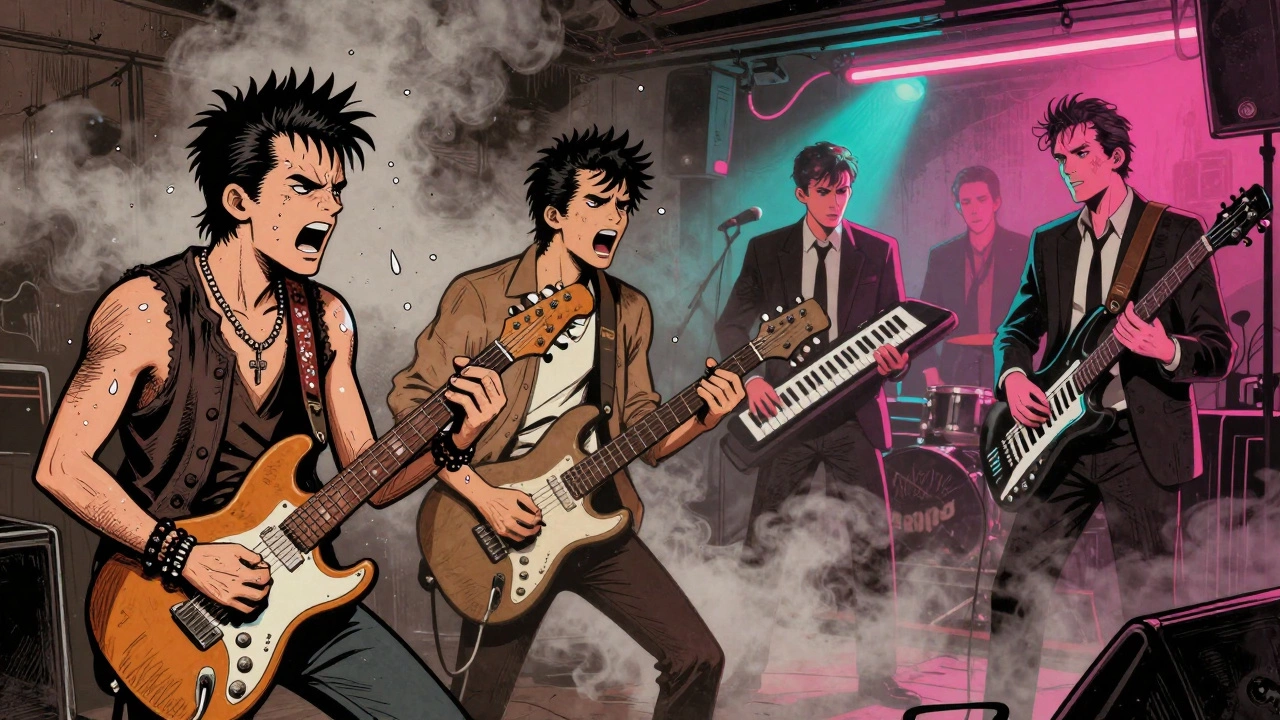

Picture a smoky club in London or New York around 1978. The air is thick with sweat and rebellion. On stage, a band shreds power chords with frantic energy. Now fast forward just two years. That same stage is lit by neon lights, the crowd is dressed in sharp suits or avant-garde makeup, and the lead singer isn't holding a guitar-they're manipulating knobs on a synthesizer, an electronic musical instrument that generates audio signals. This wasn't a betrayal of punk; it was its logical next step. The integration of synthesizers into punk-adjacent pop created the sound we now call new wave and synth-pop.
The Shift from Hostility to Adoption
In the first wave of punk between 1976 and 1977, synthesizers were often viewed with suspicion. Bands like the Sex Pistols and The Ramones championed a raw, "anti-music" aesthetic that rejected technical proficiency and expensive studio gear. Synths were associated with progressive rock excess and corporate arena acts-everything punk stood against. However, this hostility was short-lived. By 1978, the scene began to fracture and evolve into post-punk and new wave. Musicians realized that if guitars represented traditional rock structures, then machines could represent a new kind of freedom.
This shift wasn't just artistic; it was economic. Early synthesizers like Robert Moog’s modular systems were prohibitively expensive for most teenagers. But by the late 1970s and early 1980s, manufacturers like Korg and ARP released polyphonic keyboards priced similarly to mid-range electric guitars. Suddenly, a punk musician could buy a keyboard for the same money they would spend on a Fender Stratocaster. This pricing parity turned the synth into what many called "the most DIY instrument in history." You didn't need a roadie to carry a heavy amp; you just needed a cable and a power outlet.
Key Artists Who Bridged the Gap
Several pivotal artists demonstrated how to keep punk's energy while swapping strings for circuits. Gary Numan, formerly of Tubeway Army, is perhaps the most famous example. Starting with guitar-based punk influences in 1977, he quickly pivoted after discovering the expressive potential of analog synths. His 1979 hit "Are 'Friends' Electric?" and the album The Pleasure Principle dominated charts not by softening his edge, but by amplifying it through cold, mechanical rhythms and dystopian lyrics. Numan proved that you could be alienated and aggressive without a single guitar riff.
Across the Pacific, Japanese group Yellow Magic Orchestra (YMO) was simultaneously revolutionizing the sound. With albums like their self-titled debut in 1978 and Solid State Survivor in 1979, YMO combined video-game-like timbres with tight, melodic arrangements. They showed that electronic music could be fun, breezy, and technically precise, influencing both Western synth-pop and the broader global pop landscape. Meanwhile, in New York, the duo Suicide had been using Farfisa organs and drum machines since the mid-1970s, creating a harsh, minimalist sound that predated the new wave explosion. Their work laid the groundwork for electro-punk, proving that electronics could be just as abrasive as distorted guitars.
The Architecture of the New Wave Sound
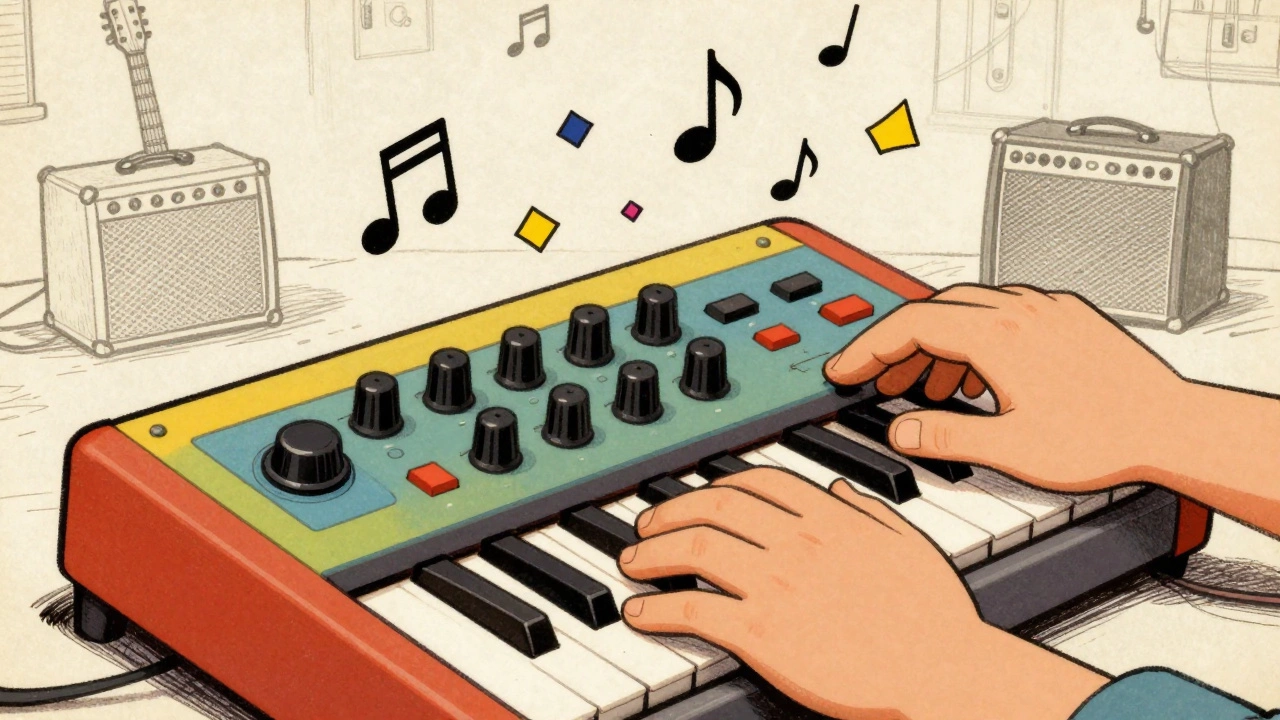
What exactly made a song "new wave"? It wasn't just the presence of a synth; it was how the instruments were arranged. Traditional punk relied on three-chord progressions played live with minimal overdubs. New wave and synth-pop introduced a new architecture:
- Sequenced Basslines: Instead of a bassist playing notes manually, musicians used sequencers to create repetitive, hypnotic patterns that drove the song forward.
- Drum Machines: Live drums were often replaced or doubled by machines like the Roland TR-808 or LinnDrum. These provided metronomic precision that human drummers couldn't match, giving the music a robotic, danceable feel.
- Layered Textures: Producers used multiple synths to create shimmering pads, arpeggiated leads, and gated reverbs. This added depth and polish, moving away from the thin sound of early punk recordings.
This production style allowed small bands to sound like large orchestras. A duo could fill an entire frequency spectrum with just two keyboards and a drum machine. This aligned perfectly with the punk ethos of doing more with less, even if the end result sounded highly polished.
| Feature | First-Wave Punk (1976-1977) | New Wave / Synth-Pop (1978-1985) |
|---|---|---|
| Primary Instrument | Electric Guitar | Synthesizer & Drum Machine |
| Production Style | Raw, minimal overdubs, live feel | Polished, multi-tracked, studio-heavy |
| Rhythm Section | Live drums and bass | Programmed beats, sequenced bass |
| Aesthetic | Diy, anti-establishment, rough | Stylized, fashion-forward, artificial |
| Goal | Immediate emotional release | Danceability and hook-driven pop craft |
The Role of Technology and MIDI
The technological leap forward was crucial. The development of MIDI (Musical Instrument Digital Interface) in the early 1980s allowed different electronic devices to communicate with each other. Before MIDI, syncing a drum machine to a sequencer was a nightmare of patch cables and timing issues. With MIDI, a band could trigger complex layers of sound with a single keystroke. This democratization of technology meant that bedroom producers could create radio-ready tracks without needing a massive label budget. It empowered artists like Depeche Mode, Orchestral Manoeuvres in the Dark (OMD), and Yazoo to build entire sonic worlds from scratch.
Mainstream Success and the Second British Invasion
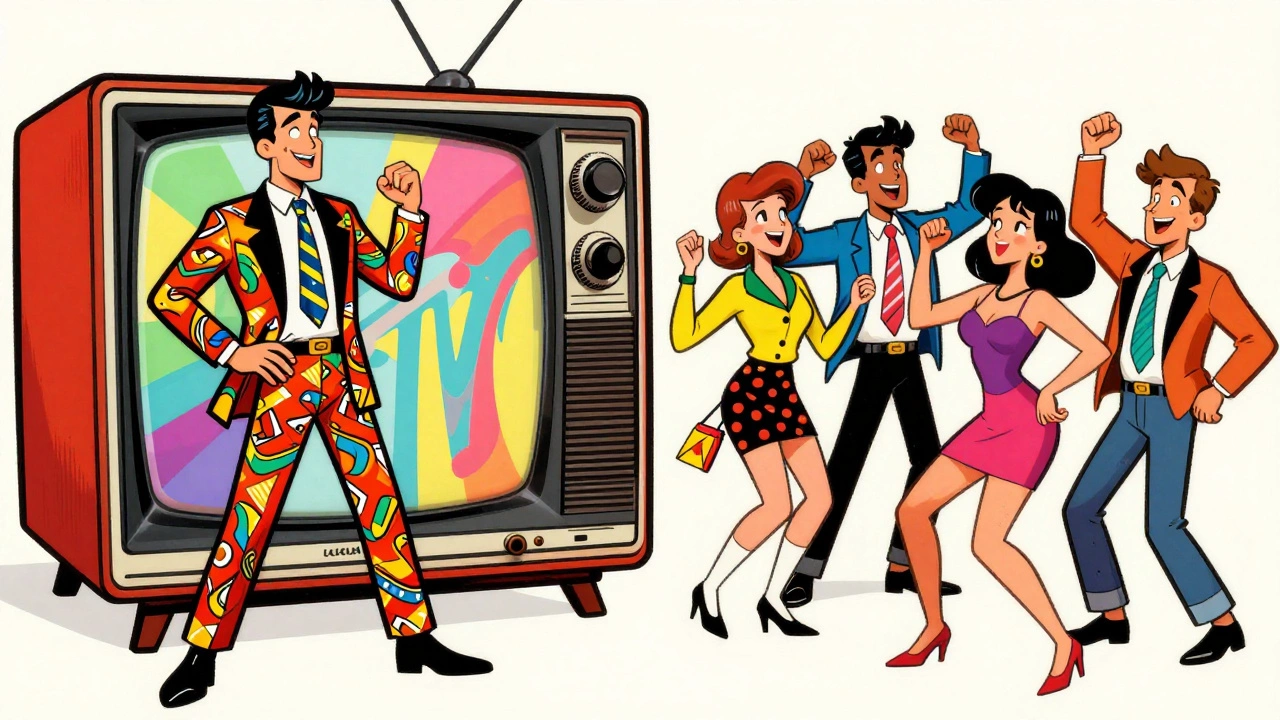
By the early 1980s, this new sound crossed the Atlantic and reshaped American charts. Often referred to as the "Second British Invasion," bands like Duran Duran, Spandau Ballet, and Culture Club brought synth-pop into the mainstream. MTV played a huge role here. Unlike rock, which relied on audio reputation, new wave was visual. The music videos for these bands were stylish, narrative-driven, and perfect for the new television network. This visual component helped sell the idea that synthesizers weren't just for nerds or prog-rockers; they were cool, modern, and essential for pop stardom.
Legacy and Modern Influence
Today, the line between punk and electronic music is blurrier than ever. Genres like digital hardcore and electropunk continue to merge the aggression of punk with the tools of electronic production. Artists like Atari Teenage Riot in the 1990s pushed this further, blending techno beats with shouted political lyrics. Even in contemporary pop, the influence of new wave is undeniable. The use of synthesizers in hits by artists like The Weeknd or Dua Lipa owes a direct debt to the pioneers who first integrated these machines into punk-adjacent contexts. The DIY spirit that started with garage bands picking up cheap guitars has evolved into producers using software synthesizers on laptops, continuing the cycle of accessibility and innovation that defined the era.
Why did punk bands start using synthesizers?
Punk bands adopted synthesizers because they became affordable enough for DIY musicians to purchase, allowing them to create unique sounds without relying on traditional rock instrumentation. Additionally, synths offered a way to break away from conventional song structures and express the alienation and futurism central to punk themes.
What is the difference between new wave and synth-pop?
While often used interchangeably, new wave is a broader term that encompasses various styles emerging from punk, including those with guitars. Synth-pop specifically refers to music where the synthesizer is the dominant instrument. All synth-pop can be considered new wave, but not all new wave is synth-pop.
Who are some key artists in the early integration of synths into punk?
Key artists include Gary Numan (Tubeway Army), who pioneered the sound with "Are 'Friends' Electric?", Yellow Magic Orchestra, who blended electronics with pop melodies, and Suicide, who used organs and drum machines for a harsh, minimalist punk sound. Other notable acts include Devo, Joy Division/New Order, and The Screamers.
How did MTV influence the popularity of new wave?
MTV provided a visual platform for new wave bands, whose stylized image and fashion-forward aesthetics were perfect for music videos. This visual exposure helped British synth-pop acts gain massive popularity in the US during the Second British Invasion, making synthesizers a mainstream symbol of coolness.
Did synthesizers replace guitars entirely in punk-derived genres?
Not entirely. While synth-pop and new wave emphasized keyboards, many post-punk bands continued to use guitars alongside synths. The integration was often additive rather than replacement, creating a hybrid sound that retained punk's energy while exploring new textures.


