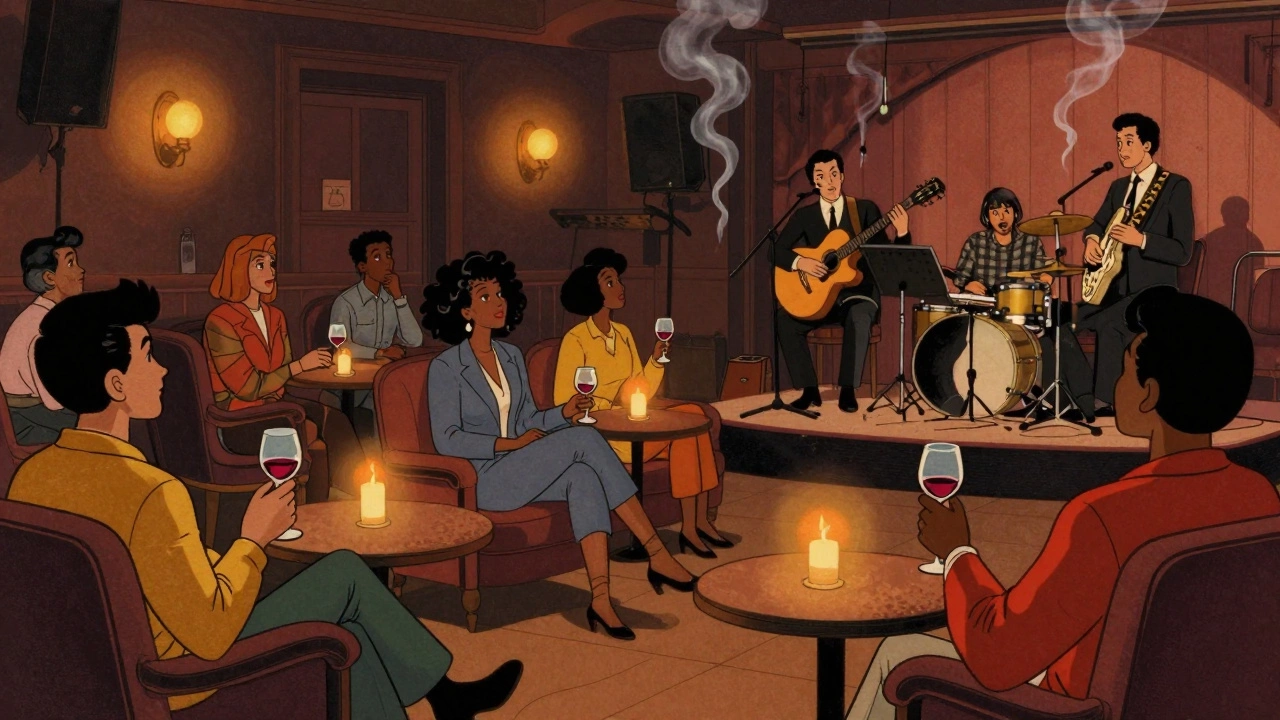

Step into a dimly lit room in New York City around 1997. The air is thick with incense. You are not standing shoulder-to-shoulder with a sweating crowd waiting for a bass drop. Instead, you are seated at a small table, holding a glass of wine, watching a band tune their instruments. This was the heartbeat of neo-soul a genre that fused classic soul, jazz, hip-hop, and funk to create a sophisticated, groove-heavy sound club culture. While mainstream R&B was dominating radio with polished pop hits, a different kind of nightlife was brewing in lounges and listening rooms across America.
This era, roughly spanning from 1995 to 2000, wasn't just about the music on the records. It was about the space where the music lived. Promoters, artists, and fans rejected the high-energy, commercial dance clubs of the mid-90s. They wanted intimacy. They wanted to hear the nuance of a jazz chord or the grit of a live drum break. This shift created a unique subculture defined by attentive listening, Afrocentric aesthetics, and a deep appreciation for musical craftsmanship.
The Birth of a Genre and Its Nightlife Niche
To understand why neo-soul needed its own kind of venue, you have to look at how the term came to be. In the 1990s, Motown executive Kedar Massenburg coined the phrase "neo-soul." He didn't use it as a marketing gimmick for pop radio. Instead, he used it as internal shorthand to describe a wave of artists who were reviving the soulful authenticity of the 1970s while incorporating contemporary elements like hip-hop beats and jazz harmonies.
This categorization had a direct impact on nightlife. Because these artists weren't being pushed toward massive arena tours or boy-band style pop stardom, labels focused on building grassroots followings. They relied on club residencies and boutique tours. Artists like D'Angelo, Maxwell, Erykah Badu, and Lauryn Hill built their reputations one intimate show at a time. This strategy meant that the venues hosting them had to match the vibe of the music: smaller, more personal, and musically serious.
The sonic characteristics of neo-soul demanded this environment. Tracks often hovered between 80 and 95 beats per minute-too slow for frantic dancing, but perfect for head-nodding and slow swaying. With complex jazz chords, extended vamp sections, and warm analog production, the music required high-quality sound systems. A noisy, crowded dance floor would drown out the subtle dynamic changes that made the genre special. Listeners needed a place to sit down and truly listen.
SOB's: The Blueprint for Neo-Soul Venues
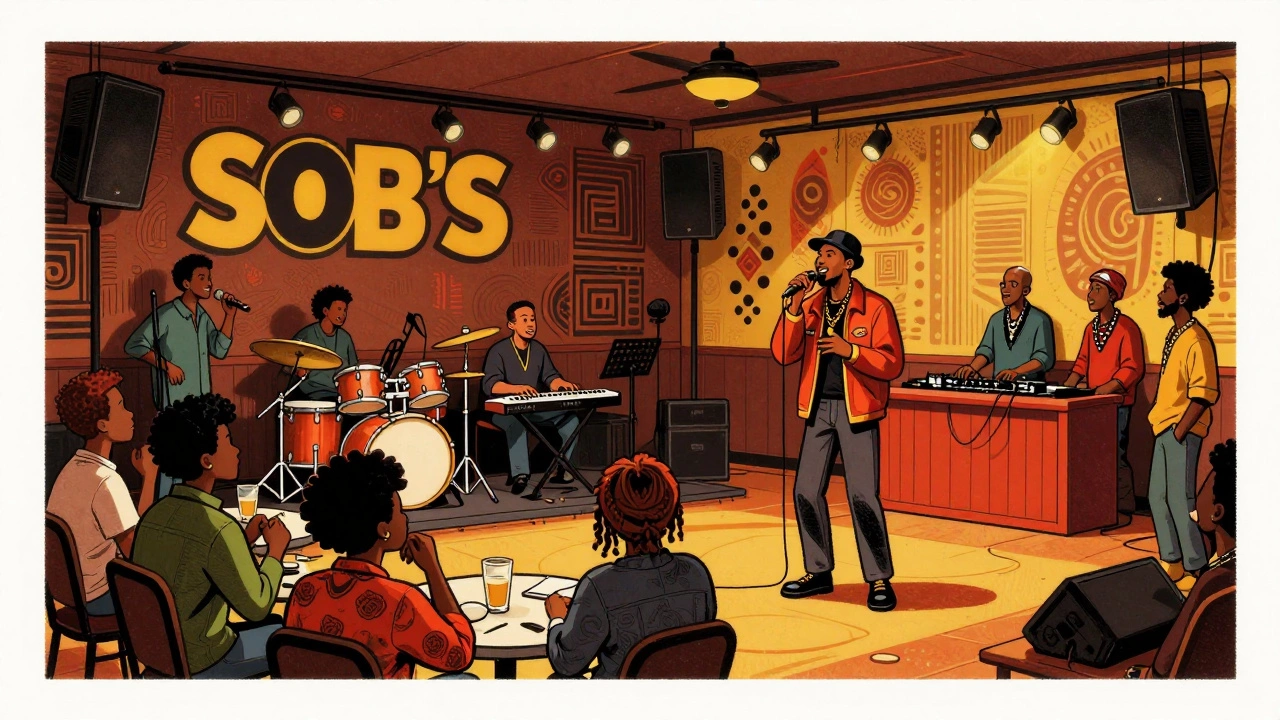
If there is one physical anchor for late-90s neo-soul club culture, it is SOB's (Sounds of Brazil) in New York City. Founded in 1982, SOB's became widely recognized as the first place to bring R&B, hip-hop, and neo-soul to the New York stage in a significant way. By the late 1990s, it served as the blueprint for what a neo-soul venue should be.
SOB's operated with a hybrid model that perfectly suited the genre. Early shows were configured as listening rooms, with tables and chairs for an audience of 100 to 300 people. This setup allowed fans to focus entirely on the performance. As the night progressed and the energy shifted, the space could transform into a standing-room club for DJ-led sets. This flexibility mirrored the versatility of neo-soul itself, which blended structured songwriting with improvisational jam sessions.
| Feature | Neo-Soul Lounge / Listening Room | Mainstream R&B / Hip-Hop Club |
|---|---|---|
| Seating | Tables and chairs; intimate configuration | Standing room; dance floor focused |
| Sound Priority | High-fidelity audio; clarity for live instruments | Loud bass; volume over nuance |
| Tempo & Vibe | Mid-tempo (80-95 BPM); relaxed, reflective | Fast tempo; high energy, party-focused |
| Aesthetic | Candles, incense, comfortable decor, Afrocentric art | Bright lights, neon, glamour, commercial branding |
| Performance Style | Live bands, extended jams, acoustic sets | DJ-driven, backing tracks, choreographed routines |
Artists who defined the genre cut their teeth at SOB's. D'Angelo, Jill Scott, Macy Gray, Erykah Badu, Floetry, and Raphael Saadiq all performed there during the height of the movement. These performances weren't just concerts; they were community gatherings. The venue’s ability to host both seated listening sessions and late-night grooves helped cement the idea that neo-soul was a lifestyle, not just a playlist.
The Soulquarians and the Power of Live Bands
You cannot talk about neo-soul club culture without mentioning the Soulquarians. This loose collective of musicians-including D'Angelo, Erykah Badu, Questlove (of The Roots), Common, Mos Def, Talib Kweli, and Q-Tip-shared a passion for unconventional beats and live instrumentation. Their collaborative studio sessions, which produced landmark albums like D'Angelo's Voodoo (2000) and The Roots' Things Fall Apart (1999), mimicked extended jam environments.
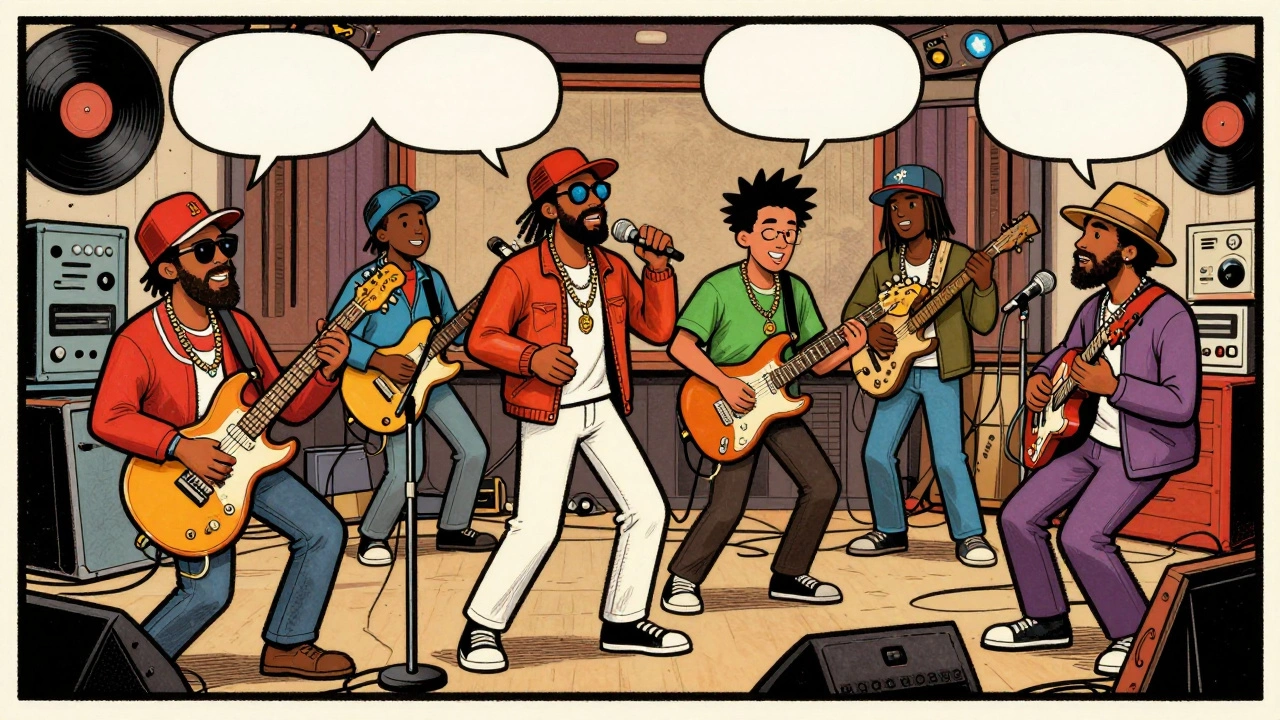
This creative process directly influenced club bookings. Promoters realized that audiences wanted to experience the same spontaneity and musicianship they heard on the records. Consequently, neo-soul nights began featuring full bands rather than just DJs playing pre-recorded tracks. Venues needed enough stage space for multiple musicians and good acoustics to capture the interplay between drums, bass, guitar, and keys.
The presence of live bands changed the audience's behavior. When you see a drummer locking into a pocket or a guitarist weaving through complex jazz chords, you don't want to shout over the noise. You lean in. This shift turned clubs into spaces of reflection and appreciation. The Roots, in particular, exemplified this with their live-band approach to hip-hop, bridging the gap between rap and soul in a way that thrived in intimate settings.
Aesthetics: More Than Just Music
Neo-soul lounges were carefully curated experiences. The visual and atmospheric elements were just as important as the sound. Promoters marketed these nights as sophisticated outings. Think candles, comfortable seating, and sometimes spoken word poetry or jazz sets alongside the neo-soul DJ selections.
The aesthetic was deeply tied to Afrocentric consciousness. Artists and fans embraced natural hair, headwraps, and traditional African patterns. Incense burned in corners, creating a sensory backdrop that felt spiritual and grounding. Visual art displays often lined the walls, reinforcing the connection between music, culture, and identity. This was a reaction against the hyper-commercialized, often superficial imagery of mainstream pop culture at the time.
This attention to detail made neo-soul clubs feel like sanctuaries. They were places where Black artistry, pride, and love were celebrated openly. For many attendees, especially women who found male-dominated hip-hop scenes unwelcoming, these spaces offered safety and inclusivity. The demographic reach expanded to include older listeners and those seeking deeper lyrical content, further distinguishing neo-soul lounges from typical urban nightclubs.
From Analog Grooves to Digital Communities
While the peak of the late-90s neo-soul club scene has passed, its influence remains strong. Today, modern hi-fi bars and vinyl lounges echo the values of those early listening rooms. Places like Block and Drum or Commune in Atlanta continue the tradition of prioritizing audio quality and curation. Fans still seek out spaces where they can sit, drink, and deeply listen to soul, jazz, and R&B.
The ethos has also migrated online. Communities like the Neo Soul Cafe Facebook group create virtual "listening rooms" where members share mixes, videos, and event information. These digital spaces maintain the community values of the 1990s, fostering discovery and discussion around the same artists who defined the era. Even though we no longer gather in the same physical lounges, the desire for curated, intimate musical experiences persists.
Looking back, the late 1990s neo-soul club culture was a vital counter-movement. It proved that nightlife could be about more than just dancing and drinking. It showed that music could be treated with reverence, that live instrumentation mattered, and that communities could form around shared cultural values. The lounges and listening rooms of that era laid the groundwork for today's appreciation of authentic, groove-centered music.
Who coined the term "neo-soul"?
The term "neo-soul" was coined in the 1990s by Kedar Massenburg, a Motown Records executive and manager of D'Angelo. He used it to categorize a new wave of artists who blended classic soul aesthetics with contemporary hip-hop, jazz, and funk elements.
What was SOB's role in neo-soul culture?
SOB's (Sounds of Brazil) in New York City was a pivotal venue for neo-soul. It functioned as both a listening room and a club, hosting early performances by key artists like D'Angelo, Erykah Badu, and Jill Scott. Its hybrid model of seated listening and standing-room dancing set the standard for neo-soul nightlife.
How did neo-soul differ from mainstream R&B in the 1990s?
Neo-soul emphasized live instrumentation, jazz-influenced chords, and socially conscious lyrics, whereas mainstream R&B often relied on polished pop production and dance-pop formats. Neo-soul venues focused on intimate listening experiences, while mainstream clubs prioritized high-energy dancing and commercial spectacle.
What were the typical tempos of neo-soul music?
Neo-soul tracks typically ranged between 80 and 95 beats per minute. This mid-tempo range encouraged head-nodding and slow dancing rather than fast-paced club dancing, making it ideal for lounge and listening room environments.
Who were the key artists in the Soulquarians collective?
The Soulquarians included prominent figures such as D'Angelo, Erykah Badu, Questlove (The Roots), Common, Mos Def, Talib Kweli, and Q-Tip. They collaborated extensively in the late 1990s and early 2000s, shaping the sound and aesthetic of neo-soul through live jam sessions and innovative production.
Why were listening rooms important for neo-soul?
Listening rooms provided the acoustic quality and intimate atmosphere necessary to appreciate neo-soul's complex arrangements and subtle dynamics. Unlike loud dance clubs, these spaces allowed audiences to focus on live instrumentation, improvisation, and lyrical depth, enhancing the overall musical experience.
Does neo-soul club culture still exist today?
Yes, the ethos continues in modern hi-fi bars, vinyl lounges, and intimate jazz clubs that prioritize audio quality and curation. Online communities also keep the spirit alive by sharing curated mixes and events, maintaining the value of deep listening and community connection established in the 1990s.


