
There is a specific kind of magic that happens when a song stops being just a collection of chords and starts acting like a short story. You know the feeling. The lights dim, the tempo slows to a gentle sway, and suddenly you are not just listening to music-you are watching a movie in your head. This is the power of narrative ballads within the realm of soft rock. These tracks do more than express a vague emotion; they introduce characters, set scenes, and deliver plot twists, all wrapped in melodies so smooth they slip straight into your memory.
From the smoky barrooms of Billy Joel’s early hits to the surreal highways of the Eagles’ biggest anthems, this subgenre turned radio waves into literature. But how did these songs become so dominant? And why do we still return to them decades later? Let’s break down the anatomy of the story-song.
The Roots of the Story-Song
To understand where soft rock narrative ballads come from, we have to look back further than the electric guitar. The tradition stretches back centuries to European folk poetry-those long, strophic poems sung in pubs across England and Scotland in the 17th century. They were compact, rhythmic, and designed to be remembered by ear.
In the 20th century, this DNA migrated to America through folk and country music. Artists like Bob Dylan brought complex social narratives into the spotlight with tracks like "Ballad of Hollis Brown" (1964). Meanwhile, groups like Simon & Garfunkel began merging these introspective stories with rock instrumentation. Their hit "The Sound of Silence," which hit No. 1 in January 1966, used a ballad structure to tell an emotional narrative rather than a strict plot, setting the template for what was coming next.
By the late 1960s, radio programmers needed a label for this lighter, melody-driven sound. By 1969-1970, the term soft rock had crystallized. It described artists like Bread and The Carpenters who offered a polished, accessible alternative to the harder sounds of classic rock. This formatting created a safe harbor for longer, story-heavy tracks that wouldn’t fit on AM radio’s strict three-minute limits but thrived on FM stations and Adult Contemporary playlists.
Anatomy of a Hit: Tempo, Harmony, and Structure
If you analyze the technical side of these songs, a clear pattern emerges. Soft rock narrative ballads typically sit between 60 and 90 beats per minute (BPM). This moderate tempo gives the listener time to process the lyrics without feeling rushed. Unlike heavy metal or punk, which rely on aggression and speed, soft rock relies on intimacy and clarity.
Musically, these songs often use diatonic harmonies centered on major keys like G, C, D, or A. These keys are friendly to both piano and acoustic guitar, allowing for clean voicings that support the voice rather than overpower it. Music theorist Allan F. Moore notes that these tracks usually follow conventional verse-chorus forms. The verses carry the new information-the plot points-while the chorus acts as an emotional anchor, repeating unchanged to provide stability amidst the changing story.
| Attribute | Typical Value/Feature | Purpose in Storytelling |
|---|---|---|
| Tempo | 60-90 BPM | Allows lyrical comprehension and creates a relaxed atmosphere |
| Instrumentation | Acoustic guitar, piano, strings, restrained drums | Provides warmth and supports vocal intimacy |
| Structure | Verse-Chorus-Bridge | Verses advance plot; Chorus reinforces theme/emotion |
| Duration | 3-7 minutes | Enough space for character development and resolution |
Masterclasses in Musical Storytelling
The true test of a narrative ballad is whether the music enhances the story, not just accompanies it. Some songs achieve this so perfectly they feel inevitable.
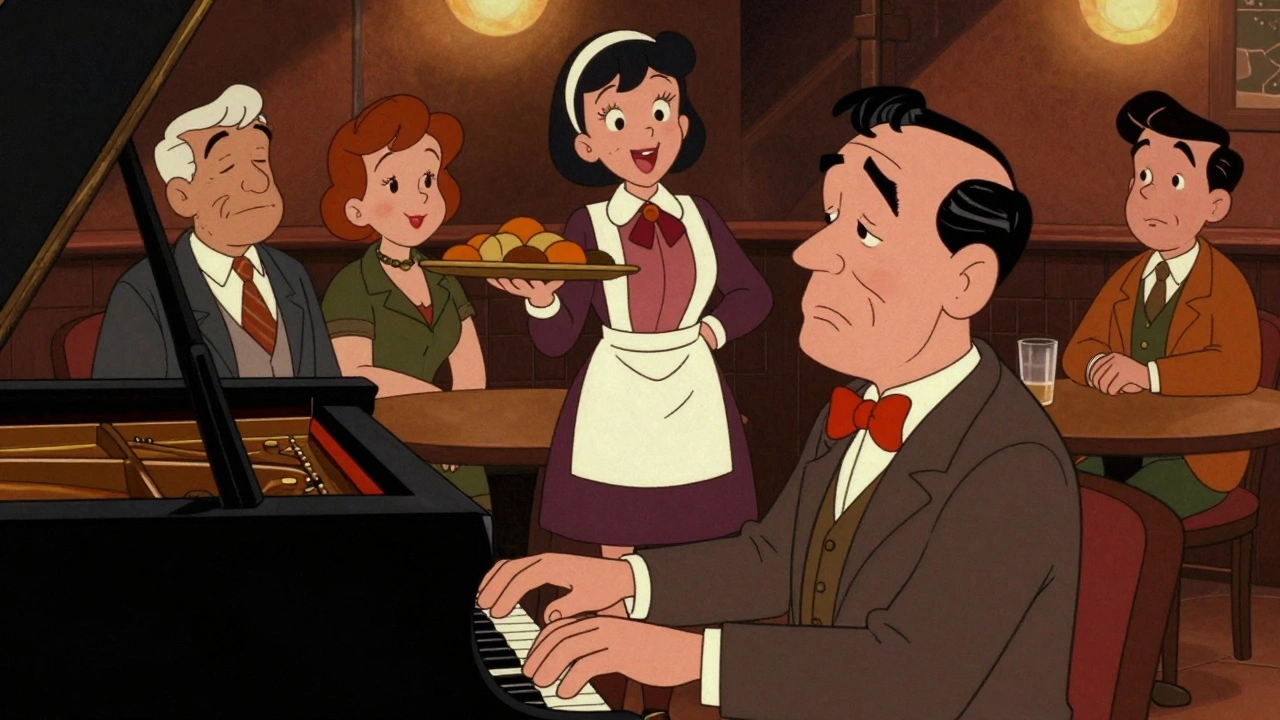
Consider Billy Joel’s "Piano Man," released in November 1973. At 5:38, it’s a novella in musical form. Set in C major at roughly 63 BPM, the song introduces us to John at the bar, a waitress, a businessman, and others. Each verse adds a new character sketch, while the waltz-time chorus ("It’s nine o’clock on a Saturday...") returns like a clock ticking in the background. Joel’s slightly nasal baritone and the harmonic mouth-organ melody act as narratorial signatures, making the dense lyrics feel like chapters in a continuous tale.
Then there is Harry Chapin’s "Cat’s in the Cradle," released in October 1974. In just 3:47, Chapin compresses three decades of a father-son relationship. The recurring image of the cat’s cradle game marks the passage of time. As the son grows up, he mirrors his father’s neglect, leading to a heartbreaking twist ending where the roles reverse. The song reached No. 1 on the Billboard Hot 100, proving that audiences were hungry for explicit, character-driven narratives.
Another prime example is Rupert Holmes’s "Escape (The Piña Colada Song)," released in September 1979. Structured around personal ads in a newspaper, the song builds suspense until the final reveal: the narrator and his partner have inadvertently answered each other’s ads. This clever twist, wrapped in lush soft rock production, spent three weeks at No. 1, confirming that mystery and irony work beautifully in this genre.

Production as Narrative Tool
In soft rock, production isn’t just about making things sound good; it’s about telling the story. Arrangement choices often mirror changes in setting or emotional stakes.
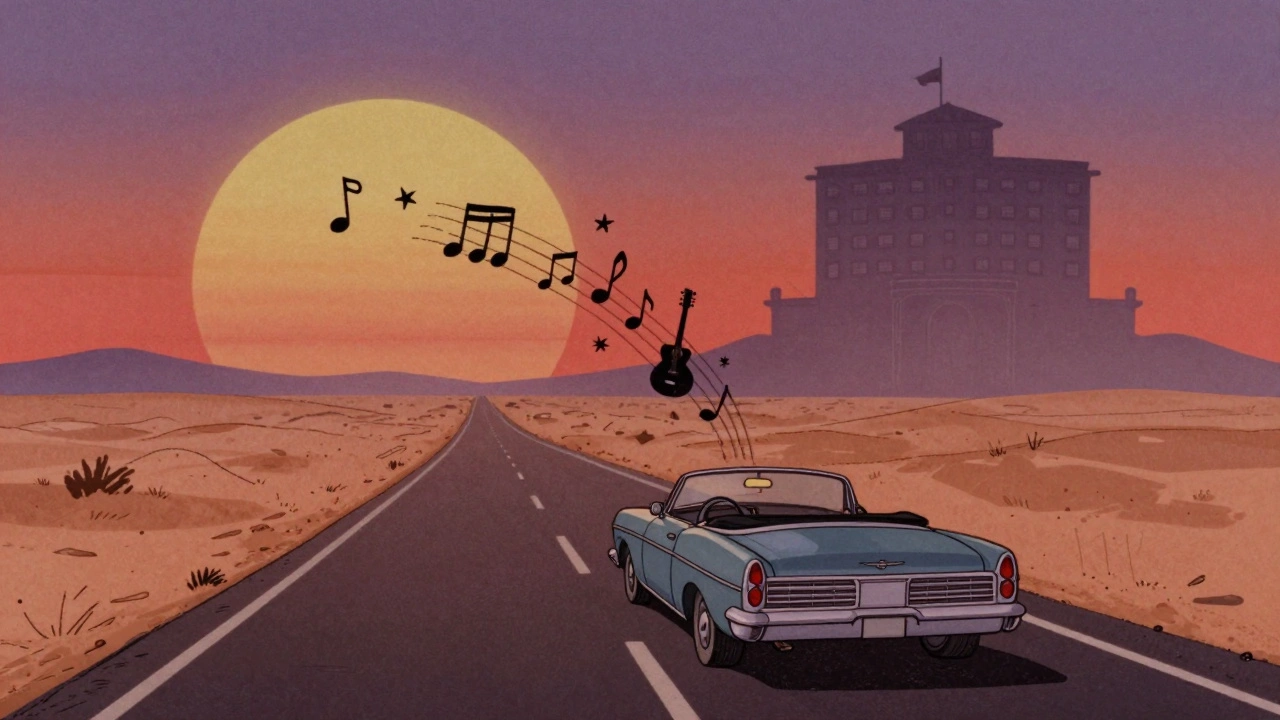
Take the Eagles’ "Hotel California," released as a single in February 1977. Produced by Bill Szymczyk and recorded at Criteria Studios in Miami, the track begins with a 12-string guitar and understated rhythm section at roughly 75 BPM. It suggests a relaxed journey. But as the lyrics grow ominous ("You can check out any time you like, but you can never leave"), additional electric guitar layers and vocal harmonies enter. The dual-guitar solo by Don Felder and Joe Walsh, extending for nearly two minutes, acts as a wordless final chapter, conveying the confusion and entrapment of the protagonist.
Similarly, Air Supply’s "All Out of Love" (1980) uses strings and backing vocals that gradually thicken from verse one to verse three. This sonic buildup mirrors the narrator’s escalating desperation after a breakup. Producers Clive Davis and Robie Porter highlighted this technique, using arrangement to reflect emotional intensity rather than relying solely on volume or distortion.
Why We Still Listen: The Enduring Appeal
Critics have always been divided on soft rock. Robert Christgau praised albums like Billy Joel’s "The Stranger" for their narrative strength, calling tracks like "Scenes from an Italian Restaurant" miniature short stories. Conversely, critics like Lester Bangs dismissed much of the genre as slick and manipulative, arguing that heavily orchestrated story songs functioned as escapist fantasies rather than confrontational art.
Yet, listener reception tells a different story. Online communities, from Reddit threads to YouTube comment sections, consistently cite these songs as exemplary examples of storytelling. Listeners often connect personally with the narratives, tying moments in "Cat’s in the Cradle" to their own experiences with parenting or aging. This multi-generational engagement shows that the core appeal remains intact.
Today, the legacy of these narrative ballads lives on in modern pop-rock and singer-songwriter genres. Artists like John Mayer, Adele, and Ed Sheeran employ similar instrumentation-piano, acoustic guitar, moderate tempos-and detailed emotional narratives. While production aesthetics have shifted toward digital reverb and layered vocals, the structural logic of using verses for scene-building and choruses for thematic distillation remains closely related to 1970s soft rock practice.
Even AI tools are now attempting to replicate this style. Platforms like Suno AI allow users to generate tracks with prompts specifying characters and emotional arcs. However, as music-tech commentators note, while these tools democratize creation, they also raise questions about originality and emotional authenticity. Can an algorithm truly capture the nuanced grief of a Richard Marx ballad or the witty irony of a Rupert Holmes twist?
For now, the human element remains central. The slight pitch inflections, the dynamic range between verse and chorus, and the perceived authenticity of the singer’s voice play as large a role in narrative persuasion as the lyrics themselves. As streaming continues to favor catalogue listening-with over 60% of consumption dedicated to older tracks according to MIDiA Research-these classic soft rock story songs show no signs of fading away. They remain essential companions for life’s transitions, offering comfort, reflection, and, most importantly, a good story.
What defines a narrative ballad in soft rock?
A narrative ballad in soft rock is a song that uses gentle, melody-driven arrangements (typically 60-90 BPM) to tell a compact, character-based or plot-driven story. These songs often feature diatonic harmonies, clean production, and structures that allow verses to advance the plot while choruses reinforce emotional themes.
How did soft rock narrative ballads originate?
They evolved from centuries-old European folk ballad traditions and 20th-century American folk and country music. In the 1960s and 70s, artists like Bob Dylan and Simon & Garfunkel merged storytelling with rock instrumentation. The term "soft rock" emerged in US radio formatting by 1969-1970 to describe lighter, melody-focused tracks that could accommodate longer, story-heavy songs on FM radio.
Why are songs like "Piano Man" and "Hotel California" considered masterpieces of this genre?
These songs exemplify the perfect blend of lyrical detail and musical support. "Piano Man" uses distinct verses to introduce characters and a recurring chorus to frame the timeline, while "Hotel California" uses evolving instrumentation and a lengthy instrumental solo to mirror the narrative’s increasing tension and surrealism.
What role does production play in soft rock storytelling?
Production choices often mirror the story’s emotional arc. For example, adding string layers or thickening backing vocals can signal rising desperation or tension. Clean, warm tones and restrained dynamics help maintain intimacy, ensuring the listener focuses on the lyrics and the singer’s performance.
Are narrative ballads still relevant today?
Yes. Modern artists like John Mayer, Adele, and Taylor Swift continue to use similar structures and instrumentation. Streaming data shows that classic soft rock ballads remain highly popular, with catalogue listening accounting for a majority of on-demand consumption. The core appeal of storytelling through melody endures across generations.


