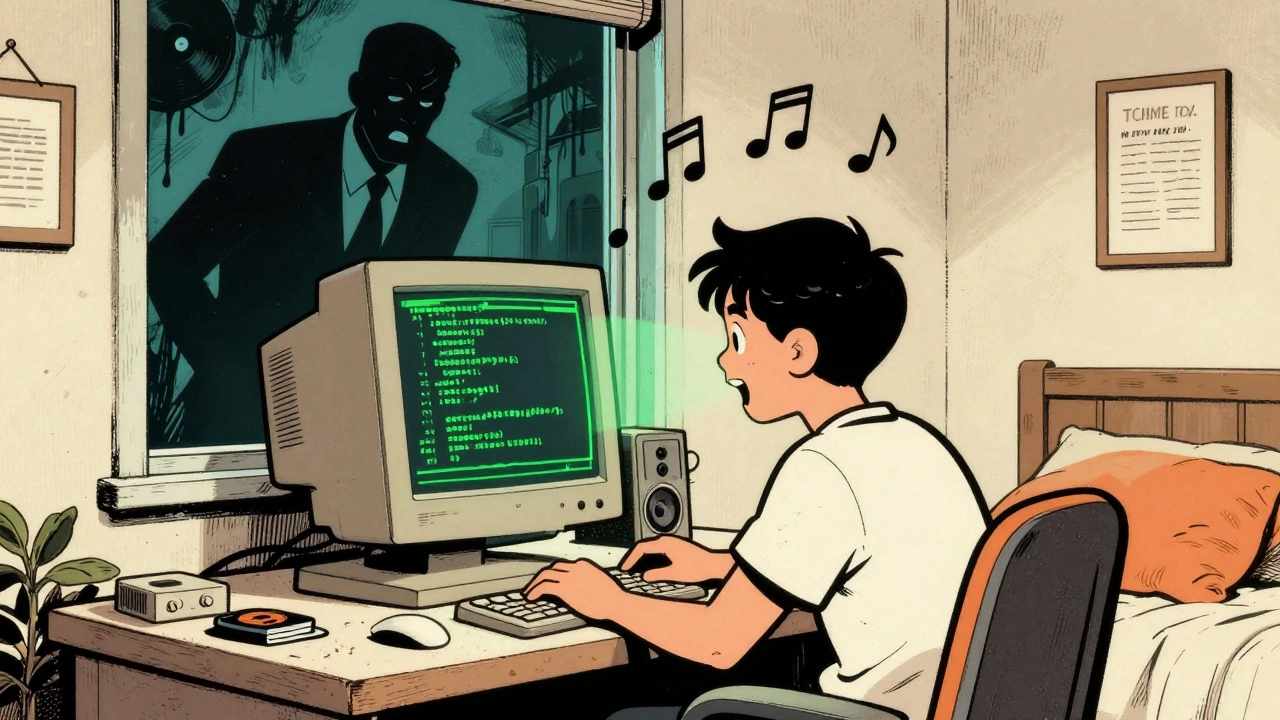

Imagine a world where you could access nearly every song ever recorded for free, instantly, from your bedroom computer. That was the promise of Napster, a peer-to-peer file-sharing service launched in June 1999 that revolutionized how people consumed music by allowing users to share MP3 files directly with each other. It lasted only two years before being shut down by court order, but its impact reshaped the global music industry and set legal precedents that still govern the internet today. Now, as we face similar disruptions with generative AI and social media giants, looking back at Napster’s rise and fall offers critical lessons for modern platform regulation.
The story isn't just about stolen music; it's about how technology outpaces law, how user behavior drives innovation, and why enforcement alone rarely solves complex digital problems. When Shawn Fanning, a 19-year-old student at Northeastern University, released the first version of Napster in Boston in 1999, he didn't intend to destroy the record industry. He simply wanted to make sharing music easier. But in doing so, he created a platform that grew from 150,000 users to over 26 million verified users in less than two years-a growth rate that terrified established businesses and confused regulators.
The Architecture of Liability: Why Central Control Matters
To understand why Napster was shut down while later services like Spotify survived, you have to look at its technical design. Unlike modern decentralized networks, Napster used a centralized index server. This means that while the actual MP3 files sat on users' hard drives, the search engine lived on Napster's servers. When you searched for "Metallica," Napster's central system told your computer which other users had that file. This architectural choice became the company's undoing in the courtroom.
In the landmark case A&M Records, Inc. v. Napster, Inc. (239 F.3d 1004), the U.S. Court of Appeals for the Ninth Circuit ruled that Napster was liable for contributory and vicarious copyright infringement. The court reasoned that because Napster controlled the central index, it had the ability to supervise infringing activity and block specific files. They also noted that Napster benefited financially from the traffic generated by copyrighted content. This distinction between a passive host and an active distributor is crucial for today's debates. Modern platforms, including AI training data aggregators and social media sites, often argue they are merely neutral conduits. However, if their algorithms actively curate, rank, or facilitate access to infringing material, they may face similar liability exposures under current interpretations of the Digital Millennium Copyright Act (DMCA).
| Platform Type | Control Mechanism | Liability Risk | Example |
|---|---|---|---|
| Centralized Index (Napster) | Server controls search results and user directories | High (Contributory/Vicarious Infringement) | Original Napster (1999-2001) |
| Fully Decentralized P2P | No central server; nodes communicate directly | Moderate (Inducement Doctrine applies) | Kazaa, Grokster (post-2001) |
| Licensed Streaming | Hosts content with explicit rights management | Low (Contractual Compliance) | Spotify, Apple Music |
| Generative AI Models | Algorithmic processing of vast datasets | Evolving (Fair Use vs. Licensing Debates) | Large Language Models (LLMs) |
The Failure of Enforcement-Only Strategies
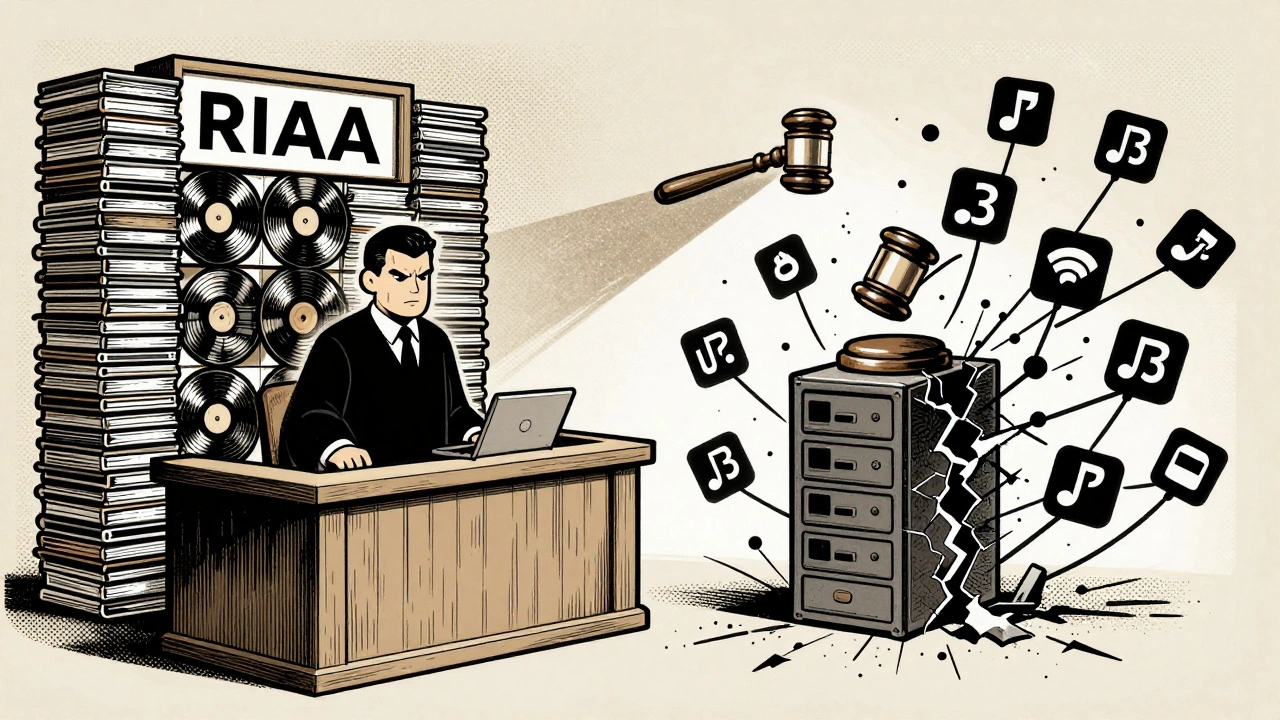
When the Recording Industry Association of America (RIAA) sued Napster, they won decisively. On July 26, 2000, a federal judge issued a preliminary injunction requiring Napster to block copyrighted music. By July 2001, unable to comply effectively without killing its own service, Napster shut down. The RIAA celebrated, believing they had stopped the bleeding. They were wrong. Shutting down Napster did not stop digital music sharing; it merely pushed it underground and into more resilient, harder-to-regulate architectures like Kazaa and Gnutella.
This pattern repeats itself in every major tech disruption. You cannot litigate a technological shift out of existence. When regulators focus solely on banning specific tools or platforms, they create a vacuum that is quickly filled by alternatives-often ones that are even less compliant or more opaque. For instance, after Napster fell, the industry saw a surge in decentralized file-sharing networks that lacked any central point of control, making them nearly impossible to shut down through traditional injunctions. Today, as governments consider regulating generative AI, the same risk exists. Banning certain AI models without addressing the underlying demand for accessible, low-cost creative tools will likely drive users toward unregulated, offshore, or open-source alternatives that offer no transparency or accountability.
The lesson here is clear: enforcement must be paired with viable alternatives. If you take away the illegal option without providing a convenient, affordable legal one, users will find another way. Napster proved that convenience trumps legality when the gap in user experience is wide enough. A CD cost $15-$20 and contained only 12 songs. Napster offered millions of songs for free, searchable in seconds. No amount of legal warnings could compete with that value proposition.
Incumbent Delay and the Cost of Ignorance
One of the most painful lessons from the Napster era is the time it took for incumbents to adapt. Record labels initially dismissed digital distribution as a niche threat. They focused almost exclusively on lawsuits rather than exploring new business models. This delay lasted roughly three to four years. During this window, piracy became normalized among millions of consumers, particularly teenagers and college students who formed lifelong habits of accessing music digitally without paying.
By the time Apple launched the iTunes Store in April 2003, offering songs for $0.99 each, the damage was done. The market had already shifted. Consumers expected instant, granular access to music, not expensive physical albums. It took until 2008 for Spotify to introduce the streaming subscription model that eventually stabilized industry revenues. That seven-year lag-from Napster’s launch to the widespread adoption of legal streaming-cost the industry billions in lost revenue and brand trust. Experts at the Bennett Institute for Public Policy at the University of Cambridge warn that content industries facing generative AI today must avoid repeating this mistake. Waiting for courts to decide the fate of AI training data could result in a similar multi-year delay, during which unlicensed models dominate the market and consumer expectations solidify around free or near-free access.
User-Centric Value Drives Adoption, Not Law
Regulators often assume that if a service is illegal, users will abandon it once warned. Napster shattered that assumption. Between 1999 and 2001, the platform grew explosively because it solved a real problem: friction. Buying music required trips to stores, cash transactions, and limited selection. Napster reduced that friction to zero. Installation took minutes. Search was instantaneous. Cost was nothing. This user-centric value proposition drove adoption faster than any marketing campaign could.
For modern platform regulation, this means compliance requirements cannot ignore user experience. If regulatory frameworks add significant friction-such as mandatory identity verification for anonymous posting, or high licensing fees passed on to consumers-they risk pushing users toward non-compliant alternatives. The goal should be to align legal structures with user expectations. For example, instead of banning AI-generated content outright, regulators could encourage standardized labeling and licensing mechanisms that allow creators to opt-in or opt-out easily, preserving the ease of use while respecting intellectual property rights.
Innovation Bifurcation: Two Paths After Disruption
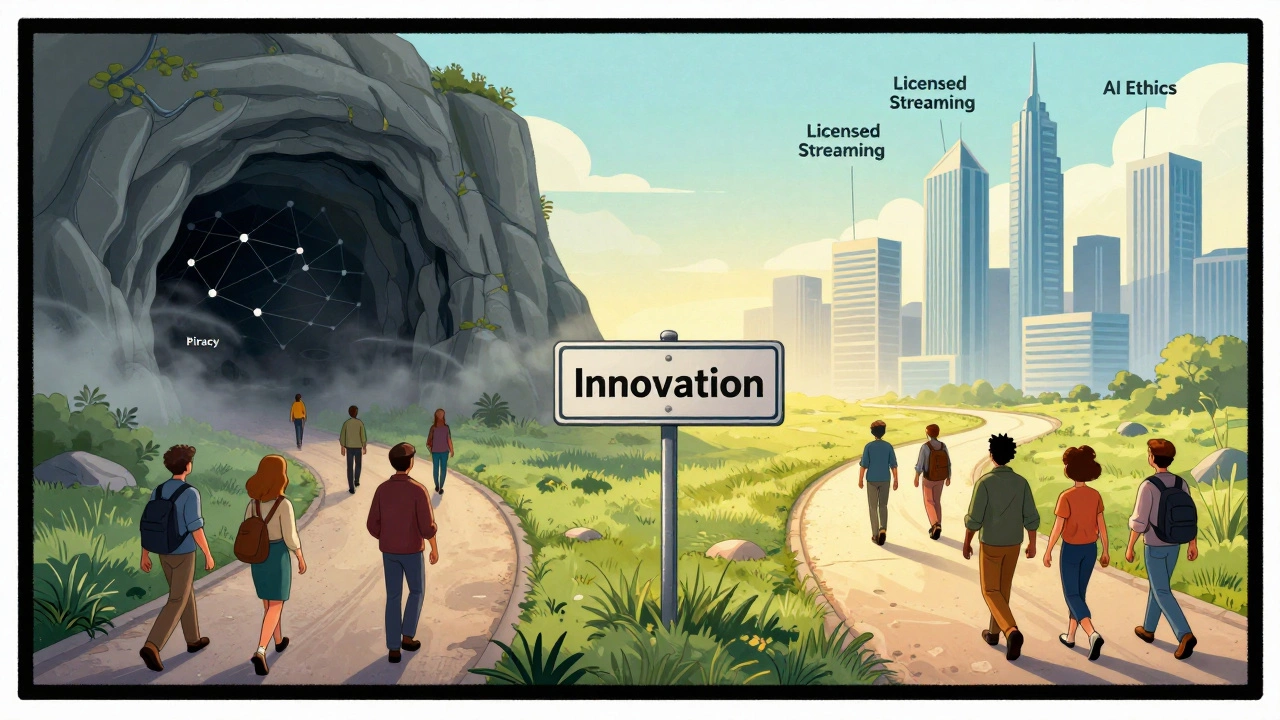
Napster’s shutdown triggered what analysts call "innovation bifurcation." On one side, developers built harder-to-regulate, decentralized systems to evade liability. On the other, entrepreneurs like Steve Jobs and Daniel Ek built licensed, compliant services that worked within the legal framework. Both paths emerged simultaneously, driven by different incentives. The pirate path offered freedom and anonymity; the legal path offered stability and quality.
Today, we see a similar split in the AI landscape. On one hand, there are closed, corporate-controlled models that invest heavily in licensing agreements and safety measures. On the other, there is a thriving ecosystem of open-source models trained on scraped data, operating in legal gray areas. Regulators must recognize that both ecosystems will coexist. Trying to eliminate one entirely is futile. Instead, policy should aim to raise the floor for all players-ensuring baseline standards for transparency, safety, and compensation-while allowing competition to determine which models succeed based on merit and user preference.
Practical Steps for Modern Policymakers
So, what should regulators do differently this time? Based on the Napster precedent, here are actionable strategies:
- Prioritize Early Engagement: Don’t wait for litigation to define the rules. Establish working groups with technologists, creators, and legal experts within the first 1-2 years of a disruptive technology’s emergence.
- Focus on Architecture, Not Just Content: Evaluate how platforms design their systems. Do they enable supervision? Do they incentivize infringement? Liability should reflect technical control.
- Create Viable Legal Alternatives: Support the development of affordable, easy-to-use licensed services. If the legal option is inconvenient or expensive, piracy will win.
- Implement Proportional Enforcement: Avoid blanket bans that displace users to worse alternatives. Target bad actors and systemic abuses, not entire categories of technology.
- Standardize Data Governance: For AI, develop clear frameworks for data sourcing, attribution, and compensation. Ambiguity breeds conflict; clarity fosters innovation.
These steps require humility and agility. Regulators must accept that they cannot predict every twist in technological evolution. But by learning from Napster’s short, intense life, they can build policies that protect rights holders without stifling the next wave of digital creativity.
The Long-Term Viability of Compliant Platforms
Napster’s brand survived long after its original service died. Roxio acquired its assets in 2002, relaunched it as a legitimate download store in 2003, and later sold it to MelodyVR in 2020 for $70 million. This trajectory shows that unauthorized models may thrive briefly, but sustainable success requires legitimacy. Users eventually prefer services that are reliable, safe, and integrated into the broader cultural economy. Piracy is a temporary workaround; licensed platforms are permanent infrastructure.
For modern startups building on emerging technologies, the message is clear: build for longevity. Incorporate compliance from day one. Partner with rights holders early. Design your architecture to support governance, not evade it. The companies that survive the next decade of platform regulation will be those that view legal constraints not as barriers, but as foundations for trust and scale.
Why was Napster shut down if it didn't host the actual music files?
Napster was shut down because its centralized index server allowed it to control and facilitate the search for copyrighted material. Courts ruled this constituted contributory and vicarious infringement, meaning Napster knew about the infringement and benefited from it, giving it legal responsibility despite not hosting the files themselves.
How does the Napster case relate to Generative AI regulation?
The Napster case serves as a warning against relying solely on litigation to stop technological disruption. Just as suing Napster didn't stop file-sharing, banning AI models may push development to unregulated spaces. Instead, policymakers should focus on creating licensed, compliant frameworks that balance innovation with creator rights, avoiding the multi-year delays that hurt the music industry.
What is the difference between Napster and modern streaming services like Spotify?
Napster operated without licenses, allowing users to share copyrighted files illegally via peer-to-peer connections. Spotify operates with explicit licensing agreements from record labels and publishers, paying royalties for streams. Spotify also hosts the content centrally, ensuring quality and legal compliance, whereas Napster relied on users' personal hard drives.
Did shutting down Napster end digital piracy?
No, shutting down Napster did not end digital piracy. It shifted activity to decentralized networks like Kazaa and Gnutella, which were harder to regulate. Piracy continued until viable, convenient legal alternatives like iTunes and later Spotify emerged, demonstrating that enforcement alone is ineffective without user-friendly legal options.
What role did user experience play in Napster's rapid growth?
User experience was the primary driver of Napster's growth. It offered instant, free access to millions of songs, eliminating the friction of buying physical CDs. This massive improvement in convenience and cost attracted 26 million users in under two years, proving that superior utility can overcome legal uncertainties and moral objections.