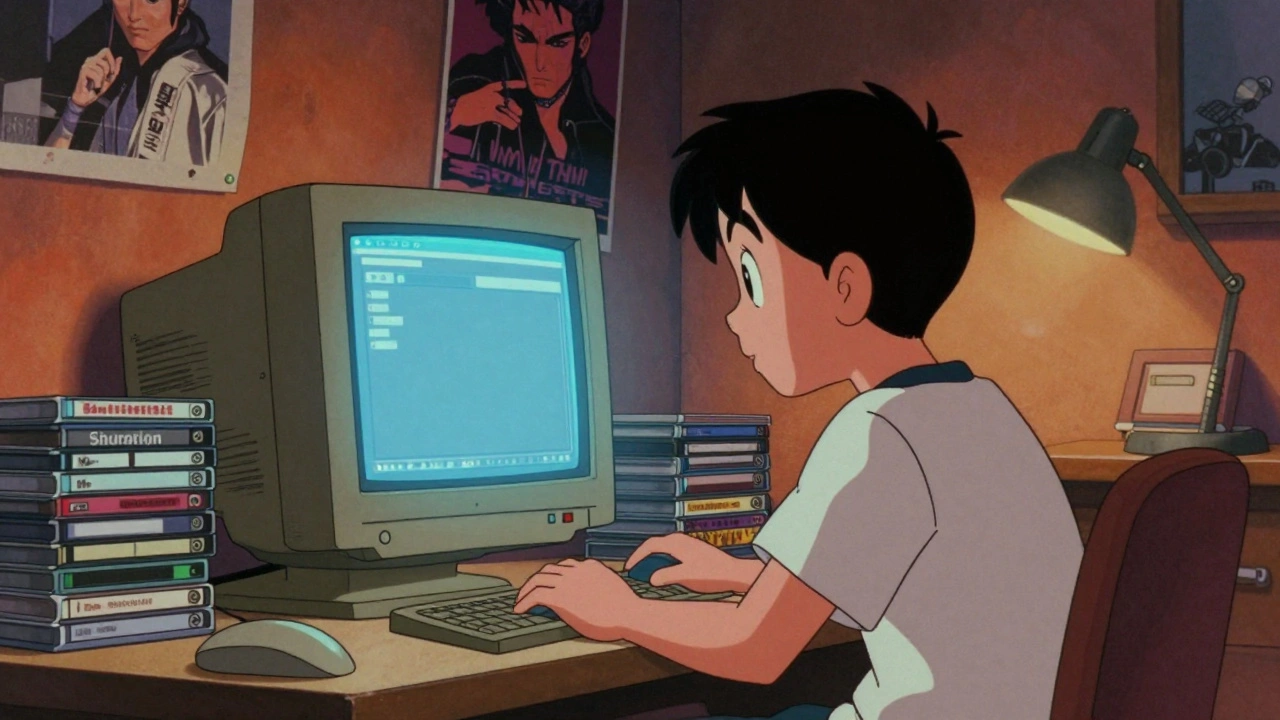

The Magic of the MP3 and P2P
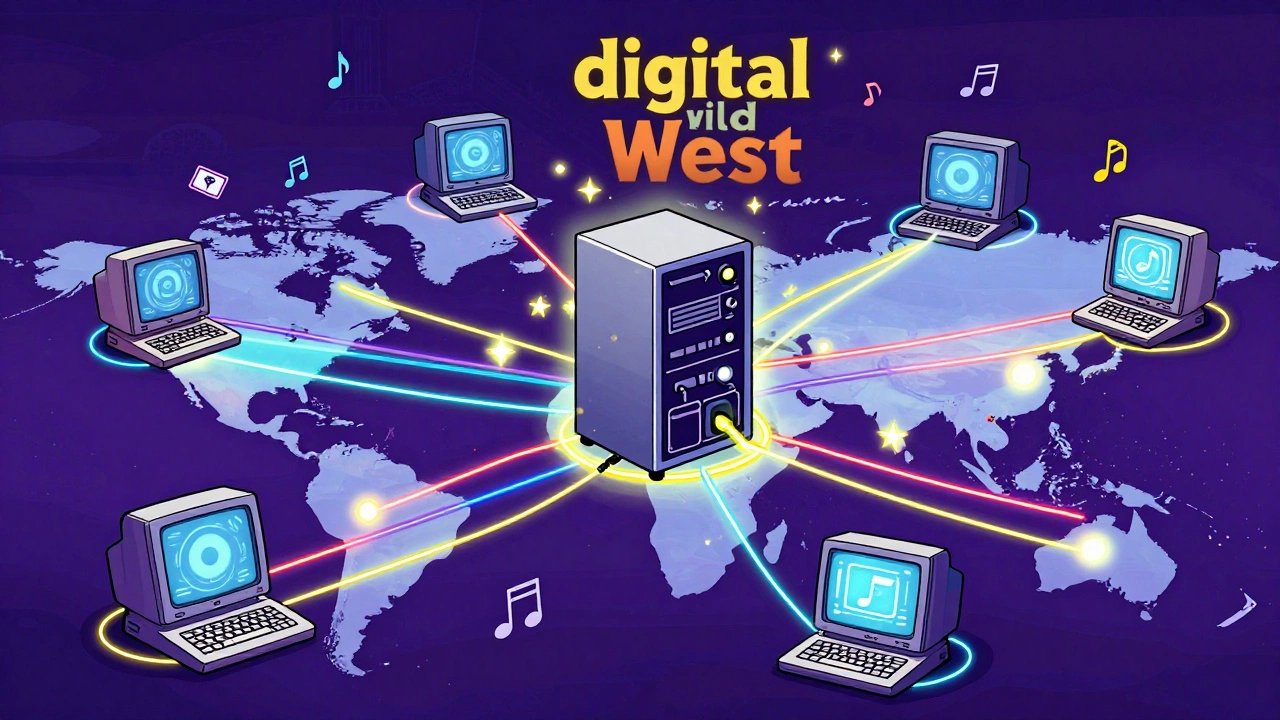
To understand why Napster blew up, you have to understand the MP3 is a digital audio compression format that shrunk song files enough to be sent over the slow internet connections of the late 90s . Before this, digital music files were too massive for the average home computer to handle. When you combine a small file size with Peer-to-Peer (P2P) is a decentralized communications model where each party in a network acts as both a client and a server , you get a digital wild west. Unlike a traditional website where you download a file from a central server, Napster let you download a song directly from another person's computer. If a college student in New York had a rare Metallica track on their hard drive, a teenager in London could grab it instantly. This shifted the power from the record labels to the users. For the first time, the world's entire music library was available for free, provided someone, somewhere, was willing to share it.How Napster Actually Worked
While we call it P2P, Napster wasn't fully decentralized. It used a hybrid model. The software relied on a centralized database that acted like a giant phone book. When you searched for "Radiohead," you weren't searching every computer on the web; you were asking Napster's central servers who had that song. Once the server gave you a list of users, your computer connected directly to theirs to transfer the file.| Feature | Napster (1999) | Pure P2P (Gnutella/Kazaa) |
|---|---|---|
| Search Method | Centralized Index | Distributed/Query-based |
| Speed | Very Fast Search | Slower Search |
| Vulnerability | Single Point of Failure | Resilient to Shutdowns |
| Control | Company could block files | No central control |
The Industry's Panic and Legal War
The music industry didn't react with curiosity; they reacted with terror. Record labels saw their profit margins evaporating as Digital Piracy is the unauthorized copying and distribution of copyrighted digital content became the norm. To the labels, Napster was a theft machine. To the users, it was a revolution in accessibility. Founded by Shawn Fanning and Sean Parker, Napster tried to play the "technology company" card, arguing they weren't responsible for what users uploaded. But the legal tide turned quickly. The RIAA is the Recording Industry Association of America, which represents the interests of major record labels led the charge. They didn't just sue Napster; they started suing the individual users. Imagine being a 19-year-old student and receiving a federal lawsuit for 100,000 dollars because you shared a few Nirvana songs. It was a scare tactic intended to drive people off the platform.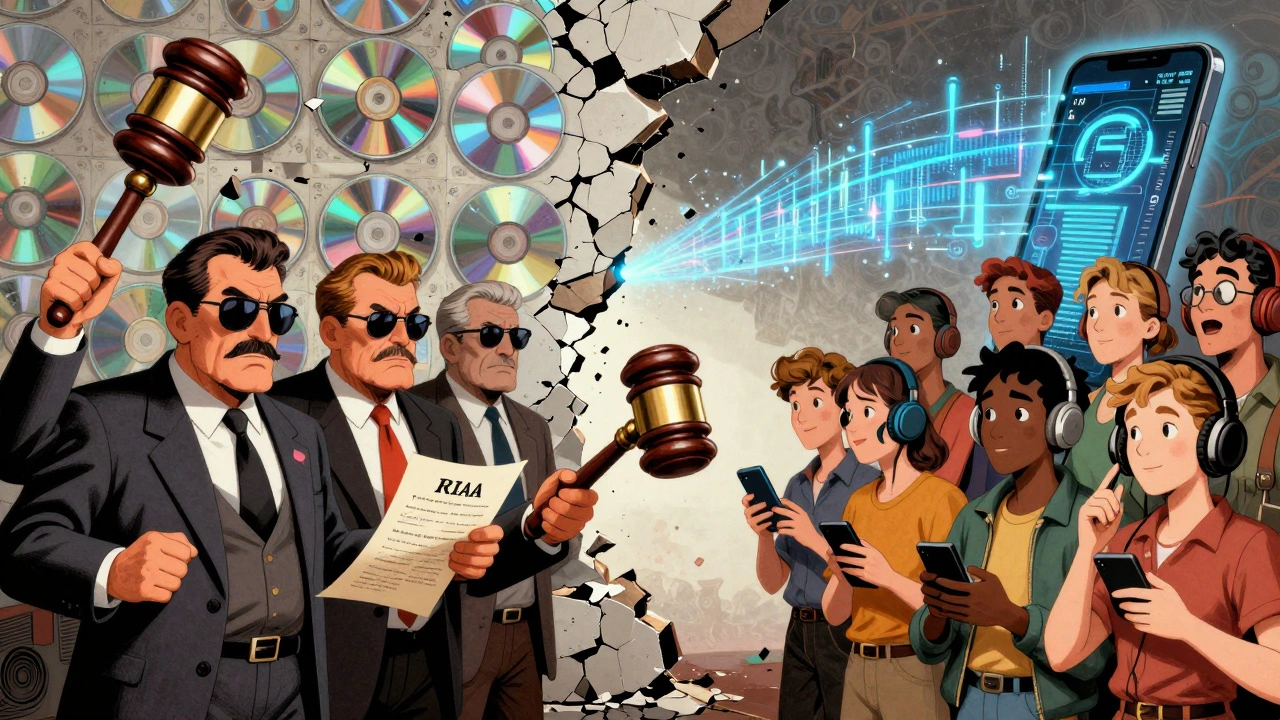
The Fall and the Financial Fallout
By 2001, the legal pressure became unsustainable. After a series of bruising court battles, Napster was forced to shut down its original file-sharing service. The company didn't go quietly, but it couldn't survive the onslaught of the major labels. By June 2002, the original Napster filed for bankruptcy. The financial resolution was staggering. Napster eventually agreed to a $26 million settlement to pay music creators for the unauthorized use of their work. On top of that, they provided a $10 million advance for future licensing royalties. This was a landmark moment because it officially acknowledged that digital distribution was here to stay, even if the specific platform that started it was dead.The Legacy: From Piracy to Streaming
Did Napster win? In the short term, no. The company died and the founders moved on. But in the long term, Napster won the cultural war. It proved that people wanted a digital library and were unwilling to go back to buying full albums for one hit song. This hunger created the gap that Apple Inc. is the technology company that launched the iTunes Store in 2003 to legitimize digital music downloads filled. Steve Jobs convinced the labels that the only way to stop piracy was to give users a legal, easy, and affordable alternative. The 99-cent song was the industry's answer to Napster's free songs. Eventually, this evolved into the subscription models we use today. Whether you use Spotify or YouTube Music, you're using a descendant of the Napster ethos: instant access to almost every song ever recorded, regardless of where the file is physically located. Napster didn't just ignite music piracy; it forced the entire entertainment world to digitize or die.Was Napster the first P2P service?
No, P2P technology existed before Napster, but Napster was the first to apply it to music on a massive, user-friendly scale. It turned a niche technical capability into a global cultural phenomenon.
Why was Napster easier to shut down than later sites like The Pirate Bay?
Napster used centralized servers to index files. Once the court ordered those servers to stop, the search function died. Later services used "decentralized" or "distributed hash tables," meaning there was no single central server to shut down.
Who actually started Napster?
It was founded by Shawn Fanning, who wrote the initial code, and Sean Parker, who helped turn it into a business and handled the early growth strategy.
Did Napster ever become legal?
The original file-sharing version of Napster was declared illegal. However, the brand name was eventually bought and rebranded as a legal digital music store and streaming service, which is why you might see "Napster" as a legitimate app today.
What happened to the people who were sued by the RIAA?
Most users settled out of court for smaller amounts. The lawsuits were largely intended as a deterrent to scare the general public away from using P2P software.


