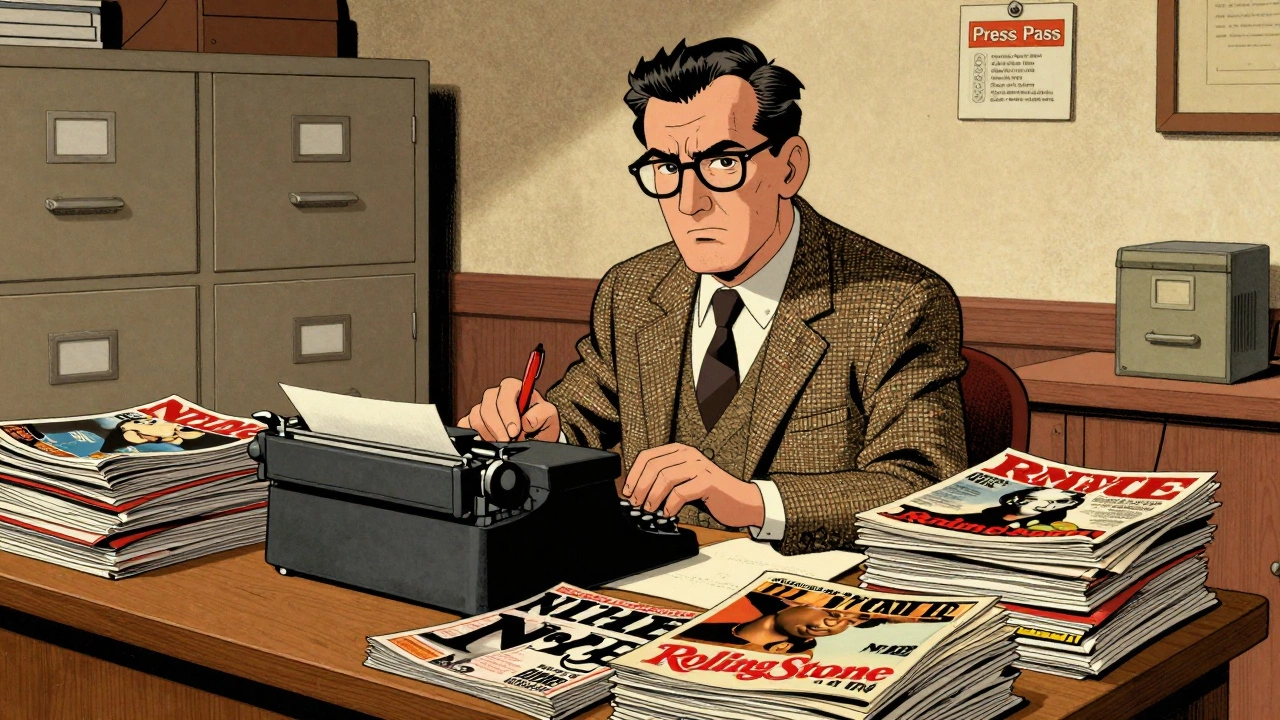

Remember when a single magazine review could make or break a band? In the early 1990s, that was reality. If Rolling Stone gave your album three stars, you sold records. If they ignored you, you stayed underground. That era of centralized power is gone. Today, a teenager with a smartphone and a strong opinion can reach more people than the entire editorial staff of a legacy print publication.
We have moved from an age of gatekeepers to an era of creator-critics. This shift didn't happen overnight. It started with the internet in the mid-90s, accelerated with social media in the 2000s, and exploded with video platforms in the 2010s. The result is a messy, vibrant, and often confusing landscape where professional journalists compete with influencers, algorithms, and fans for your attention.
The Last Days of the Print Gatekeepers
To understand where we are, we have to look at where we started. In the 1990s, music journalism was a structured industry. You had weekly magazines like NME in the UK and Rolling Stone in the US acting as the primary arbiters of taste. These publications employed full-time writers who worked within strict house styles. An album review was usually between 300 and 800 words. A feature story ran 2,000 to 5,000 words. The feedback loop was slow: readers wrote letters to the editor, which were printed weeks later.
This model relied on scarcity. There were only so many pages in a magazine, so editors had to choose carefully what made the cut. This created authority. Being published in these outlets meant you were part of the cultural conversation. However, this system also excluded many voices. Rock-centric outlets often overlooked hip-hop, R&B, and electronic dance music until specialized magazines like The Source (founded 1988) and Vibe (launched 1993) stepped in to cover those genres with depth and cultural context.
Even then, the power dynamic was clear. Labels controlled access. Journalists needed interviews to write stories. Artists needed coverage to sell albums. It was a symbiotic relationship, but it kept the average listener at arm's length. You consumed criticism; you didn't participate in it.
The Internet Breaks the Monopoly
Everything changed when the commercial internet arrived. In the late 1990s, websites like Pitchfork began publishing reviews online. Unlike print magazines, the web had no physical limits. You could publish ten reviews a day if you wanted. More importantly, anyone with a computer could start a blog.
This democratization hit hard in the 2000s. Blogs allowed aspiring critics to bypass traditional gatekeepers entirely. You didn't need a journalism degree or a connection to an editor-in-chief. You just needed a voice and a platform. Sites like All Music Guide shifted the role of the critic from essayist to metadata curator, providing encyclopedic discographies and capsule reviews that prioritized information over interpretation.
At the same time, file-sharing services like Napster (launched 1999) compressed the time lag between reading about an artist and hearing their music. Before Napster, you might read a review on Tuesday and wait until Friday to buy the CD at the store. With MP3s, you could search for the track immediately. This immediacy changed how criticism functioned. Reviews became less about discovery and more about validation.
Social Media and the Death of Distance
If the web opened the door, social media kicked it down. Between 2004 and 2006, platforms like MySpace, Facebook, YouTube, and Twitter launched. These tools enabled direct communication between artists and fans, eroding the exclusive role of the journalist.
Artists no longer needed to go through a PR representative to talk to their audience. They could post updates, share demos, and announce tours directly. Journalists adapted by using Twitter to share links, conduct quick commentary, and engage in public debates. But this also meant that professional critics now competed with user-generated content. Fan reviews, playlist sharing, and memes became significant components of music discourse.
The line between critic and fan blurred. A tweet from a passionate listener could go viral and shape public opinion faster than a long-form article in a major newspaper. This shift forced traditional outlets to speed up their production cycles, often sacrificing depth for velocity.
The Rise of the Creator-Critic
The most dramatic transformation came with the rise of video platforms. In the 2010s, individuals began building massive audiences by producing video reviews, reactions, and essays on YouTube. These creator-critics combined journalistic functions with entertainment value. They used jump-cut editing, skits, and informal language to connect with viewers.
Unlike traditional critics who worked under an editor-in-chief, these creators managed their own publishing schedules and brand identities. They monetized their work through advertising revenue shares, sponsorships, merchandise, and crowdfunding. Some reached subscriber bases in the hundreds of thousands or millions, eclipsing the readership of many print columns.
This model prioritized personality and authenticity over institutional authority. Viewers followed specific creators because they trusted their taste and enjoyed their style. The distinction between critic and creator disappeared. Many figures were simultaneously reviewers, hosts, producers, and entrepreneurs. This shift aligned music journalism more closely with the general "content creator" economy than with traditional newsrooms.
Algorithms as Editors
As human critics fragmented, algorithms stepped in to fill the void. Streaming platforms like Spotify introduced editorial and algorithmic playlists that function as de facto critics. These playlists recommend tracks based on listening data while employing small teams of human editors.
Traditional music journalism’s role in discovery has partially migrated to these recommendation engines. When a song appears on a popular playlist, it gains exposure regardless of critical acclaim. This changes what kinds of writing attract readers. Think-pieces, reported features, and cultural analysis increasingly differentiate professional coverage from algorithmic curation.
Social media commentary feeds directly into this ecosystem. Viral posts or short-form videos can rapidly elevate a track or artist, producing stories that music journalists then cover as phenomena. Critics now write not only about music itself but also about the circulation of music through platforms, fan communities, and algorithms. The scope of "music journalism" has expanded to include technology, data, and platform-policy analysis.
| Aspect | Pre-1990s Critic Model | 2020s Creator Model |
|---|---|---|
| Authority Source | Institutional affiliation (e.g., Rolling Stone) | Follower counts, engagement rates, niche expertise |
| Economic Security | Salaried positions, union contracts, steady freelance work | Ads, sponsorships, direct fan support, commissions |
| Distribution | Limited by print runs and broadcast slots | Theoretically unlimited, constrained by platform algorithms |
| Feedback Loop | Slow (letters to the editor, weeks later) | Real-time (comments, likes, shares) |
| Content Format | Print articles, radio segments | Videos, podcasts, tweets, livestreams |
Challenges for Modern Music Writers
The shift from critics to creators has brought new challenges. One major issue is sustainability. Traditional outlets faced declining advertising revenues in the 2000s and 2010s, forcing them to experiment with paywalls and memberships. Many long-running print magazines closed or transitioned to online-only publication. Classical music criticism faced particularly sharp cuts in newspaper space and staffing.
For individual creators, income is unstable. It depends on platform policies, algorithm changes, and advertiser preferences. This pressure can incentivize sensationalism and hot-take culture. Writers may prioritize clickbait headlines or controversial opinions to boost engagement metrics. Dependence on social media metrics can distort the quality of criticism.
Another challenge is the fragmentation of audiences. Listeners are scattered across different platforms and niches. Some still trust long-standing critics at major newspapers, while others follow bloggers, YouTubers, or social media commentators whose tastes align with specific subfields. This makes it harder for any single voice to define the broader cultural conversation.
Despite these challenges, the field has become more diverse. Digital forms allow more voices to comment on repertoire and institutions. Marginalized genres and independent artists get coverage that might have been overlooked in the print era. The barrier to entry is lower, but the competition is fiercer.
What Comes Next?
Looking ahead, music journalism will likely continue to negotiate between algorithmic recommendation systems and human curation. Critics and creator-journalists will position themselves as guides who contextualize and interpret both musical works and the data-driven environments in which they circulate.
We may see more integration of reporting, critical insight, and creator-style engagement. Successful journalists will need to be versatile, understanding SEO principles, audio and video editing software, and cross-posting strategies. The skill set for entry into the field is more technically complex than in the pre-web era, even as formal barriers have loosened.
The future isn't about returning to the past. It's about adapting to a hybrid ecosystem where critics, bloggers, influencers, podcasters, and video creators all produce overlapping forms of coverage. The key is finding a way to maintain depth and integrity in a world obsessed with speed and virality.
Did traditional music magazines die out?
Many traditional print magazines like NME and Melody Maker significantly reduced their print frequency or shut their print editions entirely. However, most transitioned to online-only publication, maintaining their brands and editorial staff digitally. They no longer hold the monopoly they once did, but they still play a role in the media landscape.
Who has more influence today: a Rolling Stone critic or a YouTube reviewer?
It depends on the genre and audience. For mainstream pop and rock, legacy outlets still carry weight with industry insiders. However, for younger audiences and niche genres, top YouTube reviewers and TikTok influencers often have greater immediate impact on streaming numbers and cultural trends due to their direct connection with fans.
How do algorithms affect music discovery?
Algorithms on platforms like Spotify and Apple Music act as automated curators. They recommend songs based on your listening history and similar users' behavior. This can help listeners find new music quickly, but it can also create echo chambers where you only hear what fits your existing taste, reducing exposure to challenging or unfamiliar genres.
Is it possible to make a living as a music creator-critic?
Yes, but it is difficult and unstable. Top-tier creators with large followings can earn significant income through ads, sponsorships, and merchandise. However, the majority struggle to make a consistent living. Most successful creator-critics diversify their income streams and treat their channel as a business rather than just a hobby.
Why did Pitchfork become so influential in the 2000s?
Pitchfork pioneered the model of web-native music criticism. It offered detailed, opinionated reviews of indie and alternative music at a time when mainstream magazines were focusing heavily on pop and boy bands. Its use of letter grades (A+ to F) made its judgments clear and debatable, sparking widespread discussion on forums and blogs.


