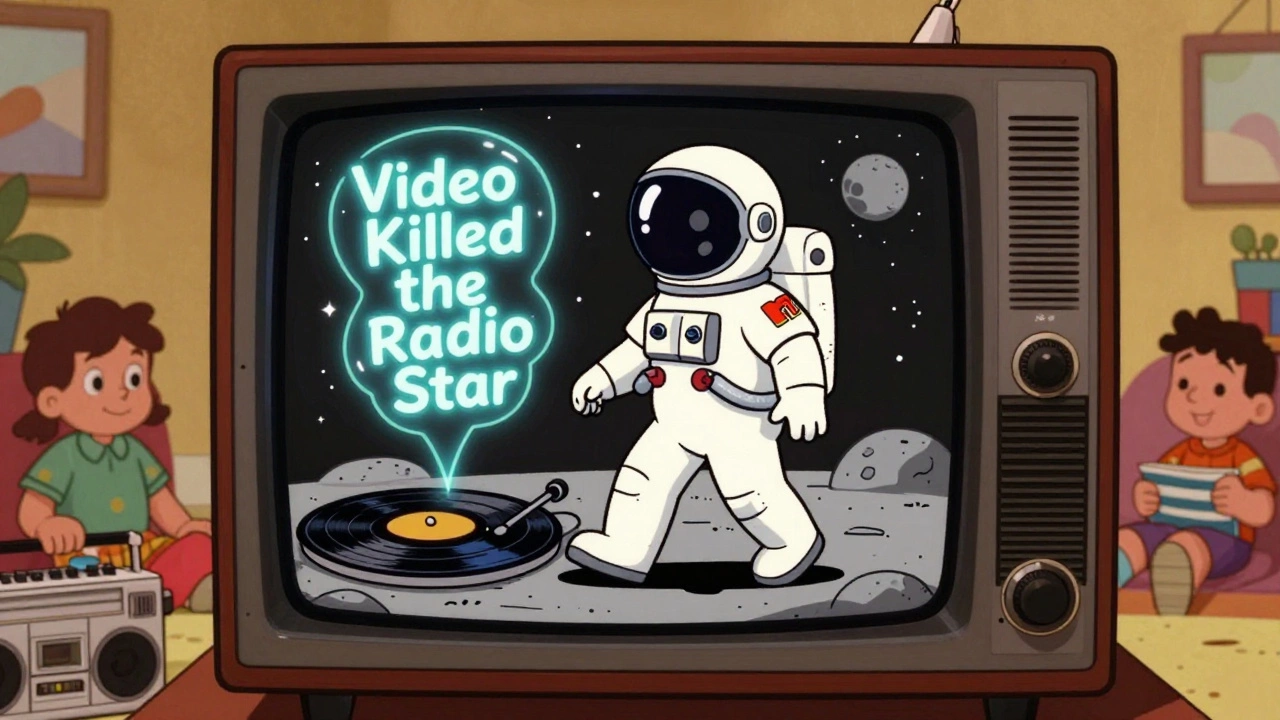

On August 1, 1981, at 12:01 a.m., a man walked on the moon - not in real life, but on a TV screen. He was one of the first video jockeys, and the song playing was "Video Killed the Radio Star" by The Buggles. That moment didn’t just launch a channel. It buried the old rules of how music got heard.
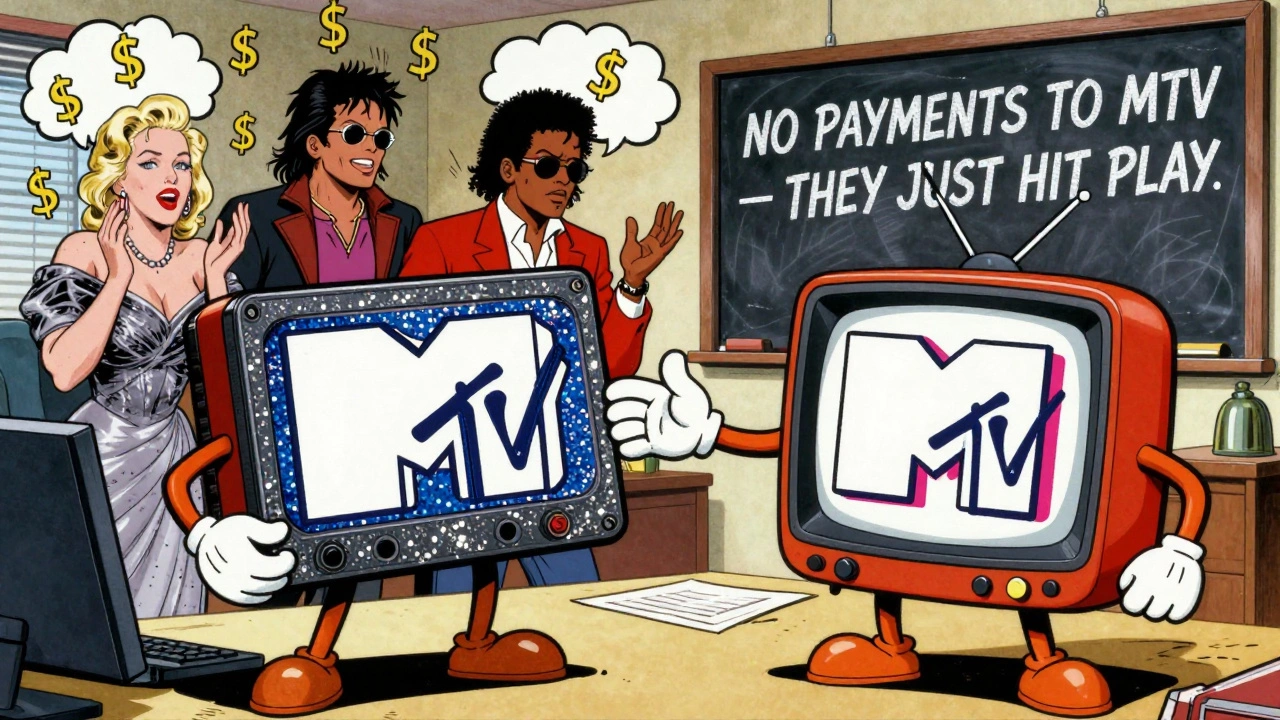
MTV Didn’t Pay for Content - And That Was the Genius
Most people think MTV was just a TV channel that played music videos. But that’s not the full story. The real innovation? They didn’t pay for any of it. At all.
When Warner-Amex launched MTV, they had one rule: record companies had to give them music videos for free. No licensing fees. No royalties. Just hand over the footage, and we’ll put it on loop. At first, there were only about 250 videos. That’s it. So they played the same ones over and over. And that worked - because suddenly, every kid in America saw the same videos, every day.
Radio stations had to pay for airtime. They paid for DJs, for studio time, for song rights. MTV? Zero content cost. And that changed everything. Record labels, who used to spend tens of thousands on radio promotion, now had a better option: make a video. If it got played on MTV, it sold albums. And MTV didn’t even have to pay for the video. The label paid. The artist paid. MTV just hit play.
The "I Want My MTV" Campaign That Forced Cable Companies to Bend
Here’s the twist: in year one, MTV lost $50 million. Advertisers didn’t believe in it. Cable companies didn’t want it. Who watches a music channel? And why would they pay extra for it?
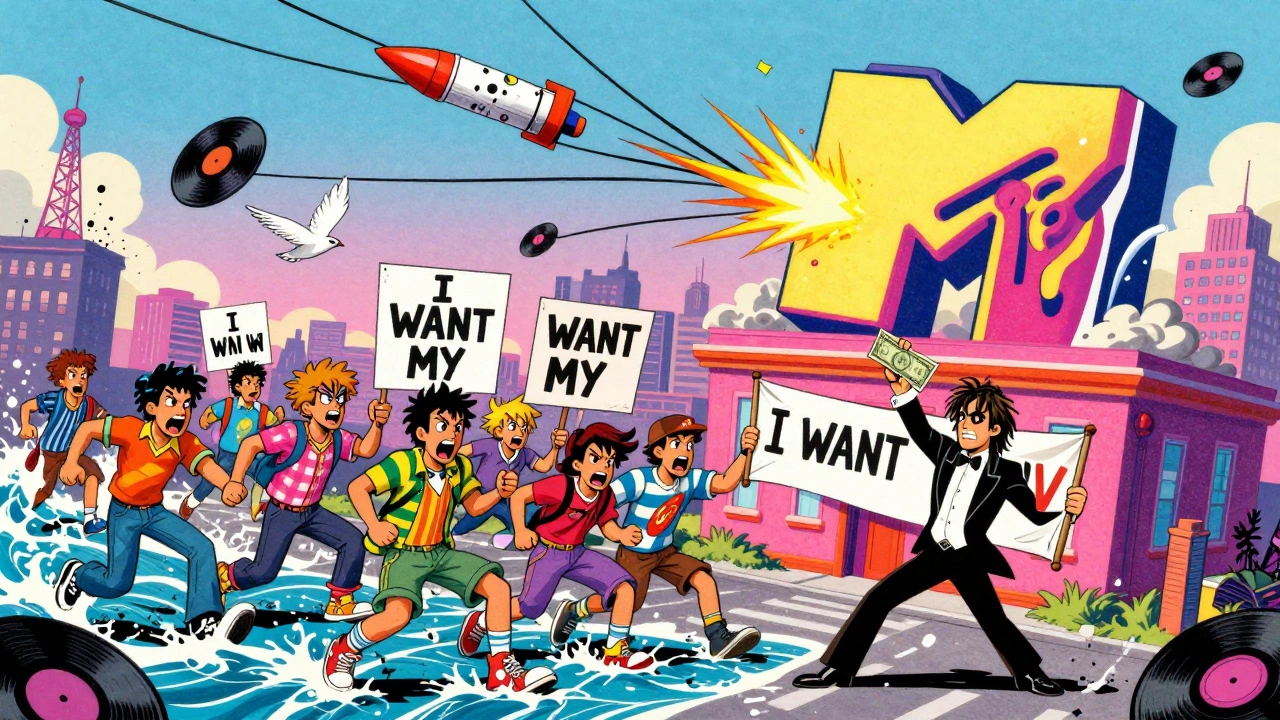
Then came the "I want my MTV" campaign. The idea? Get famous musicians to say it. But nobody wanted to do it. Mick Jagger said no - until someone offered him $1. Just one dollar. He laughed, then said yes. And when news spread that The Rolling Stones accepted $1 to endorse a TV channel, every other big artist rushed to join.
The result? Millions of teenagers called their cable providers. "Put MTV on!" The calls were so loud, cable companies had no choice. They added MTV just to stop the noise. And suddenly, MTV had national reach. Advertisers saw it: this wasn’t a niche channel. It was the new way to reach young buyers.
Radio Couldn’t Compete - Because It Was Audio Only
Before MTV, radio was king. Top 40 stations ruled. DJs picked songs. Album sales followed. But radio had one big weakness: you couldn’t see the artist. MTV changed that.
Imagine hearing "Billie Jean" on the radio. You’d hear the beat. The voice. Maybe imagine Michael Jackson dancing. But then MTV showed it. The moonwalk. The glove. The single sock. Suddenly, the song wasn’t just a track - it was an event. And sales exploded. "Thriller" became the best-selling album of all time, and MTV was the reason.
Radio couldn’t replicate that. It didn’t have visuals. It didn’t have style. It didn’t have a reason to compete. MTV didn’t just promote music - it turned music into a visual product. And once you could see the artist, you didn’t just buy the album. You bought the persona, the look, the whole package.
Record Labels Became MTV’s Silent Paymasters
Here’s the dark side: MTV didn’t just disrupt radio. It flipped the music industry’s economics upside down.
Before MTV, record labels spent money on radio promotion. After MTV? They spent money on music videos. And not just any videos - expensive ones. Michael Jackson’s "Thriller" cost $500,000. That was insane for 1983. But it worked. And soon, every label had to do the same.
New artists? They got stuck. Record deals started including clauses: "You must produce a music video." And the label would loan them the money. But that loan? It came out of their future royalties. So many artists ended up in debt before they even released their first album.
MTV didn’t pay for the videos. The labels did. The artists did. MTV just got the free content and the ad revenue. It was a perfect trap: the more videos you made, the more you sold - but the deeper you went into debt.
From Album Rock to Pop Machines
MTV didn’t just play music. It decided what kind of music got played.
Early on, MTV leaned into album-oriented rock. But they quickly realized: the songs that got the most play weren’t the deep cuts. They were the catchy, flashy ones. The ones with big visuals. The ones that made you stop and stare.
That’s when they shifted. Madonna’s "Like a Virgin" video? Controversial. Sexy. Perfect for MTV. It didn’t matter that it was pop. It mattered that it looked good. Duran Duran? Fashion-forward. Glamorous. MTV loved them. And suddenly, the music industry started chasing looks over sound.
Paul Simon’s "You Can Call Me Al" didn’t have a big budget. But it had humor, movement, and a guy in a suit dancing with a baby. It got heavy rotation. Dire Straits’ "Money for Nothing" mocked MTV - and became one of its biggest hits. Irony didn’t matter. If it looked cool, it got played.
How MTV Made Billions Without Making a Single Song
By 1985, just four years after launch, Viacom bought MTV for $667.5 million. That’s not a typo. From $50 million in losses to over half a billion in value. How?
MTV didn’t produce music. They didn’t own artists. They didn’t even make the videos. But they controlled the platform. And that was worth more than all the record labels combined.
They turned music into advertising. Every video was a 3-minute commercial for an album. Every VJ was a brand ambassador. Every repeat play was a free ad. And because they had no content costs, every dollar in ad revenue was pure profit.
Radio had to pay for everything. MTV paid for nothing. And that’s why it won.
The Legacy: When TV Killed the Radio Star
Radio didn’t disappear. But it changed. No longer the king of music discovery, it became a companion. A background. A playlist. MTV turned music into a visual spectacle. And once that happened, the old rules didn’t work anymore.
Artists had to look good. Labels had to spend more. Fans expected videos. And MTV? They just sat back, collected ad dollars, and watched the whole industry bend to their rules.
Today, YouTube and TikTok do what MTV did - but faster, cheaper, and without the cable system. But MTV was the first. The original disruptor. The channel that proved visuals could sell more records than radio ever could.
And it all started with a man walking on the moon - and a song that told the truth: "Video killed the radio star."
How did MTV make money if it didn’t pay for music videos?
MTV made money by selling advertising. Because record labels were forced to give them music videos for free, MTV had almost zero content costs. That meant nearly every dollar from ads was pure profit. The more people watched, the more advertisers paid - and MTV’s audience grew because fans demanded it.
Why did record labels agree to give MTV videos for free?
Because MTV was the only place that could turn a song into a national hit overnight. If your artist got on MTV, album sales jumped. Record labels realized that a single video could replace weeks of radio promotion - and cost far less. Even though they had to pay for production, the return on investment was huge.
Did MTV’s business model hurt new artists?
Yes, in many cases. To get on MTV, artists needed a video - and labels made them pay for it upfront, often through loans against future royalties. Many new artists ended up deeply in debt before their first album even came out. The system favored those who could afford flashy visuals, not just talent.
How did MTV change how music was marketed?
Before MTV, music was sold on sound alone. After MTV, it was sold on image, style, and performance. A song had to look as good as it sounded. Artists became brands. Music videos became essential marketing tools. Radio couldn’t compete because it couldn’t show visuals - so MTV took over as the main way to break new music.
Why did MTV’s popularity decline after the 1980s?
MTV didn’t decline because of failure - it declined because success forced change. As cable expanded and competition grew, viewers wanted more than just music videos. Reality TV, scripted shows, and celebrity culture became more profitable. MTV shifted to survive - but its original business model, built on free videos and music promotion, was never replicated.


