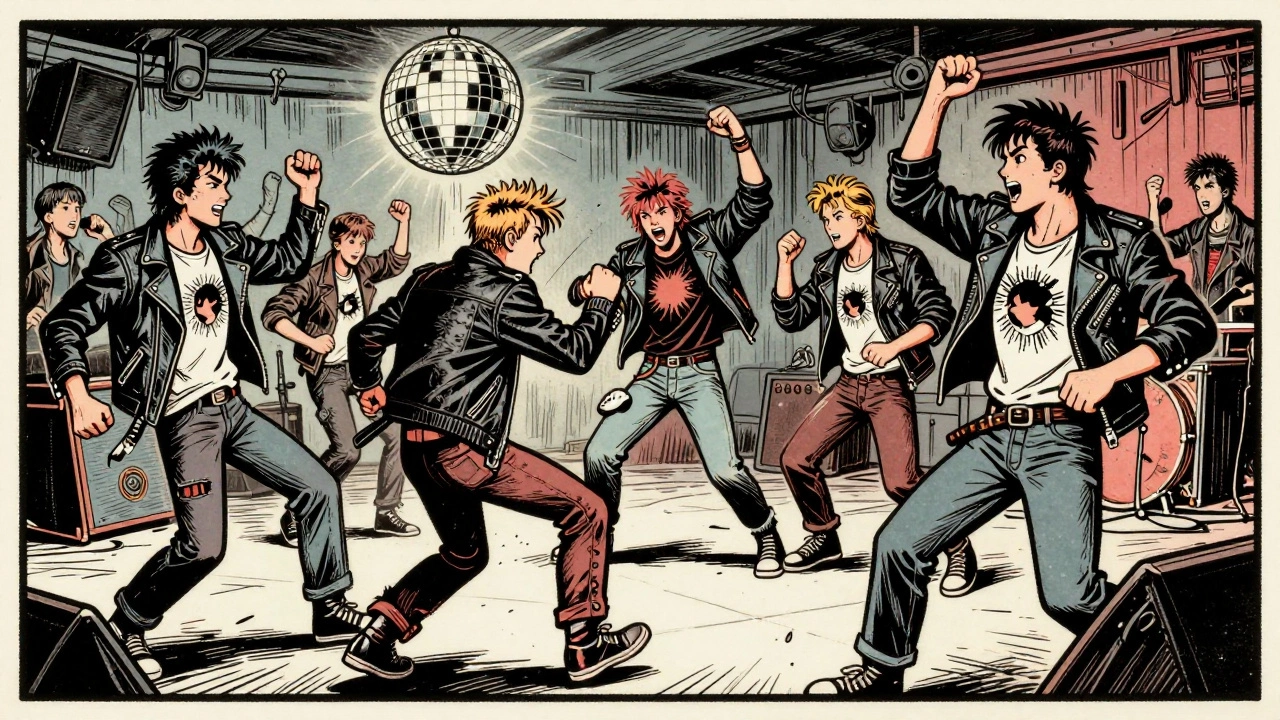

Ever wondered why some people pay money to essentially get tackled by strangers for two hours? If you've ever stepped into a heavy music show, you've seen it: the chaotic, swirling vortex of bodies known as the mosh pit. While it looks like a riot to the uninitiated, 1980s hardcore punk culture viewed this as a form of high-energy communication. It wasn't about fighting; it was about a shared, visceral release of aggression that mirrored the intensity of the music.
The Birth of the Slam
Before the world called it "moshing," the scene called it slam dancing. This high-impact style of movement didn't just appear out of nowhere; it grew out of the late 70s and early 80s punk scenes in Southern California. If you want to find the epicenter, look at the Cuckoo's Nest in Costa Mesa. Operating between 1976 and 1981, this venue is widely credited as the birthplace of slam dancing. It was here that the raw energy of bands like Black Flag and Fear translated into a new kind of participatory dance.
This wasn't just a random occurrence. Moshing was a middle finger to the polished, synchronized world of disco that dominated the late 70s. Hardcore kids wanted something that felt real, raw, and inclusive of their frustration. They didn't want to glide across a dance floor; they wanted to collide. This kinetic vocabulary became a badge of honor for the counterculture, turning the concert floor into a space for psychological catharsis.
Decoding the Different Types of Pits
Not all pits are created equal. In the 80s, the type of pit often depended on the band's specific vibe or the song's tempo. You didn't just jump in; you usually knew what you were signing up for based on how the crowd was forming.
| Pit Type | Movement Pattern | Intensity Level |
|---|---|---|
| Slam Dancing | Forward and backward collisions | High / Constant |
| Circle Pit | Counter-clockwise rotation in a ring | Moderate to High |
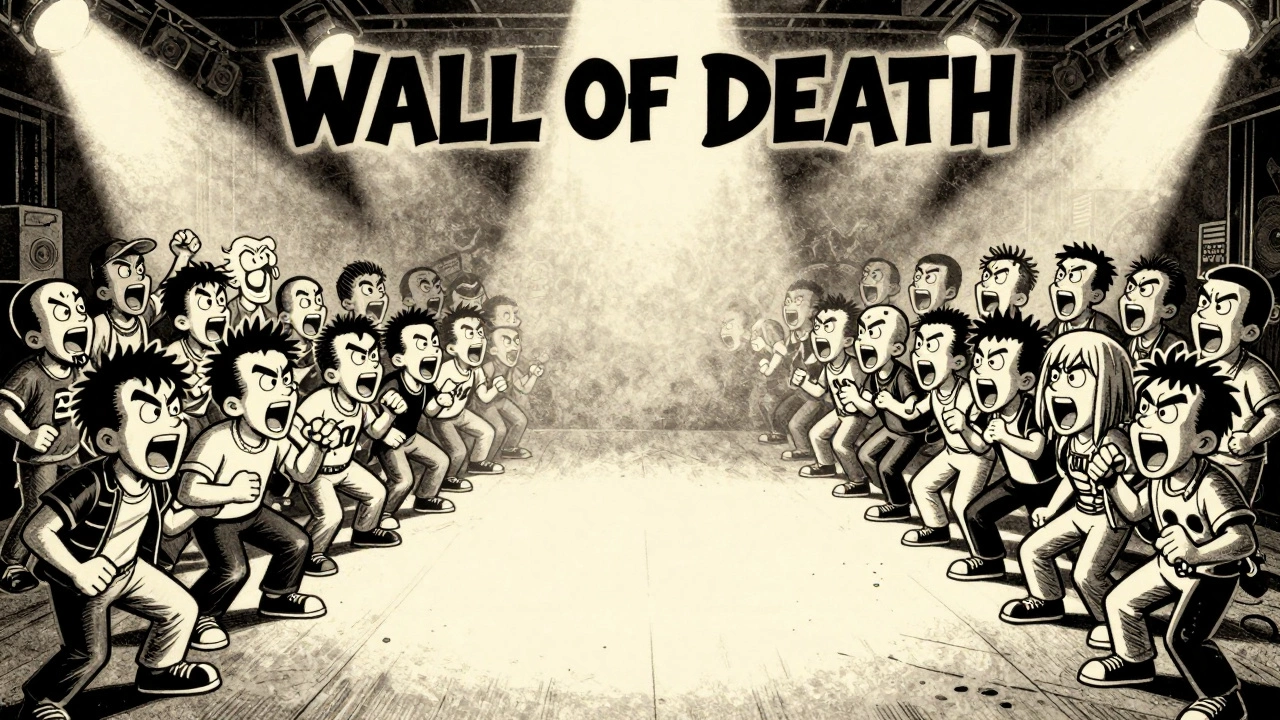
| Wall of Death | Two sides rushing toward the center | Extreme / Peak |
The "Wall of Death" was particularly theatrical, requiring a clear center gap to open up before the music hit a crescendo and both sides collided. This required a level of coordination and trust among strangers that is rarely seen in other social settings.
The Unwritten Laws of the Pit
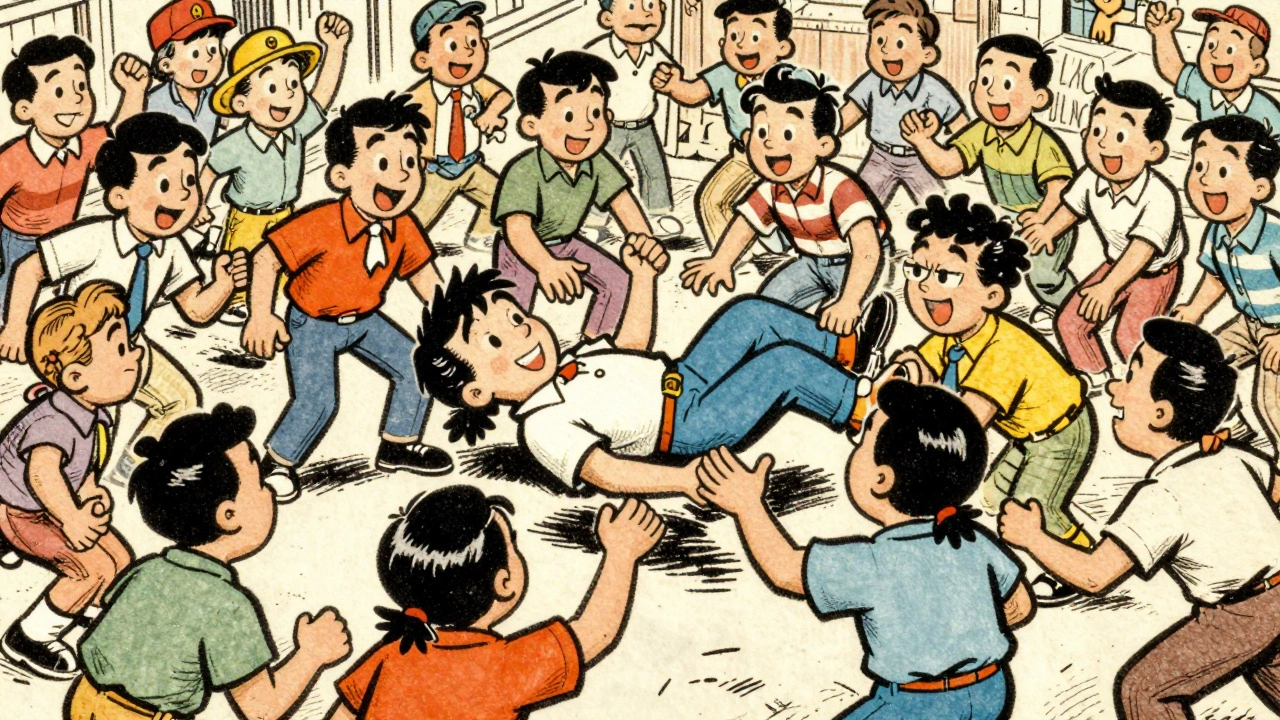
From the outside, it looks like mayhem, but 80s hardcore culture relied on a strict, decentralized system of self-governance. There were no formal security guards inside the pit-they were too slow and too out-of-touch to help. Instead, the "edge dwellers"-people standing at the perimeter-acted as the first responders. If someone fell, the people around them would instantly stop and hoist them back up before they got trampled.
The core philosophy was simple: full body contact is expected, but violence with the intent to harm is strictly prohibited. Bumping into someone isn't an assault; it's the point of the activity. However, throwing a punch or kicking someone while they're down was a quick way to get exiled from the community. This peer-led safety infrastructure allowed the activity to remain sustainable despite its inherent risks.
When the Culture Shifted
As the 90s rolled in, the relationship between bands and their audiences changed. Some artists began to see moshing as a distraction or a liability. For example, Fugazi and The Smashing Pumpkins actively discouraged or banned slam dancing at their shows. The goal was often to shift the focus back to the music, but this created a strange tension. When bands tried to police the crowd without a clear understanding of pit dynamics, the results were sometimes more dangerous than the moshing itself.
More tragically, the scene became less inclusive. The 80s era had a more balanced mix of genders, but by the 90s, the rock and metal scenes drifted toward a more aggressive, anti-woman atmosphere. Many women who had previously enjoyed the catharsis of the pit no longer felt safe or welcome. This shift changed the demographic of the hardcore scene and stripped away some of the community-driven safety that had defined the early years.
Modern Pit Safety: How to Survive the Chaos
If you're heading to a show today, you can't rely on the "vibes" of the 80s alone. Crowds are larger and the music is often even heavier. The most critical piece of advice? Don't trust a stranger to be your bodyguard. While the community spirit still exists, the sheer density of modern crowds makes passive reliance dangerous.
Start with your gear. Your choice of footwear can literally be the difference between walking out of a show and leaving in an ambulance. Avoid wooden-soled shoes, heels, or platforms-they provide zero stability and can cause ankle snaps or concussions if you fall. Bare feet are a disaster waiting to happen. Opt for flat, sturdy sneakers. Also, leave the "fashion' clothes at home; if you're worried about a rip in your shirt, you're in the wrong place.
Keep your eyes open. Watch for crowd surfers drifting over your head and be aware if a new, smaller pit is forming inside the main one. If you feel the crowd becoming too dense-where you can no longer move your arms-move toward the edges immediately. As we saw in the tragic 2001 case of Jessica Michalik during a Limp Bizkit set, crowd crush is a real, lethal threat that happens when density overrides individual movement.
Is moshing actually fighting?
No. True moshing is characterized by full-body contact without the intent to fight. While it looks violent, the goal is rhythmic, physical release. However, some people do use pits to start fights; the key is to recognize these individuals and stay away from their specific area of the pit.
What is the safest place to stand at a concert?
If you want to enjoy the music without the physical risk, the back of the venue is your best bet. You'll have a wider field of vision and can easily avoid the expanding radius of a mosh pit.
What should I do if someone falls in the pit?
Stop immediately and help them up. This is the golden rule of hardcore culture. Once the person is back on their feet and stable, the flow of the pit can resume.
Why did it start in Southern California?
The region had a concentrated explosion of hardcore punk bands and venues like Cuckoo's Nest that provided the perfect environment for an aggressive, high-energy counterculture to develop as a response to mainstream disco music.
Are there shoes I should specifically avoid?
Absolutely. Avoid wooden soles, high heels, and platform shoes. These are unstable and increase the risk of injury to both yourself and others if you lose your balance.