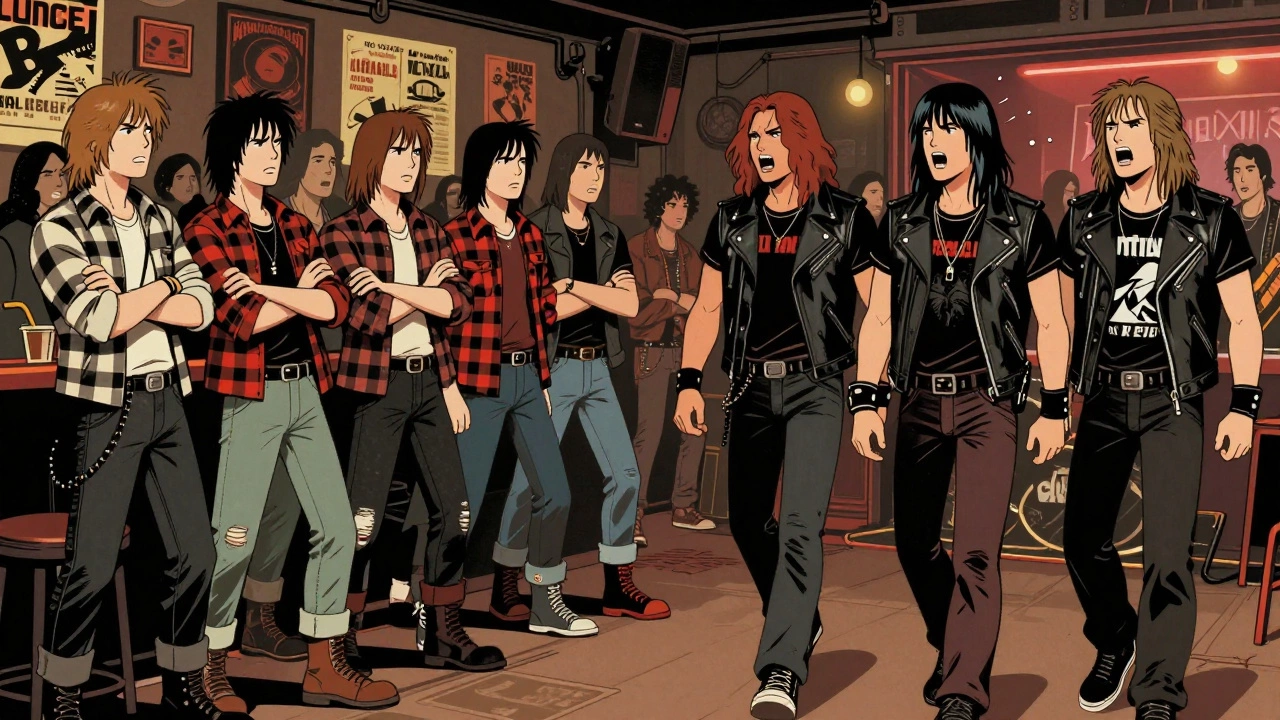

Imagine walking into a club where the dress code is strictly grunge flannel and combat boots. Suddenly, a group of guys in leather vests and band tees walks in, loud and unapologetic. The regulars look up, confused and hostile. This wasn’t just a bad night at a bar; it was the cultural atmosphere surrounding Metallica’s appearance at Lollapalooza 1996. When the thrash metal giants were announced as co-headliners for the sixth edition of the touring festival, it didn’t just make headlines-it ignited a firestorm about what “alternative” music actually meant.
The year was 1996. The music industry was shifting gears. Alternative rock had gone mainstream, thanks to bands like Nirvana and Pearl Jam selling millions of records. But Lollapalooza, created by Jane’s Addiction singer Perry Farrell, still carried the weight of being an underground sanctuary. It was supposed to be a traveling nation of counter-culture, activism, and indie spirit. Booking Metallica-a band that had already sold 16 million copies of their self-titled "Black Album"-felt to many like inviting the school bully into the art club. The tension wasn’t just about noise levels; it was about identity, authenticity, and who got to define the boundaries of cool.
The Clash of Visions: Purity vs. Profit
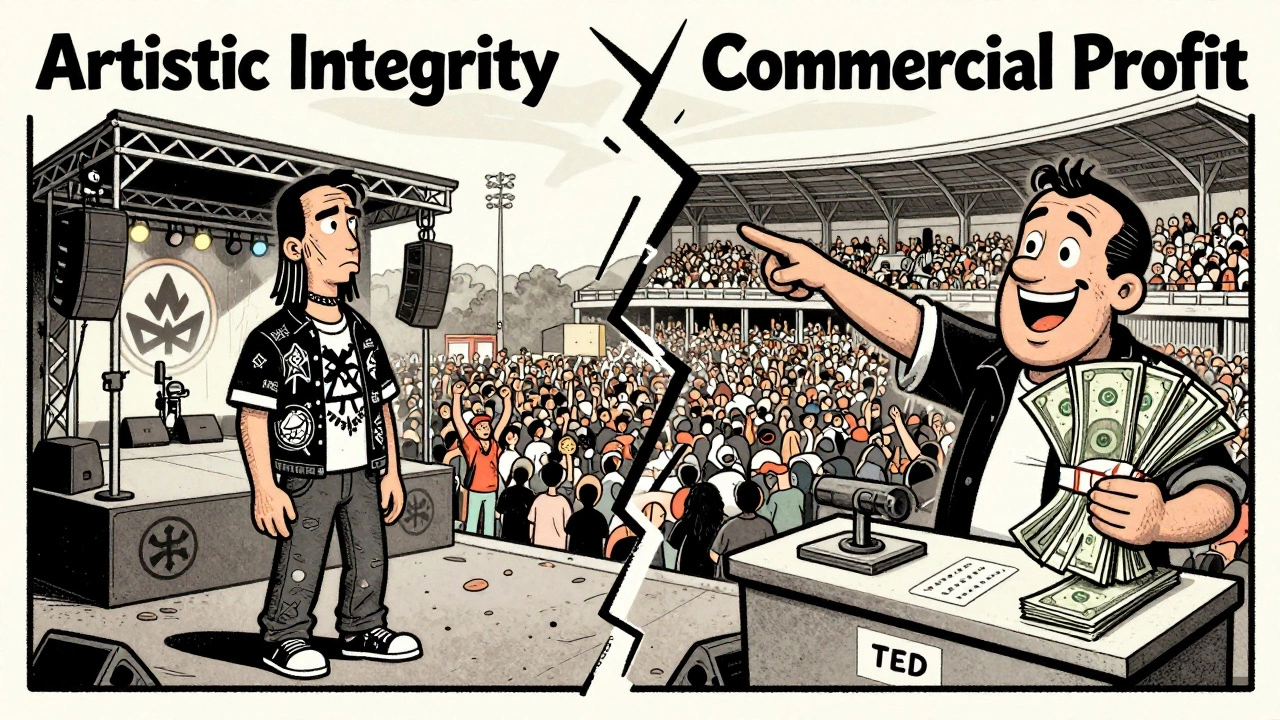
To understand why this booking caused such a stir, you have to look at the two forces pulling on Lollapalooza. On one side was Perry Farrell, the festival’s creator. He had built Lollapalooza starting in 1991 as a farewell tour for Jane’s Addiction, featuring acts like Nine Inch Nails and Siouxsie and the Banshees. For Farrell, the festival was a statement. It was anti-corporate, pro-activism, and fiercely protective of its alternative label. He saw Metallica as the antithesis of this vision-a major-label powerhouse with arena-sized production values.
On the other side was Ted Gardner, the co-promoter and manager. Gardner looked at the numbers. By the mid-90s, Lollapalooza was playing large amphitheaters, not small clubs. Ticket prices had risen to around $35 (a significant amount in 1996), and the financial pressure to sell out these massive venues was real. Metallica offered a guaranteed draw. They could fill seats. Gardner argued that without big names, the festival couldn’t survive financially. This split between artistic integrity and economic survival created a rift within the organization itself. Farrell reportedly distanced himself from day-to-day operations during the 1996 tour, unhappy with the direction, while Gardner pushed forward with the booking.
Metallica’s Reinvention: The Load Era
Metallica wasn’t the same band they had been in 1991. In June 1996, just before the tour began, they released Load, their seventh studio album which marked a stylistic shift towards slower, blues-influenced hard rock. Gone were the short haircuts and skinny jeans of the early days; replaced by long hair, designer clothes, and a more polished image. Critics and fans alike were divided. Some saw it as a natural evolution; others saw it as selling out.
For the band, joining Lollapalooza was a strategic move to break out of their comfort zone. Drummer Lars Ulrich and guitarist James Hetfield wanted to reach new audiences. They believed the line between “metal” and “alternative” was artificial. As Hetfield told MTV’s *120 Minutes*, “Good music is good music.” They weren’t trying to hide their roots; they were trying to expand them. By playing Lollapalooza, they hoped to show that heavy music could coexist with punk, hip-hop, and indie rock. It was a gamble. If the crowd rejected them, it would validate the critics who said they didn’t belong. If the crowd accepted them, it would prove the genre barriers were crumbling.
The Lineup and the Atmosphere
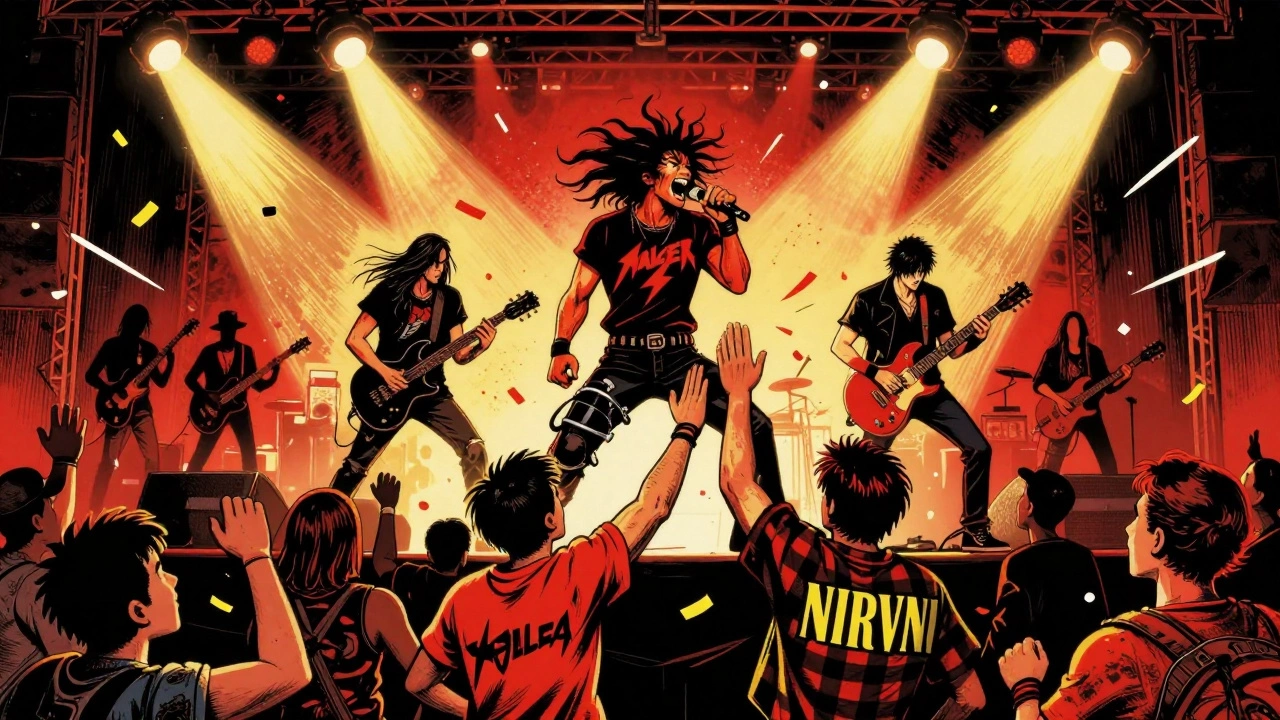
The 1996 lineup, often called “Lollapalooza No. 6,” was a eclectic mix. Alongside Metallica, headliners included Soundgarden and Rancid. Supporting acts ranged from the Ramones (on their farewell tour) to Wu-Tang Clan and Devo. This variety was part of the festival’s charm, but it also highlighted the contrast. You had punk legends sharing a stage with heavy metal titans. The setlists reflected this blend. Metallica’s performances typically lasted 90 minutes, longer than most other acts, and featured a mix of old thrash classics like “Creeping Death” and new *Load* tracks like “Ain’t My Bitch.” They even played punk covers like “So What” by Anti-Nowhere League and “Last Caress” by The Misfits, subtly nodding to the festival’s roots.
Despite the pre-tour panic, the actual events were less chaotic than feared. Newspapers like the *Los Angeles Times* had warned of “hordes” of aggressive Metallica fans roughing up other attendees. While mosh pits were intense, security largely kept things under control. Reviews from cities like Irvine, California, and Chicago noted that crowds integrated reasonably well. Long-time metalheads in Slayer t-shirts stood next to alt-rock kids in flannel. There was cross-pollination, not war. However, some fans of earlier-slot bands complained that the festival had effectively become “the Metallica tour” with support acts, undermining the egalitarian spirit of the event.
| Feature | Lollapalooza 1991-1995 | Lollapalooza 1996 |
|---|---|---|
| Primary Genre | Alternative Rock, Indie, Punk | Hard Rock, Metal, Alt-Rock |
| Headliners | Jane’s Addiction, Red Hot Chili Peppers, Smashing Pumpkins | Metallica, Soundgarden, Rancid |
| Venue Type | Clubs, Small Amphitheaters | Large Amphitheaters, Fairgrounds |
| Ticket Price (Avg) | $20-$25 | $35-$40 |
| Cultural Identity | Underground, Activist-Focused | Mainstream Crossover, Commercial |
The Aftermath: A Turning Point for Festivals
The 1996 tour was a commercial success, but it signaled the end of an era for Lollapalooza as a touring festival. The brand struggled to maintain its identity in the late 90s. The 1997 tour continued the mix of genres, featuring Tool and Snoop Dogg, but by 1998, weak ticket sales led to cancellation. The touring model died, and Lollapalooza was reborn in 2005 as a stationary, multi-stage festival in Chicago’s Grant Park. Today, it’s a massive corporate event with pop, hip-hop, and EDM headliners, far removed from its underground origins.
For Metallica, the experience was part of a larger narrative of adaptation. They continued to push boundaries, later collaborating with the San Francisco Symphony and battling Napster over digital rights. Looking back, many fans and critics view the 1996 Lollapalooza stint as a necessary evolution. It proved that genre lines were porous and that live music could bridge divides. The controversy faded, but the lesson remained: festivals are living entities that must adapt to survive, even if it means upsetting the purists.
Why It Still Matters
Decades later, the debate over Metallica at Lollapalooza 1996 persists because it touches on a timeless question in music culture: Who owns the underground? When does a subculture become mainstream? The answer isn’t simple. For some, the inclusion of Metallica diluted the festival’s soul. For others, it democratized access to heavy music. The surviving footage from shows like Irvine Meadows shows a diverse crowd, united by the music despite their differences. It was a messy, loud, and imperfect moment, but it was real. And in the end, that’s what live music is all about.
Why was Metallica playing Lollapalooza controversial?
The controversy stemmed from the clash between Metallica's status as a mainstream, major-label metal band and Lollapalooza's identity as an underground, alternative rock festival. Many fans and critics felt that booking Metallica violated the festival's ethos of showcasing non-commercial, avant-garde music, leading to accusations of "selling out."
Who were the other headliners at Lollapalooza 1996?
Alongside Metallica, the other main headliners for the 1996 tour were Soundgarden and Rancid. The lineup also featured notable acts like the Ramones, Screaming Trees, Wu-Tang Clan, and Devo, depending on the specific date and location.
Did Perry Farrell approve of Metallica's booking?
No, Perry Farrell, the creator of Lollapalooza, expressed strong reservations about booking Metallica. He felt it contradicted his original vision of the festival as an alternative to mainstream rock radio. Reports suggest he distanced himself from the day-to-day management of the 1996 tour due to this decision.
What songs did Metallica play at Lollapalooza 1996?
Metallica's setlists blended old thrash classics with new material from their *Load* album. Common songs included "Enter Sandman," "Master of Puppets," "Sad But True," "Ain't My Bitch," and punk covers like "So What" and "Last Caress." Sets typically lasted around 90 minutes.
How did the 1996 tour affect the future of Lollapalooza?
The 1996 tour marked a shift toward a more commercial, mainstream model. While successful financially, it contributed to the eventual decline of the touring format. Lollapalooza ceased annual tours after 1997 and was revived in 2005 as a stationary festival in Chicago, focusing on a broader mix of genres including pop and hip-hop.