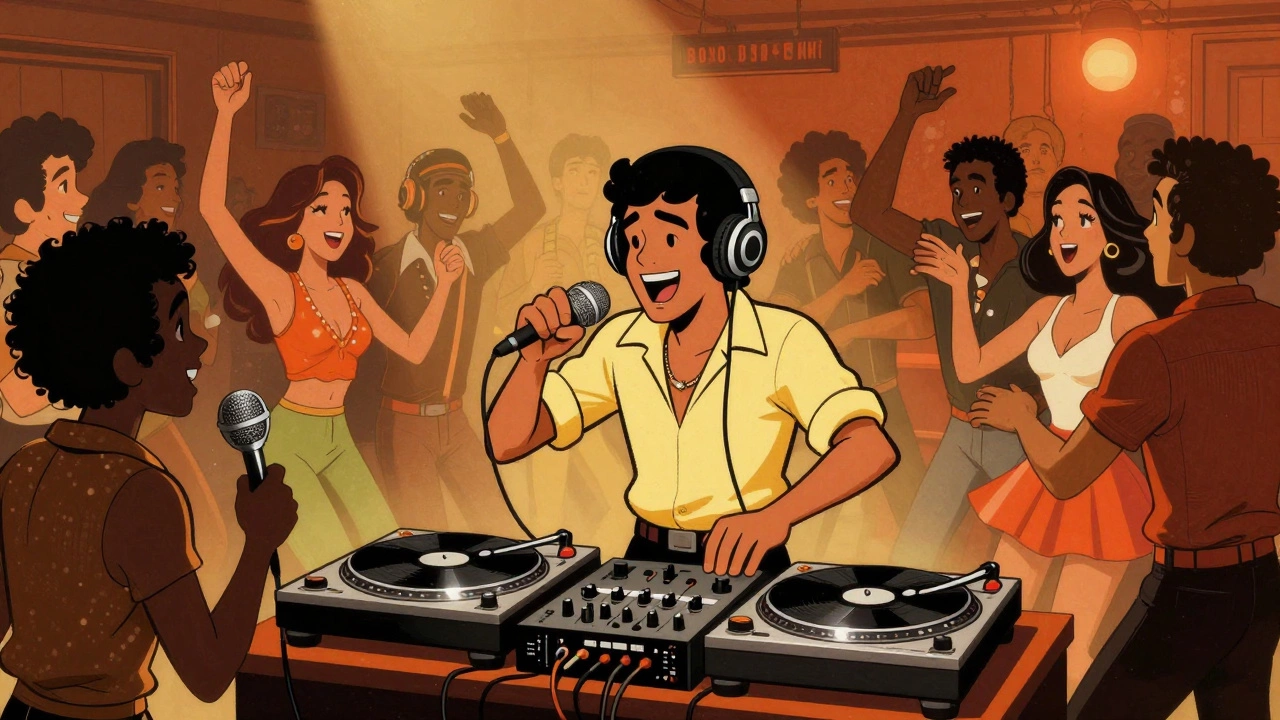

Imagine a crowded basement party in the Bronx around 1978. The air is thick with heat and excitement, and the only thing louder than the bass is the crowd. Back then, the person on the microphone wasn't the "star" of the show-the DJ was. The person talking was simply there to keep the energy high and the dance floor packed. This is where the late 1970s MC rhymes began, not as polished studio recordings, but as a raw, living interaction between a performer and a party. It wasn't about complex metaphors yet; it was about survival, rhythm, and keeping the party moving.
The Quick Breakdown
- The Role: MCs (Microphone Controllers) acted as hype-men for the DJ.
- The Style: Heavy reliance on simple AABB rhyme schemes and repetitive hooks.
- The Goal: Synchronization with the "breakbeat" to keep dancers in a groove.
- The Technique: Using call-and-response to turn a passive audience into active participants.
The Architecture of Early Flow
In the late 70s, Flow is the rhythmic delivery of lyrics over a musical beat. Unlike modern rap, where artists might play with the beat or go "off-grid," early MCs focused on a rigid, percussive delivery. They weren't just speaking; they were acting as an additional percussion instrument.
The secret to this early flow was the "four-on-the-floor" feel. MCs stressed their syllables precisely on the beats. If the DJ was playing a break from a James Brown record, the MC would time their rhymes to hit exactly when the snare hit. This created a hypnotic effect. If you've ever heard an old-school record where the rapper sounds almost like they are marching, that's because they were. They used a steady, driving cadence that ensured the music never lost its pulse.
The Power of Call-and-Response
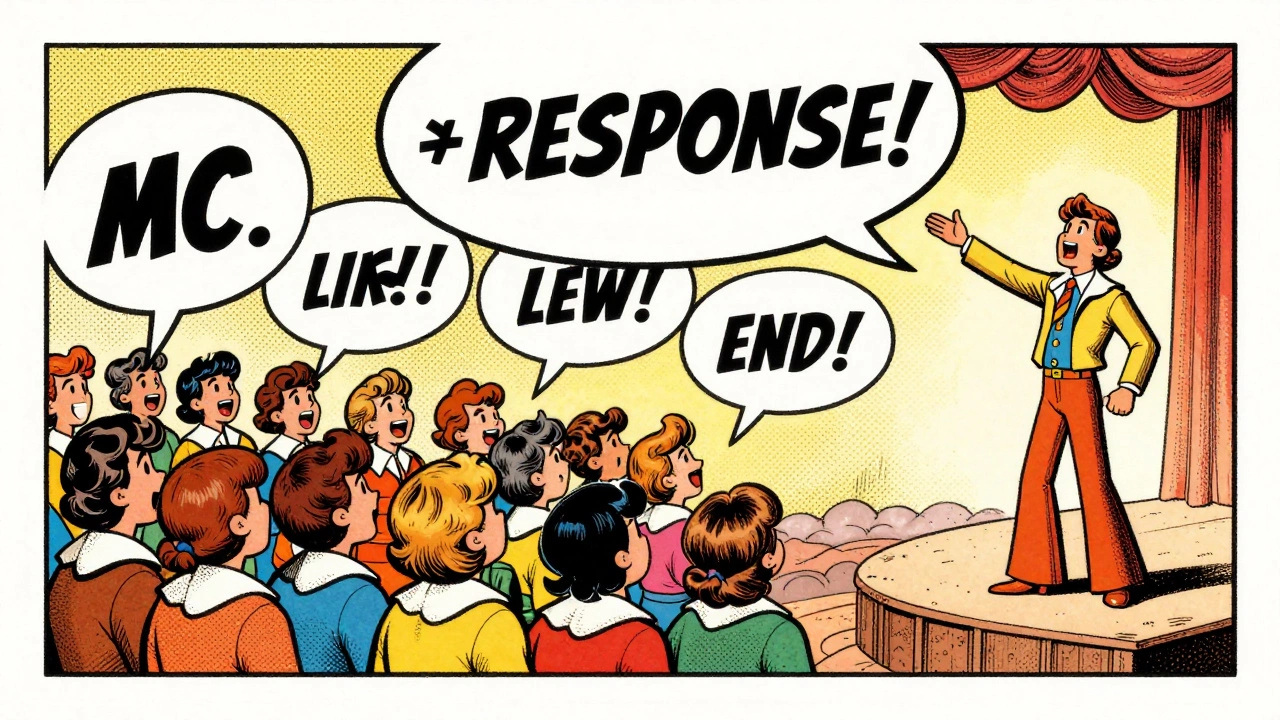
Before the era of the "solo artist," hip-hop was a communal experience. This is where Call-and-Response, a musical pattern where a singer or speaker makes a statement and the audience or another performer responds, became the primary tool for the MC.
Think of it as a social contract. The MC would shout, "Somebody say ho!" and the crowd would roar back, "Ho!" This wasn't just for show; it was a way to gauge the energy of the room. If the crowd didn't respond, the MC knew they had to change their flow or the DJ had to switch records. This technique was heavily influenced by African musical traditions and Jamaican sound system culture, where the "toaster" would interact directly with the listeners.
Rhyme Schemes: Simplicity Over Complexity
If you look at lyrics from the late 70s, you won't find the dizzying multi-syllabic internal rhymes used by today's technicians. Instead, the early era relied on the AABB Rhyme Scheme, a simple poetic structure where the first two lines rhyme and the next two lines rhyme.
Why keep it simple? Because the MC was often improvising or "freestyling" on the fly. When you're shouting over a loud sound system to a thousand people, complex wordplay gets lost. Simple rhymes are easy to follow and easy to remember. For example, an MC might rhyme "party" with "hearty" and "night" with "light." The goal was clarity and impact, not intellectual depth. The rhyme was the anchor that let the listener know where the beat was heading.
| Feature | Late 1970s Approach | Modern Approach |
|---|---|---|
| Primary Scheme | Simple AABB / Couplets | Complex Internal / Multi-syllabic |
| Delivery | On-beat / Percussive | Syncopated / Fluid / Off-beat |
| Purpose | Crowd Energy / DJ Support | Storytelling / Technical Skill |
| Lyric Origin | Largely Ad-libbed / Formulaic | Highly Structured / Written |
The Influence of the Breakbeat
You can't talk about cadence without talking about the Breakbeat, the rhythmic section of a song where the melodic instruments stop and only the drums play. The breakbeat was the canvas. DJs like Kool Herc discovered that the crowd went wild during these drum solos, so they used two turntables to loop those few seconds indefinitely.
This forced MCs to adapt. Since the beat was a repeating loop, the MC's cadence had to match that loop perfectly. If the break was four bars long, the rhyme scheme had to resolve within those four bars. This created a cyclical feel to the music. The MC became a rhythmic extension of the drum machine, focusing on the "pocket" of the beat. If they drifted too far, they would lose the dancers, and in the late 70s, losing the dance floor was the ultimate failure.
From Toasting to Rapping
Much of this early style didn't just appear out of nowhere. It was a direct evolution of Toasting, a Jamaican tradition of talking over records in a rhythmic, rhyming fashion. Jamaican immigrants in New York brought this energy to the Bronx. While toasting was often more about the "ride" of the rhythm, the New York MCs began to tighten the structure, making it more aligned with the aggressive, street-level energy of the city.
This transition saw the birth of the "persona." The MC stopped just being a voice and started becoming a character. They developed signatures-certain phrases or ways of stressing a word-that made them recognizable even before they stepped to the mic. This was the early version of "branding" in hip-hop.
Did MCs write their rhymes in the late 70s?
Most early MCs relied on a mix of pre-planned "templates" and freestyle ad-libs. They had favorite phrases and rhyming couplets they could plug into any beat, but the actual performance was heavily improvised to fit the mood of the crowd and the specific record the DJ was playing.
What is the difference between cadence and flow?
Cadence refers to the specific rhythmic pattern or "inflection" of the voice-the way a rapper stresses certain syllables. Flow is the broader term that encompasses how that cadence, the rhyme scheme, and the beat all work together to create a seamless musical experience.
Why were early rhymes so simple?
Simplicity ensured that the message got through the loud, often distorted sound systems of the era. Since the MC's primary job was to maintain the energy of the dance floor, complex metaphors would have been distracting. Simple rhymes kept the focus on the rhythm and the beat.
Who were the main influences on early MC styles?
The primary influences were Jamaican toasting, the rhythmic shouting of gospel preachers, and the funk music of artists like James Brown, whose rhythmic grunts and calls influenced the percussive nature of early rapping.
When did complex rhyme schemes start to appear?
While the seeds were planted in the late 70s, the shift toward highly complex, multi-syllabic rhyming really took off in the 1980s with pioneers like Kool G Rap and later Big Daddy Kane, as the music moved from the park jam to the recording studio.
What to Explore Next
If you want to understand how this raw energy turned into a global industry, look into the transition from the park jams to the first commercial rap records of 1979. You might also want to research the "Old School" era of the early 80s, where the role of the MC finally eclipsed the DJ, leading to the rise of the superstar rapper.


