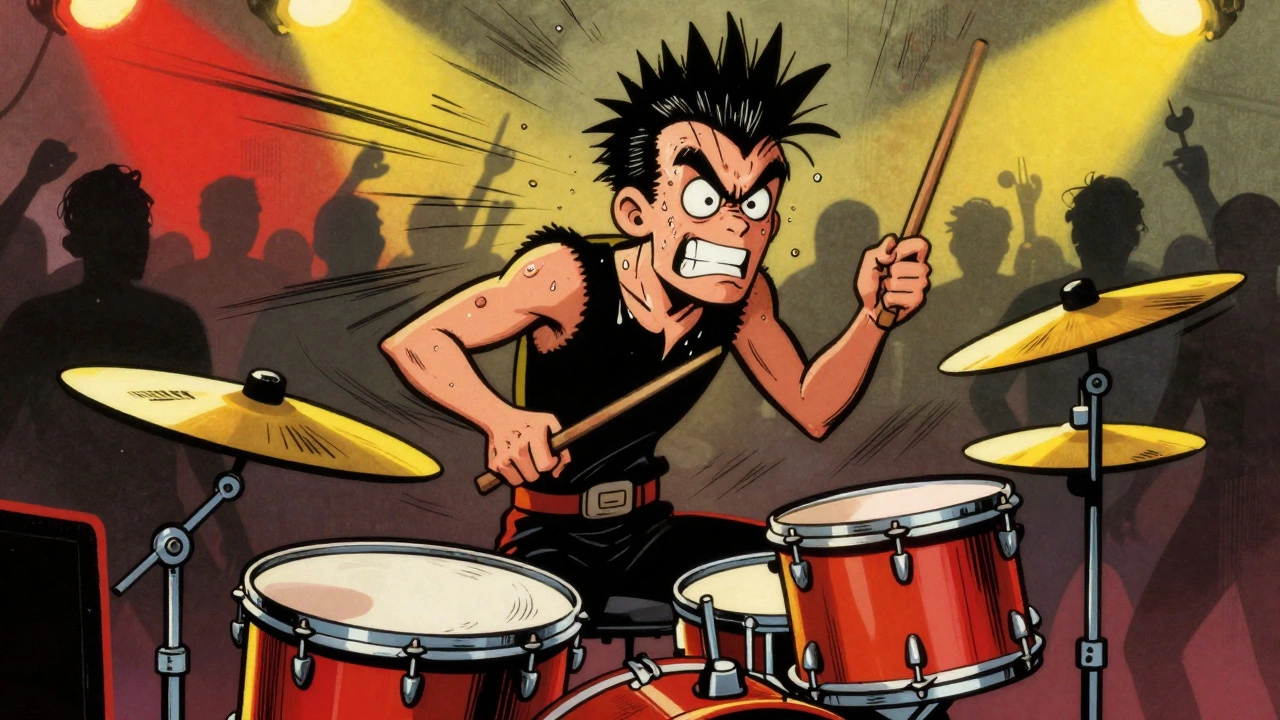

There is a specific feeling you get when a song kicks in at 180 beats per minute. It’s not just speed; it’s a physical push against your chest. That is the sound of 1990s punk. If you have ever tried to play along with Dookie by Green Day's seminal 1994 album that defined pop-punk energy or Smash by The Offspring's breakthrough 1994 album featuring raw punk rock energy, you know that playing fast is easy, but playing *tight* while sounding aggressive is hard. This guide breaks down exactly how those bands created their signature high-energy tracks using simple, repeatable drum and guitar techniques.
The Core Philosophy: Simplicity Meets Intensity
To nail this sound, you first need to understand what makes 1990s punk different from other fast genres like metal or progressive rock. Metal often relies on complex polyrhythms and precise, sterile timing. Punk is about the backbeat. The entire genre rests on the snare hitting beats 2 and 4 (or sometimes the off-beats) with unwavering consistency. If the drummer loses the backbeat, the song collapses. The goal isn't to show off technical virtuosity; it is to maintain a relentless drive that feels urgent and rebellious.
This philosophy applies to both instruments. Guitars do not play intricate solos; they provide rhythmic texture through power chords. Drums do not use elaborate fills; they use endurance-based patterns. When you combine these two elements, you create a wall of sound that hits hard without getting cluttered. The key is locking the guitar strumming pattern directly to the drum kit’s kick and snare hits.
Essential Punk Drum Patterns
Most 1990s punk songs rely on a few core groove formulas. You can build an entire setlist using just three variations. Start slow-around 60 BPM-and gradually increase the tempo as you master the footwork.
- The Standard Backbeat: Play steady eighth notes on the hi-hat. Hit the snare on beats 2 and 4. Place the bass drum on beats 1 and 3. This is your foundation. It sounds boring alone, but it provides the stability needed for faster sections.
- The Double-Kick Drive: Keep the snare on 2 and 4. Move the bass drum to beat 1, then add two quick hits on the "and" of 2 and beat 3. Finally, hit the snare on 4. Count it as "1, 2-and, 3-and, 4." This creates a forward momentum that pushes the listener into the next measure.
- The Off-Beat Snare: Instead of hitting 2 and 4, hit the snare on the "and" of every beat (1&, 2&, 3&, 4&). Keep the hi-hat on steady eighths and place the bass drum on the main beats (1, 2, 3, 4). This syncopated feel is common in skate-punk tracks and requires precise hand-eye coordination.
As you practice these, focus on your right foot. Many beginners struggle because they try to lift their heel entirely for every kick hit. At high speeds, this causes fatigue. Instead, keep your heel anchored near the pedal floor and use your ankle to snap the beater forward. This allows for quicker recovery and smoother double strokes.
Advanced Footwork: Slide vs. Heel-Toe
When songs reach tempos above 180 BPM, single-stroke bass drum hits are no longer enough. You need doubles. There are two primary techniques to achieve this without losing control.
| Technique | Mechanism | Best For | Learning Curve |
|---|---|---|---|
| Slide Technique | Foot slides forward on the pedal board to trigger a second hit immediately after the first. | Fast doubles, consistent volume, lower fatigue. | Moderate |
| Heel-Toe Technique | Heel strikes first, then toe pivots over to strike second. Requires lifting the heel. | Dynamic variation, louder accents, complex rhythms. | Steep |
For most punk styles, the slide technique is more practical. It keeps your foot flat, allowing you to generate two hits with minimal movement. Practice this slowly. Aim for even volume between the first and second hit. Once you can do this cleanly at 120 BPM, start pushing toward 160 BPM. Remember, endurance is built gradually. Do not jump straight to full speed.
Guitar Techniques: Downstrokes and Power Chords
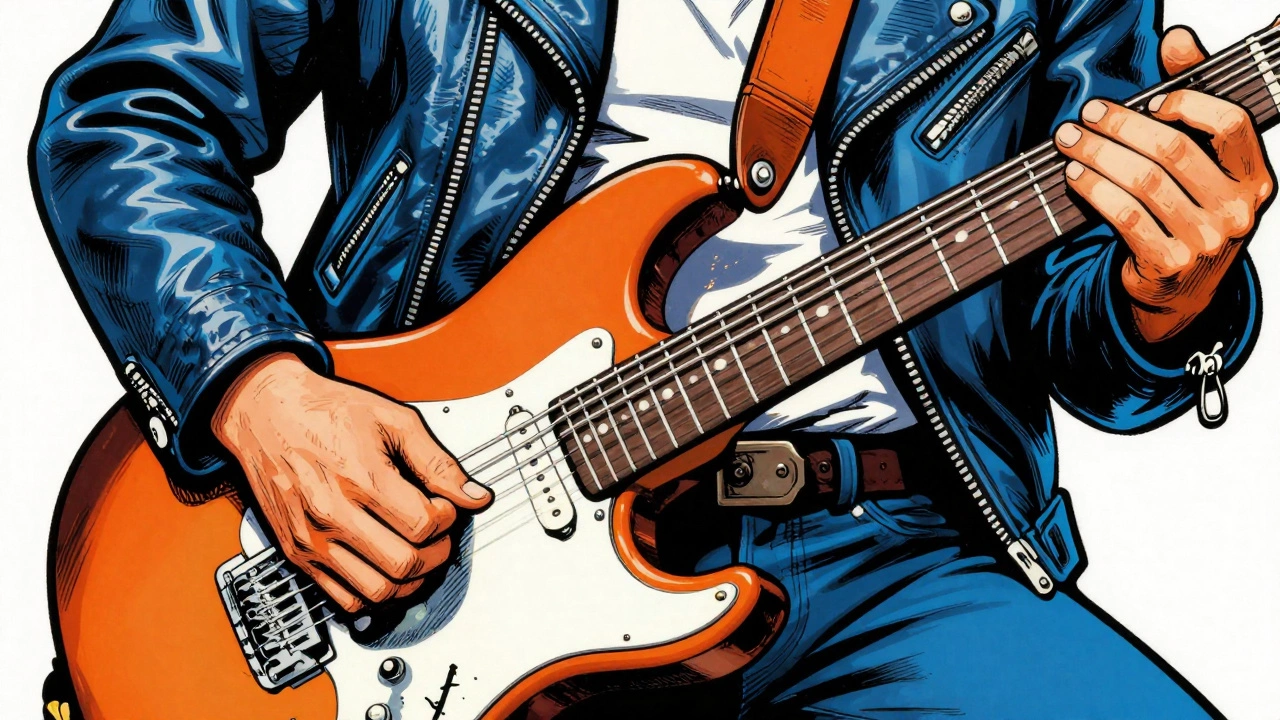
The guitar in 1990s punk is not a lead instrument; it is a rhythm engine. The primary technique is the downstroke. While clean jazz or blues players alternate up and down strokes for efficiency, punk guitarists use only downstrokes. Why? Because downstrokes naturally accentuate the beat and create a chugging, aggressive texture that matches the drum’s intensity.
Start by practicing palm-muted power chords. Place the edge of your picking hand lightly on the strings near the bridge. Strum only the bottom five strings (avoiding the high E string usually) to create a tight, percussive sound. Play eighth-note downstrokes continuously. Your wrist should do the work, not your arm. Keep your elbow relatively still and let your forearm pivot.
In verses, keep the chords muted and low in the register. In choruses, open up the strumming. Remove the palm mute and let the chords ring out fully. Switch to wider voicings or octave lines if possible. This dynamic shift-from tight and quiet to loud and open-mirrors the drum changes and creates the emotional lift listeners expect from punk anthems.
Locking Drums and Guitars Together
A common mistake among amateur bands is playing individually rather than as a unit. To fix this, the guitarist must listen to the drummer’s kick drum. When the drummer plays a double-kick pattern, the guitarist should emphasize those same beats with harder downstrokes. This synchronization creates a unified pulse that feels much faster than the actual tempo.
Try this exercise: Have the drummer play the "Double-Kick Drive" pattern described earlier. The guitarist plays steady eighth-note downstrokes. On the beats where the kick drum hits twice (the "and" of 2 and beat 3), the guitarist digs in harder. This accentuation highlights the syncopation and makes the groove feel propulsive. It turns two separate instruments into one cohesive rhythmic force.
Production Secrets: Compression and Saturation
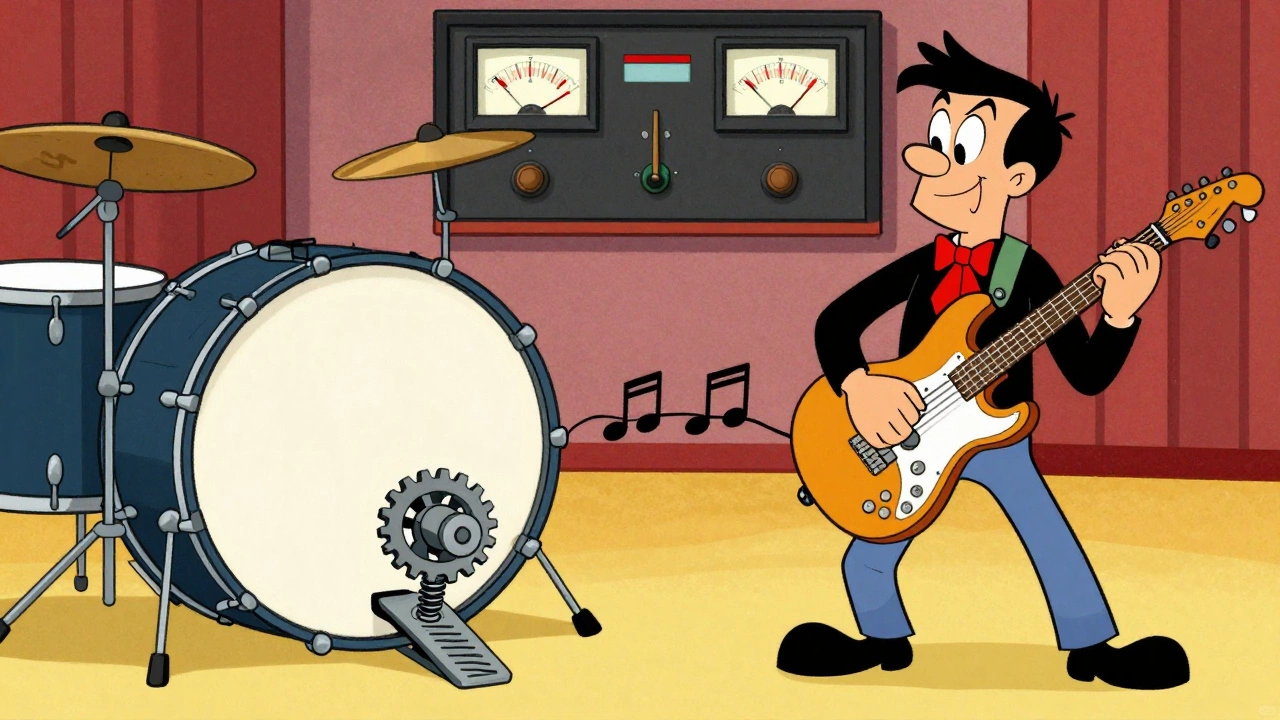
Even if you play perfectly, the recording process defines the final energy. 1990s punk productions are known for being "slammed"-heavily compressed and limited. This reduces the dynamic range, making quiet parts louder and loud parts punchier. The result is a dense, in-your-face mix that retains impact even at high volumes.
For drums, apply heavy compression to the bus track. Use a ratio of at least 4:1 with a fast attack and medium release. This squashes the peaks and brings up the sustain of the snare and kick. Add a gate to the cymbal mics to cut off long tails, ensuring they don’t mask the next snare hit. For guitars, use distortion pedals that emphasize midrange frequencies. Avoid excessive high-end fizz, which causes listener fatigue. Instead, aim for a thick, thumping tone that sits well below the vocal frequency.
Room ambience matters too. Unlike modern polished rock, punk benefits from small-room reverb. Short decay times and high diffusion simulate a garage or club setting. This adds authenticity without washing out the clarity of the performance. If you are mixing digitally, choose impulse responses from small live rooms rather than large halls.
Structural Dynamics: Polka Beats and Half-Time Breaks
Variety prevents listener boredom. One effective trick is inserting a polka beat before a chorus. A polka beat places the kick drum on the off-beats (the "ands") while the snare remains on 2 and 4. This creates a bouncy, energetic feel that builds anticipation. After two or four bars, switch back to the standard punk groove. The contrast makes the return to the main riff feel explosive.
Another technique is the half-time breakdown. Slow the perceived tempo by moving the snare to beat 3 only, while keeping the hi-hat pattern steady. This drops the energy momentarily, creating tension. When you jump back to full-time drumming and dense guitar strumming, the resurgence of energy is dramatic. Bands like Blink-182 used this structure frequently to keep their fast songs interesting and engaging.
Practice Routine for Endurance
High-energy punk demands physical stamina. Build a routine that targets both technique and conditioning. Start each session with ten minutes of metronome work at 60 BPM, focusing on perfect time. Gradually increase the tempo by 5 BPM increments until you reach your target speed. Stop before you lose form.
Incorporate rest periods within your practice. Play a complex pattern for four bars, then simplify to a basic rock beat for four bars. This mimics real song structures and teaches your muscles to recover quickly. Over weeks, you will notice improved endurance and tighter timing. Consistency beats intensity in the long run.
What is the most important element of punk drumming?
The backbeat. Maintaining a solid, consistent snare hit on beats 2 and 4 (or the off-beats) is crucial. Without a strong backbeat, the song loses its driving energy and feels disjointed.
How do I make my guitar sound more aggressive like 90s punk?
Use strict downstroke strumming and palm muting. Focus on midrange-heavy distortion tones. Avoid excessive treble, which causes ear fatigue. Lock your rhythm tightly with the drummer’s kick drum.
Why do punk songs use so much compression?
Compression reduces dynamic range, making the track sound louder and more intense. It ensures that every hit punches through the mix, creating the characteristic "slammed" aesthetic of 1990s punk production.
What is the best way to practice fast bass drum patterns?
Start slow with a metronome. Master the slide or heel-toe technique at low tempos before increasing speed. Focus on even volume and consistent timing. Gradually build endurance over weeks, not days.
Can I use upstrokes in punk guitar playing?
While possible, traditional 1990s punk emphasizes downstrokes for their natural accent and chugging texture. Upstrokes can soften the attack. Stick to downstrokes for authentic high-energy tracks.


