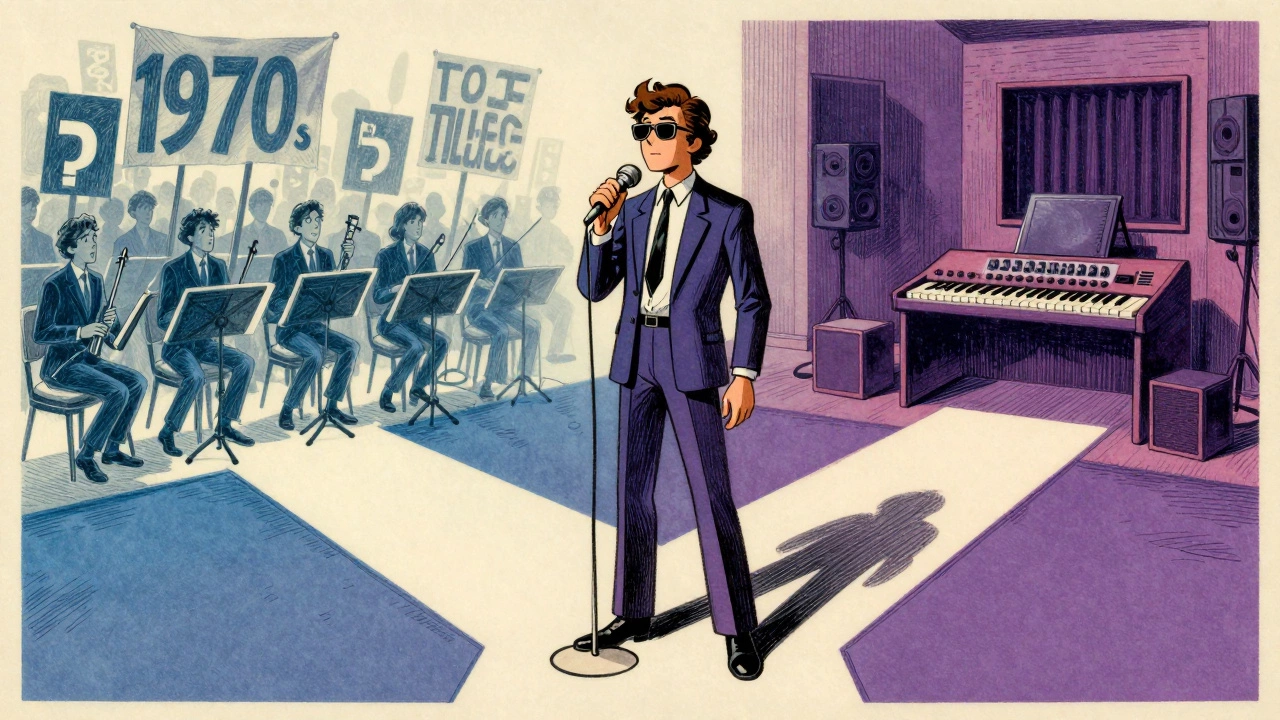

When we talk about Marvin Gaye, our minds instantly jump to "What's Going On." That 1971 masterpiece cemented him as a man with a mission, a voice for the marginalized, and a radical poet within Motown. But step into the 1980s, and the landscape shifts completely. You have to ask yourself: What happened to the revolutionary singer who sang of Vietnam and war? The decade didn't start with a bang of protest, but with the smooth, velvet hum of Sexual HealingA timeless ballad recorded by Marvin Gaye from his seventeenth studio album.
This wasn't just a stylistic shift; it was a survival strategy. By 1982, the social climate had changed. The overt civil rights battles of the 60s had evolved into complex economic struggles. Gaye's return from a four-year silence wasn't marked by fiery speeches, but by a desperate need for intimacy in a cold, mechanical world. Understanding this era means looking past the dance floor hits and finding the quiet desperation hidden in the reverb.
The Long Silence Before the Rebirth
Before we can understand where he went in the 80s, we have to acknowledge where he was coming from. Marvin Gaye left the public eye around 1978. He hadn't released a solo album since 1978's *Here, My Dear*, which was legally entangled. He was effectively invisible to the charts, though he still worked behind the scenes. When you consider the cultural explosion of the New Wave and Hip Hop beginning to rise, Gaye was standing on the edge of a precipice.
He signed with Columbia Records in early 1982. This move was seismic. Leaving Motown-the label that built him-felt like a betrayal to some, but a necessary divorce to others. Gaye wanted total control. He didn't want producers like Gamble & Huff telling him how to sing. He wanted to own his masters. This freedom, however, cost him the safety net of a guaranteed hit factory. The pressure to succeed on his own terms was crushing.
Midnight Love: A New Sonic Identity
The debut album on this new label was titled Midnight LoveMarvin Gaye's seventeenth studio album released in 1982. Listen to the production quality here. It sounds different from the crisp, orchestral pop of the 70s. It has a grittier, darker undertone, infused with early synthesizer textures. The lead single, "Sexual Healing," became a global phenomenon, but its meaning was layered.
You hear people say the song was purely about romance. They clap along at weddings. But look closer at the lyrics. He talks about pain, scars, and fear of rejection. In a decade dominated by hair metal and synth-pop, Gaye's version of passion felt raw and human. While Michael Jackson was selling out stadiums in sequined gloves, Gaye was whispering truths in smoky rooms. That contrast is vital to understanding his 1980s legacy. He wasn't trying to be a pop star anymore; he was trying to be a healer.
| Attribute | 1970s Era | 1980s Era |
|---|---|---|
| Sonic Texture | Orchestral Jazz, Gospel Choirs | Synthesizers, Drum Machines, Smooth Groove |
| Lyrical Focus | Social Justice, War, Nature | Intimacy, Mental Health, Personal Healing |
| Label Home | Motown Records | Columbia Records |
| Reception | Critical Acclaim, Cultural Icon | Commercial Revival, Late Career Peak |
The Question of Politics: Silence as Protest?
This brings us to the biggest debate among historians and fans. Was Gaye apolitical in the 80s? The answer is complicated. The Reagan era pushed for individualism. People weren't marching as they did in Detroit in the 60s. Gaye seemed to pivot inward. Instead of singing about the government failing the poor, he started singing about relationships failing the individual. Is that a lesser political act? Not necessarily.
Consider the backdrop. Washington, D.C., where he spent much of his time in those final years, was crumbling. Economic disparity was widening, yet the media machine was obsessed with excess. Gaye's music offered a quiet resistance against that artificiality. By championing vulnerability, he rejected the aggression of the era. It is possible to read his obsession with healing as a political statement in itself-a refusal to let society break the spirit through isolation. He wrote that he wanted to save himself from addiction, poverty, and bitterness, which were systemic issues affecting black communities deeply.
The Final Years and Tragic Conclusion
We cannot discuss the 1980s for Marvin Gaye without addressing the abrupt end. His final year, 1984, was a storm of legal battles, fatherly estrangement, and tax evasion charges. He released Museum PiecesA live concert album released in 1984 capturing his final tour performances, which showed a man who could still command a room. The energy was high, almost frantic, perhaps sensing the clock ticking down.
In April 1984, tensions with his father, Marvin Gay Sr., reached a breaking point. He was shot at home in Los Angeles. The story is painful but essential context for his "politics" of family. Much of his later writing involved reconciliation. Even his music videos, which were rare for him to film, portrayed deep domestic longing. The tragedy sealed his status as a martyr for the genre. It forced the industry to pause and recognize that talent alone couldn't always survive the machinery of fame.
How 80s Hits Redefined R&B
Even though the decade ended abruptly, the impact remains. You can trace lines from "Got to Give It Up" to modern Hip Hop sampling. The beat from "Sexual Healing" appears everywhere from house parties to luxury commercials. Why? Because that groove transcends language. It speaks to a universal need for touch.
His approach influenced artists like Luther Vandross and Whitney Houston, who took that vocal fluidity and polished it for the power-ballad era. Gaye proved that commercial success didn't require selling your soul. He managed to chart high while maintaining an emotional authenticity that feels even more relevant twenty years later, as we navigate similar crises in communication and mental health.
Ultimately, looking back from 2026, Marvin Gaye's 1980s work stands as a testament to resilience. He moved from a symbol of collective revolution to a guardian of personal peace. We don't always see the politics in the love songs, but sometimes that's exactly where the battle is fought-right there in the bedroom, in the relationship, in the self.
Did Marvin Gaye stop making political music in the 1980s?
Not entirely, but his focus shifted. In the 70s, he addressed broad societal issues like war and poverty directly. In the 80s, he focused on personal and relationship dynamics, reflecting a change toward introspection during the Reagan era.
Why was 'Sexual Healing' such a massive hit?
It combined a smooth, danceable rhythm with lyrics about overcoming personal pain. Its universal theme of needing connection resonated deeply with audiences feeling isolated during the early 80s.
Which record label did Marvin Gaye sign with in the 1980s?
After leaving Motown, he signed a contract with Columbia Records in 1982, marking a new phase in his career focused on creative control.
What was the title of his last studio album?
His last studio album was 'Midnight Love', released in 1982. He also released live albums afterward, like 'Museum Pieces' in 1984.
How did Marvin Gaye die?
Tragically, he was shot by his father, Marvin Gay Sr., in their family residence in Los Angeles in April 1984, ending his career prematurely.


