
Imagine a world where the most famous rock star isn't just singing songs but staging theatrical protests against American family values on national television. That was Marilyn Manson in the 1990s. While other bands were fighting for airplay with catchy hooks, Manson was busy getting banned from cities, protested by religious groups, and scrutinized by politicians. Yet, paradoxically, this relentless controversy didn't destroy his career-it fueled it. His albums topped charts, sold millions of copies, and defined an era of industrial metal.
This article breaks down exactly how that happened. We’ll look at the specific visual and musical choices Manson made, the key albums that drove his success, and the cultural battles that turned him into a household name. If you’re curious about how shock value translates into sales, or why the 1990s culture wars centered so heavily on one band, you’ve come to the right place.
The Birth of a Provocateur
To understand the Marilyn Manson phenomenon, we have to go back to Fort Lauderdale, Florida, in 1989. Music journalist Brian Warner and guitarist Scott Putesky (who became Daisy Berkowitz) formed a band called Marilyn Manson & the Spooky Kids. The name itself was a calculated collision of two iconic figures: Marilyn Monroe, the symbol of pure Hollywood glamour, and Charles Manson, the cult leader associated with violent chaos. This juxtaposition set the stage for everything that followed.
In the early 1990s, they played local clubs wearing grotesque costumes and using props like fake body parts. It wasn’t just music; it was performance art designed to disgust and fascinate simultaneously. Their breakthrough came when Trent Reznor, the frontman of Nine Inch Nails, signed them to his Nothing Records label. Reznor saw potential in their abrasive sound and helped shape their debut major-label album, Portrait of an American Family (1994). This record introduced distorted guitars, horror movie samples, and lyrics attacking suburban hypocrisy. It didn’t sell millions immediately, but it planted the seeds for the explosion that would follow.
Smells Like Children: The Mainstream Breakthrough
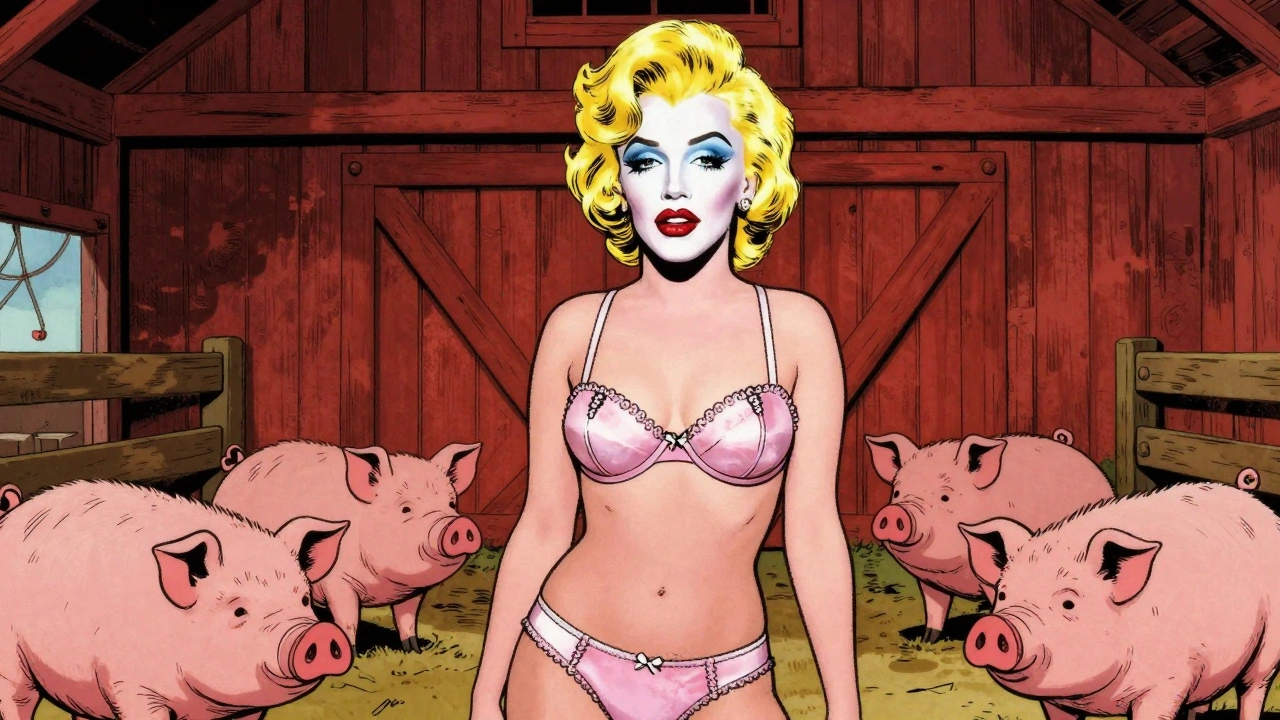
If Portrait was the foundation, the 1995 EP Smells Like Children was the door opener. The pivotal track was a cover of the Eurythmics’ "Sweet Dreams (Are Made of This)." Manson slowed it down, added menacing industrial beats, and appeared in the music video wearing white pancake makeup, smeared lipstick, and women’s lingerie. The imagery was surreal and unsettling-featuring barns, pigs, and crucifix-like poses.
MTV couldn’t ignore it. The video got heavy rotation, first late at night and then during daytime slots. The single climbed the Billboard rock charts and crossed over to the Hot 100. This moment proved a crucial theory: shock aesthetics could coexist with mainstream popularity. People weren’t just listening despite the weird visuals; they were listening because of them. It showed record labels that there was a massive audience hungry for something that challenged traditional gender norms and religious symbols.
Antichrist Superstar: Peak Industrial Metal
Released in October 1996, Antichrist Superstar is often cited as the definitive statement of Manson’s 1990s aesthetic. Structured as a concept album, it tells the story of a narrator transforming from an oppressed outcast into a dictatorial rock messiah. Musically, it fused drum machines, layered distortion, and noise samples with anthemic choruses. Visually, Manson adopted a skeletal look with pale foundation, black eyeliner, and military-style uniforms that evoked fascist imagery.
The lead single, "The Beautiful People," became an anthem on MTV and rock radio. Its sarcastic critique of celebrity culture resonated with teenagers who felt alienated by mainstream media. The album debuted in the top 5 of the Billboard 200 and eventually went platinum. But the music was only half the battle. The accompanying Dead to the World Tour featured pulpit-like podiums, torn Bible pages thrown into crowds, and ritualistic performances that drew intense protests from Christian organizations and parents’ groups.
| Album | Year | Style/Theme | Chart Performance |
|---|---|---|---|
| Portrait of an American Family | 1994 | Industrial Metal / Horror Samples | Moderate Success |
| Smells Like Children | 1995 | Remixes / Industrial Ballad | Breakthrough Single |
| Antichrist Superstar | 1996 | Concept Album / Anti-Christian Symbolism | Top 5 Billboard 200 / Platinum |
| Mechanical Animals | 1998 | Glam Rock / Androgynous Sci-Fi | #1 Billboard 200 |
Mechanical Animals: The Glam Shift
Just when everyone expected more industrial apocalypse, Manson pivoted hard with Mechanical Animals in 1998. Inspired by David Bowie’s Ziggy Stardust era, he portrayed himself as Omega, a gender-fluid, drug-addicted alien rock star. The album cover featured a hairless, porcelain-white body with artificial breasts and no visible genitals, sparking censorship debates at retail chains.
Musically, the shift was dramatic. Cleaner guitar tones, synth-driven arrangements, and classic rock structures replaced the abrasive noise of previous records. Tracks like "The Dope Show" and "Coma White" were structured like radio singles. Despite-or perhaps because of-the provocative imagery, the album debuted at number 1 on the Billboard 200. This confirmed that Manson’s shock tactics weren’t a niche gimmick; they were a viable commercial strategy that could dominate the mainstream charts.
Controversy as Marketing
You can’t talk about Manson’s success without addressing the backlash. In the mid-1990s, anonymous affidavits alleged satanic rituals and animal abuse onstage. While never substantiated in court, these claims fueled a moral panic. Politicians like Senator Joe Lieberman denounced him as a corrupting influence. Local city councils tried to ban concerts, citing obscenity laws.
Then came April 20, 1999: the Columbine High School massacre. Early, inaccurate media reports linked the shooters to Manson’s music and fashion. Although later investigations showed this connection was overstated, the damage was done. Manson was temporarily pulled from tours and faced intense scrutiny. However, even this tragedy reinforced his status as a central figure in the culture wars. For many teenagers, buying his music became an act of rebellion against the very authorities condemning it. The controversy didn’t kill his sales; it amplified his notoriety.
Why It Worked: The Cultural Context
Manson succeeded because he tapped into existing anxieties. The 1990s were still shaped by the Moral Majority and the Parents Music Resource Center (PMRC) controversies of the 1980s. Parents were worried about youth culture, technology, and changing moral norms. Manson held up a mirror to these fears, exaggerating them through theater and music. He didn’t just play notes; he created a spectacle that forced people to confront issues of religion, consumerism, and conformity.
Academic critics noted that his work functioned as Brechtian anti-theater, using shock to expose the spectacle of American media rather than just to offend. Fans, particularly those who felt marginalized or alienated, found validation in his lyrics about religious trauma and bodily self-loathing. The theatricality of his concerts provided a cathartic release. In short, Manson offered a sense of empowerment to outcasts while giving conservatives a villain to fight against. Both sides kept him relevant.
Legacy of the 1990s Shock Aesthetic
By the end of the decade, Manson had closed his core trilogy with Holy Wood (2000), responding directly to the Columbine backlash. His 1990s output remains a unique case study in how transgressive art can achieve commercial dominance. Unlike earlier shock rockers like Alice Cooper or KISS, who used horror imagery for entertainment, Manson integrated political and religious provocation into every aspect of his persona. He combined the aggression of Nine Inch Nails with the glam of Bowie and the media savvy of modern celebrity culture.
Today, looking back at the 1990s, Manson stands out as arguably the last truly controversial artist of that era. His ability to turn moral panic into platinum records changed how the music industry viewed risk and reward. For fans and historians alike, his work offers a fascinating glimpse into a time when music wasn’t just background noise-it was a battleground for cultural values.
What is Marilyn Manson's shock aesthetic?
It refers to the deliberately transgressive visual style, lyrical themes, and stage performances developed by Manson in the 1990s. This included combining industrial metal music with glam rock visuals, using religious and political symbolism to provoke audiences, and challenging gender norms through androgynous presentation.
Which Marilyn Manson album was the biggest commercial success?
Mechanical Animals (1998) was his biggest commercial peak, debuting at number 1 on the Billboard 200. Antichrist Superstar (1996) also achieved massive success, going platinum and establishing his mainstream presence.
How did Trent Reznor influence Marilyn Manson?
Trent Reznor of Nine Inch Nails signed Manson to his Nothing Records label and produced their debut major-label album, Portrait of an American Family. Reznor helped refine their sound and introduced them to larger alternative rock audiences through touring.
Was Marilyn Manson involved in the Columbine shooting?
No. Early media reports falsely linked the shooters to Manson’s music and fashion. Later investigations clarified that the connection was overstated or fabricated. However, the incident significantly impacted his public image and tour schedule in 1999.
What makes Antichrist Superstar a concept album?
Antichrist Superstar is structured in three cycles telling a narrative story. It portrays the transformation of the narrator from an oppressed outcast into a dictatorial rock messiah, using consistent thematic elements across lyrics, visuals, and performance.