
Country music in the 1970s wasn't just about twangy guitars and sad songs. It was a battleground for women's voices, and three specific artists won that fight. Loretta Lynn is a pioneering country singer-songwriter known for her bold lyrics about women's lives and reproductive rights. She didn't sing like other women of her time. She spoke plainly about pills, divorce, and drinking husbands.
Alongside her were Tammy Wynette, who defined the countrypolitan sound with hits exploring marriage and infidelity from a female perspective, and Emmylou Harris, who merged folk, rock, and country to create the Americana genre. Together, they didn't just record albums. They changed how the industry treated women. You can hear their fingerprints on every female country star today. Here is how they did it.
Tammy Wynette’s Elegant Twang and Domestic Truths
You might know Tammy Wynette for "Stand By Your Man." People still debate that song today. Some say it traps women. Others see survival. But if you stop at that one hit, you miss the point. Wynette was writing complex stories about what life inside a marriage actually looked like for working-class women in the 1970s.
She mastered the countrypolitan sound, which mixed traditional country storytelling with smooth orchestral arrangements. This style made her music feel luxurious but kept the pain real. Her album D-I-V-O-R-C-E spelled out the title so radio stations wouldn't ban it for being too harsh for kids. That was clever marketing, sure. But the lyrics were raw. She sang about the financial ruin and emotional exhaustion of splitting up.
Then she dropped "I Don't Wanna Play House." In this track, she rejected the idea that a woman's only job was to be a perfect wife and mother. She wanted freedom. She wanted respect. These songs gave voice to women who felt stuck. Wynette didn't preach feminism with academic terms. She used heartbreak as her tool. And it worked. She became the first female artist to have ten consecutive number-one singles on the Billboard Hot Country Singles chart. That isn't luck. That is connection.
Loretta Lynn: The Voice of Reproductive Autonomy
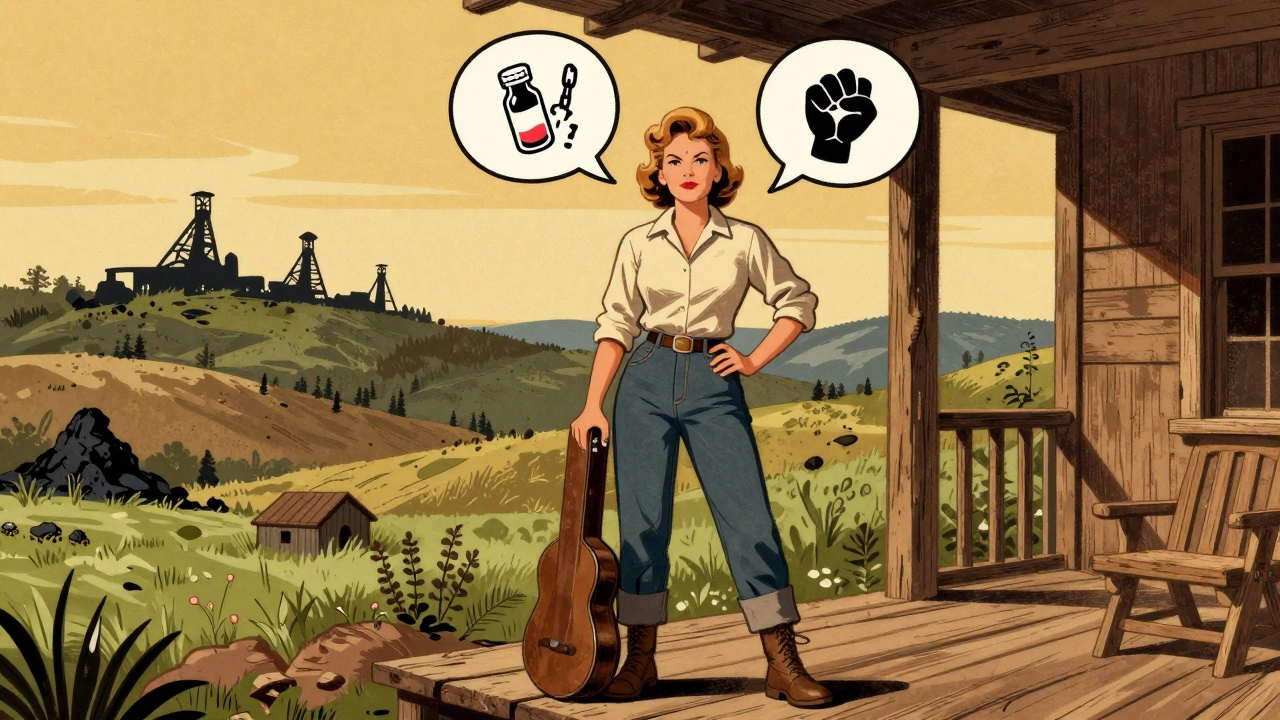
If Tammy Wynette explored marriage, Loretta Lynn broke the rules entirely. Born in Butcher Hollow, Kentucky, Lynn grew up poor. She learned guitar by ear. She started singing in coal mining towns. Her early hits like "Don't Come Home A-Drinkin'" were funny but sharp. They showed a woman setting boundaries with an abusive husband.
But her biggest impact came with "The Pill." Released in 1975, this song was explosive. It talked directly about birth control. At a time when most country songs ignored sex or treated it as a sin, Lynn celebrated a woman's right to choose her family size. She wrote it after her own doctor prescribed the pill to her. She realized thousands of women needed to hear this message.
Radio stations hated it. Some banned it outright. Critics called it scandalous. But fans bought it anyway. Lynn proved that country music could address politics and health without losing its soul. She didn't soften her language. She stayed matter-of-fact. This bravery paved the way for future artists to discuss taboo subjects. Even decades later, her album Portland Oregon (released in 2016) showed she could still write relevant material about modern life. She remained a cultural icon until her death in 2023.
Emmylou Harris: Bridging Rock and Country
While Lynn and Wynette focused on traditional Nashville sounds, Emmylou Harris looked outward. Born in Alabama, she grew up listening to folk music. She moved to California in the late 1960s. There, she met Gram Parsons. Their partnership changed everything. Parsons introduced her to country-rock fusion. After his tragic death, Harris took their vision and ran with it.
Her 1975 debut album, G.P., honored Parsons while establishing her own style. She formed the Hot Band, featuring musicians like Linda Ronstadt's former backing players. This group blended bluegrass picking with electric rock rhythms. The result was sophisticated yet accessible. Albums like Grievous Angel and Blue Kentucky Girl showcased her incredible voice. Critics praised her ability to convey deep emotion without melodrama.
Harris didn't just play music; she built bridges. She attracted rock fans who usually avoided country. She also brought country listeners into new sonic territories. Music historians Mary A. Bufwack and Robert K. Oermann called her the "beacon" of the country-rock movement. They noted that she showed Nashville that country music could succeed with dignity intact. She made it hip. Later projects like The Ballad of Sally Rose demonstrated her commitment to narrative depth. She influenced the neotraditional country wave of the 1980s and helped define the Americana genre in the 1990s.
Comparing the Three Queens
| Artist | Primary Style | Key Innovation | Signature Song/Album |
|---|---|---|---|
| Loretta Lynn | Traditional Country | Addressing reproductive rights and social taboos | "The Pill" / Loretta |
| Tammy Wynette | Countrypolitan | Exploring female domestic struggles with elegance | "D-I-V-O-R-C-E" / D-I-V-O-R-C-E |
| Emmylou Harris | Country-Rock / Folk | Fusing genres to broaden audience appeal | "G.P." / Grievous Angel |
These three women approached country music from different angles. Lynn came from the hills of Kentucky. Wynette rose through the Nashville machine. Harris arrived from the folk scene in California. Yet they shared a common goal: authenticity. None of them pretended to be something they weren't. They let their backgrounds shape their art. This honesty resonated with listeners across demographics.
Legacy Beyond the 1970s
Their influence didn't end when the decade did. Today's country stars owe them a debt. Artists like Miranda Lambert and Kacey Musgraves cite these queens as inspirations. When Lambert sings about independence, she walks the path Lynn cleared. When Musgraves explores gender roles, she follows Wynette's lead. Harris's genre-blending approach lives on in acts like The Chicks and Brandi Carlile.
Industry recognition reflects this impact. Country Universe ranked Harris fourth among all female country artists. Lynn sits at number one. Wynette is second. These rankings aren't just about sales figures. They measure cultural shift. These women forced the industry to take women seriously. Before them, female artists were often seen as novelties. After them, they became essential.
Their discographies remain vital. Streaming platforms keep their music alive for new generations. Young listeners discover "The Pill" and realize how radical it was. They hear "Stand By Your Man" and analyze its context. They listen to Harris's harmonies and appreciate the craftsmanship. Each generation finds new meaning in their work.
Why was Loretta Lynn's song "The Pill" controversial?
In the 1970s, discussing birth control openly was taboo in mainstream media, especially country music. Lynn addressed reproductive autonomy directly, challenging societal norms about women's bodies and choices. Radio stations feared backlash, leading to bans. However, fans embraced the honesty, making it a landmark record for female empowerment.
How did Tammy Wynette's "Stand By Your Man" reflect her broader body of work?
While "Stand By Your Man" suggests submission, Wynette's catalog reveals complexity. Songs like "D-I-V-O-R-C-E" and "I Don't Wanna Play House" show women leaving bad marriages or rejecting restrictive roles. Her work explores the full spectrum of relationship struggles, offering nuance rather than simple prescriptions.
What role did Gram Parsons play in Emmylou Harris's career?
Parsons introduced Harris to country-rock fusion. Their collaboration shaped her artistic direction. After his death, she continued developing this style, creating albums like G.P. and Grievous Angel. He provided the initial spark, but she built the enduring legacy.
Did these artists collaborate with each other?
Yes. Lynn and Wynette recorded the duet album Sweet Dreams in 1969. Though released before the 1970s peak, it set the stage for their individual successes. Harris collaborated with many contemporaries, including Linda Ronstadt and Dolly Parton, further expanding her network within the industry.
How does Emmylou Harris's style differ from traditional country?
Harris incorporated folk influences and rock instrumentation into her music. She used electric guitars alongside acoustic picks. Her vocal style emphasized clarity and harmony over twang. This blend created a smoother, more eclectic sound that appealed to diverse audiences beyond typical country fans.