

Ever noticed how your favorite album sounds polished and perfect, but the concert version of the same song feels raw, faster, and somehow more exciting? It isn't just your imagination. There is a massive divide between how a musician approaches a stage and how they handle a recording booth. One is about the thrill of the moment; the other is about the pursuit of a permanent, flawless artifact. Understanding the gap between live performance is the act of presenting music to an audience in real-time, emphasizing immediate emotional connection and energy and studio work helps you appreciate why a great live act might struggle in the booth, or why a studio masterpiece can sometimes feel stiff on stage.
The most immediate difference is the psychological safety net. In a live setting, you have one shot. If a guitar string snaps or a singer misses a cue, they can't hit "undo." They have to pivot instantly. This creates a high-stakes environment where risk-taking is a feature, not a bug. Audiences don't actually want a robotic, note-perfect recital; they want to feel the human element. They'll forgive a slightly flat note if the energy is electric. In contrast, studio recording is the process of capturing sound in a controlled environment to create a permanent audio track. Here, the goal is precision. If a note is off, you simply do another take. The pressure shifts from "don't mess up the show" to "make this the best version possible for eternity."
The Technical Divide: Gain, Space, and Gear
From an engineering perspective, the two worlds operate on completely different math. When you're in a loud venue, sound engineers typically aim for an input gain of 0 dB to maximize signal strength and fight through the noise of a crowd. But move that same setup into a controlled room, and the target drops to around -12 dB. Why? Because in a studio, the goal is to avoid clipping at all costs to keep the signal clean and flexible for later editing.
The room itself is another character in the story. Live venues have natural acoustics-reverbs and echoes that bounce off the walls and ceiling. Because the room provides its own "character," engineers often use fewer artificial effects on the vocals. In a studio, however, you're often dealing with isolated booths designed to kill all natural reflection. This "dead" space allows engineers to use high-end condenser microphones, which are incredibly sensitive and pick up every tiny breath or finger-slide on a string-details that would be swallowed by the noise of a concert hall.
| Feature | Live Performance | Studio Recording |
|---|---|---|
| Target Input Gain | ~0 dB (Max Signal) | ~-12 dB (Clean Headroom) |
| Acoustics | Natural reverb, uncontrolled space | Controlled isolation, dead rooms |
| Microphone Type | Dynamic (Durability/Feedback rejection) | Condenser (High detail/Sensitivity) |
| Tempo Control | Fluid, often no click track | Rigid, usually locked to a click |
| Mistake Tolerance | High (Value on authenticity) | Low (Value on perfection) |
The Performance Mindset: Outward vs. Inward
When a musician steps on stage, their energy is directed outward. They are communicating with thousands of people, feeding off the crowd's roar, and using their physical presence to sell the song. This outward energy often pushes the tempo. Many live bands don't use a click track (an electronic metronome), meaning the song naturally speeds up during a high-energy chorus. It feels organic because it is.
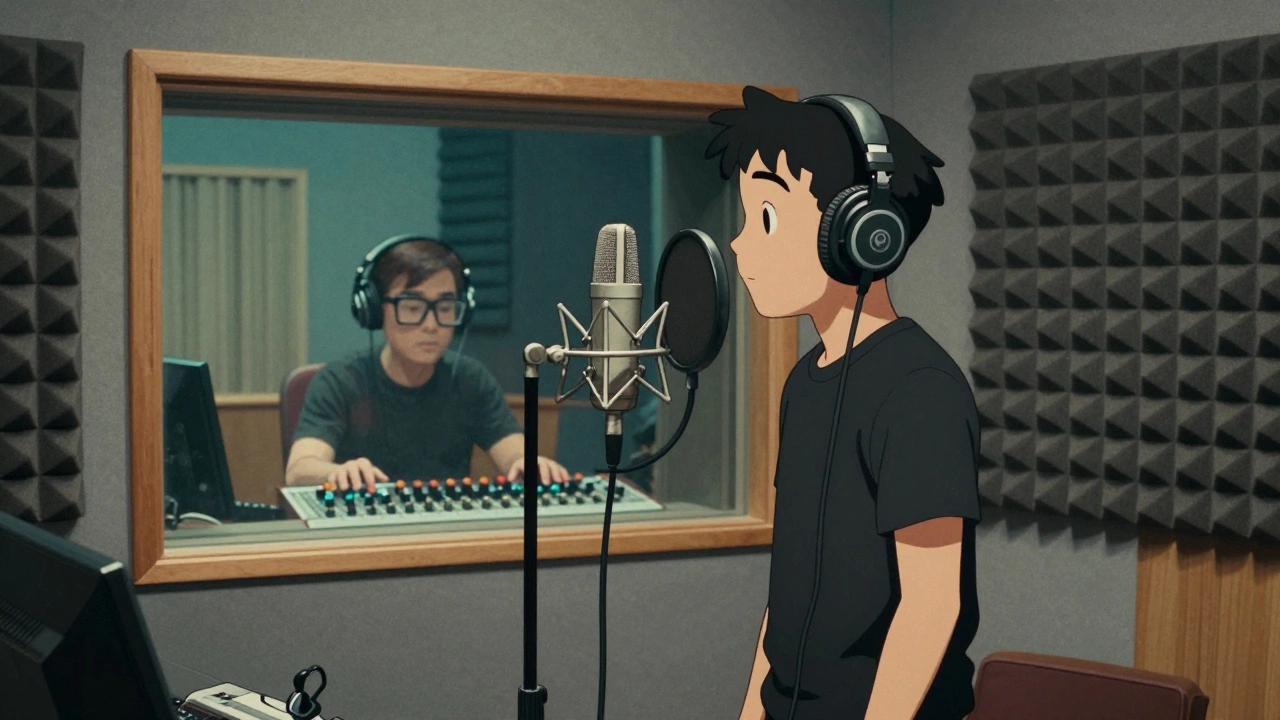
Step into the studio, and that energy has nowhere to go. The only "audience" is a few microphones and a producer staring through a glass window. This can feel unnatural, but it allows the musician to turn inward. Instead of worrying about how they look, they focus on how they sound. A singer might actually lie on their back to get a better diaphragm flow, or a guitarist might put a piece of cloth under their strings to stop accidental noise. In the studio, the philosophy is "less is more." While a live show is the place for a five-minute improvised solo to wow the crowd, a recording needs to be concise to ensure the song gets stuck in the listener's head.
The Microscope of Permanence
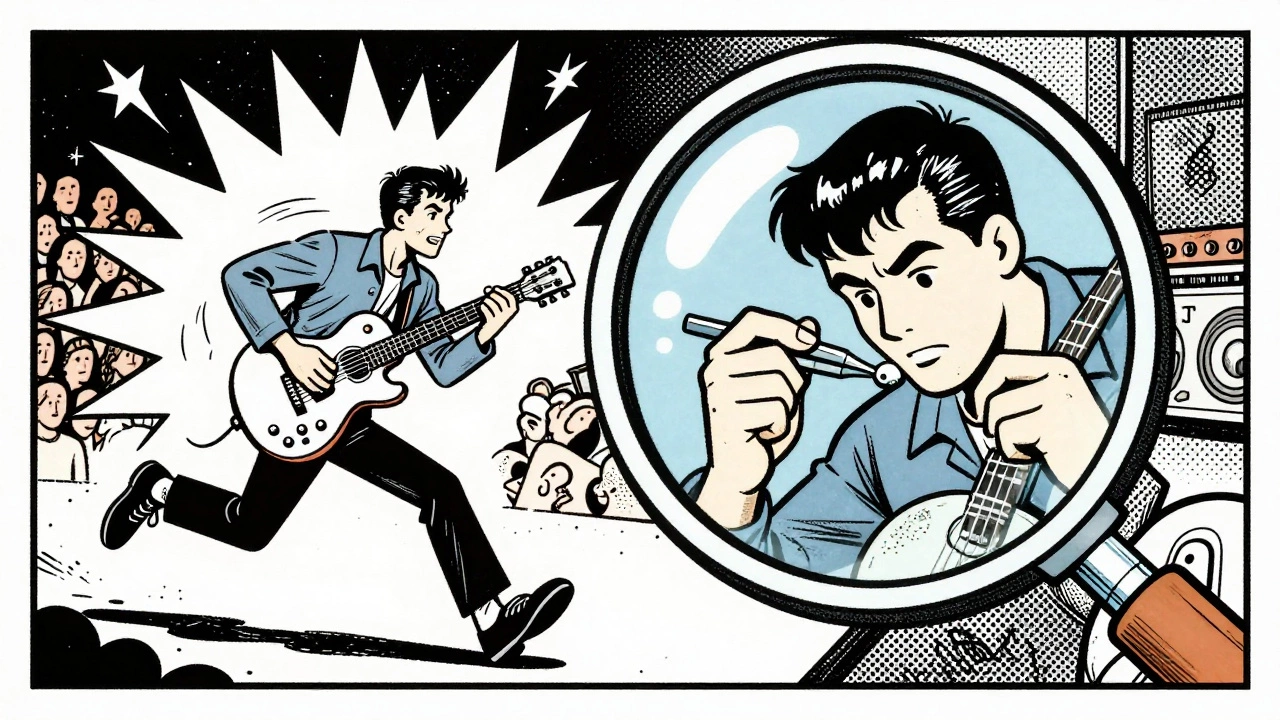
The legendary pianist Vladimir Horowitz perfectly illustrated this difference. During a live concert, he didn't mind hitting a few wrong notes. Why? Because the audience only hears that mistake once, and the risk of playing with such passion is what makes the performance great. But when it came to recording, he was meticulous. He knew that a recording is a permanent document. A wrong note on a record isn't a "human moment"-it's an error that thousands of people will hear every time they hit play.
This "recording microscope" forces musicians to obsess over details that are invisible on stage. The exact tonal snap of a snare drum or a millisecond of timing difference in a jazz groove becomes a glaring issue when listened to on high-end headphones. This is why studio work is a slow process of tweaks and repetitions, whereas live work is a sprint of adrenaline.
Adapting to the Listening Environment
It is also worth noting that these two formats are designed for different ears. A live performance is built for the acoustics of a club or stadium. It's meant to be felt in the chest. Studio recordings, however, are designed for "home listening." Whether it's a pair of earbuds on a commute or a high-fidelity system in a living room, the sonic palette is different. This is why some records sound "tame" compared to the band's live energy. It's not that the musicians are playing it safe; it's that they are tailoring the sound for an intimate, personal listening experience rather than a massive public event.
Modern Tech and the Blurring Line
In the early days of recording, the gap was smaller. Musicians often recorded their songs in a few takes, much like a live show, because the technology didn't allow for much editing. Today, Digital Audio Workstations (DAWs) have changed the game. We now have the ability to compile the best fragments of ten different takes into one "perfect" performance. This has pushed studio recordings even further away from the reality of live performance, making the raw, unpolished nature of a concert even more valuable to fans who crave authenticity.
Why do live versions of songs often sound faster than the album?
Live performances often lack a click track, and the adrenaline of the crowd naturally pushes the musicians to speed up. Additionally, the physical energy of a live setting often leads to a more aggressive, driving tempo that feels more exciting than a rigid studio recording.
Can you record a "live album" in a studio?
Yes, these are often called "live-in-studio" recordings. Musicians play together in one room to capture the natural chemistry and timing of a live band, but they still benefit from the high-quality microphones and controlled environment of a studio. It's a middle ground between the two extremes.
What is a click track and why is it used more in studios?
A click track is a digital metronome that keeps the musician in perfect time. It is essential in studios because it allows engineers to easily overdub different instruments (like adding vocals later) and makes editing much simpler by providing a consistent grid.
Do professional musicians hate recording in studios?
Not necessarily, but it requires a different mindset. Some performers find the lack of audience feedback draining, while others love the ability to experiment with sounds and textures that would be impossible to recreate on a loud stage.
Which is a better representation of an artist's skill?
Neither is "better"; they test different skills. Live performance tests endurance, adaptability, and charisma. Studio recording tests patience, attention to detail, and the ability to execute a part with surgical precision.


