

There is a specific kind of magic that happens when the lights dim, the crowd goes quiet, and a singer steps up to the mic with nothing but an acoustic guitar or a piano. It’s not the roar of a stadium show. It’s not the pyrotechnics of a hard rock arena tour. It is something quieter, more dangerous, and far more rewarding. This is the world of live soft rock, a genre defined by its ability to balance raw emotional intimacy with studio-level polish.
Soft rock has always been about melody, smooth vocals, and gentle instrumentation. But when you take those elements off the recording studio floor and put them on stage, the challenge changes completely. You have to keep the song feeling personal while ensuring every note hits with precision. That tension-between vulnerability and perfection-is what makes live soft rock so compelling today.
The DNA of Soft Rock Performance
To understand how to execute this style live, we first need to look at what defines the genre itself. Soft rock emerged in the late 1960s and dominated radio waves through the 1970s. Bands like Fleetwood Mac, Elton John, and Chicago didn’t just write songs; they crafted sonic landscapes that prioritized emotion over aggression.
In a live setting, this translates to specific musical choices. The tempo usually sits between 70 and 110 beats per minute. The keys are often major or modal, creating a warm, nostalgic feel. Instrumentation relies heavily on clean electric guitars, acoustic strumming, piano lines, and restrained percussion. There is no room for distortion-heavy solos or pounding drum kits here. Instead, the focus is on mid-tempo grooves that allow the lyrics to breathe.
- Vocal Clarity: The voice is the lead instrument. Every word must be understood.
- Gentle Dynamics: Instruments support the singer rather than compete with them.
- Emotional Resonance: Lyrics explore love, introspection, and memory.
This foundation dictates everything else about the performance. If the music is mellow, the staging cannot be chaotic. If the lyrics are intimate, the delivery cannot feel distant.
Crafting Intimacy in a Live Setting
Intimacy isn’t just about playing in a small room. You can have an intimate moment in a theater with two thousand seats, or lose it in a club with fifty. True intimacy comes from perceived closeness and vulnerability. Critics often describe these moments as feeling "like you shouldn’t be watching" because the artist is exposing their true self without armor.
How do you create that feeling? Start with the stage layout. In many traditional rock shows, musicians stand on risers, facing forward, separated by distance. For soft rock, bring everyone closer together. Have the guitarist sit next to the pianist. Let the bassist step out from behind the drum kit. When the band faces inward toward each other, the audience feels like they are peeking into a private conversation.
Lighting plays a huge role too. Avoid bright strobes or harsh white washes. Use warm, low-intensity lights that mimic candlelight or sunset tones. This visual warmth signals to the brain that it’s time to relax and listen closely. Even camera work matters if you’re recording the set. Close-ups on the singer’s face, capturing breaths and subtle facial expressions, reinforce the sense of connection.
Consider the power of silence. In hard rock, silence is rare. In soft rock, silence is a tool. Pausing before a chorus, letting a single piano note ring out, or speaking softly to the audience between songs creates space for emotion to land. These pauses make the listener lean in, literally and figuratively.

Achieving Polished Execution
Here is the tricky part: intimacy can easily tip into sloppiness. Audiences expect live performances to feel human, but they also expect professionalism. This is where "polished execution" comes in. A polished soft rock show sounds tight, balanced, and refined-even when stripped down.
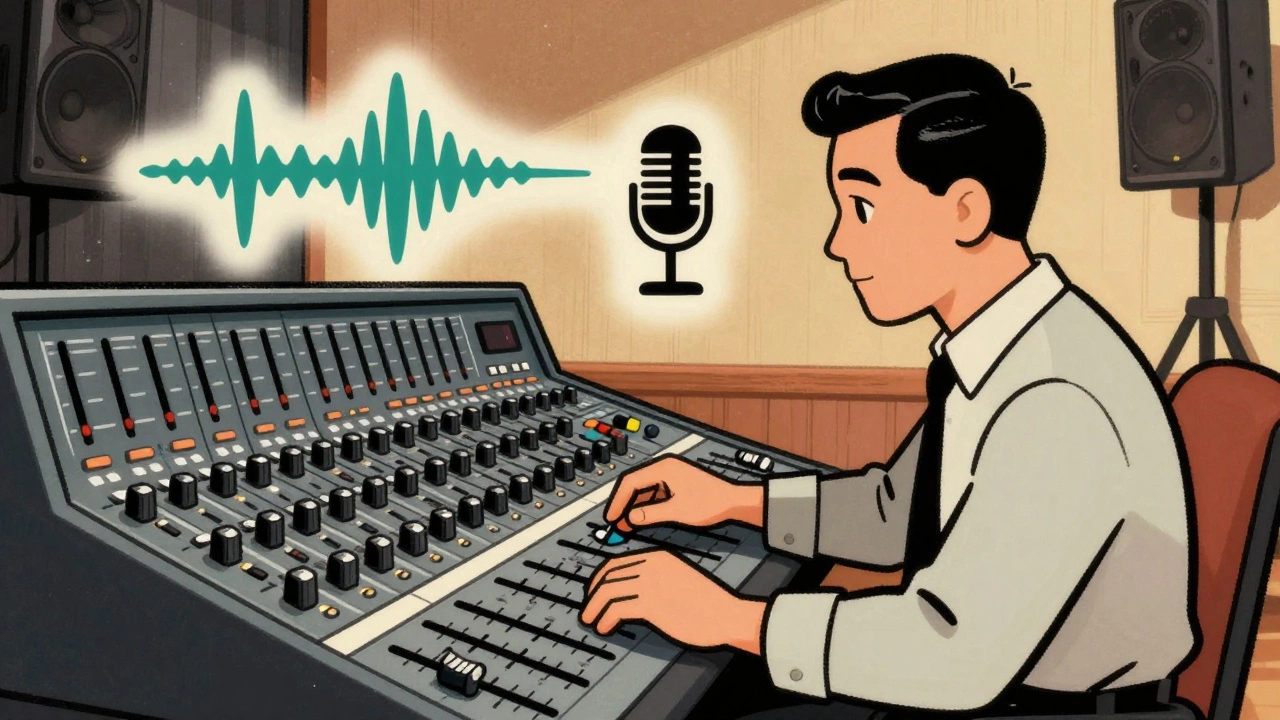
Think about the technical side. Because soft rock relies on nuance, sound reinforcement is critical. Engineers use high-quality condenser microphones for lead vocals to capture every breath and inflection. They apply careful equalization (EQ) to remove harsh frequencies and compression to keep vocal levels consistent. The goal is a clean, present sound that never masks the singer.
| Element | Purpose | Implementation Tip |
|---|---|---|
| Vocal Mic | Capture nuance | Use large-diaphragm condensers for warmth |
| Acoustic Guitar | Preserve clarity | Combine DI signal with close-miking |
| Drums | Avoid overpowering | Tune for short sustain; use lighter cymbals |
| Monitoring | Ensure pitch accuracy | Use in-ear monitors for precise feedback |
Instrumentalists must play tightly. Since there are fewer layers hiding mistakes, every note counts. Drummers tune their kits for shorter sustain so the sound doesn’t muddy up the mix. Bass players lock in with the kick drum to provide a steady, unobtrusive foundation. Guitars are played cleanly, often using volume swells instead of pick attacks to maintain smoothness.
Backing vocals are another area where polish shines. They should be tuned, blended, and mixed slightly behind the lead, adding texture without distraction. Many modern soft rock acts use click tracks or backing stems to ensure perfect timing, especially when incorporating ambient pads or extra percussion. This doesn’t make it less "live"-it makes it reliable.
The Balance: Vulnerability Meets Precision
The best live soft rock performances walk a tightrope. Too much polish, and it feels sterile, like a karaoke track. Too much rawness, and it loses its musical integrity. The sweet spot lies in controlled imperfection.
Allow yourself to crack slightly on a high note if the emotion demands it. Let your hand tremble on the guitar string during a poignant verse. But keep the rhythm section locked. Keep the harmonies in tune. This contrast-human fragility supported by professional competence-is what moves audiences.
Look at artists like Lucky Daye, whose recent live performance videos demonstrate this balance perfectly. Recorded in a studio-like environment but performed live, his sets feature carefully designed lighting, controlled acoustics, and multi-track recording. Yet, you still hear the breath, see the sweat, and feel the immediacy. That is the standard.
For bands starting out, start small. Play local venues where you can test different levels of intimacy. Record your sets. Listen back critically. Are the vocals clear? Is the mix balanced? Does the audience seem engaged? Adjust accordingly. Over time, you’ll develop a signature style that feels both personal and professional.
Distribution and Audience Expectations
Today, live soft rock isn’t just experienced in person. It thrives online. Platforms like YouTube host countless "slow rock live concert" compilations, often running over an hour long. Fans use these videos for studying, working, or relaxing at night. They praise the calm mood and high sound quality.
Streaming services like LiveOne and ROCKRADIO dedicate entire channels to soft rock, highlighting its contemplative side. This tells us that listeners want consistency. They want music that fits into their daily lives without demanding constant attention, yet rewards deep listening when they choose to engage.
If you’re performing live soft rock, consider documenting your shows. High-quality video and audio recordings extend your reach beyond the physical venue. They become evergreen content that attracts new fans who value the aesthetic of polished intimacy. Make sure your visuals match your sound-clean, warm, and inviting.
Building Your Setlist for Impact
A great soft rock setlist flows like a story. It shouldn’t jump wildly in energy. Instead, it should ebb and flow, guiding the audience through emotional arcs. Start with recognizable mid-tempo songs to establish comfort. Move into deeper, more introspective pieces as the night progresses. End with a powerful ballad that leaves a lasting impression.
Include at least one or two fully stripped-down moments. Maybe it’s just voice and piano. Maybe it’s an acoustic guitar solo. These sections act as emotional peaks, drawing the audience in before building back up with full-band arrangements. Variety within restraint keeps people engaged without breaking the spell.
Remember, your job isn’t to impress with complexity. It’s to connect with simplicity. Every chord change, every lyric, every pause should serve that goal. When you master the balance between intimate performance and polished execution, you don’t just play music-you create memories.
What makes a soft rock performance "intimate"?
Intimacy in soft rock comes from perceived closeness and vulnerability. This includes reduced instrumentation, lower volume, warm lighting, close camera angles, and visible emotional exposure from the artist. It’s about making the audience feel like they are part of a private moment.
How important is technical polish in live soft rock?
Very important. While intimacy requires vulnerability, audiences still expect high production values. Clean vocal amplification, tight instrumental playing, balanced mixes, and professional sound reinforcement ensure the performance feels refined rather than sloppy.
Can I perform soft rock in a large venue?
Yes, but you must adapt your staging. Use large-format video screens to show close-ups, employ subtle lighting designs, and prioritize vocal clarity over sheer volume. The goal is to bring the intimacy of a small room into a larger space through production techniques.
What instruments are essential for a soft rock band?
Core instruments include acoustic or clean electric guitars, piano, bass guitar, and drums tuned for short sustain. Keyboards and synthesizers may add atmospheric pads. The focus is on melodic, non-distorted tones that support the vocals.
Why do fans prefer recorded live soft rock concerts online?
Online live concert compilations offer a curated, high-quality listening experience. Fans appreciate the combination of authentic live emotion with studio-like sound quality, making it ideal for relaxation, study, or background listening without the distractions of a physical venue.