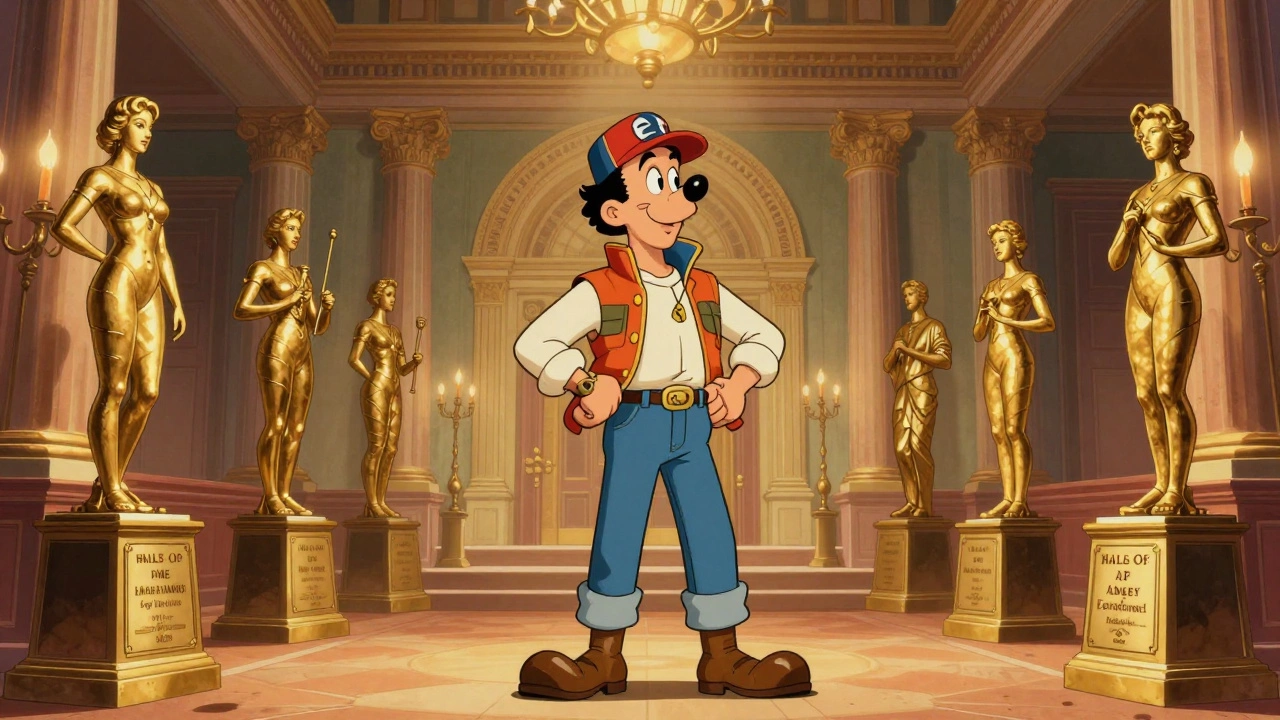

Think about the last time you saw a statue unveiled or heard about someone getting inducted into a hall of fame. It usually feels like a celebration of the present moment-a star athlete retiring, a musician hitting a career milestone. But what happens to the people and projects that defined an era decades ago? Specifically, how do we keep the spirit of the 1970s alive when the people who made it happen are gone?
The answer lies in two specific tools used by museums, sports bodies, and arts organizations: legacy awards and halls of fame. These aren't just plaques on a wall. They are deliberate mechanisms designed to capture long-term impact. While standard awards celebrate a single season or album, these institutions use legacy frameworks to recognize work that has endured for thirty, forty, or even fifty years. This is how the music, television, and sports of the 1970s transition from historical footnotes into living narratives.
Defining the Difference: Legacy Awards vs. Halls of Fame
To understand how the 1970s are preserved, you first need to separate two concepts that often get lumped together. A hall of fame is a curated list of individuals or achievements selected by electors to mark excellence, often housed in a physical museum with memorabilia. Think of the Rock and Roll Hall of Fame or the National Football Hall of Fame. The goal here is enshrinement. You meet certain criteria-championships, sales figures, critical acclaim-and you get voted in. It’s a binary process: you are either in, or you are out.
Legacy awards, on the other hand, are special recognitions created to honor sustained effects over time, often given at the discretion of a board rather than through a formal vote. These awards don’t always care about stats. They care about influence. Did you build the infrastructure that allowed others to succeed? Did you keep a genre alive when no one else was listening? Legacy awards are flexible. They can go to a venue owner, a promoter, or even a television show itself. This flexibility makes them perfect for honoring the complex, behind-the-scenes work that defined the 1970s but might not fit neatly into a "greatest hits" ballot.
Television: Measuring Impact Beyond Ratings
Nowhere is this distinction clearer than in television. For decades, the Emmy Awards focused on current seasons. If a show was great in 1975 but ended in 1978, it had no place in the ceremony once its run finished. That changed recently with the Television Academy’s introduction of a dedicated Legacy Award.
This award acknowledges that some shows shape culture long after they stop airing. To qualify, a program needs more than just nostalgia. The Academy set hard criteria: the show must have aired at least 60 episodes across five seasons. Why those numbers? Because they prove sustainability. A short-lived cult classic might be beloved, but a five-season run means the show held the attention of millions over half a decade.
Consider the landscape of 1970s TV. Shows like All in the Family or M*A*S*H didn’t just entertain; they shifted social conversations. By creating a Legacy Award, the Television Academy ensures that these programs are recognized for their ongoing relevance. The award can be presented during various ceremonies, linking past greatness directly to present-day industry standards. It tells us that a show from 1974 isn’t just history-it’s still part of the conversation today.
Music: Honoring the Infrastructure of Sound
In music, the 1970s were a golden age for regional scenes. Memphis soul, California rock, and New York disco each had distinct ecosystems. Halls of fame typically induct the performers-the singers and guitarists. But who kept the lights on? Who booked the clubs? Who promoted the tours?
Regional institutions have stepped up to fill this gap. The Valley Music Hall of Fame in California uses its Legacy Award to honor "significant contributions to the local music community." This is explicitly separate from induction. It allows the board to recognize venue owners, promoters, and organizers whose work began in the 1970s. Without these people, the bands wouldn’t have had anywhere to play.
A striking example comes from the Memphis Music Hall of Fame. In 2025, they gave their Legacy Award to Graziano Uliani, an Italian promoter. Uliani founded the Porretta Soul Festival in Bologna. For three decades, he has brought Memphis musicians to Europe, keeping the soul tradition alive abroad. Memphis soul peaked in the 1960s and 1970s. By honoring Uliani, the Hall of Fame isn’t just praising a promoter; it’s validating the global reach of 1970s American music. It shows that legacy isn’t just about where you started, but how far your influence traveled.
Sports: Recognizing the Builders, Not Just the Players
Sports halls of fame are famously statistic-driven. You need points, wins, or championships. But the game doesn’t run itself. It requires administrators, coaches, and volunteers. This is where legacy awards in sports diverge from traditional inductions.
The National Football Foundation (NFF) established its Legacy Awards in 2007. Unlike the College Football Hall of Fame, which honors players and coaches, the NFF Legacy Awards focus on "extraordinary contributions" to the institution itself. Recipients are often philanthropists, media figures, or administrators who shaped college football’s infrastructure. Many of these contributors were active in the 1970s, laying the groundwork for the modern era. Their work wasn’t visible on the scoreboard, but it was essential to the sport’s survival and growth.
Local organizations follow the same logic. On April 18, 2024, the St. Louis Amateur Baseball Association received the J. Kim Tucci Legacy Award. The citation highlighted their "outstanding contribution" to the local baseball community. Amateur baseball relies on decades of volunteerism. Recognizing an entire association, rather than a single player, acknowledges that the legacy of the 1970s youth leagues lives on through the structures built back then.
| Feature | Hall of Fame Induction | Legacy Award |
|---|---|---|
| Primary Target | Individual performers or athletes | Organizations, venues, or non-performing individuals |
| Selection Process | Formal ballots, voter committees | Board discretion, internal judgment |
| Criteria Focus | Statistical thresholds, championships, sales | Sustained impact, infrastructure building, cultural relevance |
| Timeframe | Career-long achievement | Multi-decade influence, often post-career |
| Example | National Football Hall of Fame | Television Academy Legacy Award |
Professional Fields: Preserving Expertise
It’s not just entertainment and sports. Professional fields also use legacy frameworks to preserve knowledge. The United States Center for Coaching Excellence operates a Legacy Hall of Fame for coaching science. Inductees like Dr. Drew Zwald (2023) and Daniel Gould (2022) are honored for research and leadership that spans decades. Much of modern coaching theory was developed in the 1970s and 1980s. By inducting these pioneers, the center ensures that the foundational methods of the profession aren’t lost to time.
Similarly, the International Association of Venue Managers (IAVM) Foundation gives a Legacy Award to those who advanced venue management as a profession. This field grew rapidly in the 1970s as live events became more complex. Honoring early practitioners helps define the standards we use today.
Why the 1970s Matter Now
You might wonder why we focus so much on the 1970s. It was a decade of massive cultural shifts. Punk rock emerged, sitcoms tackled controversial topics, and sports desegregation accelerated. But raw history fades without curation. Legacy awards and halls of fame provide that curation.
They allow institutions to say, "This matters." When the Memphis Music Hall of Fame honors an Italian promoter, it connects 1970s Memphis to 2020s Italy. When the Television Academy honors a 1970s series, it validates the storytelling techniques used in streaming dramas today. These awards bridge the gap between past innovation and present application. They turn nostalgia into respect.
How Recognition Works in Practice
If you’re looking to understand how these awards operate, notice the difference in accessibility. Hall of Fame inductions often have open nomination periods. Fans can submit candidates. Legacy awards are usually closed processes. The board decides. This makes them less democratic but more targeted. The institution chooses who fits its narrative of "long-term impact."
For the 1970s, this means recognition depends on contemporary relevance. A 1970s band might get into a Hall of Fame based on album sales from 1975. But a 1970s radio station manager might only get a Legacy Award if the board sees value in preserving the history of local broadcasting. The bar is different. One is about peak performance; the other is about enduring footprint.
What is the main difference between a legacy award and a hall of fame induction?
A hall of fame induction typically honors individual performance metrics like championships or sales through a formal voting process. A legacy award is more flexible, often given at the discretion of a board to recognize long-term influence, infrastructure building, or cultural preservation, regardless of statistical records.
Why did the Television Academy create a Legacy Award?
The Television Academy created the Legacy Award to formally recognize programs that have had a profound and lasting impact on society and culture, even if they are no longer airing. Standard Emmys focus on current seasons, leaving older influential shows without a dedicated platform for recognition.
Who qualifies for the Television Academy's Legacy Award?
To qualify, a television program must have aired at least 60 episodes across five seasons and demonstrate continued relevance, influence, or inspiration to genres, audiences, and society. Franchise properties are considered as a whole.
Can non-performers receive legacy awards in music?
Yes. Organizations like the Valley Music Hall of Fame and the Memphis Music Hall of Fame specifically use legacy awards to honor venue owners, promoters, and community organizers whose contributions support the music ecosystem, often recognizing work that spans decades.
How do legacy awards help preserve the history of the 1970s?
Legacy awards highlight the structural and cultural foundations laid in the 1970s, such as venue development, international promotion, and coaching methodologies. By honoring these aspects, institutions ensure that the decade is remembered not just for its stars, but for the systems that allowed those stars to shine.