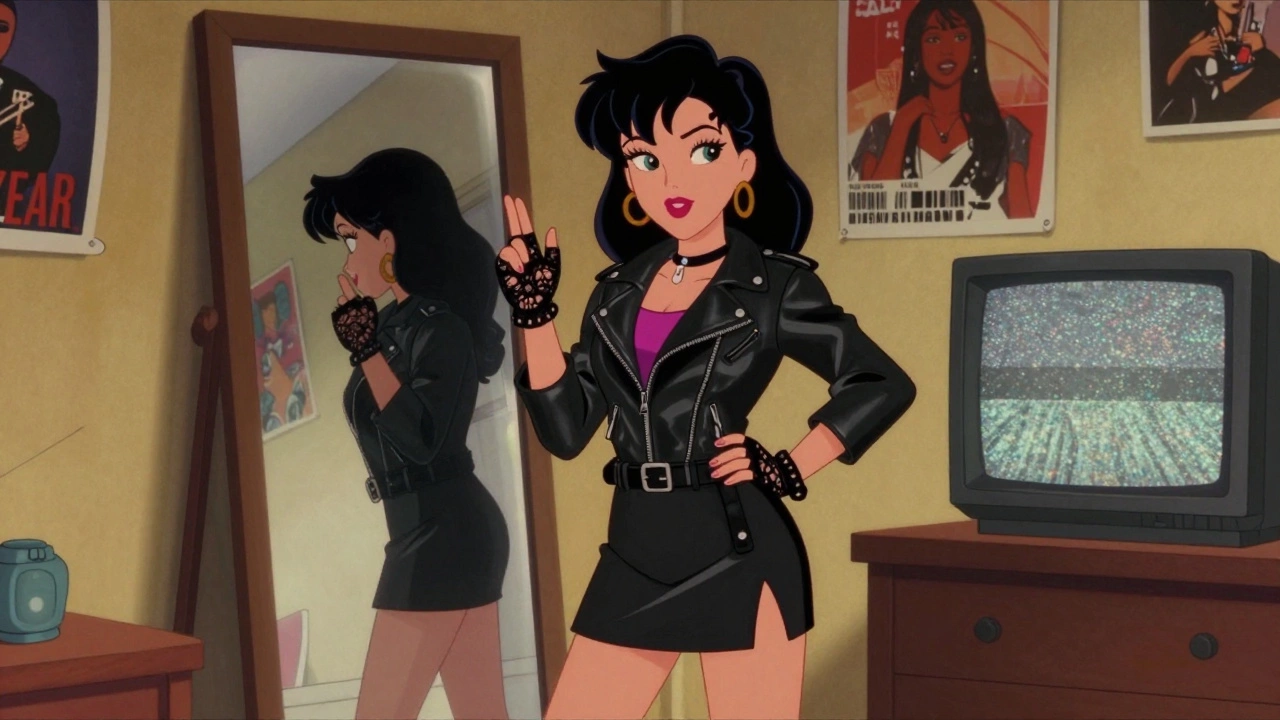

Picture a teenager in 1984 standing in front of a mirror. She’s wearing a black leather biker jacket, fingerless lace gloves, and a mini skirt that barely covers her hips. It looks tough. It looks romantic. It looks completely contradictory. But to anyone watching MTV, this outfit made perfect sense. This wasn’t just clothing; it was a visual language broadcast into millions of living rooms every night.
The 1980s didn’t just have fashion trends; they had fashion crossovers. The decade smashed together the hard edge of rock-and-roll rebellion with the soft nostalgia of Victorian romance. Leather and lace-two fabrics that historically lived on opposite ends of the social spectrum-became best friends. And pop music stars were the matchmakers. If you want to understand why we still wear oversized leather jackets today, or why lace is no longer reserved for weddings, you have to look at how the 1980s turned clothes into performance art.
The Birth of Maximalism and the Power Suit
To get to the leather and lace mix, you first have to understand the canvas: the 1980s silhouette. After the flowing, bohemian vibes of the 1970s, the new decade demanded structure. According to historians at the Fashion Institute of Technology (FIT), the era was defined by maximalism. Bigger was better. Shoulders were broader. Colors were louder.
This shift wasn’t accidental. It mirrored the economic boom and the rise of corporate culture in the US and Europe. Women were entering the workforce in record numbers, and they needed armor. Enter power dressing. Think sharp-shouldered blazers, bold geometric patterns, and expensive-looking materials. But here’s the twist: while suits dominated the office, nightlife fashion went in a different direction. It became more personal, more provocative, and heavily influenced by what people saw on television screens rather than runway shows.
The key driver? Music videos. Before MTV launched in 1981, fashion trickled down from high-end couture houses to department stores slowly. With the advent of 24-hour music television, style became instant. A pop star could debut a look on Tuesday, and teenagers would be begging their parents to buy something similar by Friday. This speed changed everything. Designers and stylists realized that if a garment didn’t look good on camera under bright lights, it wouldn’t sell.
Leather: From Subculture to Mainstream Status Symbol
In the early 1980s, leather was still largely associated with specific subcultures: bikers, punks, and heavy metal fans. It signaled danger, rebellion, and non-conformity. But as the decade progressed, mainstream fashion swallowed these edges whole.
Designers began using leather not just for jackets but for full dresses, tailored suits, and skirts. Sites like Leatherexotica note that luxury labels started treating leather like traditional woven cloth, cutting vast amounts of skin to create structured garments. This was a huge shift. Leather was no longer just protective gear for riders; it was a status symbol.
Why did this happen? Because pop culture sanitized and glamorized it. When Michael Jackson wore his red leather jacket in the "Thriller" video, he wasn’t looking like a punk rocker. He looked like a movie star. That single image cemented brightly colored, tailored leather outerwear as a must-have item. Suddenly, leather wasn’t just about rebellion; it was about power and celebrity.
- Biker Jackets: Asymmetrical zips, snapped lapels, and quilted panels became standard.
- Bomber Jackets: Softer, often worn over graphic tees.
- Oversized Trench Coats: Giant, dramatic silhouettes that screamed excess.
The material itself evolved too. Advances in synthetic fibers and finishing processes allowed for stretch leathers and metallic finishes. You could now find leather in neon pink, electric blue, and shiny gold. It matched the decade’s love for bold visual statements.
Lace: Romanticism Meets Provocation
If leather represented toughness, lace represented vulnerability. Historically, lace was tied to lingerie, wedding dresses, and historical revivalism. It was delicate, ornate, and strictly feminine. But in the 1980s, lace got an attitude adjustment.
Fashion historians point out that the 1980s saw a trend of "lingerie-as-outerwear." Corsets, bustiers, and lace-trimmed undergarments were brought out of the bedroom and onto the street. This wasn’t about hiding; it was about displaying. Lace became a tool for sexual provocation and religious iconography, especially when paired with other bold elements.
Think about the accessories. Fingerless lace gloves, lace hair bows, and layered lace tops became ubiquitous. These items were cheap to produce, making them accessible to mass-market retailers. A girl didn’t need a designer budget to get the look; she just needed a pair of lace gloves from a mall boutique. This accessibility fueled the trend’s explosion.
Lace also carried a sense of nostalgia. In a decade obsessed with the future and technology, lace provided a link to the past. It softened the harsh lines of power suits and the aggressive shine of leather. It added texture and depth to outfits that might otherwise have looked flat on camera.
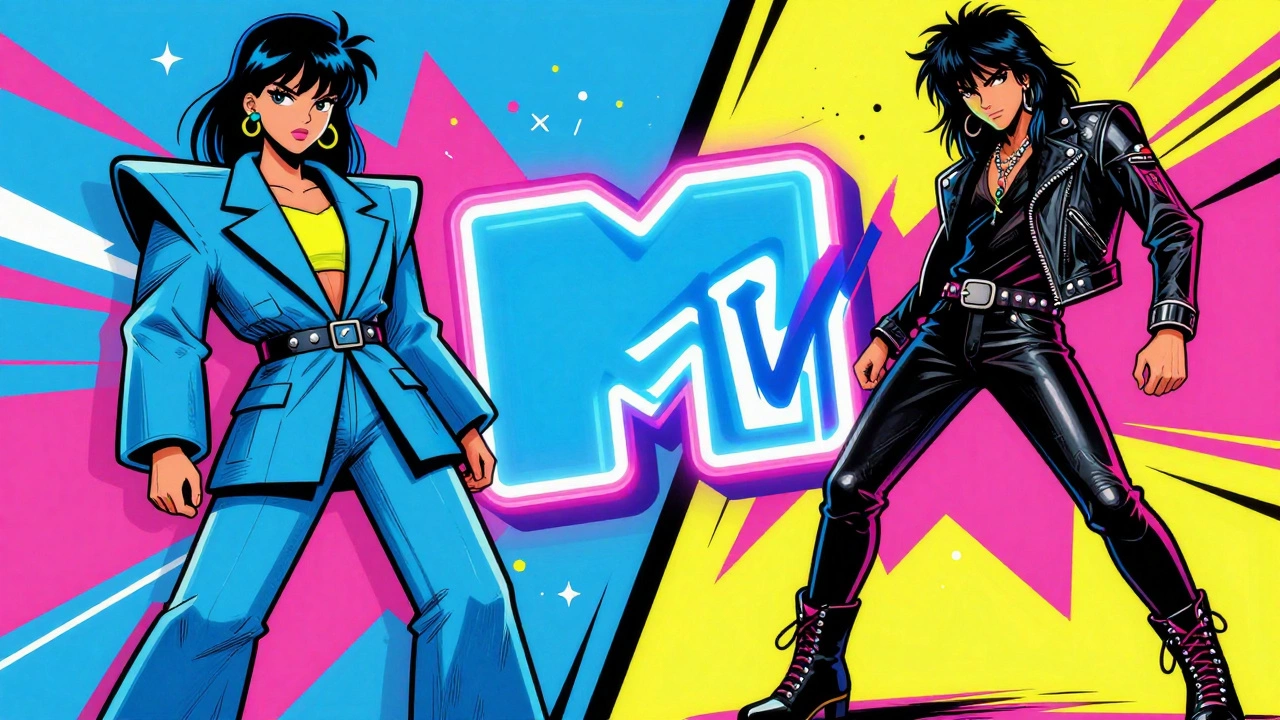
The Crossover: Mixing Hard and Soft Textures
Here is where the magic happened. The 1980s didn’t just wear leather OR lace. It wore them TOGETHER. This deliberate combination created a distinctive aesthetic that fused toughness with vulnerability. Fashion experts call this "gender play" or "textural contrast," but on the street, it just looked cool.
The classic formula was simple: take a hard, masculine-coded item (like a leather jacket) and layer it over a soft, feminine-coded item (like a lace dress or tulle skirt). This juxtaposition allowed wearers to embody multiple identities at once. You could be tough and romantic. Rebellious and polite. Dangerous and desirable.
| Attribute | Leather | Lace |
|---|---|---|
| Symbolism | Rebellion, Power, Rock | Romance, Nostalgia, Femininity |
| Primary Garments | Jackets, Pants, Suits | Dresses, Gloves, Underwear |
| Visual Effect | Hard, Shiny, Structured | Soft, Sheer, Delicate |
| Key Icon | Michael Jackson / Metal Bands | Madonna |
This mix wasn’t limited to women. In the glam rock and gothic scenes, men wore lace shirts under leather jackets, blending theatrical softness with aggressive outer layers. But it was in pop music that the crossover became most visible and widely copied.
Madonna: The Queen of the Crossover
You cannot talk about 1980s leather and lace without talking about Madonna. She is arguably the most important fashion figure of the decade. Her mid-80s "Like a Virgin" era look is the textbook example of this aesthetic.
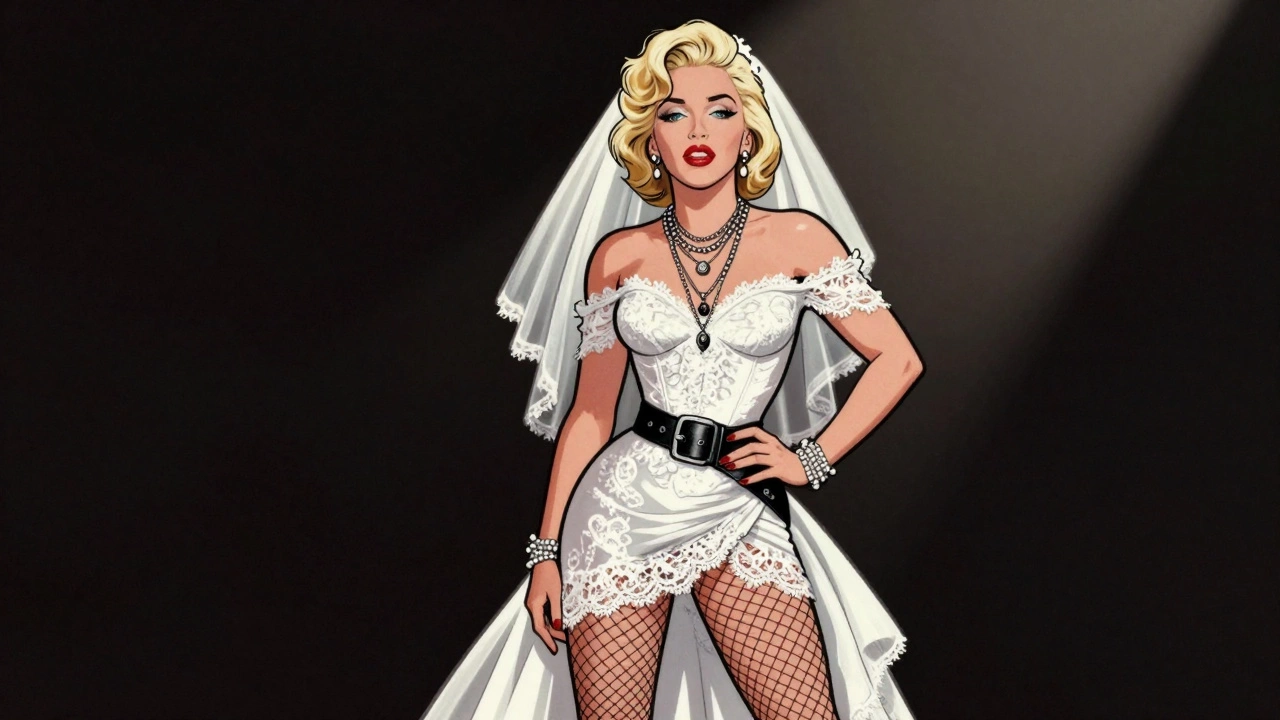
Madonna’s style was a collage. She wore white lace wedding dresses, but paired them with leather belts, crucifix necklaces, and fishnet stockings. She layered lace gloves over bare arms. She mixed religious imagery with overt sexuality. Every element was designed to provoke and engage. Young women across the globe imitated this look because it felt empowering. It gave them a way to control their own image of femininity.
Stylists worked closely with Madonna to ensure her looks translated well to video. The lace caught the light. The leather provided contrast. The result was an instantly recognizable visual brand. Harper’s Bazaar retrospectives highlight how her use of lace tops, tulle skirts, and visible bras redefined what was acceptable for public wear. She turned underwear into outerwear and made it chic.
Rock and Metal: The Roots of Toughness
While Madonna owned the lace-pop crossover, rock and metal bands kept the leather flame burning. Bands like Motörhead, Iron Maiden, and later Guns N’ Roses popularized tight leather pants, studded belts, and distressed denim. This look was less about high-fashion tailoring and more about raw energy.
However, even within rock, there was crossover. Glam metal artists often incorporated lace or ruffled shirts into their stage costumes, adding a touch of flamboyance to their leather-heavy ensembles. This blend influenced mainstream youth fashion, leading to the "rock romance" style seen in clubs and malls alike. Fans didn’t just copy the clothes; they copied the attitude. Wearing a leather jacket meant you were part of the scene, whether you played guitar or not.
From Runway to Retail: Mass Market Diffusion
One of the most significant aspects of 1980s fashion was its accessibility. By the mid-80s, the leather-and-lace visual mix had moved from high fashion runways and music videos to mass-market retail chains. Department stores sold affordable versions of runway looks. Mail-order catalogs featured lace dresses and leather jackets side-by-side.
This democratization of style meant that the crossover aesthetic wasn’t just for celebrities. It was for everyone. Accessories played a huge role here. You didn’t need a $500 leather coat to get the vibe. A pair of lace gloves, an oversized belt, or some statement jewelry could transform a basic outfit. This encouraged experimentation. People mixed graphic tees, ripped jeans, and ornate lace pieces without adhering to strict rules. The 1980s celebrated eclecticism.
Legacy: Why We Still Care
Decades later, leather and lace remain central to how we remember the 1980s. Social media platforms like TikTok and Instagram are filled with users reviving these styles. Oversized leather trench coats are frequently cited as iconic 80s pieces to "steal" for modern wardrobes. Vintage lace gloves are sought after by collectors and stylists alike.
Why does this aesthetic endure? Because it captures the spirit of the decade: excess, confidence, and individuality. The combination of leather and lace allows for endless variation. It can be dressed up for a gala or down for a concert. It bridges the gap between strength and sensitivity. In a world that often demands we pick one identity, the 1980s taught us that we can wear both.
Today’s fashion cycles continue to reference this era. Slip dresses, power suiting, and lace layering make regular comebacks. But the core lesson remains the same: fashion is a form of communication. And in the 1980s, the message was loud, clear, and wrapped in leather and lace.
Who popularized the mix of leather and lace in the 1980s?
Madonna is widely credited with popularizing the specific crossover of lace lingerie-style tops with leather accessories and streetwear elements. Her "Like a Virgin" era look combined lace gloves, corsets, and crucifixes with leather belts and jackets, creating a template that millions of young women copied. Rock and metal musicians also contributed by normalizing leather as a mainstream fashion item.
What did leather symbolize in 1980s fashion?
Leather symbolized rebellion, power, and authority. Initially associated with punk and biker subcultures, it was adopted by mainstream fashion to convey toughness and edginess. In the context of power dressing, leather jackets with broad shoulders projected confidence and dominance, particularly in corporate and nightlife settings.
How did MTV influence 1980s fashion trends?
MTV accelerated the spread of fashion trends by turning music videos into global style guides. Instead of waiting for magazines or runway shows, viewers saw outfits worn by stars like Michael Jackson and Madonna instantly. This visual medium emphasized textures and colors that looked good on camera, driving demand for specific items like leather jackets and lace details.
Why was lace considered provocative in the 1980s?
Lace was traditionally associated with lingerie and modest historical attire. When worn as outerwear-such as lace gloves, sheer tops, or visible bra straps-it challenged conventional norms of public decency. Combined with religious symbols or leather, it created a juxtaposition of innocence and sexuality that was seen as daring and provocative.
Are leather and lace combinations still popular today?
Yes, the aesthetic continues to influence modern fashion. Vintage enthusiasts and contemporary designers frequently revive 1980s silhouettes, including oversized leather coats and lace-layered outfits. The combination remains a staple in alternative, gothic, and retro-inspired styles, valued for its textural contrast and symbolic balance of strength and femininity.