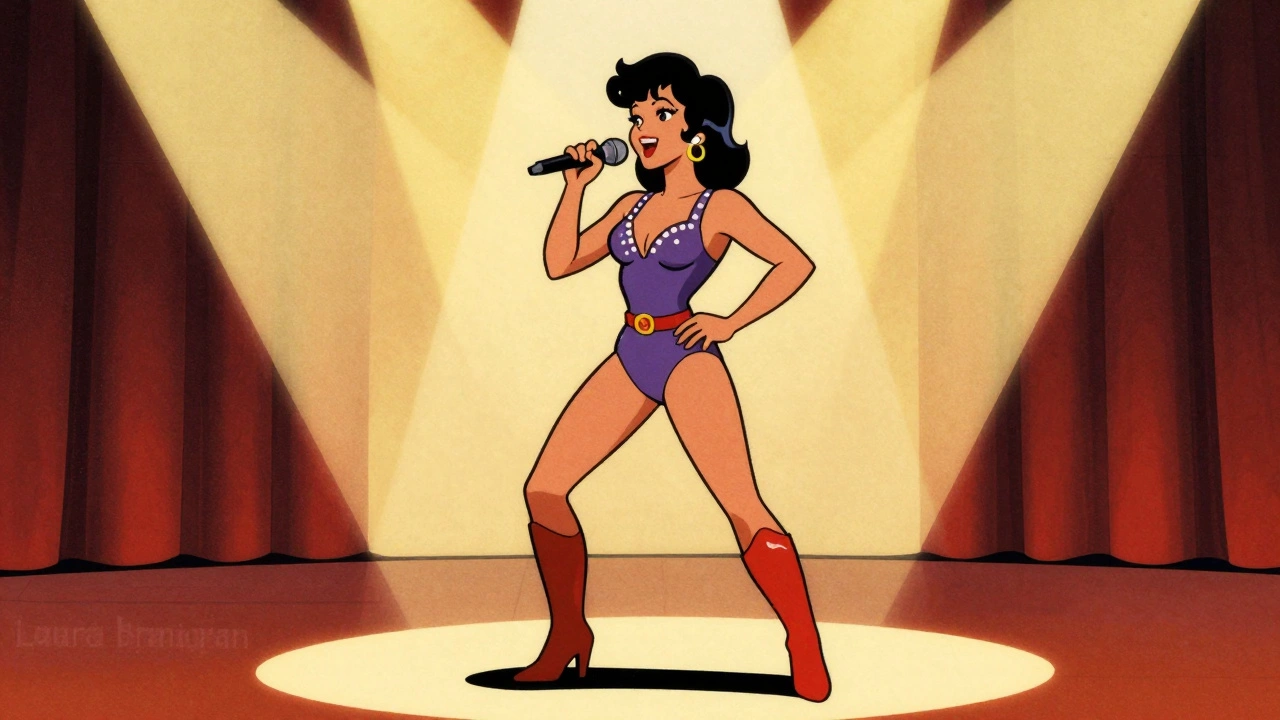

Most people know Laura Branigan for one thing: that explosive opening belt in "Gloria." But if you stop there, you miss the real story. She wasn’t just a one-hit wonder who stumbled into fame. She was a master of translation, taking European synth-pop gems and forging them into American anthems with a voice that could crack concrete or whisper secrets. Her legacy isn't just about catchy tunes; it's about how she used raw vocal power to dominate the charts during the golden age of MTV.
Why is Laura Branigan considered a pioneer of women in 80s pop?
She bridged the gap between European Italo-disco and mainstream US radio, proving that adapted songs could be massive hits when delivered with authentic emotional intensity rather than just novelty.
The Voice That Defined an Era
When we talk about Laura Branigan is an American singer known for her powerful alto voice and iconic 1980s hits like 'Gloria' and 'Self Control', we are talking about technical precision wrapped in emotion. Critics often describe her timbre as an "elastic alto," but that doesn't do it justice. She had a reported four-octave range. Think about that. Most singers struggle to hit two octaves cleanly. Branigan could soar from deep, guttural lows to piercing, sustained highs without losing pitch stability.
This wasn't just talent; it was discipline. Vocal coaches still use her recordings as case studies for breath support. In songs like "Gloria" and "Self Control," she holds long notes with intense vibrato. To pull that off, you need serious diaphragmatic control. If you try to sing those tracks today, you’ll quickly realize why they are considered difficult covers. She didn't rely on auto-tune or heavy production tricks. The rawness of her delivery cut through the synthetic layers of 80s synthesizers, giving electronic music a human heart.
Her approach stood out against her peers. While artists like Olivia Newton-John offered polished sweetness, Branigan brought a darker, more aggressive edge. She sounded like someone who had lived through heartbreak and was shouting about it. This "emotive and guttural" quality made her a "singer’s singer"-respected by other musicians even if she didn't always top the charts week after week.
From Folk Roots to Synth-Pop Star
Before the sequins and the big hair, Branigan was part of the folk-rock scene. In the early 1970s, she performed with a group called Meadow. Their album, *The Friend Ship*, recorded around 1972-1973, showcased a pastoral, ensemble-driven sound. It was subtle, acoustic, and quiet. Fast forward to 1982, and she was unleashing high-intensity pop blasts. That shift wasn't accidental. It was a strategic evolution.
Atlantic Records co-founder Ahmet Ertegun signed her in the early 80s, seeing potential in her unique instrument. He helped guide her transition from indie folk to mainstream stardom. This move placed her squarely in the center of the New York music scene, which was buzzing with energy and innovation. She traded the gentle harmonies of Meadow for solo spotlight, bringing her theatrical background (she studied drama at NYU) to every performance. This blend of acting and singing gave her hooks a dramatic weight that pure pop stars often lacked.
The Art of the Cover: Turning Euro-Hits into US Anthems
Here is where Branigan’s genius really shines. She didn't write most of her biggest hits. Instead, she curated them. She looked across the Atlantic to Italy, where composers were crafting intricate, melody-rich Italo-disco tracks. Songs like Umberto Tozzi’s "Gloria" (1979) and Raf’s "Self Control" (1984) were huge in Europe but unknown in America. Branigan saw their potential.
She didn't just translate the lyrics; she re-framed the entire arrangement. Take "Gloria." The original Italian version is upbeat and danceable. Branigan’s team slowed it down slightly, added heavier drums, and emphasized the synth lines to create a more aggressive, club-ready vibe. Then, she sang it. Her English adaptation kept the spirit of the original but made it accessible to American radio listeners. The result? A number 2 hit on the Billboard Hot 100 that stayed on the charts for 36 weeks.
"Self Control" followed the same formula. Originally by Raf, it was a moody, mid-tempo track. Branigan’s version, directed visually by William Friedkin (yes, the director of *The Exorcist*), leaned into its darker themes. The video’s controversial imagery matched the song’s seductive, dangerous tone. It topped charts in multiple European markets and reached number 4 in the US. These weren't cheap cash-ins; they were sophisticated cultural exchanges that proved great melodies have no borders.
Key Albums and Career Trajectory
To understand her impact, you have to look at the discography. Her 80s output was tight and consistent. Here is how the core albums break down:
| Album Title | Release Year | Key Singles | Vocal Style & Theme |
|---|---|---|---|
| Branigan | 1982 | "Gloria", "Solitaire" | Breakthrough power vocals; high-energy synthpop |
| Branigan 2 | 1983 | "How Am I Supposed to Live Without You" | Transition to ballads; showcasing range |
| Self Control | 1984 | "Self Control", "Ti Amo", "The Lucky One" | Peak commercial success; dark, seductive tones |
| Hold Me | 1985 | "Spanish Eddie", "Superman" | Experimental; mix of rock and pop textures |
| Touch | 1987 | "The Power of Love" | Adult contemporary shift; mature, controlled delivery |
*Note: "How Am I Supposed to Live Without You" was co-written by Michael Bolton and became a signature ballad, though it was later covered famously by Robert Palmer. Branigan’s original version remains a fan favorite for its raw vulnerability.*
Comparing the Powerhouses: Branigan vs. Dion vs. Rush
You can't talk about Branigan without mentioning Celine Dion and Jennifer Rush. All three were powerhouse vocalists who dominated the late 80s and early 90s. But their approaches differed significantly.
Jennifer Rush released the original "The Power of Love" in 1984. It was technically impressive but felt somewhat rigid. Celine Dion’s 1993 version became a global phenomenon, polished to perfection for mass appeal. Branigan’s 1987 cover on the album *Touch* sits somewhere in between. Critics argue her version has more "grit" and emotional immediacy. She doesn't just sing the notes; she acts them out. Where Dion might glide over a phrase, Branigan digs into it, using her chest voice to convey pain and longing.
Similarly, compare her to Madonna. Madonna built her empire on image, dance, and original songwriting. Branigan relied on interpretation. Some critics dismissed this as a weakness, saying she lacked a songwriter identity. But others argue that being a supreme interpreter is just as valuable. Think of Frank Sinatra or Ella Fitzgerald. They didn't write all their standards, but they owned them. Branigan did the same for 80s Euro-pop. She made these songs hers through sheer vocal force.
Why Her Legacy Endures Today
Laura Branigan passed away in 2004, but her music hasn't faded. Why? Because it works. "Gloria" is still played at weddings, bars, and retro parties worldwide. It’s a universal anthem of female empowerment and joy. "Self Control" remains a staple in clubs, especially in Germany and the UK, where its origins lie.
Fan communities keep her memory alive. On forums and social media, younger listeners discover her through algorithmic playlists. They start with "Gloria," then dig deeper. They find "Solitaire," a haunting cover of Neil Diamond’s song that showcases her softer side. They hear "Ti Amo" and appreciate the romance. This backtracking behavior proves her catalog has depth beyond the singles.
Moreover, her estate actively curates her work. Reissues like *The Complete Atlantic Albums* (2019) and live recordings ensure new generations can access high-quality audio. These efforts maintain her status as a pivotal figure in music history. She represents a specific moment when technology (synthesizers) met tradition (powerful live vocals), creating a sound that defined a decade.
Practical Tips for Aspiring Singers
If you want to channel your inner Branigan, here is what you need to focus on:
- Breath Support: Don't rush the high notes. Build the air pressure from your diaphragm before you hit the climax. Listen to how she sustains the final note in "Gloria." It’s not forced; it’s supported.
- Dramatic Phrasing: Treat each verse like a scene in a play. Use dynamics. Start soft, build tension, and release it in the chorus. Branigan rarely sang flatly; there was always a narrative arc.
- Vibrato Control: Practice adding vibrato naturally at the end of long notes. Avoid shaking your head or tensing your throat. Let the resonance come from open vocal cords and steady airflow.
- Emotional Authenticity: Even in upbeat songs, bring sincerity. Branigan’s power came from believing every word she sang. Connect personally to the lyrics, even if they aren't yours.
Final Thoughts on a Vocal Titan
Laura Branigan’s 1980s legacy is secure because it rests on undeniable skill. She took risks by covering foreign material, faced criticism for not writing her own hits, and yet delivered performances that rival any original composition of the era. Her voice was her brand-distinctive, powerful, and unforgettable. In a landscape crowded with trends and gimmicks, she relied on the oldest tool in the business: a great voice delivering a great hook. That combination never goes out of style.
What was Laura Branigan’s biggest hit?
Her biggest hit was "Gloria," which peaked at number 2 on the Billboard Hot 100 in 1982 and remained on the charts for 36 weeks. It is widely considered her signature song.
Did Laura Branigan write her own songs?
While she wrote some material, such as "I Wish We Could Be Alone," most of her major hits were covers of Italian songs like "Gloria" (Umberto Tozzi) and "Self Control" (Raf). She focused on interpretation rather than songwriting.
How does "Self Control" compare to other versions?
Branigan’s version is often praised for its darker, more seductive tone compared to the original by Raf. The music video, directed by William Friedkin, added a cinematic quality that boosted its popularity in clubs and on MTV.
Why is Laura Branigan underrated?
Some critics view her reliance on covers as a limitation compared to songwriters like Madonna. However, fans and vocal experts argue her interpretive skills and technical prowess make her contributions to 80s pop far more significant than chart numbers suggest.
Where can I listen to her complete 80s discography?
All her core Atlantic Records albums from 1982 to 1990 are available on major streaming platforms. For collectors, the 2019 box set "The Complete Atlantic Albums" offers remastered versions of her studio work.