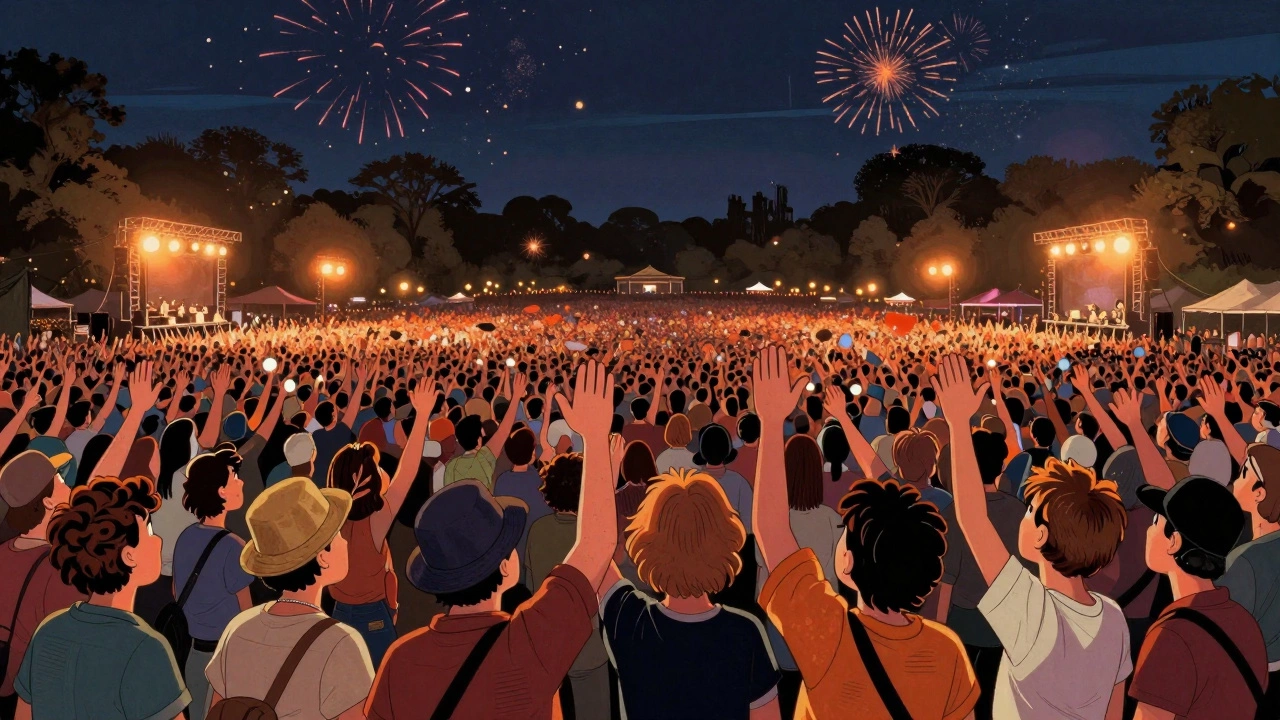

Imagine standing in a field in Hertfordshire on an August night in 1996. The air is thick with heat, anticipation, and the smell of spilled beer. You are one of tens of thousands waiting for Oasis, the English rock band that defined the sound and attitude of 1990s Britain. This wasn't just another gig; it was a cultural earthquake. The two nights at Knebworth House, a historic estate in Hertfordshire known for hosting major music festivals marked the absolute zenith of the Britpop movement, a mid-1990s British musical phenomenon characterized by guitar-driven rock and nationalistic pride. Today, we look back not just at the music, but at why this specific event remains the defining moment of an entire generation.
The Weight of Expectation
To understand the scale of Knebworth 1996, you have to understand where Oasis came from just months prior. In November 1995, they released (What's the Story) Morning Glory?, Oasis' second studio album which became one of the best-selling albums in UK history. It wasn't just popular; it was ubiquitous. Songs like "Wonderwall" and "Don't Look Back in Anger" were playing in every shop, radio station, and living room across the United Kingdom. By summer 1996, the demand for live performances had become overwhelming. Promoters couldn't find venues large enough to hold the crowds. So, they went back to Knebworth Park, a venue famous for hosting Led Zeppelin in 1979.
The decision to play two nights-August 10 and August 11-was unprecedented for a single band at that time. It signaled that Oasis were no longer just a band; they were a national institution. The ticket sales broke records, creating a logistical nightmare for organizers who had to manage security, crowd control, and the sheer energy of fans who felt they were witnessing history. For many attendees, getting a ticket was a battle won against impossible odds, adding to the sense of exclusivity and importance before the first chord was even struck.
Atmosphere Inside the Park
Those who made it inside remember the atmosphere vividly. It wasn't a polished stadium show with perfect sightlines. It was raw, chaotic, and electric. Attendee Nick Dale, who was 20 years old when he attended the August 11 performance, described the experience as "infamous" and "era-defining." He noted that everyone present knew they were part of something massive. There was a collective consciousness among the crowd-a shared belief that British rock was finally cool again, reclaiming its throne from American grunge and alternative rock.
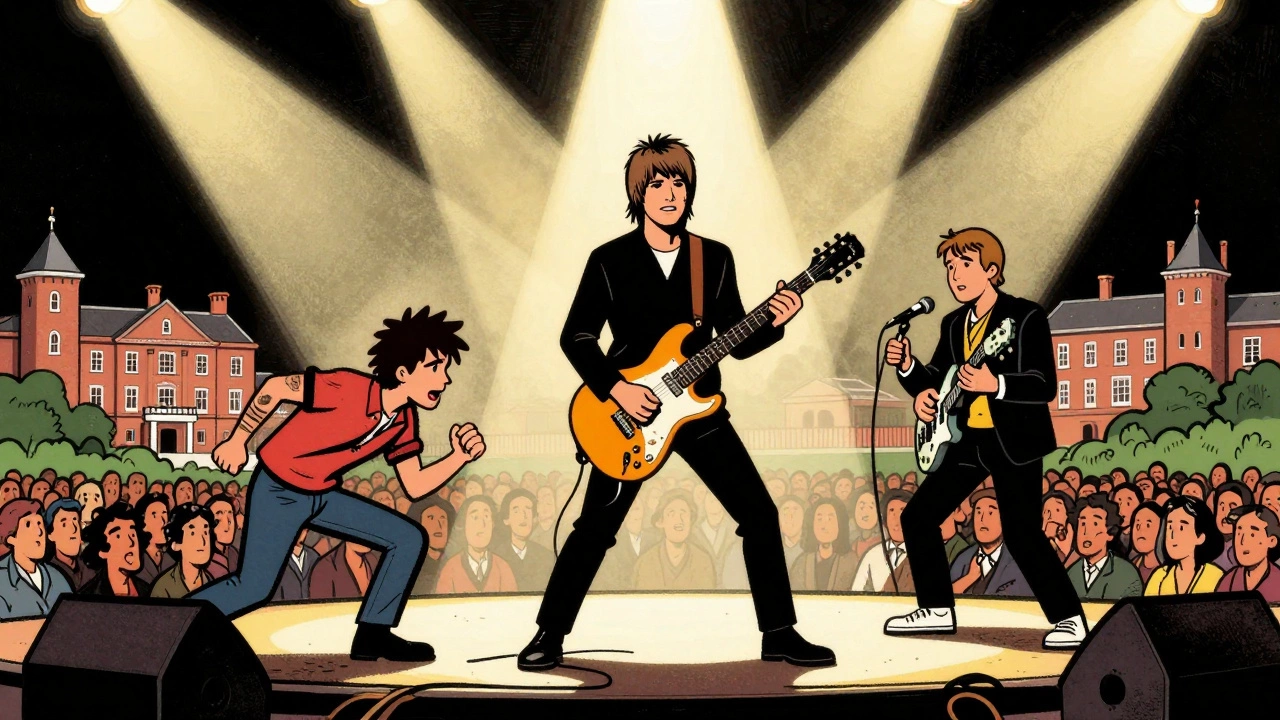
The production values were ambitious for the time. On the second night, the set included a taped introduction titled "The Swamp Song," which ended with a rendition of "Octopus Garden." This detail shows that despite the gritty reputation of the band, there was significant effort put into the spectacle. The stage setup allowed Noel Gallagher, Oasis' lead guitarist and primary songwriter during the 1990s to command the arena with his iconic stance and guitar work. Meanwhile, Liam Gallagher, Oasis' lead vocalist known for his distinctive swagger and voice engaged directly with the front rows, embodying the rebellious spirit that drew so many young people to their music.
Setlist and Musical Performance
The setlists from both nights were carefully curated anthems. They didn't shy away from their biggest hits because the crowd demanded them. The August 11 setlist, which is particularly well-documented, featured deep cuts from (What's the Story) Morning Glory? alongside tracks from their debut album, Definitely Maybe, Oasis' debut studio album released in 1994 that established their sound. The performance quality varied, as is typical with any large-scale live event, but the energy never waned. The band played through the fatigue, fueled by the roar of the audience.
One of the most memorable moments came from guest appearances. John Squire, Guitarist for The Stone Roses, another key band in the British indie rock scene joined the band on stage. Squire, representing rival act The Stone Roses, performed multiple songs with Oasis, including a Beatles cover. This collaboration was symbolic. It suggested a unification of the British guitar bands, setting aside the fierce rivalry that had defined the earlier part of the decade. It showed that despite the competition between Oasis and other acts like Blur, A British rock band that rivaled Oasis for dominance in the Britpop era, there was a shared respect and camaraderie within the scene.
The Peak of Britpop Culture
Knebworth 1996 sits squarely at the peak of the Britpop era. This movement was more than just music; it was a cultural shift. It celebrated British identity, fashion, and attitude. Bands dressed in vintage clothing, referenced classic British films, and wrote songs about everyday life in the UK. Oasis were the kings of this wave. Their success at Knebworth proved that guitar rock could still dominate the charts in the age of MTV and digital technology.
However, this peak also marked a turning point. Music historians often cite the period immediately following Knebworth as the beginning of the decline for both Oasis' dominance and the broader Britpop movement. Internal tensions within the band, particularly between brothers Noel and Liam, began to surface more publicly. The pressure of being the biggest band in the world took its toll. While they would continue to tour and record successfully, the pure, unadulterated ascendancy captured at Knebworth was never quite replicated. The cultural landscape was changing, with new genres emerging and audiences shifting their attention.
Legacy and Documentation
The significance of these concerts has endured for decades. In 2021, exactly 25 years after the original events, Oasis released an official live album and documentary film titled Knebworth 1996, An official release commemorating the 1996 concerts featuring footage and audio from the performances. Directed by filmmaker Jake Scott, A director known for his work in music documentaries and commercial films, the documentary premiered on September 23, 2021, while the accompanying live album followed on November 19, 2021. This release allowed a new generation to experience the scale and emotion of those nights, preserving the legacy for future fans.
The documentation is extensive. Setlist databases like Setlist.fm maintain detailed song-by-song records, ensuring that every note played is accounted for. Fan communities and wikis have dedicated pages to analyzing every aspect of the performances, from the lighting cues to the wardrobe choices. This level of ongoing interest is unusual for a specific concert event, highlighting how deeply embedded Knebworth 1996 is in the collective memory of music lovers.
| Attribute | Detail |
|---|---|
| Dates | August 10 and 11, 1996 |
| Venue | Knebworth Park, Hertfordshire, England |
| Tour | (What's the Story) Morning Glory? Tour |
| Guest Performer | John Squire (The Stone Roses) |
| Documentary Release | September 23, 2021 |
| Live Album Release | November 19, 2021 |
Why It Still Matters
For those who weren't there, Knebworth 1996 represents a moment of pure cultural unity. It was a time when millions of people shared the same taste, the same heroes, and the same dreams. For those who were there, it was a personal milestone, a rite of passage that defined their youth. The event showcased the power of live music to bring people together on a massive scale. Even today, when you hear "Supersonic" or "Rock 'n' Roll Star," you can almost feel the energy of that Hertfordshire summer. Oasis may have broken up in 2009, but their impact at Knebworth remains a testament to the enduring power of British rock.
When did Oasis perform at Knebworth?
Oasis performed two consecutive nights at Knebworth Park on August 10 and August 11, 1996.
Who directed the Knebworth 1996 documentary?
The documentary was directed by Jake Scott and was released in 2021, marking the 25th anniversary of the concerts.
Did anyone else perform with Oasis at Knebworth?
Yes, John Squire from The Stone Roses joined Oasis on stage for several songs, including a Beatles cover, symbolizing unity in the Britpop scene.
Why is Knebworth 1996 considered the peak of Britpop?
It represented the highest point of commercial success and cultural influence for Oasis and the Britpop movement, occurring shortly after the release of their massively successful album (What's the Story) Morning Glory?.
Is there an official live album from Knebworth 1996?
Yes, an official live album titled Knebworth 1996 was released on November 19, 2021, accompanied by a documentary film.


