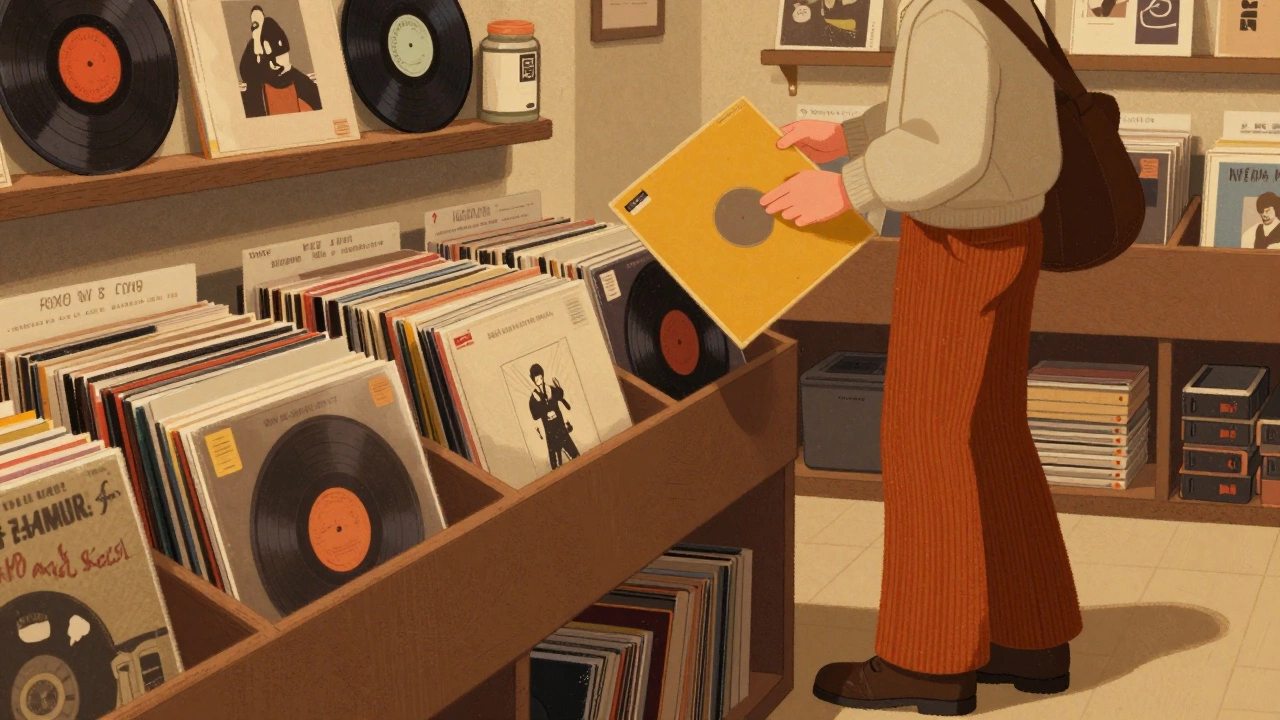

Walk into any indie record store or scroll through your TikTok feed, and you’ll likely encounter a familiar vibe. The colors are warm-mustard yellows, burnt oranges, and faded greens. The clothes feature corduroy collars and flared hems. But it’s the sound that really pulls you in. It’s not the crisp, quantized perfection of modern pop production. Instead, you hear the slight wobble of tape saturation, the crackle of a vinyl sample, and the organic interplay of a band playing together in a room. This is the resurgence of 1970s aesthetics, defined as a contemporary artistic movement where independent musicians adopt the sonic warmth and visual textures of the 1970-1979 era to create authentic, nostalgic experiences for modern audiences.
This isn’t just about wearing bell-bottoms on stage. It’s a deliberate rejection of digital sterility. Indie artists are digging deep into the archives of soft rock, funk, psychedelic soul, and early punk to find something real. They are channeling the spirit of an era when albums were events, not just playlists, and when imperfection was considered part of the charm.
The Sonic Blueprint: Analog Warmth vs. Digital Precision
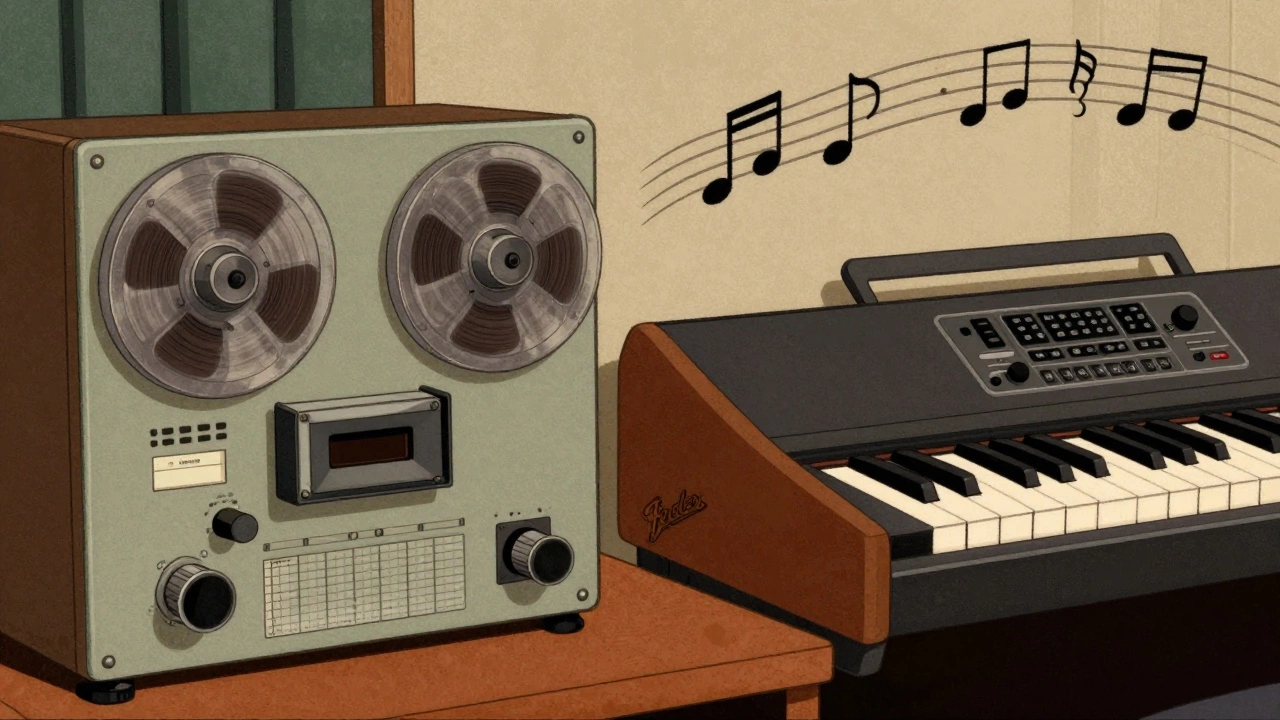
To understand why this sound feels so different, we have to look at how music was made in the 1970s. Back then, there were no undo buttons. Musicians recorded onto analog tape machines, specifically magnetic tape recorders like Ampex or Studer models that capture audio signals physically, introducing harmonic distortion and natural compression known as 'warmth'. These machines, often running at 16 or 24 tracks, had limitations. You couldn’t fix a timing error with a mouse click. If the drummer rushed, the whole band had to listen closely and stay tight. This pressure created a unique energy-a "live-in-the-room" feel that modern producers spend hours trying to emulate.
Today’s indie artists aren’t just copying songs; they are copying the tools. Many are buying vintage Fender Rhodes electric pianos, electric piano instruments from the 1970s known for their mellow, bell-like tone achieved via tines struck by hammers and Moog synthesizers, monophonic analog synthesizers invented by Robert Moog, characterized by rich, oscillating basslines and lead sounds. Others use high-end plugins that simulate the nonlinearities of old tube amplifiers and transformer-based consoles like Neve or API. The goal is to get that specific harmonic distortion-the way a signal slightly breaks up when pushed too hard-which adds depth and character that clean digital audio lacks.
Consider the rhythm section. In the 1980s, drum sounds became huge and gated, thanks to reverb-heavy productions. But in the 70s, drums were drier, closer, and more intimate. Modern indie bands mimicking this era often deaden their drum heads, use vintage cymbals, and place microphones carefully to capture the room’s natural acoustics rather than slapping on a generic reverb preset. It’s a subtle difference, but it changes the entire emotional weight of the track.
Visual Storytelling: Earth Tones and Film Grain
If the sound is the engine, the visuals are the bodywork. The 1970s aesthetic in indie culture is instantly recognizable because it relies on a very specific color palette and texture. Think less neon and cyberpunk, and more earth and wood. We’re talking about moss green, rust orange, beige, and cream. These colors appear everywhere, from album covers to music videos to social media feeds.
Photography plays a huge role here. Many indie creators are ditching high-resolution digital cameras for film photography, the process of capturing images on light-sensitive chemical film, resulting in grain, light leaks, and unpredictable exposures that add authenticity. Shooting on Super 8 or 16mm film introduces grain, light leaks, and color shifts that digital filters struggle to replicate perfectly. Even when shooting digitally, directors often add simulated VHS overlays or set their aspect ratio to 4:3 to mimic old television screens. The result is a look that feels unpolished, personal, and immediate.
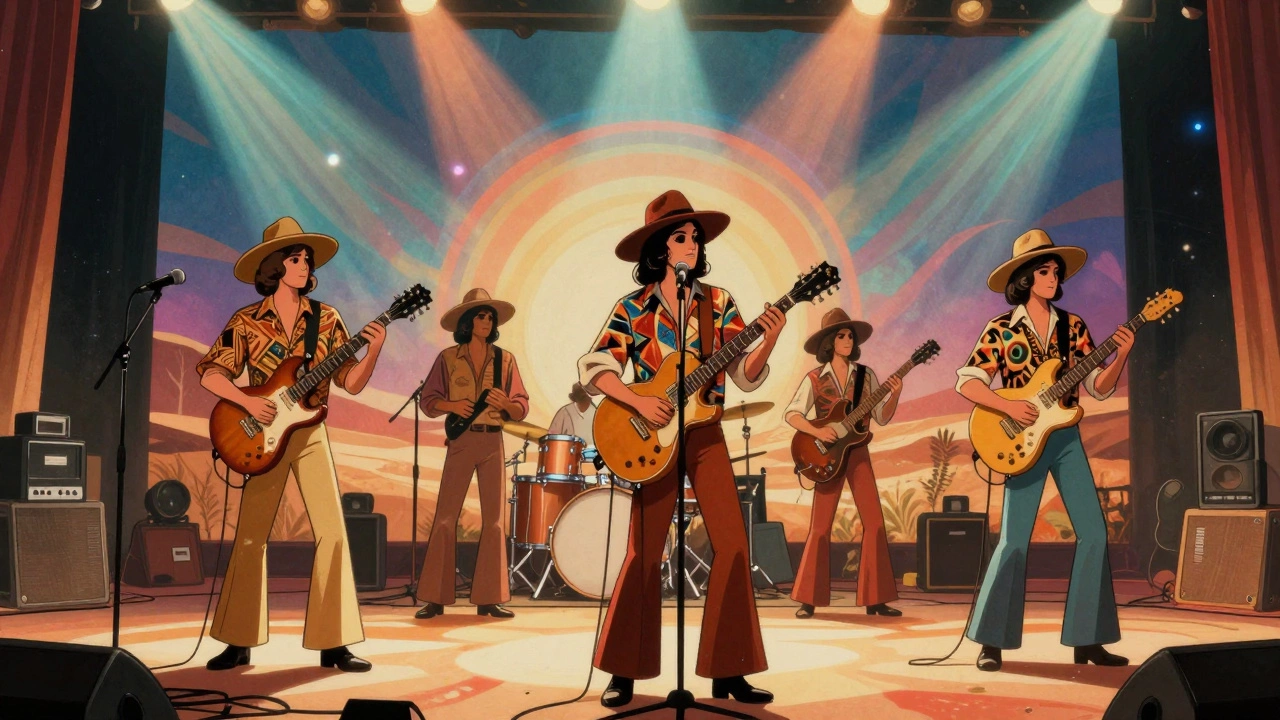
Fashion follows suit. You won’t see sleek, futuristic outfits on these stages. Instead, you’ll spot patterned shirts, suede jackets, and wide-brimmed hats. This isn’t accidental. It aligns with the broader indie ethos of DIY and thriftiness. Wearing vintage clothing connects the artist to a history of sustainability and individuality, rejecting the fast-fashion cycle of mainstream pop stars.
Key Artists Defining the Revival
Several artists have become synonymous with this trend, each bringing a different flavor of the 70s to the forefront.
| Artist | Primary 70s Influence | Sonic Characteristics | Visual Style |
|---|---|---|---|
| Tame Impala | Psychedelic Rock / Disco | Phaser-drenched drums, stereo panning, lush synths | Prismatic colors, optical illusions, liquid-light projections |
| Weyes Blood | Soft Rock / Baroque Pop | Mellotron strings, piano ballads, analog reverb, soaring vocals | Soft-focus film photography, period-coded wardrobes, home interiors |
| Khruangbin | Thai Funk / Global Soul | Dry, spacious mixes, minimal overdubs, vintage amp tones | Desert landscapes, saturated colors, wide-brimmed hats, bell-bottoms |
| The Lemon Twigs | Glam Rock / Power Pop | Multi-part suites, stacked harmonies, jangly guitars | Flared trousers, patterned shirts, shag haircuts, press photos |
Tame Impala, led by Kevin Parker, takes the psychedelic side of the 70s and runs with it. Their use of phasers and heavy stereo panning recalls Pink Floyd and Supertramp, while their visuals lean into the trippy, kaleidoscopic posters of late-60s and early-70s concerts. On the other end of the spectrum, Weyes Blood (Natalie Mering) channels the melancholy beauty of 70s soft rock. Her album *Titanic Rising* is practically a love letter to The Carpenters and Harry Nilsson, using mellotrons and string sections to create a sweeping, cinematic sound. Visually, her work looks like a series of beautiful, sad memories captured on Kodak film.
Then there’s Khruangbin, who found inspiration in obscure Thai funk cassettes from the 70s. Their sound is instrumental, dry, and funky, relying on groove rather than melody. Their aesthetic is equally distinct: desert sunsets, muted earth tones, and a laid-back fashion sense that feels effortlessly cool. These artists prove that the 70s wasn’t one monolithic style, but a collection of diverse subgenres that indie artists can pick and choose from.
Why Nostalgia Sells: The Psychology of Retro
Why does this era resonate so strongly today? Cultural critic Simon Reynolds coined the term "retromania" to describe our current obsession with recycling past styles. For many listeners, the 1970s represent a time before algorithms dictated what we heard. It was an era of album-oriented rock, where you bought a record and listened to it start to finish. There was no shuffle mode.
In a world dominated by short-form content and instant gratification, the 70s indie revival offers a slower, more immersive experience. The extended chords (maj7, 9ths), key changes, and longer song structures require patience and attention. Fans crave this depth. They want to feel like they are discovering something hidden, not being fed a product designed by a marketing team. The DIY nature of the indie scene reinforces this. When an artist records on tape in their garage, it feels honest. It feels human.
Social media platforms like TikTok have accelerated this trend. Playlists labeled "indie music inspired by the 60s and 70s" go viral because they offer a cohesive mood. Users don’t just listen; they engage with the aesthetic. They share photos of their vinyl collections, post outfits inspired by 70s fashion, and discuss the technical aspects of analog gear. This community building turns listening into a lifestyle.
Production Challenges: Emulating Imperfection
For artists wanting to adopt this style, the path isn’t always easy. Emulating analog warmth requires skill. You can’t just slap a plugin on a track and call it a day. You need to understand gain staging, microphone placement, and the physical limitations of tape. Many indie producers spend weeks experimenting with settings to get that right amount of saturation without losing clarity.
Visually, shooting on actual film is expensive and slow. You can’t check the shot immediately. You have to wait for development. This forces a different mindset-one that values intention over volume. For digital creators, simulating this look requires careful color grading and the addition of artifacts like grain and lens flares. It’s about embracing the mistake. A light leak isn’t an error; it’s a feature. A slightly out-of-tune vocal isn’t a flaw; it’s emotion.
The challenge lies in balancing homage with innovation. If you copy the 70s too closely, you risk sounding like a tribute band. The most successful artists, like Tame Impala or Weyes Blood, use the 70s as a foundation, not a cage. They blend vintage sounds with modern production techniques, creating something that feels both familiar and new. They respect the past while speaking to the present.
Future Directions: Beyond Pastiche
As we move further into the 2020s, the 70s indie trend shows no signs of fading. However, it is evolving. We are seeing more hybridization, where 70s elements are mixed with electronic, hyperpop, or experimental genres. Artists are no longer just recreating the past; they are deconstructing it. They might take a 70s funk bassline and run it through a glitch effect, or pair a vintage Mellotron with a trap beat.
This evolution keeps the aesthetic fresh. It prevents it from becoming a museum piece. The core values of the indie movement-independence, authenticity, and personal expression-remain constant. The tools change, but the philosophy stays the same. Whether it’s through the warmth of analog tape or the grain of film stock, indie artists continue to seek connection in a digital world. They remind us that music is not just data; it’s memory, emotion, and art.
What makes 1970s indie music sound different from modern pop?
1970s indie music often features analog recording warmth, live-in-the-room instrumentation, and extended chord progressions. Unlike modern pop, which may rely on quantized rhythms and digital precision, 70s-inspired tracks embrace slight imperfections, tape saturation, and organic dynamics to create a more human, emotive sound.
Which instruments are essential for achieving a 1970s indie sound?
Key instruments include the Fender Rhodes electric piano, Wurlitzer, Moog or ARP synthesizers, Mellotron for strings, and vintage tube amplifiers. Drum kits are often tuned lower with deadened heads to achieve a dry, punchy tone reminiscent of 70s recordings.
How do indie artists incorporate 1970s visuals into their branding?
Artists use warm earth-tone color palettes (mustard, rust, moss), retro typography, and film grain in their photography and videos. Fashion choices often include corduroy, suede, flared pants, and patterned shirts. Many shoot on actual Super 8 or 16mm film to capture authentic light leaks and imperfections.
Is the 1970s aesthetic just a trend, or will it last?
While trends come and go, the 1970s aesthetic has proven durable due to its association with authenticity and DIY culture. As long as listeners value organic sound and visual nostalgia over polished digital perfection, this style will remain relevant, likely evolving by blending with newer genres.
Can I achieve a 1970s sound using only digital tools?
Yes, many high-quality plugins emulate tape saturation, analog compressors, and vintage reverbs. However, achieving the true "feel" also involves performance choices, such as playing live together and avoiding over-editing, which cannot be fully replicated by software alone.