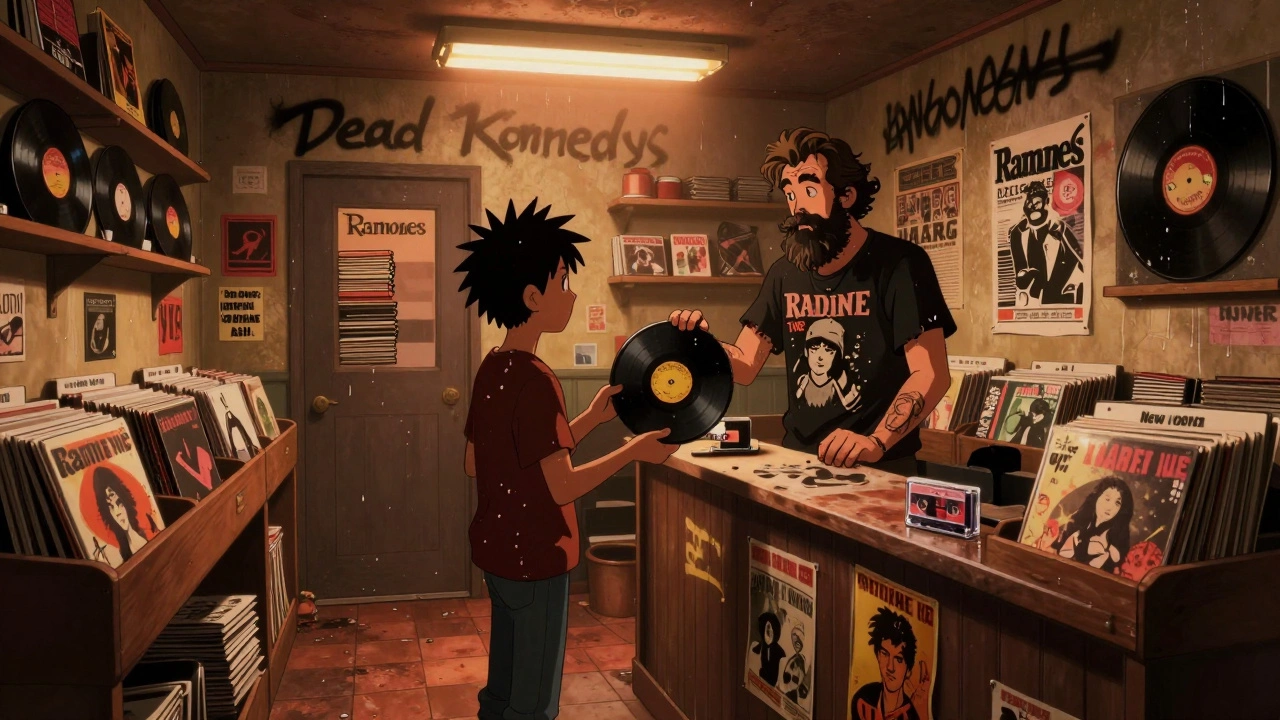

Back in the late 1970s, if you wanted to hear a new punk record, you didn’t scroll through Spotify or click a YouTube link. You walked into a dimly lit shop with a sticky floor, a stack of zines by the door, and a wall of vinyl that smelled like sweat, spray paint, and rebellion. These weren’t just stores. They were independent record shops - the last physical outposts of a movement that refused to be sold.
Punk didn’t need radio play or corporate backing. It lived in basements, squats, and small clubs like CBGB in New York. But between the shows and the flyers taped to telephone poles, there was always one place where the music actually changed hands: the record shop. Not the big chain store with its glossy pop compilations. Not the mall kiosk with the same five CDs on loop. But a tiny, cluttered space run by someone who knew every band on the shelf - and would tell you why the one on the bottom left mattered more than anything else.
Where the Music Wasn’t Just Sold - It Was Shared
Independent record shops in the punk era didn’t just stock records. They were distribution hubs, bulletin boards, and safe houses for a culture that the mainstream ignored. In New York, shops like Acme Records a Lower East Side staple that carried early Dead Kennedys, Misfits, and Ramones pressings became meeting points. You’d go in to buy a 7-inch by The Clash, and leave with a handmade zine, a flyer for a show in Queens, and the name of a new band no one else had heard of yet.
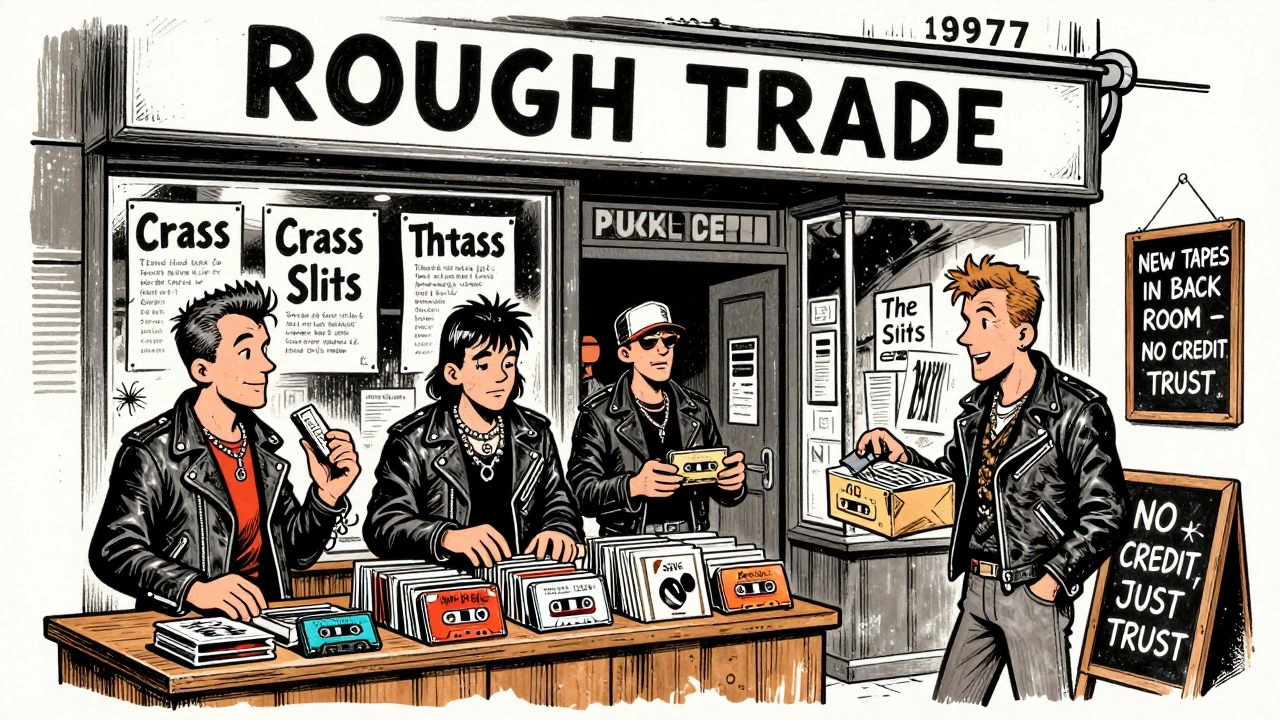
In London, Rough Trade began as a record shop in 1976 before becoming a label, and was the epicenter of UK punk’s DIY network. It wasn’t just a store - it was a command center. Bands dropped off their self-recorded tapes. Fans traded bootlegs. Zines were stacked beside cassettes by Crass and The Slits. The shop didn’t just sell music; it built the network that kept punk alive.
In the U.S., SST Records founded by Greg Ginn of Black Flag, operated out of a garage and relied on independent shops to distribute its hardcore releases. Shops in California, like Record Peddler in Long Beach, carried SST’s entire catalog - from Black Flag to Minutemen - and hosted in-store shows where bands played for free, paid in beer and cassette copies.
The DIY Chain: From Tape to Shelf
Punk didn’t wait for permission. Bands recorded on four-track cassette decks in basements. They pressed 500 copies of a single, hand-screened the sleeves, and mailed them out. But those copies didn’t just vanish into the mail. They ended up on shelves - in shops that understood what this music was worth.
Take the Saints from Perth, Australia. In 1976, they self-released their debut single, (I’m) Stranded. No label. No funding. Just a van, a stack of records, and a few shops willing to take them. That single made it to shops in Sydney, Melbourne, and eventually New York. How? Because someone at a record store saw it, played it, and said, “This is it.”
ROIR Records, a cassette-only label from New York, cut costs by skipping vinyl entirely. Their tapes were cheap, easy to duplicate, and perfect for trading. Shops like Ork Records Terry Ork’s basement operation, which released early Television and Richard Hell tapes didn’t just sell tapes - they were the first streaming service. You’d come in, ask, “What’s new?” and walk out with a tape of a band that played a warehouse show last week.
These shops were the only places where you could find music that wasn’t on the radio. Where you could buy a record from a band that hadn’t played a venue bigger than a garage. Where the owner didn’t care if you had cash - sometimes, you traded a shirt, a poster, or your own demo tape.
The Fall and the Comeback
By the 2000s, the rise of digital music, corporate consolidation, and rising rent prices wiped out most of these shops. In Los Angeles alone, 84 independent record stores closed between 1956 and 2020. Many punk shops vanished quietly - no fanfare, no headlines. Just a “Closed” sign on a door that once buzzed with the sound of new releases being played loud.
But then something unexpected happened. Vinyl came back.
Not as a nostalgia gimmick. Not as a luxury item for collectors. But as a way to reconnect. People started buying records again - not just for the sound, but for the ritual. The weight of the sleeve. The smell of the vinyl. The liner notes scribbled by hand. And for punk fans, it meant rediscovering the places where it all began.
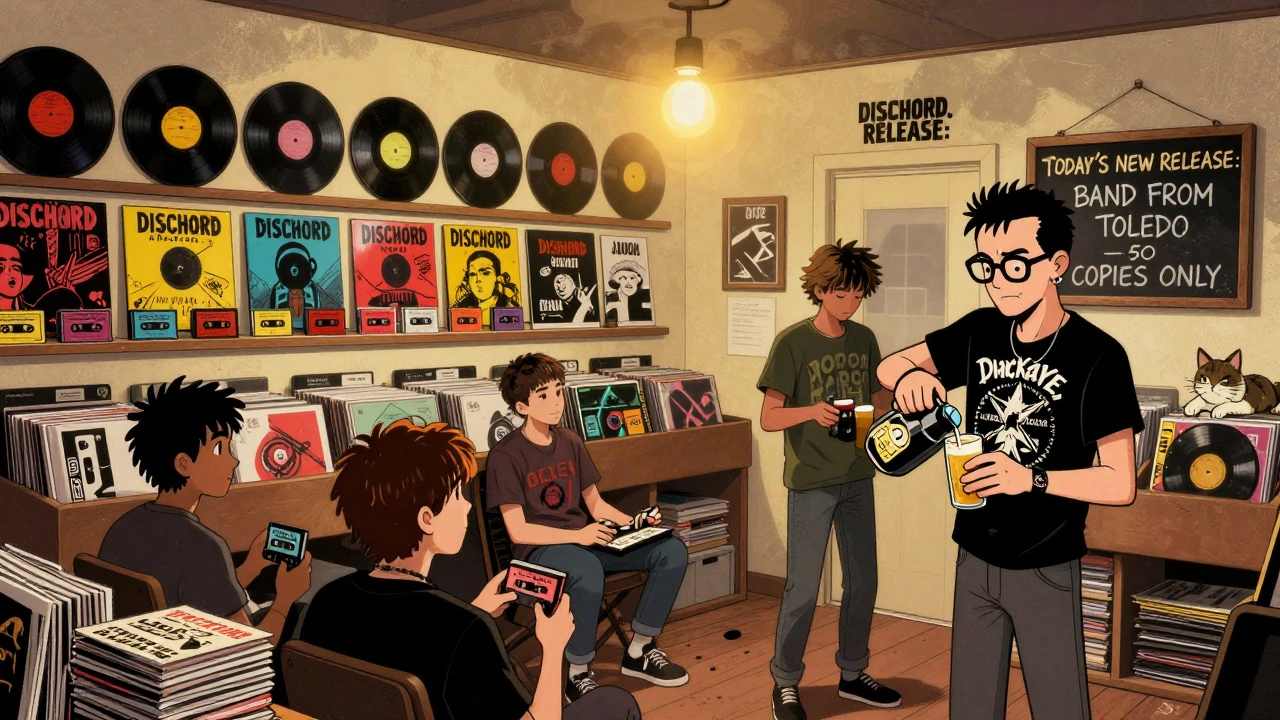
Today, shops like Dischord Records in Washington, D.C., still run by Ian MacKaye of Minor Threat and Fugazi, operates as both label and store, offering limited-run pressings of 1980s hardcore and new local bands. In Portland, Black Cat Records a small shop on Southeast Hawthorne that’s been open since 2009, hosts monthly punk listening nights and has a wall of local band cassettes. In Chicago, Reckless Records has a dedicated punk section with over 1,200 titles, including rare UK post-punk and Midwest hardcore.
What Makes a Punk Record Shop Today?
It’s not just about the stock. It’s about the people. A real punk record shop today still does what it always did:
- Carries obscure releases - not just the classics, but the new bands no one else will touch
- Hosts in-store shows, listening parties, or zine swaps
- Trades with customers - you bring in a tape, they give you credit
- Keeps a wall of local bands - no corporate press releases, just hand-stamped sleeves
- Knows your name, and remembers what you liked last time
These shops survive because they’re not trying to compete with Amazon. They’re not trying to be cool. They’re just keeping a flame alive. The same one that burned in CBGB, in Rough Trade, in the back of a van in Perth.
Where to Find Them Now
You won’t find a list of “top 10 punk record shops.” That’s not how punk works. But if you want to find one, here’s how:
- Look for shops with a wall of cassettes - not just vinyl. Cassettes are still the lifeblood of underground punk.
- Check the back room. That’s where the zines, flyers, and demo tapes live.
- Ask the staff what they’re listening to. If they say, “Oh, this new band from Toledo,” and pull out a self-released tape - you’re in the right place.
- See if they have a mailing list. The best punk shops still use paper newsletters, not email.
- Go on a Saturday afternoon. That’s when the community shows up - not for sales, but to talk.
There are fewer than 300 independent record shops left in the U.S. that still carry significant punk inventory. But they’re still there. And they’re still necessary.
Why This Matters
Music isn’t just data. It’s a community. And punk, more than any other genre, was built on connection - not algorithms. Independent record shops were the glue. They turned strangers into fans. Fans into friends. Friends into a movement.
Today, when everything is instant, when every song is just a swipe away, these shops are the last places where music still has weight. Where you have to show up. Where you have to listen. Where you have to wait - and where something real still happens.
Are independent record shops still relevant in the age of streaming?
Yes - more than ever. Streaming gives you access to music, but not community. Independent record shops still offer the human connection that defined punk: face-to-face recommendations, physical zines, live in-store shows, and the chance to meet others who care about the same music. They’re not competing with Spotify - they’re offering something it can’t: belonging.
Can I find rare punk records at these shops today?
Absolutely. Many shops specialize in rare pressings - original UK punk singles, early SST releases, obscure European hardcore tapes, and self-released cassettes from the 1980s. Some even have limited-edition reissues pressed on colored vinyl or with hand-screened sleeves. The best way to find them? Visit in person. Online listings rarely capture the full inventory.
Do punk record shops still sell cassettes?
Yes - and cassettes are more common now than they were in the 2000s. Many new punk bands release exclusively on cassette because it’s cheap, DIY-friendly, and fits the aesthetic. Shops often carry dozens of local and international cassette-only releases, sometimes with hand-written tracklists or stickers added by the band.
How do these shops stay in business?
They don’t rely on big sales. Most survive through a mix of vinyl sales, zine and merch turnover, small event fees, and community support. Many run on a barter system - trade a record for store credit. Others host benefit shows, sell handmade patches, or partner with local artists. Profit isn’t the goal. Survival is.
Is it possible to start my own punk record shop today?
Yes - but it won’t look like a store from the 1980s. Modern punk shops often combine vinyl, cassettes, zines, and local art. They’re smaller, more community-driven, and rely on social media to spread the word. Start by hosting listening nights, supporting local bands, and building trust. The money comes later. The community comes first.


