
I Feel Love didn’t just top the charts-it rewired the future of music. Released in 1977, this six-minute track wasn’t another disco banger. It was a sonic earthquake. A synth-driven heartbeat that pulsed through clubs, changed how records were made, and laid the foundation for every dance track that came after it. No drum machines. No guitars. Just a woman’s voice, a Moog synthesizer, and a bass line that refused to stop moving.
The Song That Wasn’t Supposed to Be a Hit
Donna Summer didn’t love it. Giorgio Moroder didn’t think it would matter. Pete Bellotte wrote the melody, but even he didn’t expect this track to outlive its time. It was meant to be the final song on Summer’s concept album I Remember Yesterday, a nostalgic journey through decades of pop music-ending with a leap into the unknown. The album’s other tracks mimicked 1950s rock, 1960s soul, and 1970s funk. The last one? A cold, mechanical, alien sound. No one thought it would sell.
Summer recorded her vocals in under ten minutes. Moroder later admitted: "We did it just as an album track. Neither of us thought it would be as big as it’s been." But Neil Bogart, head of Casablanca Records, had a hunch. He pulled it from the album and released it as a single. That decision changed everything.
The Sound of the Future
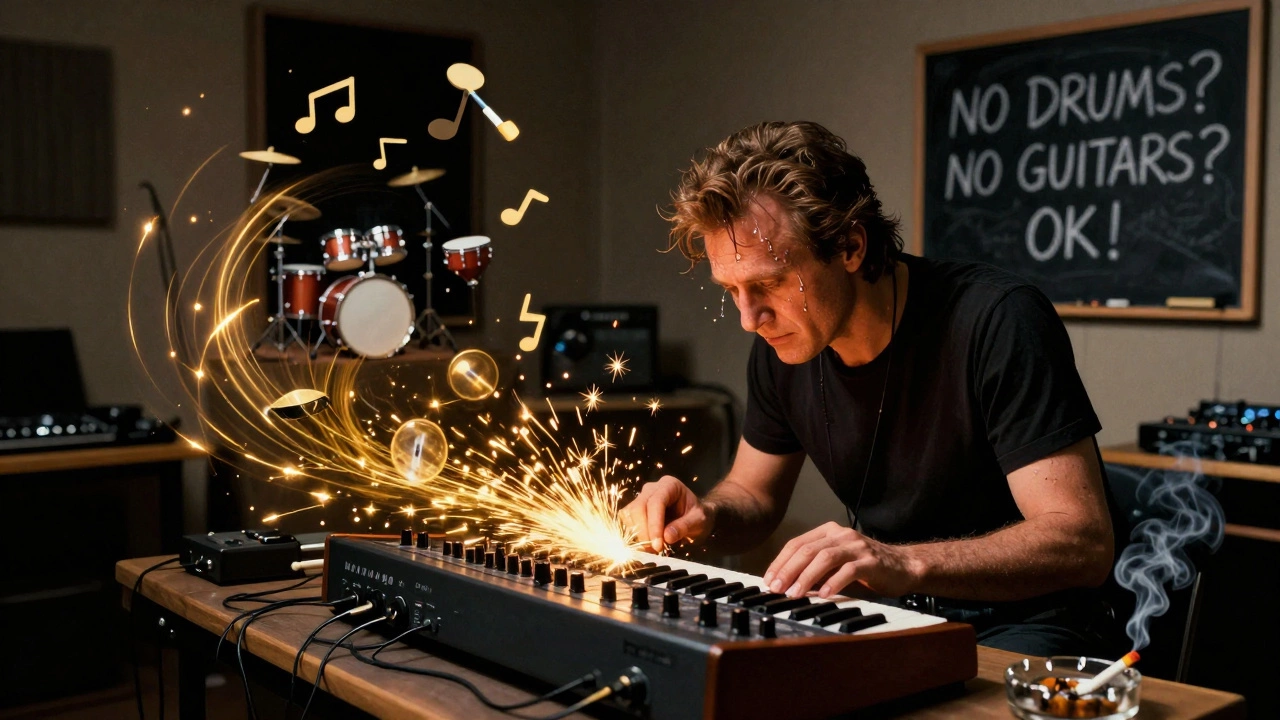
Before I Feel Love, electronic music was experimental, niche, often clunky. Synthesizers were used in prog rock or sci-fi soundtracks, not dance floors. Moroder, working with engineer Robbie Wedel at Musicland Studios in Munich, built the track backward. He started with rhythm, not melody. No live drums. No bass guitar. Everything came from a modular Moog.
The bass line? A happy accident. A delay pedal was turned on too long, and the result-a rippling, undulating pulse-became the song’s spine. The kick drum? Played live by Keith Forsey, the future producer of Billy Idol. Everything else? Made by hand, note by note, on a synthesizer. Snare? Synth. Hi-hat? Synth. Even the claps. Each sound programmed separately, layered, and timed to perfection.
At nearly 17 minutes long (in its full version), it was a DJ’s dream. No fade-outs. No breaks. Just a continuous, hypnotic groove. As Moroder said: "For a DJ, what’s the best thing to do? You put the record on, 17 minutes, and you go out and have a cigarette."
How the World Reacted
The BBC banned it. They called it "too sexual," too mechanical, too strange. But that only made people want to hear it more. Clubs in New York, London, and Berlin played it nonstop. By the time the ban was lifted, the song was already number one in seven countries.
David Bowie and Brian Eno were in the studio recording Low when they heard it. Eno ran into the room with the 7-inch single and shouted, "This single is going to change the sound of club music for the next 15 years." He was wrong. It changed music for 50 years. Bowie later said it felt like "hearing the future."
Blondie’s "Heart of Glass" came out the next year-same beat, same feel. Sparks’ No. 1 in Heaven was made with Moroder himself. Human League, Simple Minds, Depeche Mode-they all studied this track like a textbook. Phil Oakey said they wanted to sound like "ABBA or Donna Summer." That was the goal.
The LGBTQ+ Liberation Anthem
While the music world debated its genius, queer clubs embraced it as a lifeline. The song’s mechanical rhythm felt like liberation. The lack of human imperfection-no wobbly guitar, no smoky blues-made it feel pure. Clean. Free.
Giorgio Moroder told Pitchfork: "Millions of gay people love Donna, and some say ‘I was liberated by that song.’" Jimmy Somerville of Bronski Beat said it was the reason he became a singer. The beat didn’t just move feet-it moved souls. In a time when gay identity was still criminalized in many places, I Feel Love became a soundtrack for self-acceptance.
It wasn’t just music. It was a declaration: pleasure, rhythm, and technology could be tools of freedom.
The Blueprint for Everything That Came After
House music? It’s I Feel Love with a 4/4 kick. Techno? Same pulse, slower, colder. Electro? Built on that synth bass. Even modern EDM drops trace back to that undulating Moog line.
It proved electronic music could be emotional. Summer’s voice-breathy, urgent, almost pleading-gave warmth to a cold machine. That balance became the holy grail: human feeling + robotic precision.
By the 1990s, DJs in Chicago and Detroit were playing it in backrooms, looping sections, extending it into new forms. The track became the missing link between disco and house. Some historians call it the first house song ever made.
And it didn’t stop. In 2022, Rolling Stone ranked it the greatest dance song of all time. Beyoncé closed her album Renaissance with "Summer Renaissance," a direct callback to Summer’s vocal style and Moroder’s production. It wasn’t a sample. It was a tribute. A passing of the torch.
Why It Still Matters
Most songs fade. This one evolved. It didn’t just influence genres-it created them. It showed that a synthesizer could be more than a novelty. That a woman’s voice could carry a revolution. That a club track could be art, science, and protest all at once.
Today, producers still recreate that bass line. DJs still spin the 17-minute version. Fans still close their eyes and feel it. Not because it’s old. But because it’s alive.
Donna Summer didn’t invent dance music. But with this one song, she and Moroder gave it a heartbeat. And that heartbeat? It’s still beating.
Was "I Feel Love" the first electronic dance song?
No, it wasn’t the first electronic song ever made, but it was the first to fuse synthesizer production with mainstream dance-floor energy at such a massive scale. Earlier tracks like Kraftwerk’s "Trans-Europe Express" or Jean-Michel Jarre’s "Oxygène" used electronics, but they were more experimental or ambient. "I Feel Love" made the synth feel sensual, rhythmic, and irresistible to a global audience. Many historians argue it’s the first true house or techno precursor because of its relentless 4/4 pulse and production style.
How did Giorgio Moroder make the bass line?
Moroder used a modular Moog synthesizer to create the bass line, but the iconic undulating effect came from a mistake. Engineer Robbie Wedel accidentally left a delay pedal engaged while playing back the bass track. Instead of removing it, Moroder realized the echo created a pulsing, wave-like motion that felt alive. He locked it in. That "flaw" became the song’s signature sound. No other instrument was used for the bass-it was all synthesized.
Why was the BBC banned "I Feel Love"?
The BBC banned the song because they deemed it "too sexual" and "mechanical." The combination of Donna Summer’s breathy, sensual vocals and the cold, robotic beat unsettled conservative broadcasters. They feared it would encourage promiscuity and undermine traditional music values. Ironically, the ban made the song more popular. Clubs played it louder, radio stations outside the UK picked it up, and demand surged. The BBC eventually reversed the ban after public pressure and chart success.
Did Donna Summer write the lyrics?
Yes. Pete Bellotte composed the melody and structure, but Donna Summer wrote the lyrics. She was given the backing track and asked to create words that matched its feeling. She wrote about euphoria, connection, and transcendence-words that matched the music’s physical pull. She later said she didn’t like the track at first, calling it "too cold," but once she sang it, she understood its power.
How did "I Feel Love" influence house and techno music?
House and techno producers in Chicago and Detroit in the 1980s used "I Feel Love" as a direct template. The relentless four-on-the-floor beat, the synthetic bass, the lack of live drums-all became core elements of house music. DJs like Frankie Knuckles and Juan Atkins looped its bass line and built new tracks around it. The song proved that electronic rhythms could carry emotion and movement without guitars or drums. It gave them permission to make music that felt futuristic yet deeply human.


