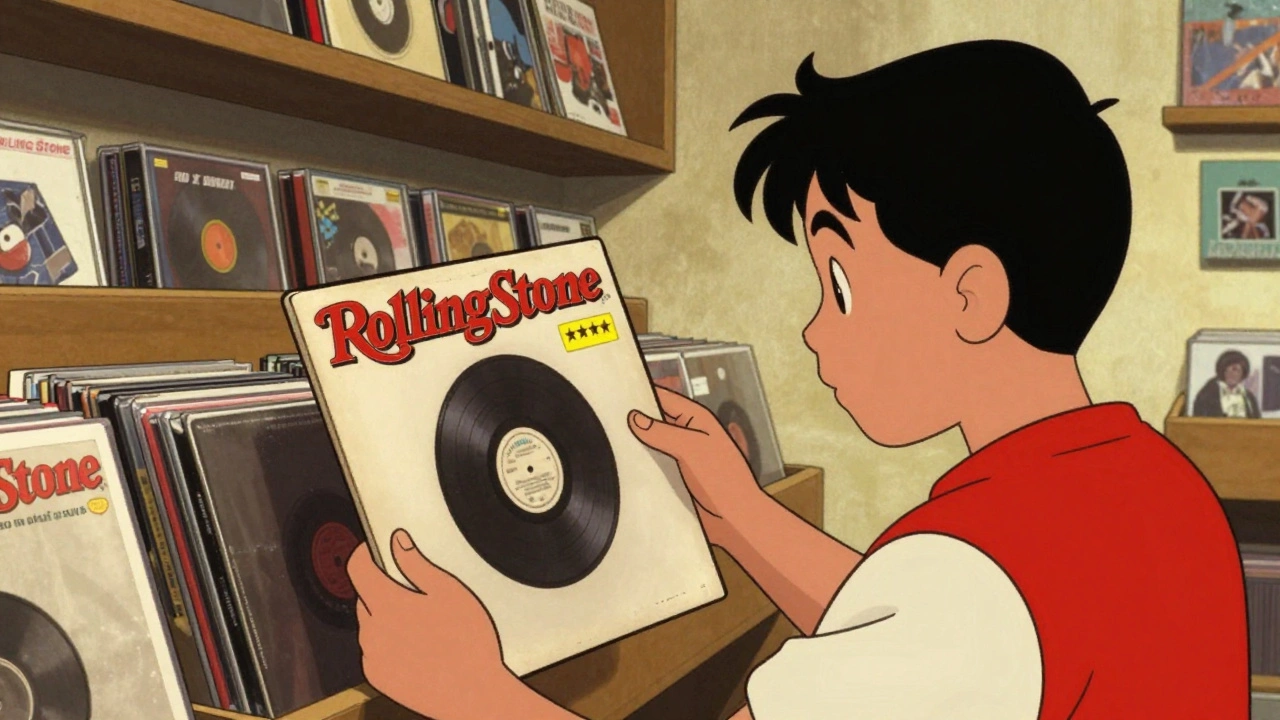

Imagine walking into a record store in 1992. You pick up an album, flip it over, and look for a review sticker. If Rolling Stone is a prominent American monthly magazine that focuses on politics, pop culture, music, and business gave it four stars, you bought it. If they ignored it, you probably didn't either. Back then, a tiny group of editors at major magazines held the keys to your musical taste. They decided what was "cool," what was "important," and what was just noise.
That monopoly didn't last long. The arrival of the internet in the 1990s didn't just change how we listened to music; it completely dismantled the old system of music criticism. It shifted power from a handful of print editors to a chaotic, global network of fans, bloggers, and new digital tastemakers. This wasn't a smooth transition. It was messy, fast, and often brutal. But it fundamentally changed who gets to say what music matters.
The Old Guard: Print Magazines as Strict Gatekeepers
Before the web took over, music criticism was a physical commodity. Newspapers had limited column inches. Magazines had fixed page counts. Editors had to choose which albums got reviewed and which ones got left behind. This structural limit created a powerful bottleneck. If NME is a British music and popular culture magazine published weekly since 1952 or Spin is an American music magazine founded in 1985 that focuses on rock and alternative music didn't cover your band, you effectively didn't exist to the mainstream audience.
This scarcity enforced a specific style of writing. Critics wrote with a heavy dose of attitude. A 2018 analysis of early-90s rock criticism notes that writers prioritized "attitude over analysis." They used snarky insults and dense cultural references to signal their own hipness. It was a way of drawing a line between "us" (the cool indie kids) and "them" (the mainstream corporate crowd). Readers accepted this because they had no other source of authority. Letters to the editor were slow, rare, and heavily edited. You couldn't argue back in real-time. The critic spoke; you listened.
This system worked well for major labels and established artists. For underground scenes, niche genres, and independent labels, it was often exclusionary. If you played hardcore punk in Ohio or experimental electronic music in Berlin, you were lucky if a national magazine noticed you at all. The gatekeepers were few, and their tastes were narrow.
Usenet and the Rise of Fan Voices
The first crack in the wall came before most people even knew what a "web browser" was. In the early 1990s, Usenet is a worldwide distributed discussion system available on computers that are connected to the Internet became a hub for music fans. Newsgroups like rec.music.reviews and alt.rap allowed anyone with an internet connection to post thoughts about albums.
Take alt.rap, which saw its first archived post in March 1991. These weren't polished essays. They were raw, unfiltered reactions. Fans debated authenticity, shared release dates, and tore apart hits they hated. One famous thread dismissed Technotronic’s "Pump Up the Jam" as "the worst shit ever." There was no editor checking facts or softening language. Just hundreds of voices arguing in real-time.
This democratization was radical. It meant that gatekeeping didn't disappear; it just moved. Instead of one editor deciding what was good, a community of peers built their own hierarchies. Respected posters gained influence through consistency and knowledge, not bylines. Underground rap, regional rock, and obscure electronic acts found audiences without needing permission from New York or London publishers. The barrier to entry dropped from "getting hired by a magazine" to "knowing how to use a text editor."
Webzines: Professionalism Meets Infinite Space
As the World Wide Web grew, so did the idea of online magazines. In 1994, journalist Michael Goldberg launched Addicted to Noise is one of the first widely noted online music magazines, founded in 1994. It was a pioneering example of professional criticism moving online. Unlike print, ATN wasn't limited by paper costs or printing presses. They could publish interviews, reviews, and news instantly.
Thomas Goetz, later executive editor of Wired is a monthly American magazine focusing on how emerging technologies affect culture, the economy, and politics, wrote about this shift in the mid-90s. He noted that online magazines offered "immediate and maximal context." You could read a review while listening to embedded audio clips. You could click links to related articles. The experience was richer and faster than waiting for next week's newspaper.
But there was a catch. How do you make money? Early webzines struggled with the tension between editorial independence and commercial pressure. They experimented with banner ads and label partnerships. While print critics relied on advertising revenue too, the internet made the conflict more visible. Readers began to ask: "Is this review honest, or did the label pay for it?" This forced a new kind of transparency-or at least, a new set of questions-into the critical conversation.
Pitchfork and the Decimal Score Revolution
If Usenet was the chaotic beginning, Pitchfork is an American online music publication founded in 1995 by Ryan Schreiber was the moment the new guard sharpened its knives. Ryan Schreiber started the site from his bedroom around 1995-1996. He wanted to create criticism that was more provocative and confrontational than what he saw in traditional magazines.
His weapon of choice was the decimal score. Instead of rolling stones' vague star ratings, Pitchfork used a 0.0 to 10.0 scale. This precision felt scientific, but it was also deeply subjective. A 7.3 meant something different than a 7.4. It invited debate. It encouraged readers to obsess over the nuances of a review.
Pitchfork quickly became the ultimate tastemaker for indie and alternative music. It praised obscure bands and eviscerated mainstream acts. In doing so, it created a new canon. By 2010, scholars described Pitchfork as an "insurgency" against mainstream media. But insurgencies become institutions. As Pitchfork grew, its influence expanded globally. Its scores affected sales, radio play, and artist reputations. It became a new type of gatekeeper-one that was digital, decentralized, yet incredibly powerful.
| Feature | Pre-Internet (Print) | Internet Era (1990s+) |
|---|---|---|
| Gatekeepers | Editors at major magazines (Rolling Stone, NME) | Digital outlets (Pitchfork), fan communities (Usenet), algorithms |
| Speed | Days to weeks after release | Same-day or same-evening reviews |
| Rating System | Stars (1-5) or letter grades | Decimal scores (0.0-10.0), aggregated metascores |
| Access | Limited by physical distribution | Global, instant access via web |
| Tone | Snarky, culturally referential, elite | Provocative, data-driven, sometimes brutal |
Napster and the Commerce Crisis
The internet didn't just change how we talked about music; it changed how we got it. In 1999, Napster is a peer-to-peer file sharing application and service launched in 1999 launched. Suddenly, millions of users could share MP3 files directly with each other, bypassing record labels, retailers, and copyright laws entirely.
This forced critics to adapt. Reviews could no longer just be about aesthetics. They had to address economics. Academic studies show a massive spike in keywords like "sales," "market," and "industry" in music criticism around 1997 and 2000. Critics began discussing piracy, digital distribution, and the collapse of CD sales. The role of the critic expanded from judge of taste to interpreter of technological disruption.
Napster also blurred the line between consumption and criticism. If you could listen to any album for free, did a review still matter? Yes, but differently. Reviews became guides to quality in a sea of infinite choice. Instead of telling you *if* you should buy an album, they told you *which* of the thousands of available albums was worth your time. This shifted the critic's value proposition from scarcity to curation.
The Legacy: Fragmentation and New Hierarchies
The 1990s laid the groundwork for today's fragmented media landscape. The centralized authority of Rolling Stone dissolved. In its place, we got Pitchfork, Metacritic, blogs, forums, and eventually social media. Gatekeeping didn't end; it multiplied.
Data shows that this new system has its own biases. Since Pitchfork launched in 1996, it has awarded only 11 albums a perfect 10.0 score upon release. Meanwhile, retrospective analyses show that pre-1999 albums dominate the "perfect" lists on aggregators like Metacritic. This suggests that the internet era created stricter, more numerically codified standards for perfection. Older albums benefit from nostalgia and canonization; newer albums face harsher scrutiny.
Moreover, the "edge" of criticism has softened. Early internet critics were bold and confrontational. Today, many digital outlets are cautious, intertwined with publicity cycles, and afraid of backlash. The internet gave us a voice, but it also gave us echo chambers. We can find critics who agree with us, but we rarely encounter the challenging, attitude-driven critiques that defined the early 90s.
Yet, the core change remains permanent. Anyone can now write a review. Anyone can start a blog. The gates are open, but navigating the noise requires new skills. We don't trust institutions anymore; we trust communities, track records, and data. The internet broke the old gatekeepers, but it built new ones. And we're still figuring out who holds the keys.
Did the internet kill music criticism?
No, it transformed it. While traditional print magazines lost dominance, online platforms like Pitchfork, blogs, and social media created new forms of criticism. The volume of criticism increased dramatically, shifting from exclusive expert opinions to a mix of professional reviews and fan discussions.
Why did Pitchfork use decimal scores?
Pitchfork founder Ryan Schreiber introduced decimal scores (0.0-10.0) to create more precise, provocative judgments. This system sparked debate and allowed for nuanced distinctions between albums, contrasting with the broader star ratings used by print magazines. It became a hallmark of digital-era criticism.
What was the role of Usenet in music criticism?
Usenet newsgroups like rec.music.reviews and alt.rap allowed fans to post reviews and debates globally before the web became mainstream. This democratized criticism, giving non-professional voices a platform and creating early online communities that challenged the authority of print editors.
How did Napster affect music critics?
Napster forced critics to address economic and technological issues alongside aesthetic ones. With free file-sharing becoming common, critics had to discuss piracy, industry revenue drops, and digital distribution models, expanding their role beyond simple album reviews.
Who were the first online music magazines?
Addicted to Noise (ATN), founded in 1994 by Michael Goldberg, is considered one of the first professional online music magazines. Other early examples include Seen and Heard and Classical Source, which leveraged the web's unlimited space and speed to provide immediate coverage.


