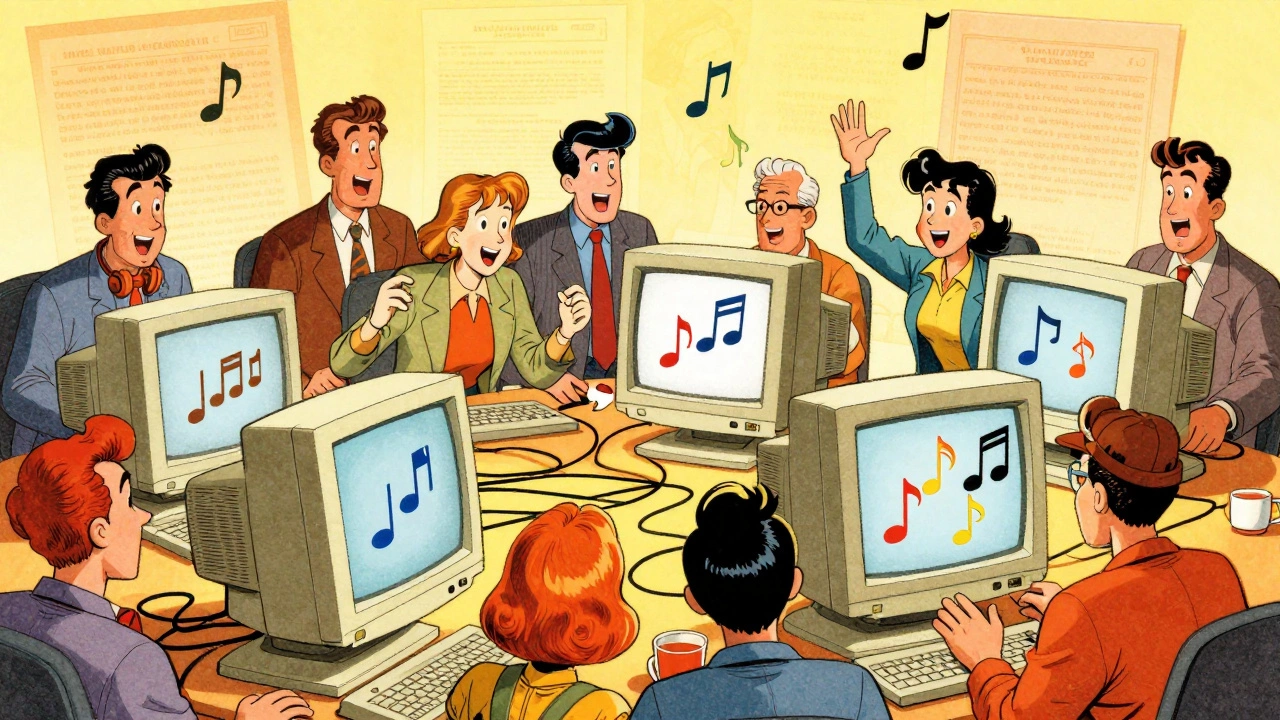

Imagine a world where downloading a song was as easy as sending an email, completely free of charge. That was the reality in late 1999. But by the end of 2001, that golden age of unrestricted file-sharing had vanished. It didn’t disappear because technology failed; it ended because the legal foundation beneath it collapsed. Between 1999 and 2001, three massive legal events-the enforcement of the Digital Millennium Copyright Act (DMCA), the shutdown of Napster, and the antitrust battle against Microsoft-rewrote the rules for the entire digital industry.
These weren't just court cases. They were structural resets. They decided who owned the internet's traffic, how software could be bundled, and whether code itself could be copyrighted. If you use Spotify today, browse Windows, or worry about copyright strikes on YouTube, you are living in the world these three landmarks built.
The New Rulebook: The DMCA Takes Effect
Before 1999, copyright law struggled to keep up with the internet. You could argue that sharing a file was like lending a tape to a friend. Then came the Digital Millennium Copyright Act (DMCA), enacted in 1998 but fully enforced between 1999 and 2001. This law did two things that changed everything. First, it made breaking digital locks illegal. Second, it gave websites a "safe harbor" if they removed infringing content quickly.
The anti-circumvention part is crucial. Before this, if you wrote code to bypass encryption, you might get sued for copyright infringement. Under the DMCA, simply publishing the code became a crime. We saw this play out immediately with DVD encryption. In 2000, a teenager named Jon Lech Johansen released a program called DeCSS that broke the Content Scramble System (CSS) used on DVDs. Studios sued him under the DMCA, not because he stole movies, but because he shared the key to unlock them. The courts agreed with the studios. This established that protecting access controls was more important than open research or consumer rights in many contexts.
For tech companies, the "safe harbor" provision created a new job: compliance officers. Platforms now had to build systems to receive takedown notices and remove content rapidly. If they didn't, they lost their protection and faced massive liability. This shifted the burden from individual pirates to the platforms hosting them.
Napster Falls: The End of Centralized File-Sharing
While the DMCA set the stage, A&M Records, Inc. v. Napster, Inc. pulled the plug. Launched in August 1999, Napster allowed millions of users to share MP3 files directly. At its peak, it had over 80 million registered users. But its architecture was its downfall.
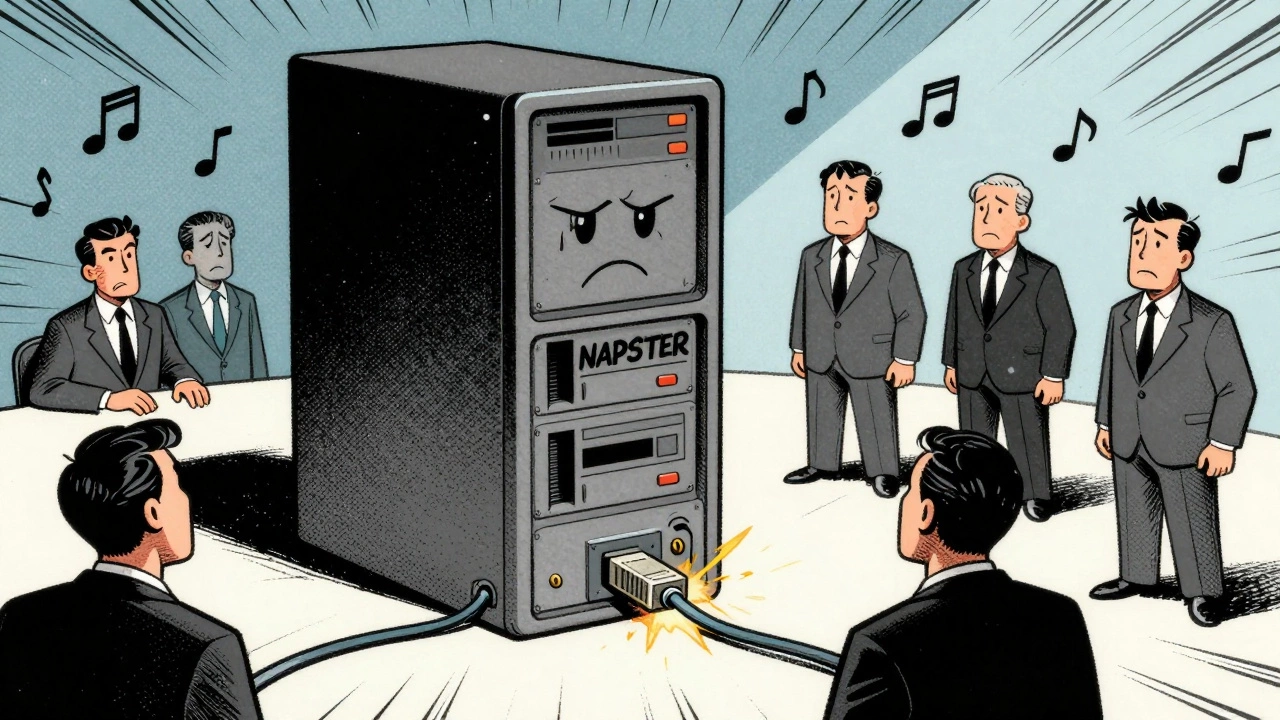
Napster used centralized servers to index every song on every user's computer. When you searched for "Smells Like Teen Spirit," Napster's server told your computer which other user had it. The record labels argued that because Napster knew what was being shared and could control access, they were liable for the infringement. In December 1999, A&M Records and others filed suit. By July 2000, a district court issued a preliminary injunction. In February 2001, the Ninth Circuit Court of Appeals upheld the ruling, declaring Napster liable for contributory and vicarious infringement.
This decision killed the "Betamax defense." In 1984, the Supreme Court ruled that Sony wasn't liable for people recording TV shows because VCRs had substantial non-infringing uses. The Napster court said peer-to-peer music sharing was different. There was no legitimate reason to download a full copyrighted song for free. Consequently, Napster shut down in July 2001. Its owners later paid $26 million to settle claims. The lesson was clear: if your platform indexes infringing content, you are on the hook.
Microsoft vs. The World: Redefining Platform Power
While copyright wars raged in music, a different battle shaped the software world. United States v. Microsoft Corp. began in 1998 when the Department of Justice accused Microsoft of illegally maintaining a monopoly on PC operating systems. The core issue? Bundling Internet Explorer with Windows. Microsoft argued it was improving the product; regulators argued it was crushing competition like Netscape Navigator.
In November 2000, a judge ordered Microsoft to be broken into two companies. Microsoft appealed. On June 28, 2001, the D.C. Circuit Court overturned the breakup order, citing procedural errors. However, the court affirmed that Microsoft had violated antitrust laws. Instead of a breakup, the government and Microsoft reached a consent decree in November 2001. For five years, Microsoft had to share technical information with competitors and allow PC manufacturers to hide the Internet Explorer icon if they wanted.
This case reset expectations for big tech. It showed that even dominant players could be regulated, but also that behavioral remedies (rules on conduct) were preferred over structural ones (breaking up companies). It paved the way for future scrutiny of Apple, Google, and Amazon.
| Legal Event | Primary Focus | Key Outcome | Industry Impact |
|---|---|---|---|
| DMCA Enforcement | Digital Rights & Access Control | Criminalized circumvention tools; created safe harbors | Mandated DRM adoption; shifted liability to platforms |
| Napster Lawsuit | Copyright Liability | Napster shut down; held liable for user actions | Killed centralized P2P; forced licensed music models |
| Microsoft Antitrust Case | Monopoly & Competition | Consent decree imposed behavioral restrictions | Limited bundling power; required API transparency |
The Shift to Decentralization and Licensing
The immediate aftermath of these rulings was a scramble. File-sharers didn't stop; they adapted. Services like Kazaa and BitTorrent emerged, using decentralized networks without central indexing servers. This made it harder to sue them under the Napster precedent. However, the legal pressure remained high. The Recording Industry Association of America (RIAA) began suing individual users, creating a climate of fear around piracy.
Simultaneously, the music industry realized they couldn't win the war against consumers' desire for convenience. They needed a better mousetrap. In 2003, Apple launched the iTunes Store, selling songs for $0.99 each. This model worked because it offered quality, ease of use, and legality. It was only possible because the DMCA protected Apple's FairPlay DRM system, and the Napster ruling ensured no one else could offer a free alternative with the same scale.
The Microsoft case similarly influenced how software was developed. Independent Software Vendors (ISVs) gained some leverage to demand interoperability. While Microsoft remained dominant, the threat of antitrust action kept them somewhat in check regarding how they treated competitors. This dynamic would echo in later debates about app store fees and browser compatibility.
Why These Cases Still Matter Today
We often think of streaming services like Spotify or Netflix as inevitable. They weren't. They were the direct result of the legal boundaries drawn in 1999-2001. Without the DMCA's safe harbor, YouTube would have been impossible to launch in 2005. Without the Napster ruling, there would be no incentive for artists and labels to license their catalogs to streaming platforms. Without the Microsoft precedent, we might never see serious antitrust challenges to Big Tech's data monopolies.
These three landmarks created the "operating system" for the modern digital economy. They balanced the rights of creators with the innovation needs of technologists, albeit imperfectly. Critics argue the DMCA stifled security research and fair use. Others say the Microsoft settlement was too weak. Yet, despite the flaws, this period defined the structure of our online lives. Understanding it helps us navigate current debates about AI training data, social media moderation, and platform regulation. The rules written then are still the ones we play by today.
What exactly did the DMCA do to change copyright law?
The DMCA introduced two major changes. First, it made it illegal to create or distribute tools that bypass digital copyright protections (like encryption). Second, it provided a "safe harbor" for online service providers, meaning they wouldn't be liable for user-uploaded infringing content as long as they promptly removed it upon notice. This shifted the focus from punishing individual users to regulating platforms.
Why was Napster shut down while BitTorrent survived?
Napster used centralized servers to index all files, making it easy for courts to hold the company liable for knowing about and facilitating infringement. BitTorrent and later services used decentralized protocols without central indexing, making it much harder to pinpoint a single entity responsible for the infringement. This architectural shift was a direct response to the Napster legal precedent.
Did the Microsoft antitrust case break up the company?
No. Initially, a judge ordered Microsoft to be split into two companies. However, this was overturned on appeal in 2001. Instead, Microsoft signed a consent decree that imposed behavioral restrictions, such as sharing technical interfaces with competitors and limiting restrictive contracts. The company remained intact but faced stricter regulatory oversight for several years.
How did these cases lead to the rise of Spotify and iTunes?
The Napster ruling proved that free, unauthorized distribution was legally unsustainable. This forced the music industry to seek legal alternatives. The DMCA's safe harbor allowed platforms like iTunes and later Spotify to operate without fearing infinite liability for user uploads, provided they managed licenses and takedowns correctly. These services offered convenient, legal access, meeting consumer demand within the new legal framework.
What is the "DeCSS" case and why is it important?
DeCSS was a program that decrypted DVDs, bypassing the Content Scramble System (CSS). When the code was published online, studios sued under the DMCA's anti-circumvention provisions. The courts ruled against the publishers, establishing that distributing decryption tools was illegal even if no actual copyright infringement occurred. This set a strong precedent for protecting digital locks over open access.