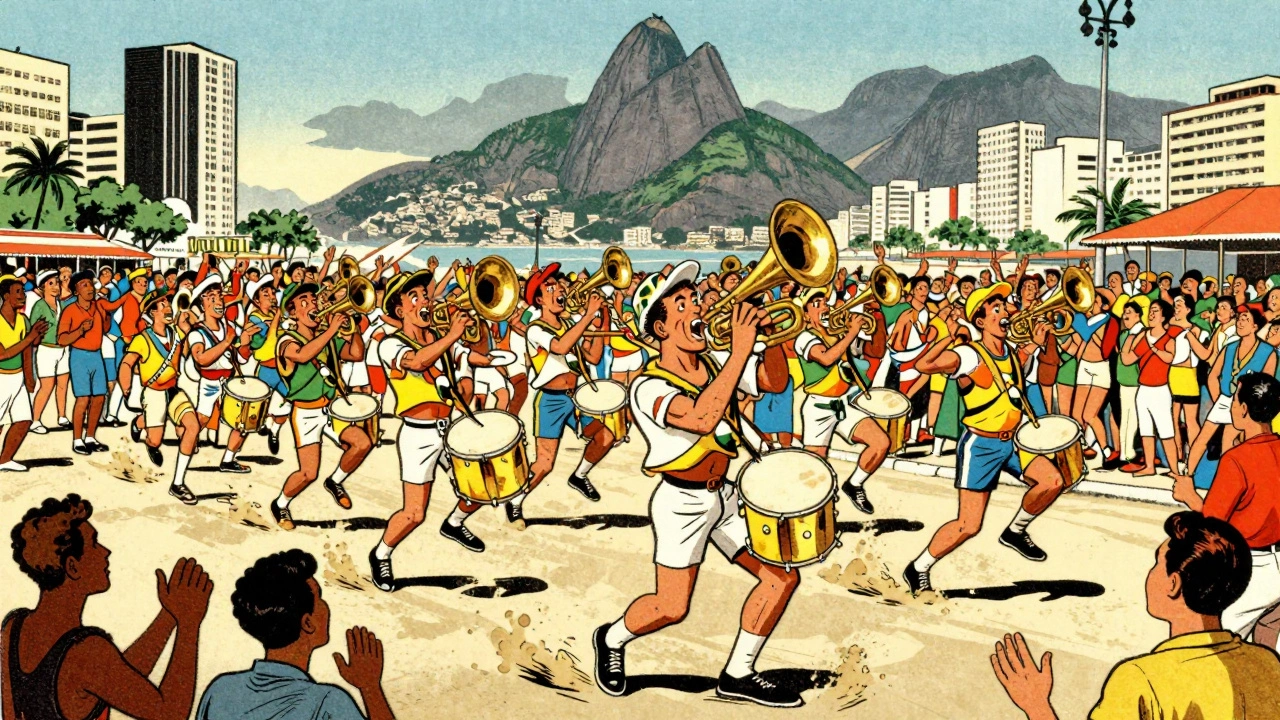

Imagine a rhythm that started in the dusty streets of Rio de Janeiro, played by working-class drummers during carnival, and somehow ended up playing softly in high-end jazz clubs in New York and Paris. That is exactly what happened with Bossa Nova, which is a sophisticated fusion of samba rhythms and American jazz harmonies that emerged in the late 1950s. It wasn’t just a new sound; it was a cultural earthquake. This article breaks down how this transformation happened, who made it possible, and why it still matters today.
The Stagnation of Traditional Samba
To understand why Samba is a traditional Brazilian music genre rooted in African rhythms and European melodies, characterized by complex polyrhythms and percussion-heavy instrumentation needed a change, you have to look at where it stood in the 1950s. For decades, samba had been the heartbeat of Brazil’s street carnivals. It was loud, energetic, and deeply tied to the working class. But by the mid-20th century, many musicians felt stuck. The style had become repetitive. The massive samba school bands, with their heavy reliance on drums and brass, were hard to adapt for smaller venues or radio play. There was a sense of stagnation.
This creative block created a vacuum. Musicians were hungry for something fresh. At the same time, American jazz was becoming increasingly popular in Brazil. Jazz offered complex chord structures and improvisational freedom that traditional samba lacked. The stage was set for a collision of cultures. Middle-class Brazilians, who had previously kept their distance from the rougher edges of street samba, began looking for a way to express their national identity without abandoning modernity. They wanted something distinctly Brazilian but also cosmopolitan.
The Architects of a New Sound
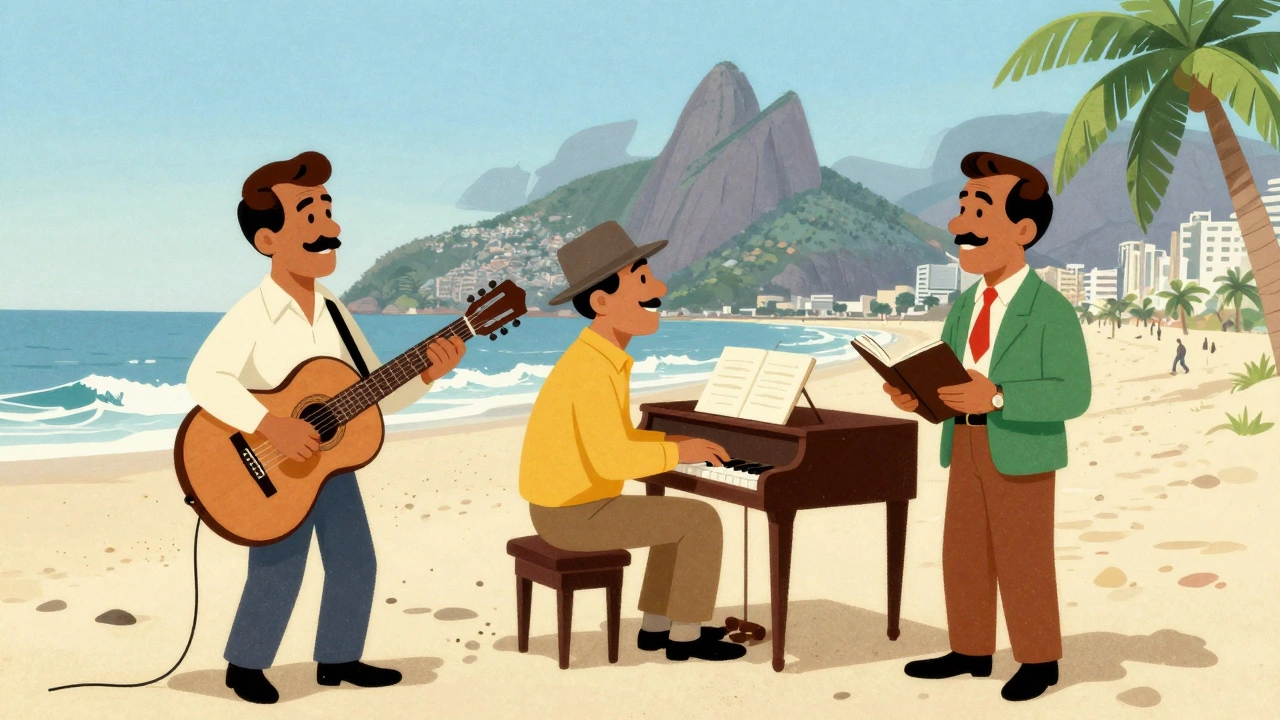
The birth of bossa nova didn’t happen by accident. It was crafted by three key figures who met in the vibrant neighborhood of Copacabana in Rio de Janeiro. These men are often called the architects of the movement:
- João Gilberto is a guitarist and singer known for his innovative fingerstyle guitar technique and soft, intimate vocal delivery: He took the complex rhythms of samba and simplified them. Instead of playing every beat, he left spaces. This "bossa beat" was subtle, syncopated, and incredibly cool. His approach turned the guitar into a rhythmic instrument that could mimic the feel of a full drum kit.
- Antônio Carlos Jobim (also known as Tom Jobim) is a classically trained pianist and composer who introduced sophisticated jazz harmonies to Brazilian music: Jobim brought the theory. He understood chord progressions, modal interchange, and harmonic complexity. He wrote the melodies that would define the genre, blending the melancholy of Portuguese fado with the brightness of jazz.
- Vinicius de Moraes is a poet and playwright whose lyrics provided the literary depth and romantic imagery of bossa nova: While Jobim composed the music and Gilberto defined the rhythm, Moraes wrote the words. His lyrics were poetic, often describing beaches, love, and the simple beauty of life in Rio. They gave the music its soul and accessibility.
Their collaboration was not immediate. It grew out of shared jam sessions and mutual respect. When they finally combined forces, the result was explosive. The synergy between Gilberto’s understated performance style, Jobim’s rich harmonies, and Moraes’s elegant lyrics created a complete artistic package. It was sophisticated enough for critics but catchy enough for the masses.
The Breakthrough Moment: Chega de Saudade
If there is one date that marks the official start of bossa nova, it is 1959. That year, João Gilberto released his debut album, Chega de Saudade. This record was not just a collection of songs; it was a manifesto. On track after track, Gilberto demonstrated his unique guitar technique. He used a nylon-string classical guitar, plucking strings with his thumb and fingers in a way that created a percussive yet melodic texture. His voice was whisper-quiet, almost conversational, contrasting sharply with the belted vocals common in earlier samba recordings.
The title track itself, written by Jobim and Moraes, became an instant hit. Its lyrics spoke of longing and nostalgia-themes that resonated deeply with listeners. The song’s structure was simple, but its execution was revolutionary. It proved that samba could be intimate. It showed that Brazilian music could compete with the best jazz coming out of the United States. Within months, other musicians in Rio began copying Gilberto’s style. The "new wave" had arrived.
From Local Phenomenon to Global Sensation
Bossa nova did not stay in Brazil for long. By the early 1960s, it had crossed the Atlantic. Several factors contributed to its international success. First, the timing was perfect. In 1964, the world was captivated by the British Invasion of rock and roll. Bands like The Beatles and The Rolling Stones were changing pop music. But while rock was loud and aggressive, bossa nova offered a different kind of rebellion-one based on sophistication and subtlety.
American jazz musicians were already familiar with Brazilian rhythms. Artists like Stan Getz and Charlie Byrd had recorded albums featuring Brazilian music in the late 1950s. Their 1962 album Jazz Samba was a commercial success in the US, paving the way for broader acceptance. Then came the definitive moment: the 1963 album Getz/Gilberto, featuring João Gilberto, Antonio Carlos Jobim, and Stan Getz. The single "The Girl from Ipanema" topped charts worldwide. Suddenly, everyone knew about bossa nova.
| Feature | Samba | Bossa Nova |
|---|---|---|
| Rhythm | Complex, driving, polyrhythmic | Syncopated, relaxed, simplified |
| Instruments | Percussion (drums, tambourines), brass | Guitar, piano, light percussion, vocals |
| Vocal Style | Loud, energetic, collective | Soft, intimate, individual |
| Social Context | Working class, street carnivals | Middle class, coffee houses, nightclubs |
| Harmony | Simple, repetitive chords | Complex, jazz-influenced chords |
The global appeal of bossa nova lay in its versatility. It fit perfectly into cocktail lounges, movie soundtracks, and jazz festivals. It was seen as exotic yet accessible. Unlike some forms of world music that required deep cultural knowledge to appreciate, bossa nova was immediately enjoyable. Its lyrics often described universal themes like love, nature, and happiness. This helped it transcend language barriers.
Evolution and Innovation in the Modern Era
Bossa nova did not disappear after the 1960s. Instead, it evolved. As political tensions rose in Brazil during the military dictatorship of the 1960s and 70s, the genre split. Some artists continued the classic style, while others developed Tropicália is a musical and artistic movement that blended bossa nova with rock, psychedelia, and social commentary. Tropicália was more aggressive and politically charged, reflecting the unrest of the times. However, the core elements of bossa nova remained influential.
In the 21st century, bossa nova has undergone another reinvention. Younger artists have taken the classic rhythms and fused them with electronic music, hip-hop, and indie pop. One notable example is Bebel Gilberto is the daughter of João Gilberto, known for blending traditional bossa nova with electronic beats and contemporary production. Her 2000 album Tanto Tempo was a breakthrough. She sampled old records, added synthesizers, and created a sound that felt both nostalgic and futuristic. This approach introduced bossa nova to a new generation of club-goers and digital music fans.
Today, you can hear bossa nova influences in everything from Netflix series soundtracks to yoga playlists. Its adaptability is its greatest strength. The basic groove-the "bossa beat"-is easy to recognize and even easier to remix. Producers use it to add warmth and sophistication to tracks that might otherwise feel cold or mechanical. This ongoing innovation ensures that bossa nova remains relevant, not just as a historical artifact, but as a living, breathing part of global music culture.
Why the Evolution Matters
The story of samba evolving into bossa nova is more than just a music lesson. It is a case study in how cultural traditions can adapt without losing their identity. When João Gilberto and Antônio Carlos Jobim changed samba, they didn’t erase it. They distilled it. They removed the noise and focused on the essence. This allowed the music to travel further and connect with more people.
For musicians, the legacy of bossa nova teaches the value of experimentation. It shows that combining seemingly disparate elements-like African-derived rhythms and European-style harmony-can create something entirely new. For listeners, it offers a reminder that music is not static. It grows, changes, and reflects the society around it. Whether you are listening to a 1959 recording or a 2026 electronic remix, the heart of bossa nova beats on: relaxed, sophisticated, and endlessly innovative.
What is the main difference between samba and bossa nova?
The main difference lies in rhythm and instrumentation. Samba is fast, loud, and driven by percussion instruments like drums and tambourines. It is typically performed by large groups. Bossa nova is slower, softer, and centered around the acoustic guitar and piano. It features a syncopated, relaxed rhythm and is often performed by small ensembles or solo artists.
Who invented bossa nova?
Bossa nova was not invented by one person but developed through the collaboration of several key figures. João Gilberto is credited with creating the distinctive guitar style and vocal approach. Antônio Carlos Jobim composed many of the most famous songs and introduced jazz harmonies. Vinicius de Moraes wrote the iconic lyrics. Together, they formed the core of the movement in the late 1950s.
When did bossa nova become popular internationally?
Bossa nova began gaining international attention in the early 1960s, but it truly exploded in 1963-1964. The release of the album Getz/Gilberto and the single "The Girl from Ipanema" brought the genre to mainstream audiences in the United States and Europe. This period coincided with the rise of the British Invasion in rock music, making bossa nova a major parallel trend in global pop culture.
Is bossa nova still popular today?
Yes, bossa nova remains popular, though its form has evolved. While classic recordings by Jobim and Gilberto are still widely listened to, modern artists continue to innovate. Artists like Bebel Gilberto have fused bossa nova with electronic music, introducing it to younger generations. Its rhythms are frequently used in film scores, advertising, and contemporary pop productions due to their versatile and soothing qualities.
How did American jazz influence bossa nova?
American jazz influenced bossa nova primarily through its harmonic structures and improvisational techniques. Composers like Antônio Carlos Jobim incorporated extended chords, modal progressions, and complex voicings typical of jazz into Brazilian melodies. This added a layer of sophistication to the music, allowing it to appeal to jazz audiences while retaining its distinct Brazilian rhythmic identity.


