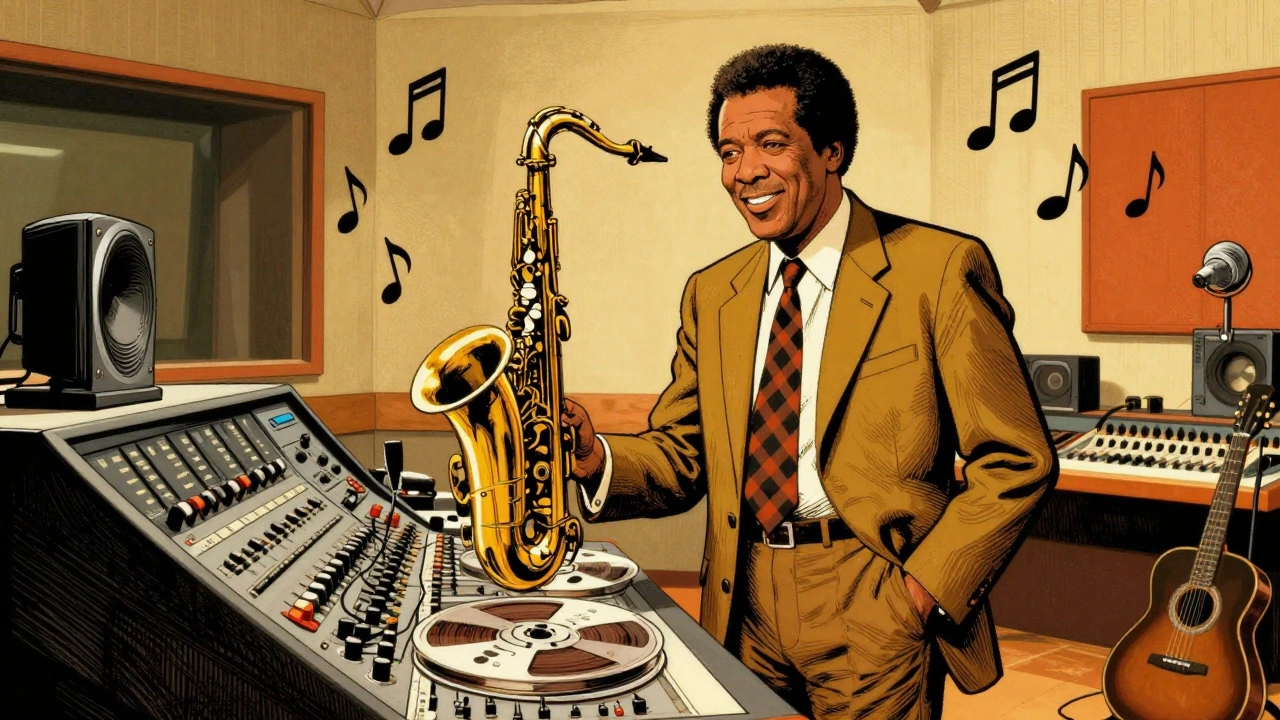

Most producers stick to one lane. They do rock, or they do jazz, or maybe they specialize in hip-hop beats. Quincy Jones is an American record producer, musician, and composer who became the most powerful producer in the industry by mastering multiple genres simultaneously during the 1970s. He didn't just cross lanes; he paved new roads between them. In the decade from 1970 to 1979, Jones took big-band jazz arranging techniques and applied them to funk, soul, pop, and film scores. The result wasn't a messy mix. It was a polished, cohesive sound that defined an era.
You don't need to be a musicologist to hear the difference when you listen to his work from this period. Whether it's the heavy groove of Body Heat or the sparkling pop of Michael Jackson’s Off the Wall, there is a specific clarity to the sound. This article breaks down exactly how Jones achieved that mastery, looking at his studio methods, his key collaborations, and the technical choices that made his records timeless.
The Solo Albums as Laboratories
Before Jones produced global superstars, he used his own solo albums on A&M Records to test new ideas. Think of these records as his personal laboratory. Between 1969 and 1974, he released Gula Matari, Smackwater Jack, You've Got It Bad Girl, and Body Heat. These weren't just collections of songs; they were experiments in blending high-brow orchestration with street-level rhythm and blues.
Take Smackwater Jack (1971). Jones included long versions of TV themes like "Ironside" and "Sanford & Son." Why? Because those tunes were culturally relevant at their peak. He took those familiar melodies and reharmonized them with complex jazz-funk voicings. He also covered Stevie Wonder’s "Superstition," stripping it back and rebuilding it with extended instrumental sections. This showed his core philosophy: select material that resonates now, then elevate it with sophisticated arrangement.
By 1974, with the release of Body Heat, Jones had refined this approach into a distinct style. The album runs for 38 minutes and 31 seconds of pure groove. It features slow-jam tracks like the title song alongside socially conscious ballads like "Everything Must Change." Critics noted the "seriously heavy" funk elements, driven by intricate horn arrangements and deep bass lines. Fans still rate this album highly today, with many calling it a masterpiece of sophisticated urban soul. It proved that jazz instrumentation could carry a heavy R&B punch without losing its elegance.
The Studio Workflow: Acoustics Over Gimmicks
What made Jones’s productions sound so good? It wasn't just talent; it was logistics. In the 1970s, technology was advancing, but Jones relied heavily on analog tape and live ensemble tracking. He didn't chase every new synthesizer trend blindly. Instead, he used technology to enhance the human performance.
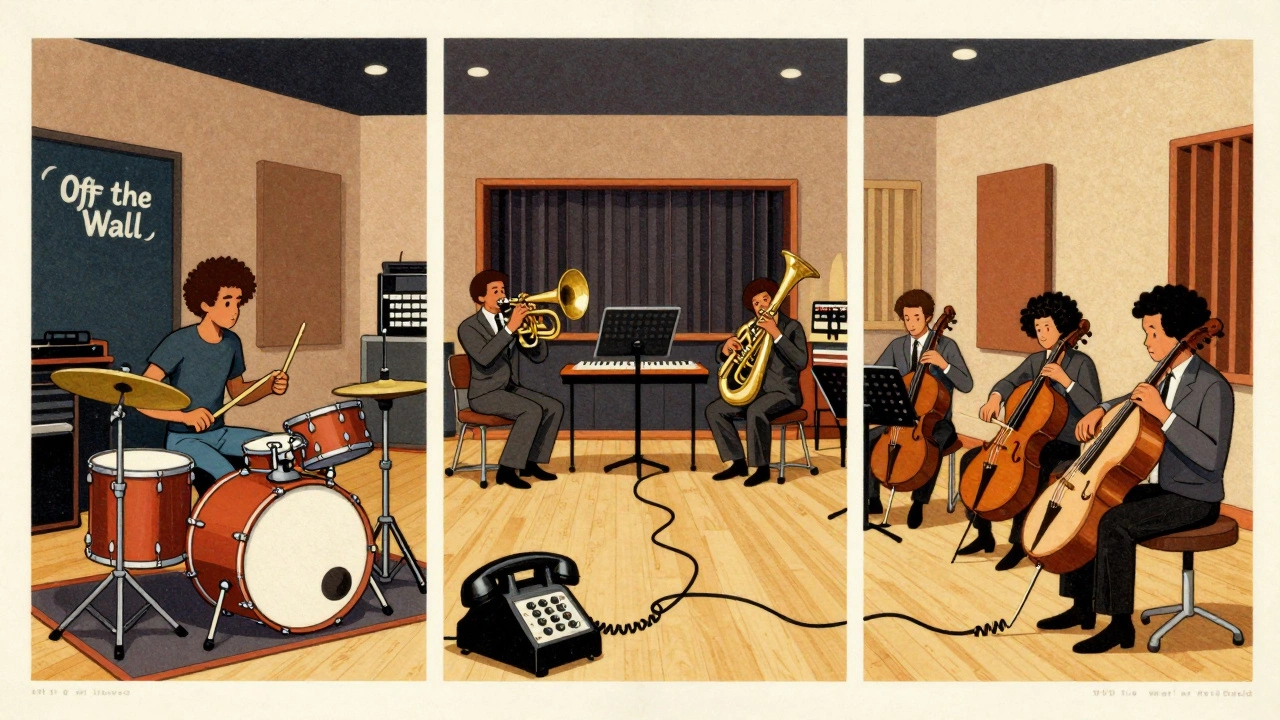
A key part of his method was using multiple studios for different instrument groups. When recording Michael Jackson’s Off the Wall, sessions started on December 4, 1978. Jones split the work across three Los Angeles locations:
- Allen Zentz Recording: Used for rhythm tracks and vocals. This room had a specific acoustic quality that suited the tight, punchy drum sounds Jones wanted.
- Westlake Recording Studios: Dedicated to horn sections. The space allowed the brass to breathe and project clearly.
- Cherokee Studios: Reserved for string overdubs. Strings require a smoother, more reflective environment than horns or drums.
Mix engineer Bruce Swedien then handled the audio mixing at Westlake. By isolating instruments in rooms designed for their sonic characteristics, Jones avoided the muddy sound that often plagues multi-track recordings. He layered these clean tracks carefully, using stereo panning to place each element precisely in the soundstage. This workflow ensured that even when the arrangement was dense with thirty musicians, every note remained audible.
Crafting Hits: The Brothers Johnson and The Wiz
Jones didn't keep these techniques to himself. He applied them to other artists, acting as both mentor and producer. His work with The Brothers Johnson is a prime example. George and Louis Johnson were talented musicians, but Jones helped shape their sound into something radio-ready yet musically rich.
In 1977, Jones produced their album Right On Time. The standout track was "Strawberry Letter 23," originally written by Shuggie Otis in 1971. Jones arranged the cover to highlight the band’s strengths. He locked their bass and guitar work into tight syncopated grooves, supported by lush horn charts. The single went gold, and the album went platinum. Some critics argued Jones smoothed out the raw edges of the band’s sound, making it "safe." But commercially, it was undeniable proof of his ability to craft hits that appealed to wide audiences while maintaining musical complexity.
Simultaneously, Jones expanded into visual media. In 1977, he composed the score for the ABC miniseries Roots, winning a Primetime Emmy Award. Then came The Wiz in 1978. This film adaptation of the Broadway musical featured a star-studded cast including Diana Ross and Michael Jackson. Jones served as conductor, orchestrator, and producer. The soundtrack blended Broadway-style overtures with gospel-inflected chorals and funk dance sequences. Managing large choral and orchestral forces while keeping rhythmic clarity required immense skill. More importantly, this project brought Jones and Michael Jackson together, setting the stage for their historic collaboration.

Off the Wall: The Peak of 1970s Production
If any single record defines Jones’s 1970s mastery, it is Off the Wall. Released on August 10, 1979, this album sold about 20 million copies worldwide. It generated four U.S. Top 10 singles, including "Don't Stop 'Til You Get Enough" and "Rock with You." But beyond the sales, the production technique was revolutionary.
Jones liberated Jackson from the constraints of his Motown past. He surrounded him with top-tier session musicians and drew from a wide palette of influences-jazz, funk, disco, and pop. The goal was to frame Jackson as an adult artist. To achieve this, Jones emphasized clean arrangements and live instrumentation over production gimmicks.
| Track | Primary Genre | Production Highlight |
|---|---|---|
| Don't Stop 'Til You Get Enough | Disco/Funk | Talk box effects and driving bassline |
| Rock with You | Pop/Soul | Smooth synth pads and gentle percussion |
| Off the Wall | Funk | Complex horn stabs and layered vocals |
| She's Out of My Life | Ballad | Minimalist arrangement focusing on vocal emotion |
The recording process took six months, from December 1978 to June 1979. Jones and songwriter Rod Temperton auditioned hundreds of songs. They spent time refining every detail. The result was a layered yet transparent soundstage. Dynamic horn stabs punctuated the verses, string swells added emotional depth to the choruses, and percussion was placed precisely in the stereo field. This meticulous attention to detail created an album that still sounds fresh decades later. It won a Grammy Award in 1980 and was inducted into the Grammy Hall of Fame in 2007.
The Legacy of Big-Band Arranging
Throughout the 1970s, Jones consistently applied principles from his early days playing trumpet in Count Basie’s orchestra. Music scholars note that he always had his "Basie boots on." What does that mean? It means he used sectional call-and-response, riff-based horn lines, and dynamic brass swells in everything he touched. Whether it was a jazz record, a funk track, or a pop ballad, this arranging through-line gave his work a recognizable signature.
This approach bridged the gap between complex jazz harmony and accessible pop rhythms. For modern producers, studying Jones’s 1970s catalog offers valuable lessons. It shows that genre boundaries are flexible. It demonstrates the importance of acoustic space and live performance. And it proves that polish doesn't have to mean soulless. Jones’s work remains a durable foundation for understanding how a single producer can navigate and integrate multiple genres with authority and grace.
Why is Body Heat considered a pivotal album in Quincy Jones's career?
Released in 1974, Body Heat represents a technical and stylistic peak in Jones's 1970s production. It combines soul, pop, and jazz-funk under his own name. The album showcases his studio methodology, featuring heavy Moog synthesizer bass lines doubled with electric bass for thickness, intricate horn arrangements, and meticulous stereo panning. It demonstrated that big-band orchestration could drive contemporary funk and R&B grooves effectively.
How did Quincy Jones use multiple studios for Off the Wall?
Jones utilized three different Los Angeles studios to optimize acoustics for specific instruments. Rhythm tracks and vocals were recorded at Allen Zentz Recording. Horn sections were tracked at Westlake Recording Studios to capture their projection. String overdubs took place at Cherokee Studios for a smoother sound. Finally, mix engineer Bruce Swedien combined these elements at Westlake. This workflow prevented frequency masking and ensured clarity in the dense arrangements.
What role did The Wiz play in connecting Quincy Jones and Michael Jackson?
The Wiz, released in 1978, was the first major collaboration between Jones and Jackson. Jones served as producer, conductor, and orchestrator for the soundtrack, which featured Jackson singing "Ease on Down the Road." Working closely with Jackson on this project allowed Jones to see his potential as an adult artist. After The Wiz, Jackson asked Jones to recommend producers for his next solo album, leading Jones to produce Off the Wall himself.
Did critics criticize Quincy Jones's production style in the 1970s?
Yes, some critics felt Jones's meticulous production smoothed away the raw edges of funk music. For example, reviews of his work with The Brothers Johnson noted that while the arrangements were brilliant and commercially successful, they sometimes made the sound feel "safe and sappy" compared to grittier funk contemporaries. However, this polish is also credited with making complex music accessible to mainstream audiences.
What is the "Basie influence" in Quincy Jones's arranging?
Jones played trumpet in Count Basie's orchestra early in his career. The "Basie influence" refers to his consistent use of big-band arranging techniques in all genres. This includes sectional call-and-response patterns, riff-based horn lines, and dynamic brass swells. Even in pop and disco tracks, Jones structured the horn parts to provide rhythmic punctuation and harmonic richness derived from jazz tradition.


