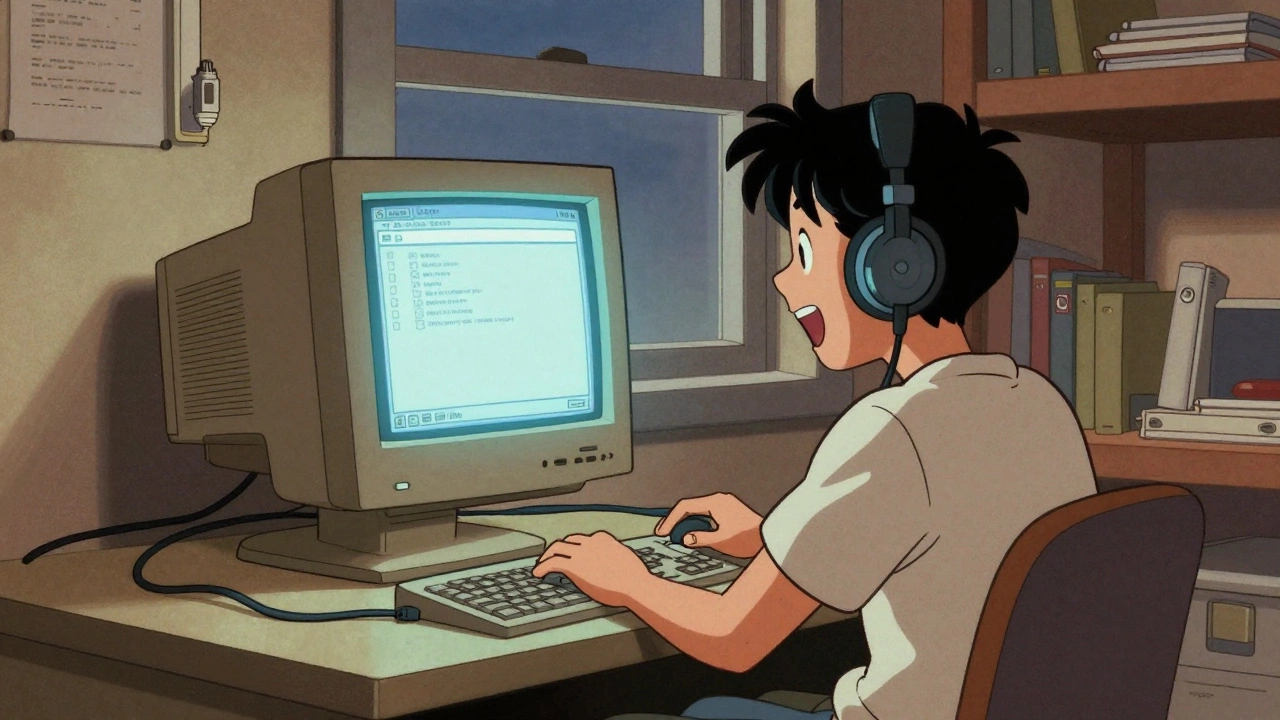

Imagine it is October 1999. You are sitting in a dorm room with a beige desktop computer connected to the university’s wired Ethernet. Outside, the world still buys music on physical CDs that cost $15 to $18 each. Inside your room, however, you have access to millions of songs for free. This was not a futuristic dream; it was the daily reality for millions of students across the United States. The catalyst was Napster, a peer-to-peer file-sharing application launched by Shawn Fanning in June 1999. This single piece of software transformed college campuses into the epicenter of a cultural and legal earthquake that reshaped the music industry forever.
The story of 1999 file-sharing is not just about technology; it is about the perfect storm of infrastructure, youth culture, and economic frustration. College networks provided the highway, MP3 files provided the fuel, and students provided the drivers. By the end of that year, this convergence had created a new normal where digital piracy was not an act of rebellion but a standard utility, much like email or web browsing. Understanding this era requires looking beyond the headlines of lawsuits and examining how ordinary students lived with this technology.
The Infrastructure: Why Dorms Were the Perfect Launchpad
To understand why file-sharing exploded on campuses, you have to look at the hardware. In 1999, most homes relied on dial-up modems that capped speeds at 56 kilobits per second (kbps). Downloading a single song could take minutes, and you couldn’t use the phone line while downloading. Colleges, however, were different. Universities had invested heavily in high-speed network infrastructure to support research and education. Dorm rooms often featured direct connections to 10 Mbps or even 100 Mbps Ethernet switches.
This speed difference was massive. A typical MP3 file, compressed using the MP3 format (MPEG-1 Audio Layer III compression standard) at 128 kbps, weighed between 3 and 5 megabytes. On a home dial-up connection, that download might take three to four minutes. On a campus 10 Mbps link, it took less than five seconds. On a 100 Mbps link, it was instantaneous. Students could accumulate entire discographies of hundreds of songs in a matter of hours. This technical advantage turned university networks into massive, informal distribution hubs.
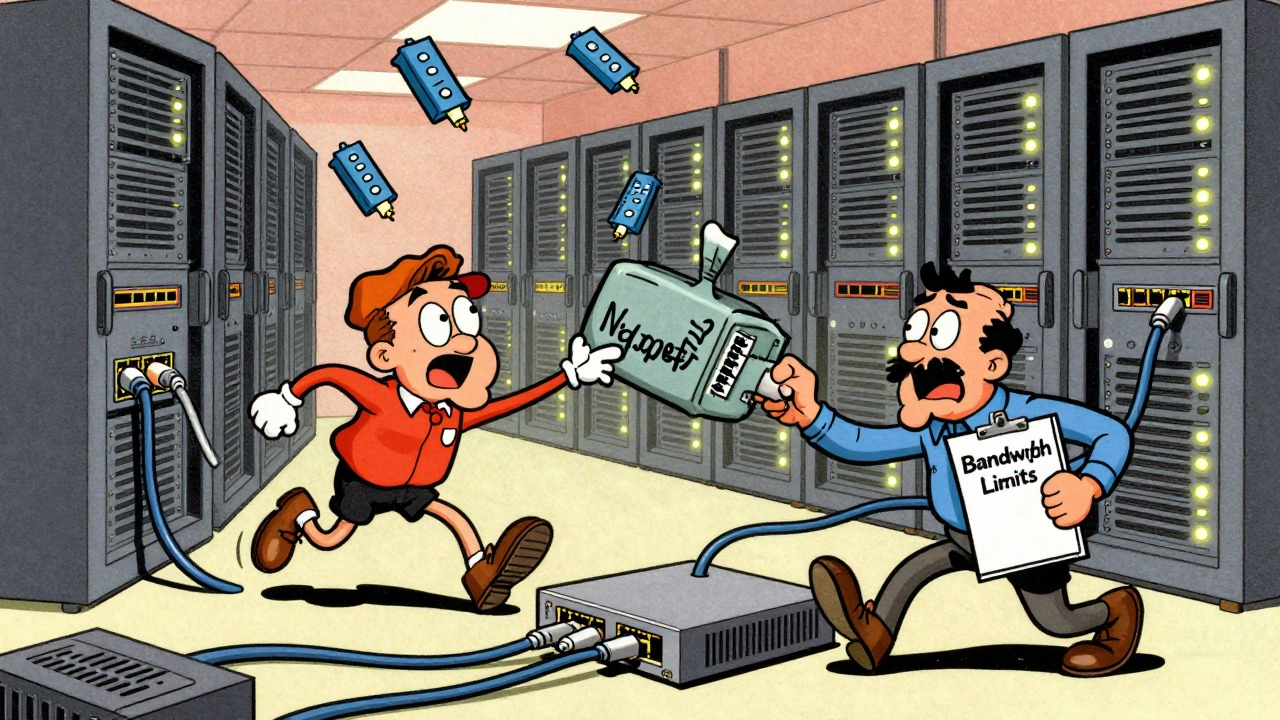
The impact on network traffic was staggering. Contemporary analyses and later retrospectives note that at some institutions, up to 61% of external network traffic from dormitories consisted of MP3 transfers during peak hours. The university’s expensive bandwidth, intended for academic research, was being used primarily to share Metallica albums and Radiohead demos. This wasn’t a glitch; it was a feature of the new student lifestyle.
The Culture: From Record Stores to Search Bars
Before 1999, discovering new music meant visiting a record store, listening to radio, or borrowing tapes from friends. It was a slow, curated process. Napster changed the dynamic entirely. The service combined a centralized index server with peer-to-peer data transfer. When a student searched for "Smells Like Teen Spirit," the central server listed every user who had that file available. The actual download happened directly between two computers. This hybrid model made searching easy and distribution decentralized.
On campuses, this fostered a distinctive social culture. Dorm rooms became mini-libraries. Students would rip their personal CD collections using freely available software and upload them to the network, hoping others would share back. It was a system of reciprocal generosity. If you wanted a rare B-side or a live bootleg, you didn’t need to hunt down a collector; you just needed to type keywords into a search bar. The marginal cost of acquiring a song dropped from roughly $1 (if buying a CD) to effectively zero, aside from time and hard drive space.
This shift altered how students valued music. Albums were no longer singular purchases but part of a vast, accessible ocean. Playlists replaced album sequences. Parties were fueled by custom mixes downloaded overnight. The barrier to entry for musical exploration vanished. For many students, this felt like liberation-a democratization of culture that broke the grip of major record labels.
The Legal Backlash: RIAA, Artists, and Universities
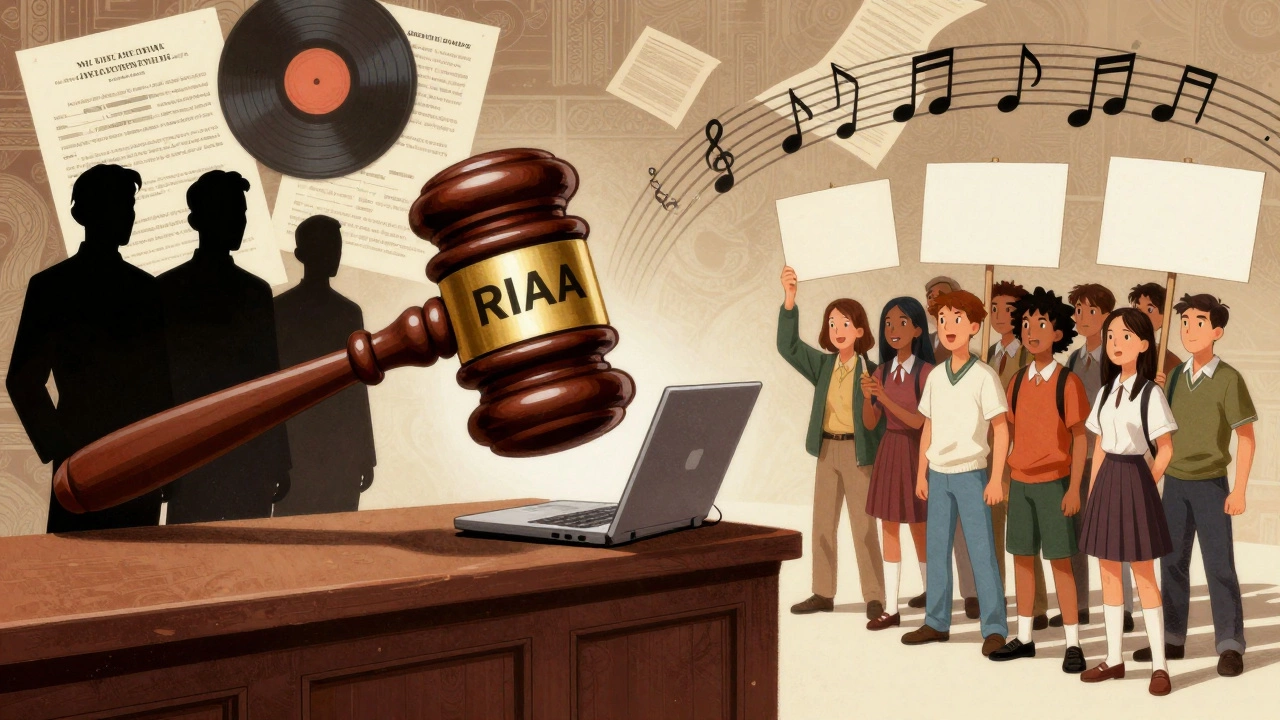
The recording industry did not view this as liberation; they saw it as theft. The Recording Industry Association of America (RIAA) (trade organization representing major record companies in the US) initiated a landmark lawsuit against Napster in December 1999. The complaint argued that Napster facilitated widespread copyright infringement by enabling users to share copyrighted sound recordings without authorization. This case, RIAA v. Napster, became a defining moment in digital copyright law, forcing courts to decide if a company that merely indexed files could be held liable for its users’ actions.
The conflict quickly moved from abstract legal theory to specific artists. In early 2000, heavy metal band Metallica (American heavy metal band formed in 1981) and hip-hop artist Dr. Dre (American rapper and record producer) filed separate lawsuits. They targeted not only Napster but also several universities, including Indiana University, Yale, and USC. These institutions were accused of allowing their networks to be used for unauthorized sharing. For students, this was shocking. Their universities, traditionally seen as bastions of free speech and academic freedom, were suddenly named as co-defendants in piracy lawsuits.
This put university administrations in an impossible position. They faced pressure from the RIAA to stop the traffic, but they also faced pushback from students who viewed file-sharing as a right. The debate raged in student newspapers and dorm conversations: Was downloading a song theft? Was it fair use? Or was it a new form of cultural exchange? There were no easy answers, and the tension defined the era.
Campus Responses: Throttling, Bans, and Policy Shifts
Faced with legal threats and clogged networks, universities responded with a mix of technical and policy measures. IT departments began monitoring traffic more closely. Many institutions implemented bandwidth throttling, limiting each student’s daily or weekly data usage to quotas of several hundred megabytes. Others blocked the specific TCP ports used by Napster clients, effectively cutting off access to the service.
Policies evolved rapidly. Acceptable Use Policies (AUPs), which previously focused on preventing illegal hacking or harassment, were updated to explicitly forbid the sharing of copyrighted material. Universities integrated procedures from the Digital Millennium Copyright Act (DMCA) (US copyright law enacted in 1998) into their network governance. Students received warnings that continued file-sharing could result in disciplinary action or loss of network access. Some schools even launched educational programs to teach students about copyright law, attempting to bridge the gap between legal requirements and student behavior.
These measures had an immediate effect. File-sharing volumes on campus networks dropped significantly after the bans were enforced. However, they also pushed students toward more decentralized, harder-to-block technologies like Gnutella and Kazaa. The cat-and-mouse game between IT administrators and tech-savvy students became a regular feature of campus life.
Napster vs. The Alternatives: Why It Won (Temporarily)
Napster did not exist in a vacuum. In July 1999, MP3.com (early online music service that offered streaming and downloads) went public, with its stock trading at triple its initial offering price. Investors believed that legal, licensed digital music services would be the future. MP3.com hosted music on centralized servers and pursued licensing deals with rights holders. It was clean, legal, and structured.
Yet, students overwhelmingly chose Napster. Why? Because MP3.com was limited. Its catalog was restricted by licensing agreements, and it often required payment or registration hurdles. Napster offered frictionless access to nearly any track via direct user uploads. The library size dwarfed contemporaneous legal services. For a student wanting a comprehensive catalog, Napster was simply superior. This highlighted a critical lesson for the music industry: convenience and selection trumped legality when the alternative was expensive and cumbersome.
| Feature | Napster | MP3.com / Legal Services | Physical CDs |
|---|---|---|---|
| Cost to User | Free | Low/Moderate (subscription or per-track) | $12-$18 per album |
| Library Size | Vast (user-generated) | Limited (licensed catalog) | Physical availability varies |
| Speed of Access | Instant (on campus networks) | Slow (dial-up speeds common) | Requires travel to store |
| Legal Status | Illegal (copyright infringement) | Legal | Legal |
| User Experience | Frictionless search and download | Restricted by licenses | Tangible ownership |
The Legacy: How 1999 Shaped Today’s Streaming World
Napster was shut down in 2001 following court rulings that forced it to implement content filtering and cease operations. But the genie could not be put back in the bottle. The habits formed on college campuses in 1999 persisted. Students expected on-demand access to vast catalogs. They refused to pay full price for individual tracks if they could get them for free elsewhere.
This era forced the music industry to adapt. The eventual rise of Spotify, Apple Music, and other streaming platforms can be traced directly back to the lessons learned from the Napster wars. These services offer the convenience and selection that Napster pioneered, but within a legal framework that compensates artists and labels. The 1999 campus file-sharing culture proved that technology could disrupt entrenched industries, but it also showed that sustainable models require balancing user experience with creator compensation.
For those who lived through it, 1999 remains a nostalgic yet complex period. It was a time of technological wonder, legal confusion, and cultural shift. The dorm rooms of 1999 were not just places of study; they were the control centers of a revolution that changed how we consume music today.
Why did Napster become so popular on college campuses specifically?
Napster thrived on college campuses because universities provided high-speed wired internet connections (10-100 Mbps) that were far faster than the dial-up modems available in most homes. This allowed students to download large MP3 files in seconds rather than minutes. Additionally, students had significant discretionary time and a culture of sharing resources, making them ideal early adopters.
What was the legal outcome of the RIAA's lawsuit against Napster?
The courts ruled that Napster was liable for contributory and vicarious copyright infringement. This led to preliminary injunctions that forced Napster to block the sharing of certain copyrighted files. Ultimately, these legal pressures contributed to the shutdown of the original Napster service in 2001.
Did universities ban Napster?
Yes, many universities banned Napster or severely restricted its use. Facing lawsuits from artists like Metallica and Dr. Dre, and dealing with excessive bandwidth usage, IT departments implemented port blocking, bandwidth throttling, and updated acceptable use policies to prohibit copyright infringement.
How did Napster change the music industry?
Napster demonstrated that consumers preferred convenient, on-demand access to music over physical purchases. It forced the industry to move away from relying solely on CD sales and eventually led to the development of legal streaming services like Spotify, which offer similar convenience within a licensed framework.
Who founded Napster?
Napster was founded by Shawn Fanning, an 18-year-old student at Northeastern University, along with Sean Parker. Fanning developed the software in late 1998, and it was publicly released on June 1, 1999.
What role did the DMCA play in campus file-sharing policies?
The Digital Millennium Copyright Act (DMCA) provided the legal framework for universities to respond to copyright violations. Institutions adopted DMCA procedures to handle takedown notices, establish formal mechanisms for reporting infringement, and educate students about their legal responsibilities regarding digital content.