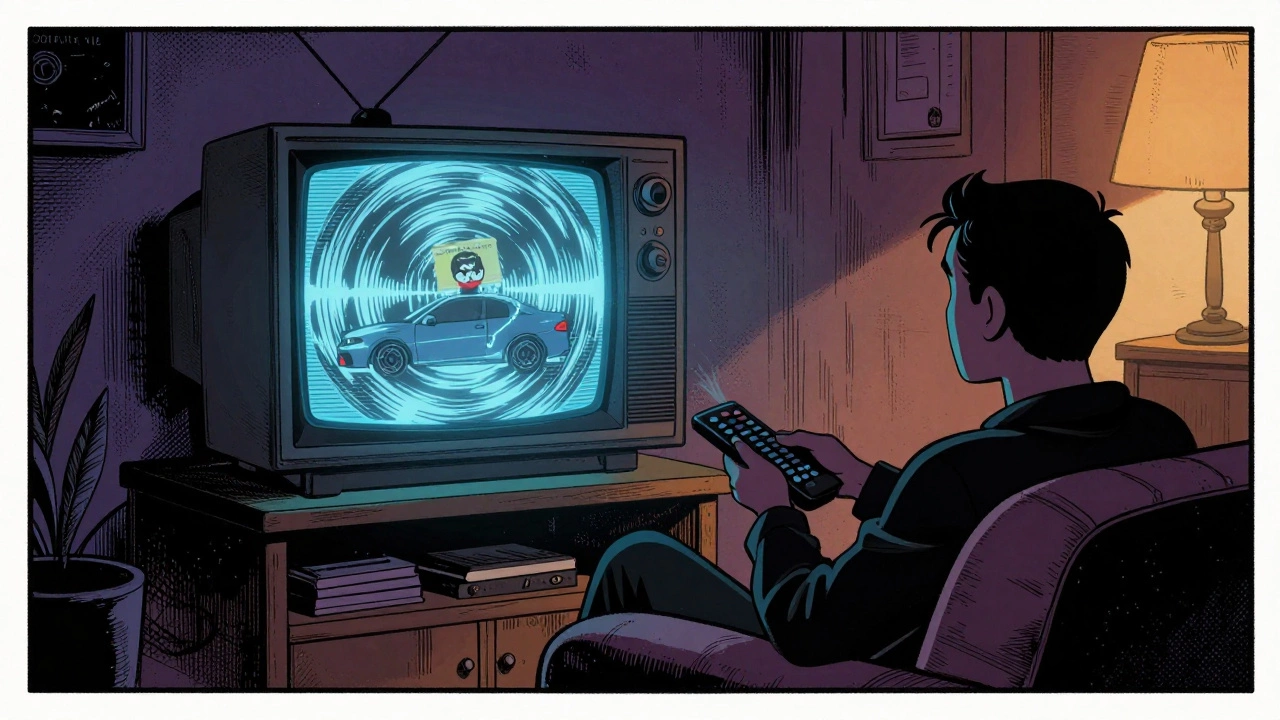

Picture your living room in late 1999. The TV is on, a car commercial plays, and suddenly you hear that haunting, slow-burning synth melody from Moby's album Play. You don't know who Moby is yet. You just think it sounds cool. Fast forward to 2000, and that same song is everywhere-on the radio, in movies, in coffee shops. This wasn't an accident. It was a calculated, unprecedented cultural takeover that changed how we listen to electronic music forever.
Play is the fifth studio album by American electronic musician Richard Melville Hall, released on May 17, 1999. It didn't explode overnight. In fact, when it first dropped, industry insiders thought it might flop. But through a unique mix of spiritual sampling, DIY production, and aggressive synchronization licensing, Play became the gateway drug for ambient electronica, moving the genre from underground clubs into the mainstream consciousness of millions.
The Birth of a Slow-Burn Masterpiece
To understand why Play worked, you have to look at where Moby came from. Before this album, he had released Animal Rights, a 1996 rock-oriented album that was a commercial disappointment. That failure pushed him back to his roots: electronic music, spirituality, and American folk traditions. He retreated to his home studio in Manhattan between mid-1997 and early 1999, armed with inexpensive samplers, sequencers, and a deep well of curiosity.
Unlike the high-budget pop productions dominating the charts in 1998 and 1999, Play was a solitary project. Moby handled writing, performance, production, and mixing almost entirely alone. This DIY approach gave the album a raw, intimate feel. He wasn't trying to make club bangers; he was building atmospheric soundscapes. The result was a collection of 18 tracks that fused field recordings of early-20th-century blues and gospel with loop-based electronic production.
Sampling the Soul of America
The secret sauce of Play wasn't just the synths; it was the voices. Moby spent hundreds of hours digging through the Archive of American Folk Song, a collection curated by ethnomusicologist Alan Lomax containing blues, gospel, and folk recordings from the 1930s to the 1950s. Specifically, he used the four-CD set Sounds of the South.
He took vocal fragments from these historical recordings and placed them over modern electronic beats. Take "Natural Blues," which samples "Trouble So Hard" by Alabama singer Vera Hall, recorded in 1937. Or "Honey," which features vocals from "Sometimes" by Bessie Jones, recorded in the early 1960s. These weren't just background noises; they were emotional anchors. By juxtaposing century-old African American vocal performances with late-1990s digital textures, Moby created a sense of temporal dislocation. The music felt ancient and futuristic at the same time.
| Track | Original Artist | Original Recording Year | Source Material |
|---|---|---|---|
| Natural Blues | Vera Hall | 1937 | Trouble So Hard |
| Honey | Bessie Jones | Early 1960s | Sometimes |
| Find My Baby | Doo-wop Group | 1950s | Unspecified doo-wop recording |
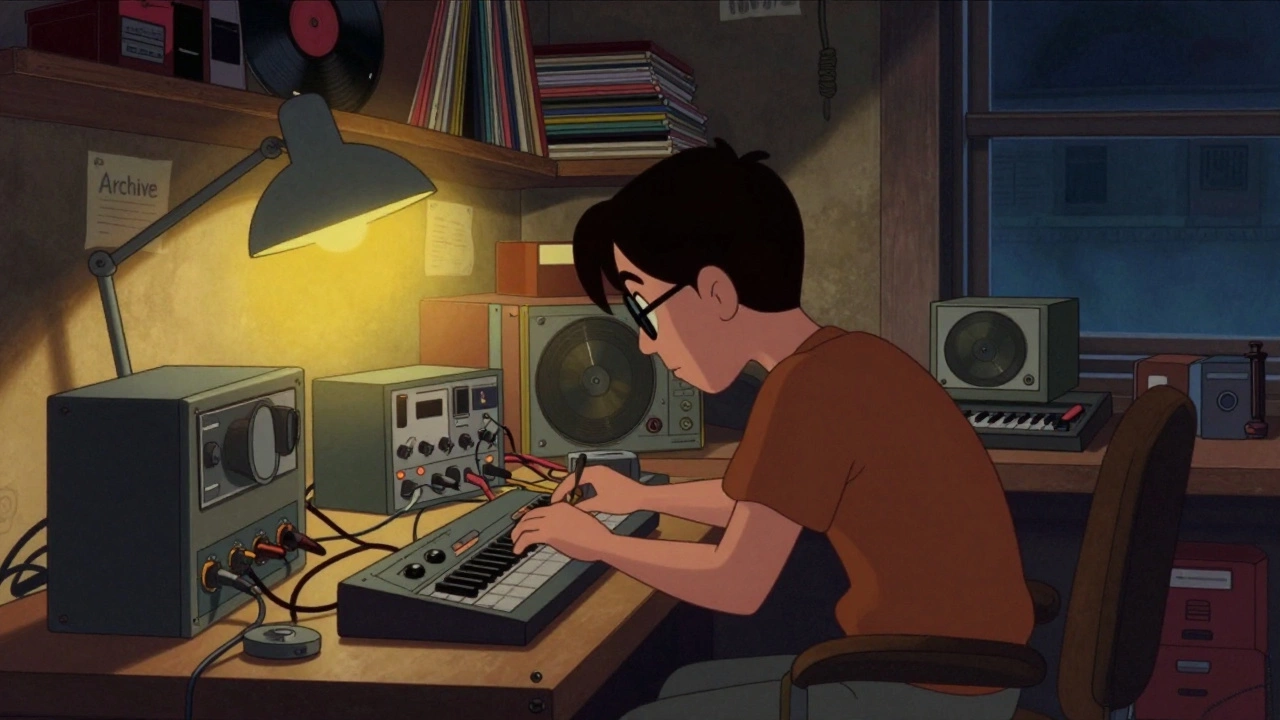
The Sync Licensing Revolution
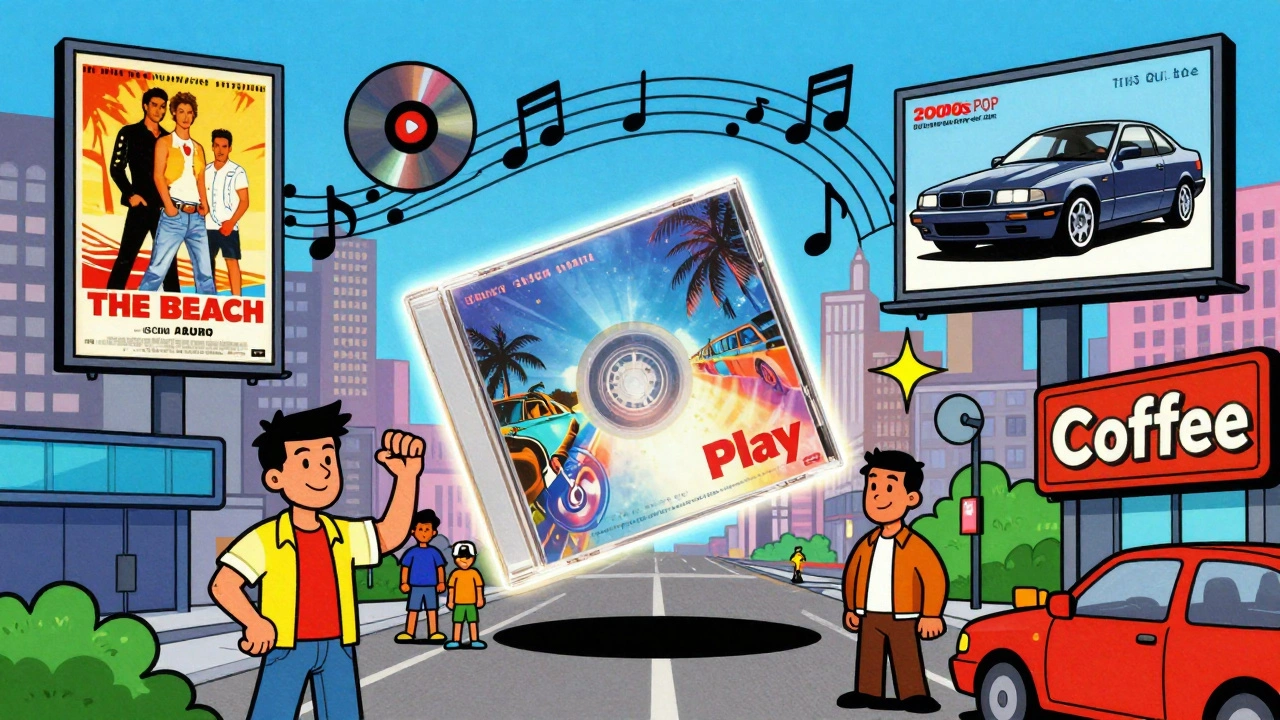
Here is where Play broke the rules of the music industry. Most artists relied on radio play and MTV rotation to get famous. Moby did something else: he licensed every single track. Between 1999 and 2002, all 18 songs on the album were placed in films, television shows, or advertisements. Estimates suggest there were over 1,000 individual placements worldwide.
This strategy turned the album into a de facto global marketing campaign. If you watched TV in North America or Europe during 2000-2001, you heard Play. "Porcelain" appeared in the film The Beach (2000). Other tracks scored car commercials, tech ads, and movie trailers. This ubiquity normalized ambient-leaning electronica for a mass audience. People who would never buy a dance record found themselves humming these melodies because they were embedded in their daily lives.
Critics like those at Crack Magazine argue that this saturation functioned as a gateway. It moved electronica from niche club culture into everyday listening environments. It wasn't just music for dancing; it was music for thinking, working, and driving.
A Different Kind of Electronic Success
When we talk about the late 1990s electronic crossover, names like The Prodigy and The Chemical Brothers usually come up. Their albums, like The Fat of the Land (1997) and Dig Your Own Hole (1997), were huge hits. But they were rooted in big beat and rave culture-aggressive, fast, and energetic.
Play was different. It sat in the 90-110 BPM range, much slower than the 120-140 BPM typical of house and techno. This made it perfect for spaces where harder club music would be intrusive: coffee shops, retail stores, and drama soundtracks. While The Prodigy brought the energy, Moby brought the mood. This distinction allowed Play to infiltrate new markets and stay relevant longer.
The commercial trajectory reflected this difference. Play didn't debut at number one. It entered the UK Albums Chart in May 1999 but took 49 weeks to climb to No. 1 in April 2000. In the US, it peaked at No. 38 on the Billboard 200 in early 2000. It was a slow burn, driven by cumulative exposure rather than initial hype. By the mid-2000s, it had sold around 12 million copies worldwide, becoming one of the best-selling electronic albums of all time.
Controversy and Legacy
Success brought scrutiny. As cultural attitudes shifted in the 2010s and 2020s, questions arose about authenticity and appropriation. Critics pointed out the image of a white, New York-based musician repurposing uncredited-sounding recordings of black Southern singers from the 1930s-1950s for a global pop audience. Even though the samples were legally licensed via the Alan Lomax archive, the power dynamics felt problematic to some listeners.
Additionally, the sheer ubiquity of the tracks led to accusations of overexposure. By the mid-2000s, the music press sometimes used Play as shorthand for bland, coffee-shop electronica. Moby himself admitted later that he was ambivalent about hearing his music everywhere. However, retrospective pieces in 2024 still hail it as a pivotal artifact. It proved that atmospheric, sample-based electronic music could function as both personal art and omnipresent cultural wallpaper.
Why It Still Matters
Play arrived just before the full impact of file sharing and digital distribution. It captured the tail end of the CD era, allowing its long promotional tail to keep selling while it remained in print. Today, more than 20 years later, the album continues to be treated as a canonical text in electronic music history. It influenced how later artists in genres like EDM and indietronica integrated nostalgic samples and slower, emotionally resonant tracks into their catalogs.
If you want to understand how ambient electronica crossed over in 1999, you don't just look at the charts. You look at the ads, the movies, and the quiet moments in people's lives where Moby's melancholic synths filled the air. That is the true legacy of Play.
What is the most famous song on Moby's Play?
While many tracks are popular, "Porcelain" and "Natural Blues" are often cited as the most recognizable. "Porcelain" gained massive exposure through its use in the film The Beach and various commercials, making it a staple of early 2000s pop culture.
How many copies of Play has Moby sold?
Play has sold approximately 12 million copies worldwide, making it one of the best-selling electronic albums of all time. It achieved multi-platinum status in the UK, US, Germany, and other European territories.
Did Moby write all the songs on Play?
Moby handled the writing, performance, production, and mixing almost entirely alone. However, the vocals on several tracks are samples from older recordings by artists like Vera Hall and Bessie Jones, sourced from the Alan Lomax Archive.
Why was Play so heavily used in advertising?
Moby and his management pursued an aggressive synchronization licensing strategy. They licensed all 18 tracks for use in films, TV, and ads. This resulted in over 1,000 placements, effectively turning the album into a global marketing campaign that introduced ambient electronica to mainstream audiences.
Is Play considered ambient or dance music?
Play is described as a hybrid of ambient electronica, downtempo, trip hop, and alternative dance. Unlike the faster big-beat style of contemporaries like The Chemical Brothers, Play features slower tempos (90-110 BPM) and atmospheric textures, making it suitable for both listening and background use.