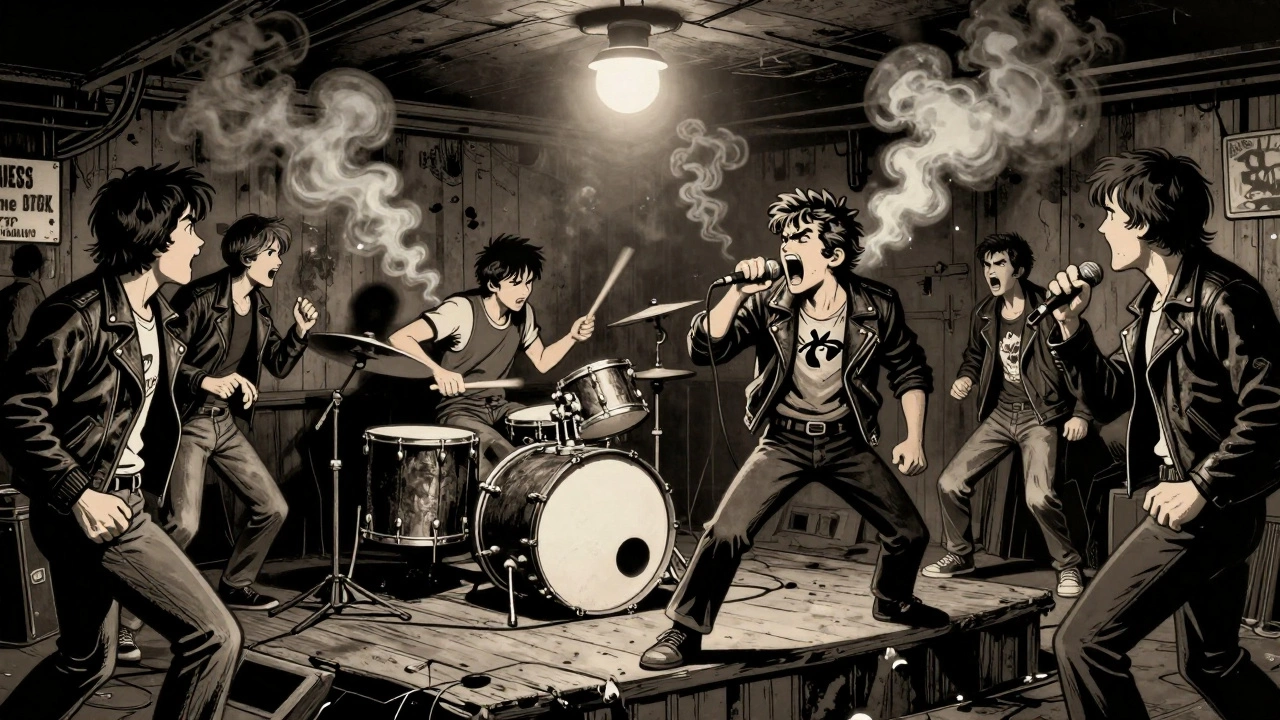

Picture a basement in San Francisco or Los Angeles around 1978. The air is thick with sweat and cigarette smoke. On stage, a band isn't playing polished riffs or singing about love. They are screaming. The drums are pounding like a machine gun. This wasn't just noise; it was a revolution brewing in the dark corners of the American underground. This is where Hardcore punk, often shortened to 'hardcore' or 'hXc', began its life. It didn't start with a bang on a main stage but with a whisper that quickly turned into a scream, rooted in two powerful ideas: breakneck speed and a refusal to ask for permission.
You might think punk rock started with the Ramones or the Sex Pistols, and you'd be right. But hardcore was something different. It was faster. It was angrier. And most importantly, it was built by the people who listened to it, not the people who sold tickets. To understand why this movement changed music forever, we have to look at those late-1970s seeds. We need to see how a group of kids decided that if they wanted their art, they had to build the entire world around it themselves.
The Acceleration: Why Speed Became the Weapon
Let's talk about the sound first. If early punk was a rebellion against long, pretentious rock solos, hardcore was a rejection of punk itself becoming too cool. By the late 1970s, some punk bands were getting fancy. They were wearing suits, hiring producers, and trying to make hits. The kids who would form the hardcore scene hated that. They saw it as selling out.
So, they did the opposite. They sped everything up. Fast tempos became the defining characteristic of the genre. Songs that used to last three minutes now lasted thirty seconds. Drums switched from simple beats to relentless double-kick patterns. Guitars stopped worrying about melody and focused on power chords played at a frantic pace. This wasn't an accident. It was a deliberate choice to create urgency. As documented in historical accounts of the genre, hardcore "eschewed nuance, technique, and the avant-garde" in favor of pure rhythmic intensity.
Think about what that means for the listener. You don't have time to think. You can't analyze the lyrics deeply because the next line is already here. You feel the energy physically. This approach stripped away the "cosmopolitan art-school" vibe that was creeping into New Wave music at the time. New Wave was stylish and clever. Hardcore was raw and immediate. It was a reaction against the hippie culture that still lingered in the background, rejecting peace and love for confrontation and truth.
The Birth of the DIY Ethic
Speed got their attention, but the Do-It-Yourself (DIY) ethic kept them alive. In the late 1970s, major record labels looked at these angry, fast bands and saw no profit. There was no market for screaming teenagers in basements. So, the bands had a choice: quit or build their own infrastructure. They chose the latter.
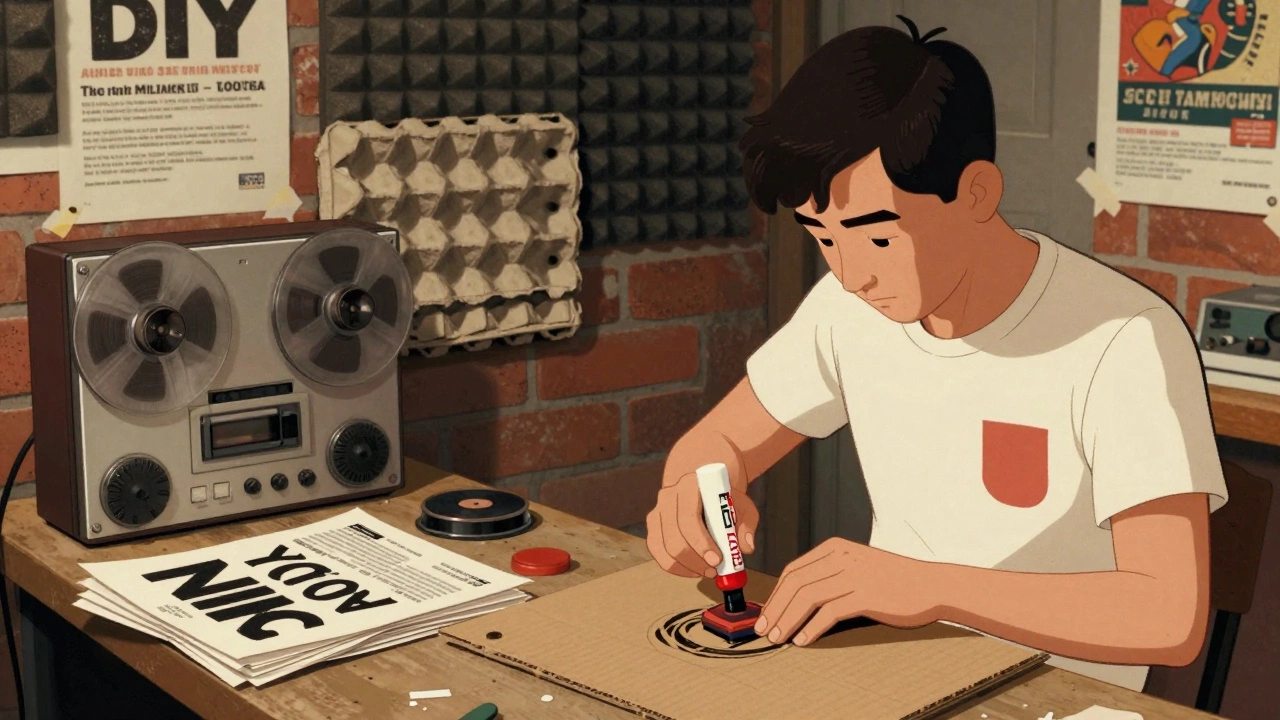
This is where the concept of DIY ethic moved from a vague idea to a strict code. It wasn't just about making your own clothes anymore. It was about controlling every single part of the music industry. Bands booked their own tours. They drove their own vans across the country, sleeping on floors. They recorded their own albums in cheap studios or even garages. They printed their own flyers and distributed their own records.
Steve Emig, writing about the history of this culture, notes that DIY "became a core idea in the late 1970s punk rock culture." It wasn't optional. It was essential. Because no one else would help them, they helped each other. This created a tight-knit community. If you were in the scene, you weren't just a fan; you were a participant. You might write for a fanzine, work the door at a show, or press copies of a record. The barrier between artist and audience dissolved completely.
Building the Infrastructure: Labels and Venues
You can't sustain a movement without a way to share it. Since mainstream channels were closed, hardcore pioneers built their own. This led to the rise of independent record labels. These weren't big corporations with marketing budgets. They were small operations run by fans who loved the music. Labels like SST Records, Dischord Records, and Alternative Tentacles emerged from this period. They operated on thin margins and sheer passion.
These labels created a social network. As academic research from WestCollections points out, "The DIY record labels and independent pressing system creates a social network that allows for punk music and ideologies to be distributed." This was crucial. It meant that a band in Washington, D.C., could send a record to a fan in California without going through a gatekeeper in New York. The music traveled directly from creator to consumer.
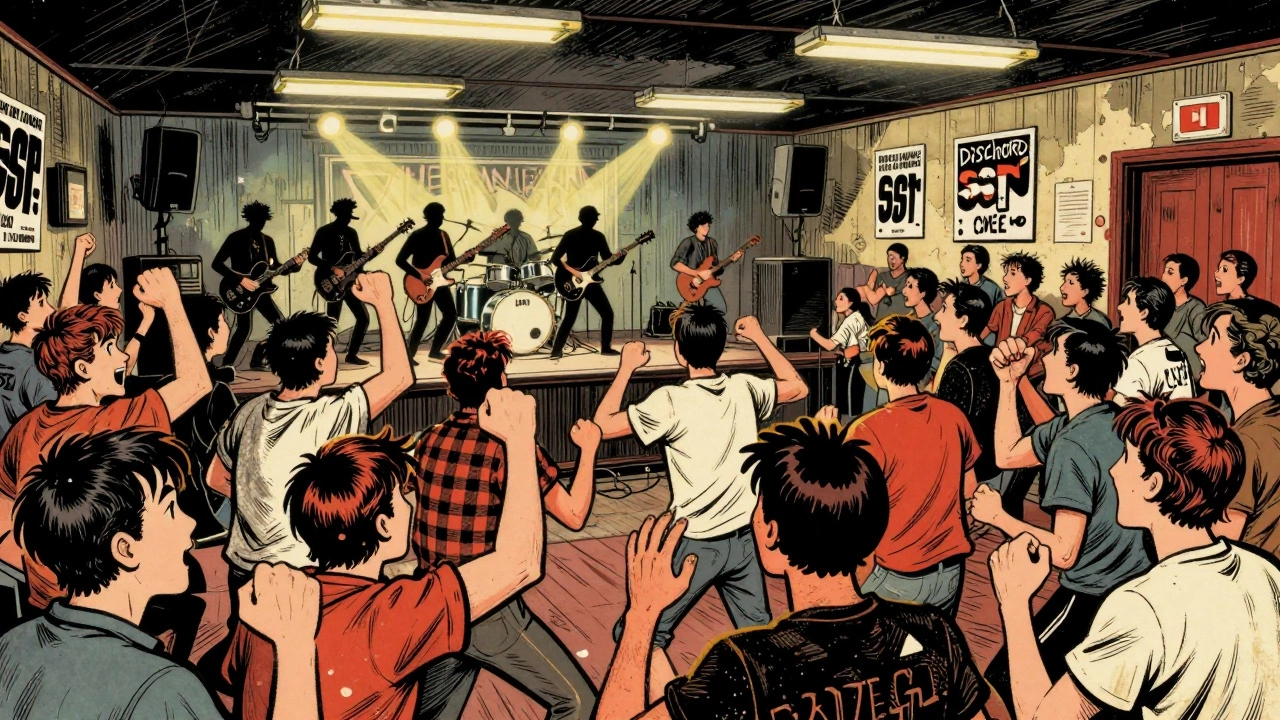
Venues were just as important. With clubs often refusing to book these "too loud" acts, scenes formed around alternative spaces. VFW halls, church basements, and community centers became the new arenas. These places were cheap and accessible. They allowed shows to happen frequently, keeping the momentum high. The atmosphere in these venues was intense. Mosh pits formed naturally, not as organized violence but as a physical release of the energy the music provided.
Regional Scenes: A United Fragmentation
While the core values were the same, the local flavor varied. Hardcore sprouted underground scenes across the United States in the early 1980s, but the roots were deep in the late 70s. Each city developed its own identity while staying true to the DIY spirit.
| Region | Key Cities | Musical/Cultural Focus |
|---|---|---|
| West Coast | Los Angeles, San Francisco | Faster, more aggressive sound; political activism; strong connection to skate culture. |
| East Coast | Washington, D.C., New York | More melodic influences; emphasis on positive thinking and personal responsibility (Straight Edge). |
| Midwest/Northeast | Boston, Chicago | Raw energy; crossover with metal elements; tight-knit local networks. |
In Los Angeles, bands like Black Flag and Circle Jerks pushed the tempo to extremes. The scene was gritty and politically charged. In Washington, D.C., bands like Minor Threat introduced the concept of Straight Edge-a lifestyle choice within the DIY framework that rejected drugs and alcohol. This showed that DIY wasn't just about music production; it was about creating a moral code. Fans were encouraged to take control of their lives, not just their entertainment.
Why DIY Was More Than Just Necessity
It's easy to look back and say, "They only did DIY because they had no money." That's half true. Yes, necessity drove the initial actions. But the participants embraced it as a philosophy. Chris, a key figure interviewed in studies of the subculture, explained that the ethical domain of DIY is "something that is fundamentally made by fans, for the fans." This distinction matters. It wasn't a business strategy; it was a statement of autonomy.
This approach fostered a sense of satisfaction and identity. People involved in the scene felt they were part of something authentic. They weren't consuming a product manufactured for mass appeal. They were contributing to a living, breathing culture. The ability to create your own identity and connect with like-minded individuals provided a deep sense of belonging. This is why the DIY ethic survived long after the initial shock value of hardcore faded.
The Legacy: From Basements to Mainstream Influence
You might wonder if any of this matters today. Look around. The entire independent music industry owes a debt to those late-1970s hardcore pioneers. The model they built-small labels, self-distribution, direct-to-fan engagement-is the standard for indie artists now. Even genres that seem far removed from punk, like grunge and thrash metal, adopted aspects of the DIY approach before achieving commercial success.
Hardcore proved that you don't need a major label to be heard. You need conviction, speed, and a willingness to do the work yourself. This legacy continues to inspire musicians worldwide. When a band self-releases an album on Bandcamp or books their own tour using social media, they are walking the path paved by those late-1970s seeds. The technology has changed, but the ethic remains the same.
The emergence of hardcore punk in the late 1970s was more than a musical shift. It was a cultural blueprint for independence. By combining fast tempos with a rigorous DIY ethic, it created a sustainable alternative to the mainstream music industry. It taught a generation that creativity doesn't require permission. It requires action. And that lesson is still echoing in every basement show and independent release today.
What is the difference between punk rock and hardcore punk?
While both genres share rebellious roots, hardcore punk is generally faster, harder, and more aggressive than traditional punk rock. Hardcore emerged in the late 1970s as a reaction against the perceived complacency and artistic pretension of earlier punk and New Wave movements. Musically, hardcore emphasizes speed and rhythmic intensity over technical proficiency, often featuring shorter songs and simpler structures. Culturally, hardcore codified the DIY ethic more strictly, rejecting corporate involvement entirely.
Why was the DIY ethic so important to hardcore punk?
The DIY (Do-It-Yourself) ethic was essential because major record labels refused to support these bands. Instead of quitting, hardcore musicians built their own infrastructure, including independent record labels, fanzines, and venue networks. This allowed them to distribute their music and ideas without corporate interference. Beyond practicality, DIY became a philosophical stance, empowering fans to become active participants in the culture rather than passive consumers.
Which cities were central to the late-1970s hardcore scene?
The late-1970s and early-1980s hardcore scenes primarily emerged in Los Angeles and San Francisco on the West Coast, and Washington, D.C., Boston, and New York on the East Coast. Each region developed unique characteristics: LA was known for its speed and aggression, while D.C. focused more on melody and the Straight Edge lifestyle. These hubs created interconnected networks that spread the DIY ethos nationwide.
How did hardcore punk influence modern independent music?
Hardcore punk laid the foundation for the American indie music scene. The infrastructure created by hardcore bands-independent labels, self-booked tours, and direct distribution models-became the blueprint for alternative genres. Genres like grunge and thrash metal later adopted these DIY practices. Today, many independent artists use similar methods, leveraging digital tools to maintain the autonomy that hardcore pioneers fought for in the 1970s.
What role did fanzines play in the hardcore movement?
Fanzines were critical for communication and community building in the absence of mainstream media coverage. Created by fans, these self-published magazines shared news about shows, reviewed records, and discussed political and social issues relevant to the subculture. They helped connect isolated regional scenes, allowing ideas and ideologies to spread rapidly across the country without relying on traditional press outlets.