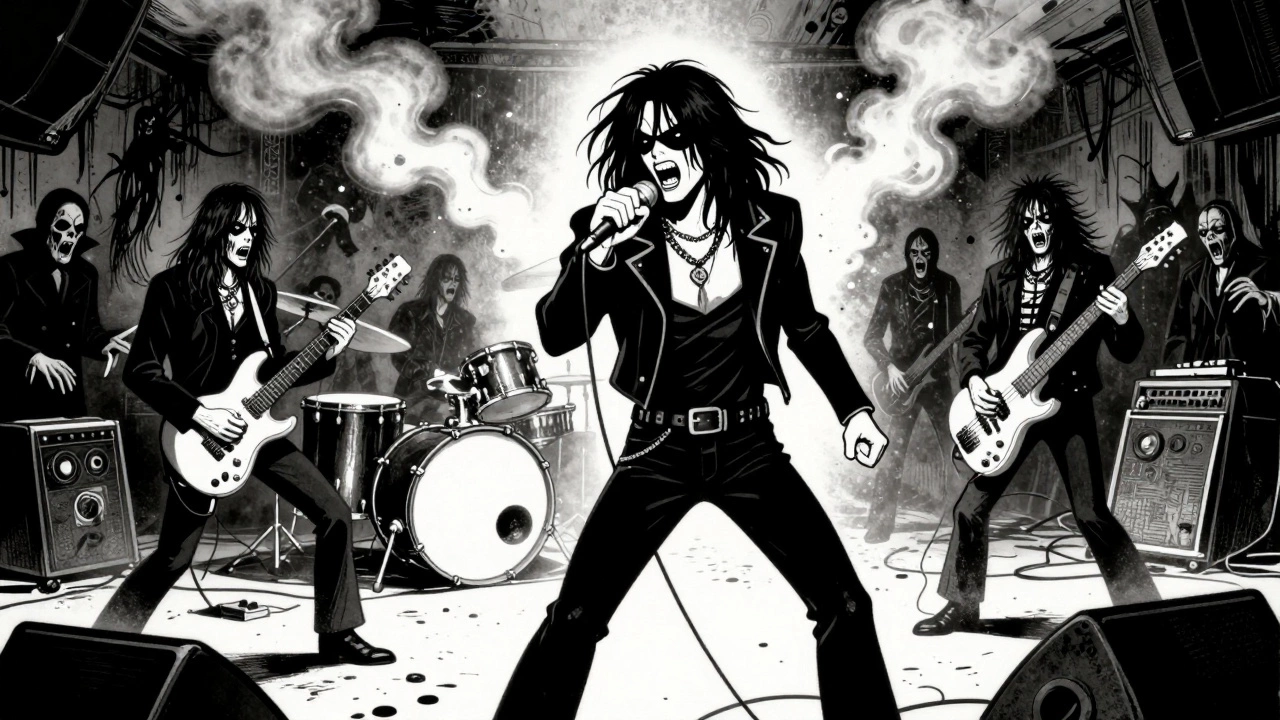

Imagine a band that traded the political anger of typical punk for zombies, vampires, and true crime. That is exactly what Misfits are known for today. But their path to becoming icons wasn't straight. It was messy, underground, and defined by one man's obsession with B-movies and catchy melodies. This is the story of how Glenn Danzig built the blueprint for horror punk between 1977 and 1983, and how he cemented its legacy through crucial mid-1980s releases.
The Birth of a Subgenre in New Jersey
In January 1977, in Lodi, New Jersey, Glenn Danzig formed the Misfits. He didn't set out to start a revolution; he just wanted to play loud music with friends. Drummer Manny Martínez joined first, followed by bassist Jerry Only. From the start, Danzig had a clear vision. While bands like Black Flag and Dead Kennedys were screaming about politics and society, Danzig looked elsewhere. He found inspiration in the cheap thrill of horror films and the melodic croon of 1950s rock 'n' roll.
This combination created something entirely new. Horror punk emerged as a distinct style. It blended fast, aggressive punk tempos with simple power chords and lyrics about monsters. The early singles, like "Cough/Cool" (1977), hinted at this direction. By the time they released "Bullet" and "Horror Business," the formula was solid. These tracks weren't just songs; they were short stories about violence and fear, wrapped in three-minute packages.
Danzig’s vocal style was key to this sound. He mixed the drama of Roy Orbison with the raw aggression of hardcore punk. This contrast made the music accessible yet intense. Fans could sing along to the gang-style choruses while feeling the edge of danger. This approach set the Misfits apart from their peers immediately.
Visual Identity: The Fiend Skull and Devilocks
You can’t talk about the Misfits without mentioning their look. In the late 1970s, most punk bands wore ripped clothes or leather jackets. The Misfits went further. They adopted a uniform. Black clothing became standard. More importantly, they introduced the "devilock" hairstyle-long hair combed forward to hang over the face. This look became synonymous with the genre.
The visual centerpiece was the Fiend Skull logo. Adapted from the 1946 serial "The Crimson Ghost," this image appeared on album covers, t-shirts, and posters. It wasn't just art; it was branding. The skull represented the band’s identity: dark, mysterious, and cool. Even when the band broke up, the logo survived. It became a cultural symbol worn by fans who might not even know the band’s name.
This focus on aesthetics was rare in punk at the time. Most bands rejected commercialism. The Misfits embraced it, but on their own terms. They controlled their image tightly. Every element, from the stage makeup to the merchandise, reinforced the horror theme. This consistency helped build a loyal fanbase that extended beyond the local New Jersey scene.
Key Albums: Walk Among Us and Earth A.D./Wolfs Blood
The core of the Misfits’ catalog was recorded between 1977 and 1983. Two albums stand out as definitive statements of their sound. Walk Among Us, released in 1982, was their first full-length studio album. It combined previously issued tracks with new material. Songs like "Astro Zombies" and "Vampira" showcased their cinematic influences clearly. The production was raw, capturing the energy of their live shows.
Earth A.D./Wolfs Blood, released in 1983, pushed the tempo higher. Recorded in two parts, it reflected the growing tension within the band. The first half, "Earth A.D.," leaned into hardcore punk. The second half, "Wolfs Blood," retained more melody. This duality showed the band evolving while staying true to their roots. Tracks like "Skulls" demonstrated their ability to blend speed with catchiness.
These albums were released on Plan 9 Records, Danzig’s own label. This independence allowed him complete creative control. He decided which songs got recorded, how they sounded, and when they were released. This DIY approach was common in punk, but Danzig used it strategically. He treated each release as part of a larger narrative.
| Album | Release Year | Style Focus | Key Tracks |
|---|---|---|---|
| Walk Among Us | 1982 | Classic Horror Punk | Astro Zombies, Vampira |
| Earth A.D./Wolfs Blood | 1983 | Hardcore/Melodic Mix | Skulls, London Dungeon |
| Legacy of Brutality | 1985 | Early Sessions Compilation | Cemetery Gate, Die, Die My Darling |
Post-Breakup Curation: The Mid-1980s Compilations
The Misfits broke up on October 29, 1983. Danzig left to form Samhain, exploring darker, gothic sounds. However, his work with the Misfits didn't end there. He retained control over their recordings. This led to two important compilations in the mid-1980s.
Legacy of Brutality arrived in 1985. It featured tracks from 1978-1981 sessions, some with new overdubs by Danzig. This album preserved the raw energy of their early years. It served as a bridge for fans who missed the initial run of singles.
Then came the 1986 compilation simply titled Misfits (often called "Collection I"). Released on July 1, 1986, this 20-track set was curated personally by Danzig. It pulled songs from all previous releases, creating a definitive overview of the band’s output. Tracks like "She" (inspired by Patty Hearst) and "Night of the Living Dead" (referencing George Romero’s film) highlighted the thematic depth of their lyrics.
This compilation was crucial. It introduced the Misfits to a wider audience. Many listeners discovered the band through this record, not the original singles. Danzig effectively framed their catalog as a coherent body of work. He presented horror punk not as a gimmick, but as a serious artistic statement.
Lyrical Themes: Movies, Crime, and Fear
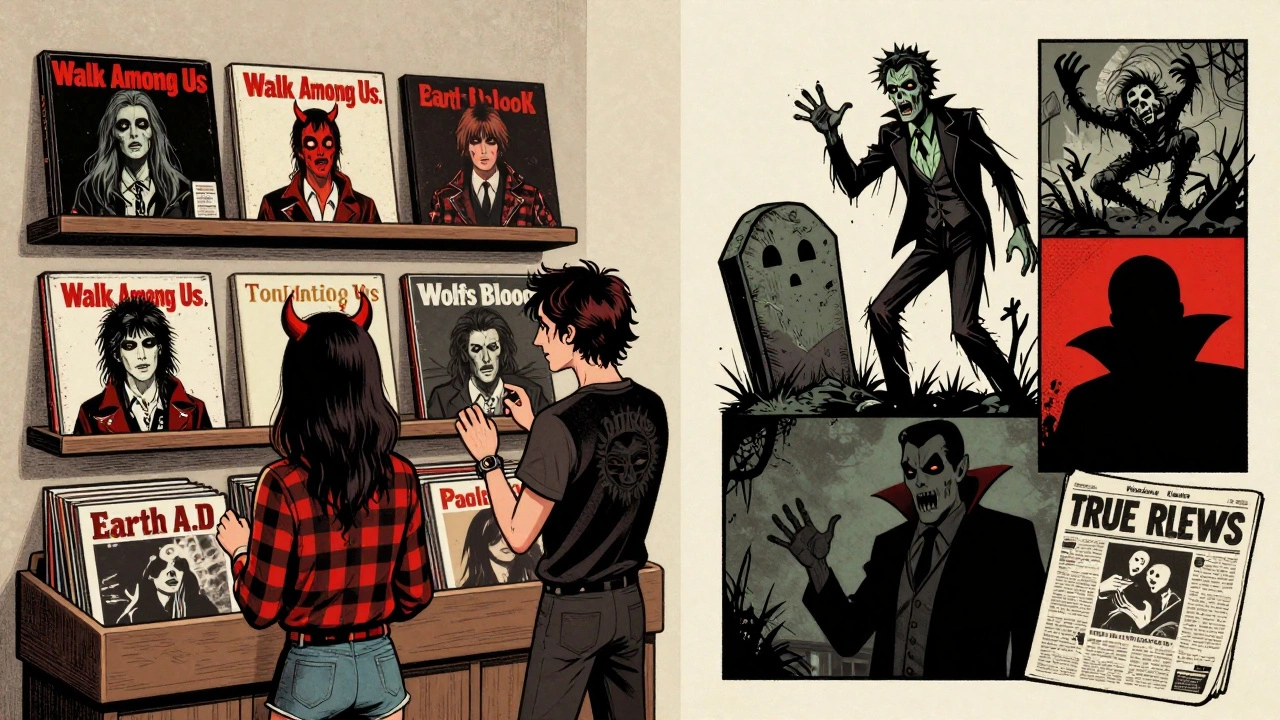
Danzig’s songwriting drew heavily from specific sources. He didn't just write generic monster songs. Each track often referenced a real event or film. "Night of the Living Dead" directly cited Romero’s 1968 classic. "Horror Business" has been linked to the 1978 death of Nancy Spungen. "Bullet" narrated the assassination of JFK. "London Dungeon" recounted Danzig’s own arrest in the UK.
This specificity gave the lyrics weight. Listeners could connect the songs to real-world events or popular culture. It also added layers of meaning. What seemed like simple punk anthems revealed deeper narratives upon closer inspection. This approach influenced later bands in the genre. They learned that horror themes could be both entertaining and substantive.
The use of true crime elements was particularly bold. At a time when punk was largely apolitical or anti-establishment, focusing on violent crimes was provocative. It challenged listeners to confront uncomfortable topics. Yet, the delivery remained melodic and catchy. This balance kept the music accessible while maintaining its edge.
Legacy and Influence Beyond the 1980s
The impact of the Misfits extends far beyond their active years. Bands like Metallica covered "Last Caress" and "Green Hell" in the late 1980s. This crossover appeal brought horror punk to metal audiences. Other genres, including psychobilly and gothic rock, borrowed elements from their style. The Cramps and Bauhaus explored similar territories, but the Misfits’ blend of melody and aggression remained unique.
The Fiend Skull logo continues to appear on merchandise worldwide. It transcends music, becoming a symbol of counter-culture fashion. Fans wear it not just to show support for the band, but to identify with the aesthetic. This enduring popularity proves the strength of Danzig’s original vision.
For modern artists, the Misfits serve as a template. They show how to create a distinct identity through consistent imagery and thematic focus. They demonstrate that niche interests can build massive followings if executed with passion and clarity. The 1980s may have ended, but the horror punk movement started then still thrives.
What defines horror punk?
Horror punk is a subgenre combining fast punk rhythms with horror-themed lyrics and imagery. Key features include simple power chords, gang vocals, and references to movies, monsters, and crime. The Misfits pioneered this style in the late 1970s.
Why did Glenn Danzig leave the Misfits?
Danzig left in 1983 due to creative differences and personal tensions. He wanted to explore darker, more complex musical directions, leading to the formation of Samhain. His departure marked the end of the original Misfits lineup.
What is the significance of the 1986 Misfits compilation?
The 1986 compilation, curated by Danzig, consolidated the band’s best tracks from 1977-1983. It introduced their horror punk sound to a broader audience and established a canonical version of their discography for future fans.
How did the Misfits influence other bands?
Bands like Metallica covered Misfits songs, bringing their music to metal fans. Their visual style inspired countless acts in punk, goth, and alternative scenes. The Fiend Skull remains an iconic symbol in youth culture.
What role did Plan 9 Records play?
Plan 9 Records was Glenn Danzig’s independent label. It allowed him full control over recording, distribution, and artwork. This autonomy was crucial in developing the Misfits’ unique aesthetic and releasing their music on their own terms.


