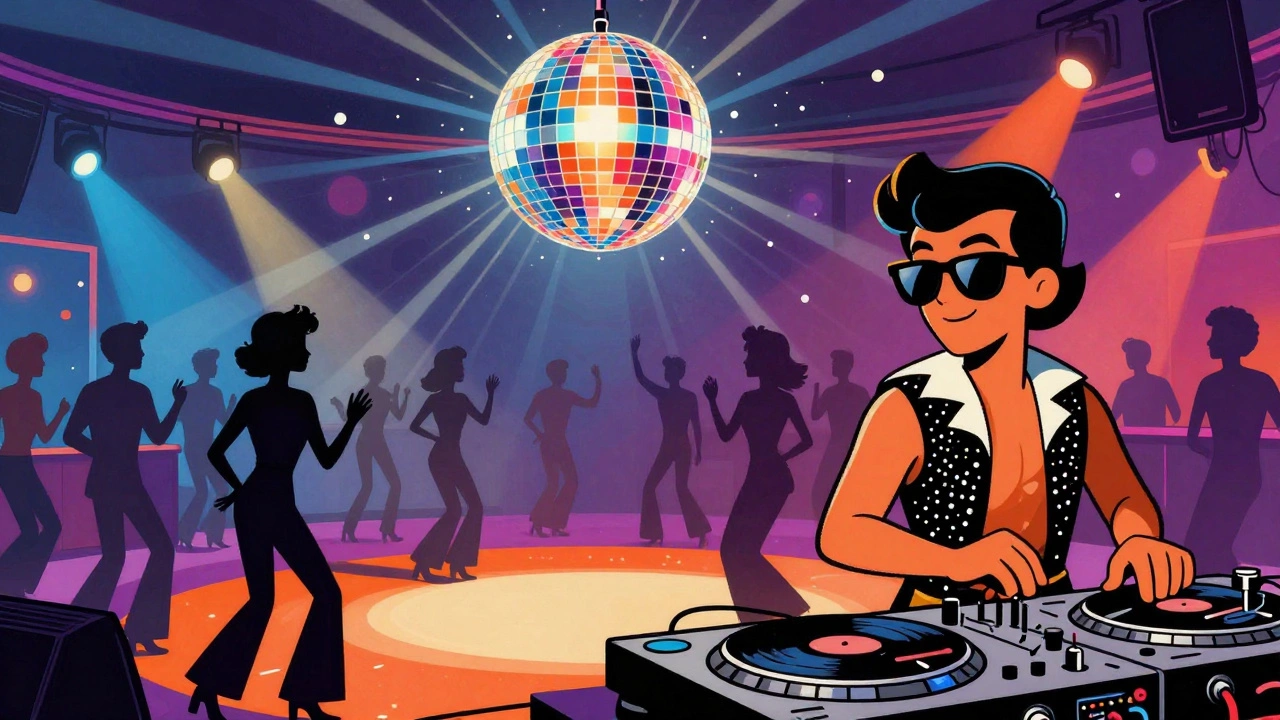

Think about the last hit song you heard on the radio or scrolled past on a playlist. Chances are, it didn't start with a slow build. It likely grabbed your attention within seconds, kept you moving with a steady beat, and dropped you into a high-energy moment that felt like a reward. You might not realize it, but you are experiencing the structural DNA of Disco, a genre that revolutionized club culture in the 1970s and quietly rewrote the rules for how we write pop music today.
We often talk about disco as a visual style-glitter balls, wide collars, and funky basslines. But its real legacy isn't just aesthetic; it is architectural. The way modern pop songs are built, from the placement of the hook to the use of instrumental breaks, traces a direct line back to the dancefloors of New York and London in the late 1970s. Even though the production tools have changed from analog synthesizers to digital audio workstations, the blueprint remains surprisingly consistent.
The Hook: From Sing-Alongs to Earworms
In the early days of Tin Pan Alley or classic rock, verses carried the weight of the story, and choruses were just the payoff at the end. Disco flipped this script. Because disco was designed for clubs where people were dancing rather than sitting and listening intently, the song needed to be instantly recognizable. If you missed the first thirty seconds, you still needed to know what the song was about.
This necessity birthed the modern obsession with the "hook." A hook in disco wasn't just a catchy melody; it was a repetitive, chant-like phrase layered over an extended groove. Think of tracks by ABBA or Donna Summer. Their choruses functioned as slogans. This approach ensures that even if the lyrics are simple, the melodic fragment sticks in your head immediately.
Fast forward to the 2020s, and this principle is more dominant than ever. Look at BTS’s "Dynamite" (2020) or Dua Lipa’s "Don’t Start Now" (2019). These songs rely on short, clipped vocal phrases that repeat constantly. They don't evolve much melodically; instead, they lock into a groove and ride it. This is pure disco logic applied to the streaming era. Algorithms favor songs that deliver satisfaction quickly, and the disco-style hook provides that instant gratification without requiring the listener to wait for a complex narrative arc.
Breakdowns and the Evolution of the Drop
If the hook is the face of the song, the breakdown is its spine. In traditional verse-chorus structures, the energy usually stays relatively constant or builds linearly toward the end. Disco introduced a different dynamic: the tension-and-release cycle found in DJ sets.
DJs in the 1970s would extend tracks by looping sections, stripping away instruments, and then bringing them all back in for a massive climax. This practice created "breakdowns"-moments where the drums drop out, leaving only a synth pad, a filtered bassline, or a vocal sample. This silence before the storm creates anticipation. When the four-on-the-floor kick drum returns, the physical reaction is visceral.
This concept evolved through house music and techno into the modern EDM "drop." A 2023 study from the University of Kansas noted that many contemporary pop songs have effectively split the chorus in half. One part becomes a lyrical build-up (the pre-chorus), and the other becomes an instrumental peak (the drop). In disco-influenced pop, this drop often replaces the traditional sung chorus entirely. Instead of singing the title again, the band lets the synthesizer riff take over. It mirrors the disco breakdown, translating a DJ-centric technique into a three-minute radio single.

Bridges vs. Pre-Choruses: Managing Energy
One of the most confusing aspects of songwriting for beginners is the difference between a bridge and a pre-chorus. In disco-derived pop structures, these two sections serve distinct purposes in managing the song's energy curve.
A pre-chorus appears before every chorus. Its job is to lift the energy from the verse up to the hook. In disco-pop, this section often introduces a rising chord progression or a rhythmic syncopation that signals, "The big moment is coming." It acts as a ramp. Without it, the transition from a low-energy verse to a high-energy chorus can feel jarring. Artists like Daft Punk mastered this in their nu-disco hits, using vocoder effects and rising filters in the pre-chorus to create a sense of inevitability before the drop.
The bridge, however, is different. Traditionally called the "middle eight," it appears only once, usually after the second chorus. In rock or ballads, the bridge offers a harmonic change-a new key or chord progression-to prevent boredom. In disco-influenced pop, the bridge often takes the form of a dance break or a filtered instrumental section. It doesn't necessarily introduce new lyrics; instead, it provides textural contrast. It strips the track down to its bare bones before rebuilding it for the final, explosive chorus. This keeps the listener engaged by changing the sonic landscape without breaking the hypnotic groove.
Comparing Structural Approaches
| Feature | Classic Verse-Chorus (Rock/Ballad) | Disco-Influenced Modern Pop |
|---|---|---|
| Primary Focus | Narrative storytelling in verses | Groove and immediate hook recognition |
| Chorus Function | Lyrical summary and emotional peak | Rhythmic anchor and repetitive earworm |
| Bridge Role | Harmonic shift and new lyrical perspective | Instrumental breakdown or dance break |
| Energy Flow | Linear build or static intensity | Cyclical tension and release (build/drop) |
| Intro Length | Often long (instrumental buildup) | Short or non-existent (hook-first approach) |
Notice how the disco-influenced model prioritizes rhythm and repetition over lyrical complexity. This isn't a sign of lesser artistic merit; it is a functional adaptation. The goal is to keep bodies moving and ears locked in. By minimizing intros and maximizing hook density, these songs fit perfectly into the fragmented attention spans of the digital age.
Why This Matters for Listeners and Creators
Understanding this lineage helps us appreciate why certain songs feel so satisfying. When you hear a track like Kylie Minogue’s "Padam Padam" or any current top-40 hit, you are hearing a conversation between 1970s club culture and 2020s technology. The producers are using modern synths, but they are arranging the elements according to disco principles: front-load the hook, use the pre-chorus to build tension, and replace the traditional bridge with a rhythmic breakdown.
For songwriters, this means less focus on writing complex verse narratives and more focus on crafting a compelling rhythmic motif. The "story" is no longer told primarily through words but through the arrangement itself. The rise of nu-disco and the continued success of artists who blend retro aesthetics with modern production prove that this structure is not a fleeting trend. It is the dominant framework for popular music because it works. It connects directly to our physical response to rhythm, bypassing the intellect to engage the body.
As we move further into the 2020s, we can expect this fusion to deepen. Gen Z listeners, who grew up with both vintage samples and algorithmic playlists, are driving demand for tracks that offer both nostalgia and immediacy. The disco revolution never really ended; it just went underground, waiting for the right technology to bring its structural genius back to the surface.
What makes a disco song structure different from a standard pop song?
A disco song structure prioritizes a continuous four-on-the-floor groove and places the hook very early, often within the first 30 seconds. Unlike standard pop songs that may have long instrumental intros or complex verse narratives, disco structures rely on repetitive, chant-like choruses and use breakdowns (instrumental breaks) to create tension and release, rather than relying solely on lyrical bridges for contrast.
How did disco influence the modern EDM drop?
Disco DJs used to extend tracks by stripping away instruments and then bringing them back in for a climax. This technique evolved into the EDM "drop." Modern pop songs often split the chorus into a lyrical build-up (pre-chorus) and an instrumental peak (drop), mirroring the tension-and-release cycles originally developed in disco club mixes.
What is the role of the bridge in disco-influenced pop?
In disco-influenced pop, the bridge often serves as a dance break or a filtered instrumental section rather than a lyrical middle-eight. Its purpose is to provide textural contrast and reset the listener's energy before the final chorus, maintaining the groove while preventing monotony.
Why do modern pop songs prioritize hooks so heavily?
Streaming algorithms and short attention spans reward songs that deliver satisfaction quickly. Disco established the template for immediate hook recognition, ensuring listeners know the song's identity instantly. This approach minimizes skip rates and maximizes engagement, making it ideal for the digital music landscape.
Is nu-disco just a revival or a continuation of disco?
Nu-disco is considered a continuation because it retains the core structural DNA of 1970s disco-four-on-the-floor beats, extended grooves, and hook-centric writing-but updates the production with modern synthesizers and digital tools. It bridges the gap between classic disco aesthetics and contemporary electronic dance music.