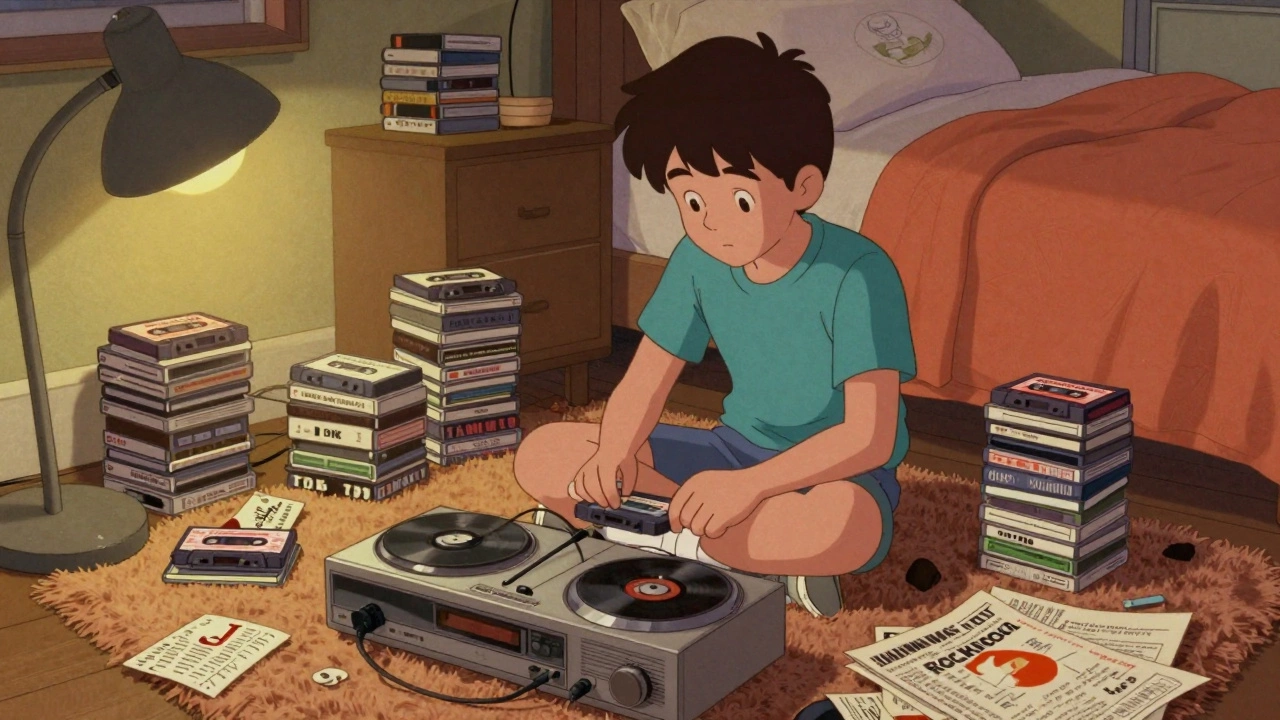

Imagine it is 1984. You live in a small town with no local record store that stocks underground music. The only way to hear what’s happening in the punk or hardcore scene isn’t through radio or MTV-it’s through a plastic rectangle mailed from a stranger in another state. This was the reality for thousands of fans and musicians in the 1980s. Compilation tapes were not just collections of songs; they were the internet before the internet existed. They connected isolated scenes, built global communities, and gave birth to entire genres like thrash metal and hardcore punk.
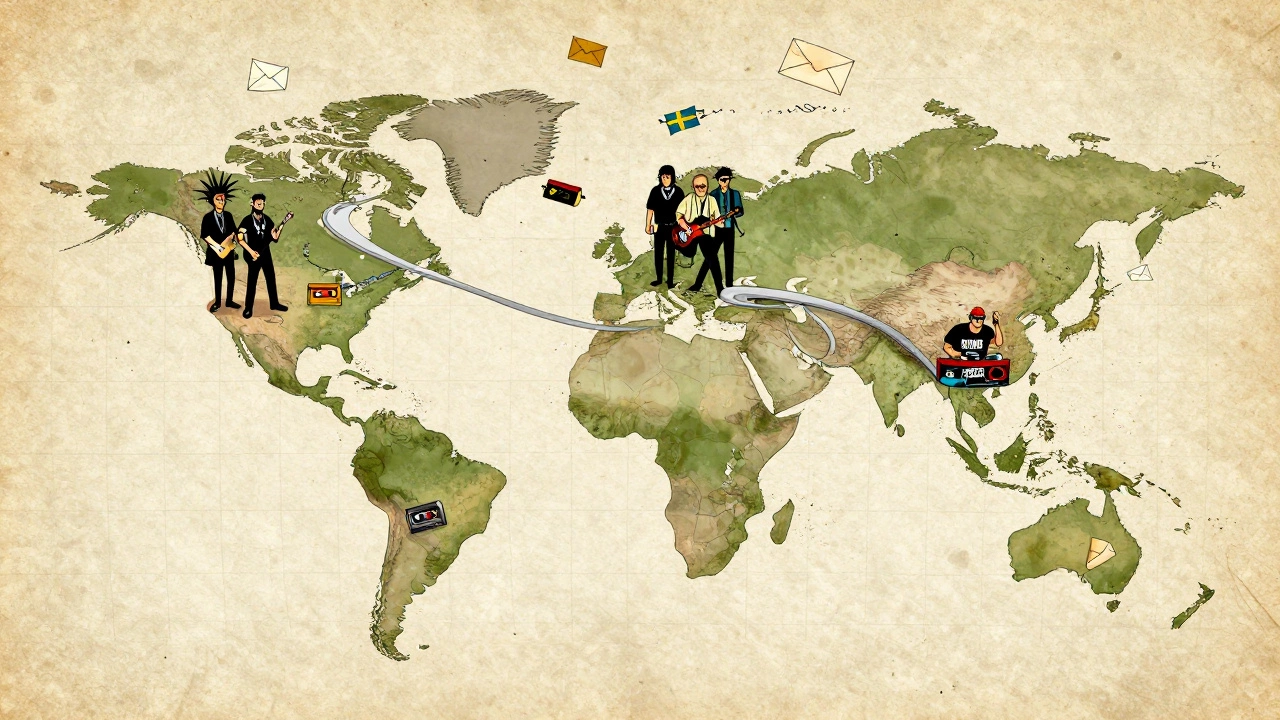
We often think of music discovery as something that happens on streaming platforms today, but back then, it required physical effort, patience, and a lot of blank cassettes. These tapes served as social artifacts, networking tools, and cheap distribution channels. They allowed a band in Boise, Idaho, to reach fans in Bologna, Italy, without ever stepping foot in a major label office. Let’s look at how this low-tech medium revolutionized high-energy music.
The Technology That Made It Possible
You can’t have compilation tapes without the hardware. The Philips Compact Cassette, introduced in 1963, was already around, but it took specific technological leaps in the late 1970s and early 1980s to make them viable for serious music distribution. The game-changer was portability. When Sony launched the Walkman TPS-L2 in 1979, people could carry their music everywhere. Suddenly, listening wasn’t confined to the living room stereo.
But portability alone didn’t create the compilation culture. Quality did. By the early 1980s, manufacturers like TDK, Maxell, and BASF released high-bias chromium dioxide (Type II) and metal (Type IV) cassettes. These tapes offered frequency responses approaching 20 Hz-18 kHz and signal-to-noise ratios around 60 dB when used with Dolby B or C noise reduction. For most listeners, this sounded competitive with vinyl LPs.
On the production side, home recording became accessible. The TASCAM Portastudio, introduced between 1979 and 1983, allowed bands to record four tracks at home. Small labels could take these multitrack recordings, compile them onto a master tape, and duplicate them. Consumer decks from Nakamichi and TEAC featured dual-well dubbing, letting users copy one cassette to another in real time or at double speed. This meant you didn’t need a factory to make copies; you needed a deck and some time.
| Technology/Device | Manufacturer | Impact on Scene |
|---|---|---|
| Walkman TPS-L2 | Sony | Enabled portable listening, making tapes personal and mobile. |
| Type II/IV Cassettes | TDK, Maxell, BASF | Improved sound quality, reducing hiss and boosting clarity. |
| Portastudio 4-Track | TASCAM | Allowed home recording of demos and compilations without studio costs. |
| Dual-Well Deck | Nakamichi, TEAC | Simplified duplication process for traders and small labels. |
Punk and Hardcore: The Network Builders
If you want to understand the power of compilation tapes, look at punk and hardcore. In the early 1980s, these scenes were fragmented. Bands in California couldn’t easily tour to New York, let alone Europe. But they could mail tapes. Fanzines like Maximum Rocknroll (founded in San Francisco in 1982) and Flipside (Southern California) played a crucial role. They advertised cassette compilations assembled by small labels and zine editors.
These compilations often featured 10 to 40 bands from different regions. A single tape might combine groups from California, the Midwest, and Europe. While landmark releases like This Is Boston, Not L.A. (1982) started as vinyl, fans quickly dubbed them onto cassettes. They rearranged sequences, mixed in local demo tracks, and created hybrid documents that circulated via mail. This wasn’t just copying; it was curating.
Thurston Moore’s 2004 book Mixtape: The Art of Cassette Culture highlights how trading homemade compilations helped connect isolated scenes. A fan in Tokyo could hear a band from London alongside a group from Los Angeles on the same tape. This juxtaposition created a sense of a global movement. It proved that punk wasn’t just a local phenomenon; it was a translocal network held together by magnetic tape.
Metal: The Tape-Trading Infrastructure
While punk used tapes for community building, underground metal-especially thrash, death, and black metal-used them as primary infrastructure. Early demos were everything. Metallica’s No Life ’Til Leather (1982), Slayer’s rehearsal recordings, and Sepultura’s Brazilian underground tapes all circulated internationally through mail-based trading.
Fans didn’t just listen; they traded. They would exchange dubbed cassettes, often including self-curated compilations of the best new tracks from multiple bands. Fanzines like Metal Forces (UK), Kick Ass Monthly (USA), and Norway’s Slayer Mag printed contact addresses for bands and traders. Every issue acted as a directory for a decentralized network.
A typical tape trader might build a 60- or 90-minute compilation featuring 2-3 tracks each from 10-20 groups. They labeled these meticulously with track lists and recording sources. These tapes traveled from Scandinavia to South America to Eastern Europe. Daniel Ekeroth’s Swedish Death Metal (2006) describes this era as formative. Many bands credit appearing on home-dubbed, unlicensed compilation tapes as the reason they secured deals with labels like Earache or Roadrunner.
Hip-Hop and Experimental Noise
Cassette culture wasn’t limited to guitar-driven genres. In hip-hop, DJ compilation tapes, known as mixtapes, were vital. Building on 1970s park jams, 1980s DJs like Kid Capri, Brucie B, Ron G, and Tony Touch produced continuous 60- to 90-minute mixes. These featured blends, quick-mixing of breakbeats, and exclusive MC freestyles.
Sold hand-to-hand in nightclubs or on street corners for $5-10, these tapes were rapidly dubbed by buyers for friends. They functioned as portable versions of local nightlife. By the late 1980s, mail-order lists in magazines like The Source allowed fans in distant cities to order New York and New Jersey DJ tapes by post. This extended the cassette-based network linking scenes across the country.
In the experimental world, "cassette culture" described artists producing work exclusively on cassette. Labels like Broken Flag (UK) and Sound of Pig (USA) issued compilation tapes grouping harsh noise, power electronics, and experimental pieces from international artists. These were tiny editions, often 50-500 copies, with photocopied artwork. An artist in rural Canada might discover peers in Italy or Japan through a shared appearance on a compilation cassette. It was a mail-art exchange object as much as a musical release.
Why Cassettes Beat Vinyl and CDs
You might wonder why everyone didn’t just stick to vinyl. The answer is cost and flexibility. Pressing vinyl required expensive plants and minimum runs in the thousands. Cassettes could be duplicated using consumer gear in runs of tens or hundreds. High-speed bin-loop duplication systems allowed labels to mass-produce thousands of copies at under $0.50 per unit for large runs. This lowered barriers dramatically for small operations.
Compared to early CDs, which were expensive and required digital mastering, cassettes tolerated lo-fi or live recordings. You could assemble a compilation incrementally by simply recording new tracks in sequence. However, there were trade-offs. Sound quality degraded with each generation of dubbing. Wow, flutter, tape hiss, and dropouts were common. Tapes were mechanically vulnerable to stretching or tangling. Yet, for many, the convenience and low cost outweighed the sonic imperfections.
The Social Ritual of Making Mixtapes
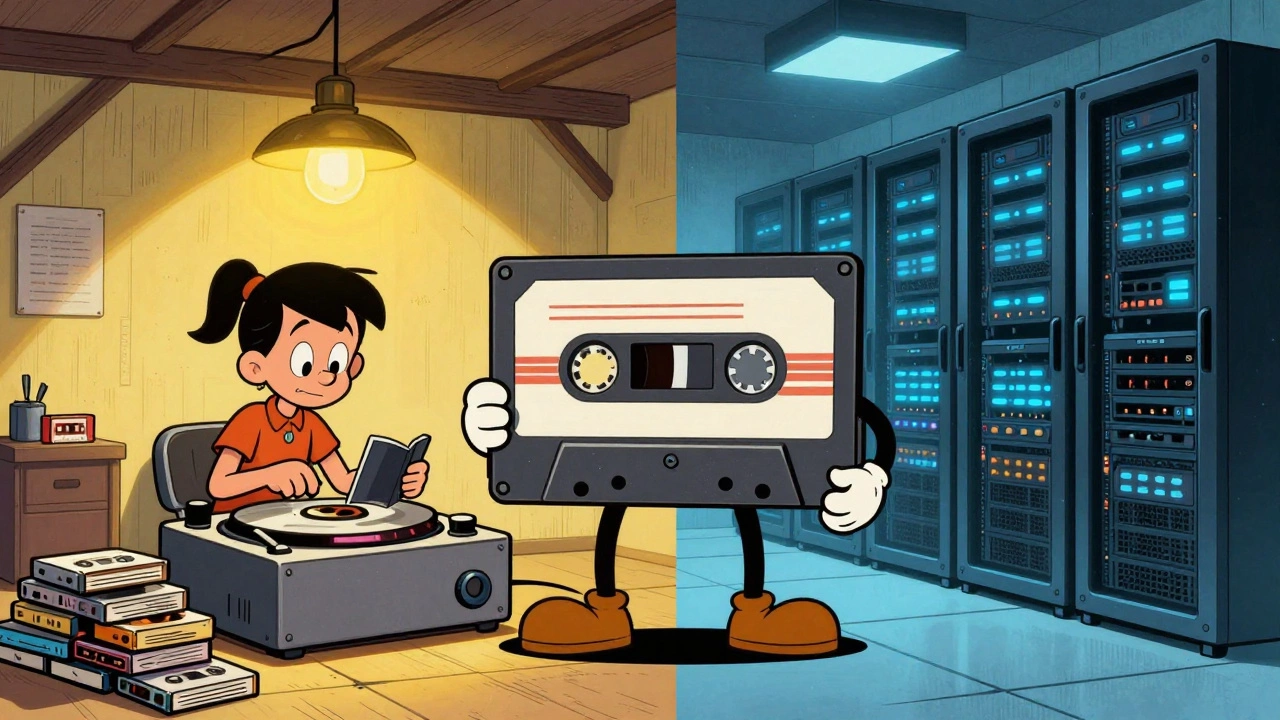
Making a compilation tape was an act of care. Home-made mixtapes required real-time recording. A compiler would cue up each song from vinyl, radio, or another cassette, adjust recording levels, and start and stop manually. They used pause buttons to cut dead space. This process encouraged careful sequencing-balancing tempos, moods, and side lengths to fit within 30 or 45 minutes per side.
Each tape became a personalized artifact, often with handwritten track lists and artwork on the J-card. Memoirs from the era describe how making and exchanging these tapes was a form of courtship and friendship. The choice and order of tracks were interpreted as coded social messages. In scene-building contexts, label-curated compilations performed a similar function collectively. Track order could juxtapose bands from different cities, asserting a shared aesthetic or political stance.
Legacy and Revival
By the late 1980s, compact discs began to erode cassette dominance. Major labels shifted marketing toward CD box sets. Home users who could afford CD-R drives started making digital mix CDs. But cassette compilation culture never fully disappeared. In the 2010s, a notable revival occurred. Independent labels began issuing limited-edition cassette compilations, explicitly evoking 1980s aesthetics. Small runs of 50-300 copies sold through Bandcamp and festivals.
Today, nostalgia for 1980s compilation tapes is visible in dedicated forums and marketplaces. Listings tagged as "80s compilation cassettes" include original commercial releases and home-dubbed mixes preserved for nostalgic buyers. YouTube channels posting "cassette tape compilation" videos attract hundreds of thousands of views. Listeners associate these mixes with teenage bedroom listening, long car rides, and the tactile rituals of flipping and rewinding tapes. Beyond history, these tapes symbolize a mode of curated, embodied listening that many find lacking in algorithmic streaming environments.
What made compilation tapes so important for punk and hardcore scenes?
Compilation tapes were crucial because they provided a cheap, low-barrier distribution method that bypassed traditional record labels. They allowed isolated bands in different cities or countries to share music directly with fans. Through fanzines and mail-order networks, these tapes connected geographically dispersed scenes, creating a sense of global community and enabling bands to build reputations before securing major deals.
How did cassette technology improve in the 1980s to support music distribution?
The introduction of high-bias chromium dioxide (Type II) and metal (Type IV) cassettes improved sound quality significantly, offering better frequency response and lower noise. Portable players like the Sony Walkman made listening mobile. Meanwhile, home recording devices like the TASCAM Portastudio and dual-well dubbing decks allowed individuals and small labels to record and duplicate music easily without expensive studio equipment.
Did compilation tapes affect genres other than punk and metal?
Yes, they were vital in hip-hop, where DJ mixtapes spread regional styles and exclusive tracks. In experimental and industrial music, "cassette culture" labels distributed niche genres like noise and power electronics globally. In non-Western markets, such as India and Turkey, cassettes enabled local artists to distribute film songs, devotional music, and folk traditions widely and affordably, bypassing metropolitan record companies.
Why did cassettes eventually decline in popularity?
Cassettes declined due to the rise of compact discs (CDs), which offered superior sound quality, durability, and random access. Later, recordable CDs (CD-Rs) and digital file-sharing formats like MP3s provided even easier ways to copy and distribute music. Major labels shifted their marketing focus to CDs, and consumers gradually adopted digital technologies that eliminated the mechanical limitations of tape, such as degradation and tangling.
Is there a modern revival of cassette compilation culture?
Yes, there has been a significant revival since the 2010s. Independent labels release limited-edition cassette compilations, often emphasizing handmade aesthetics and small run sizes. Platforms like Bandcamp facilitate sales, and collectors value original 1980s tapes for their historical significance. This resurgence reflects a desire for tangible, curated music experiences that contrast with the impersonal nature of algorithmic streaming services.