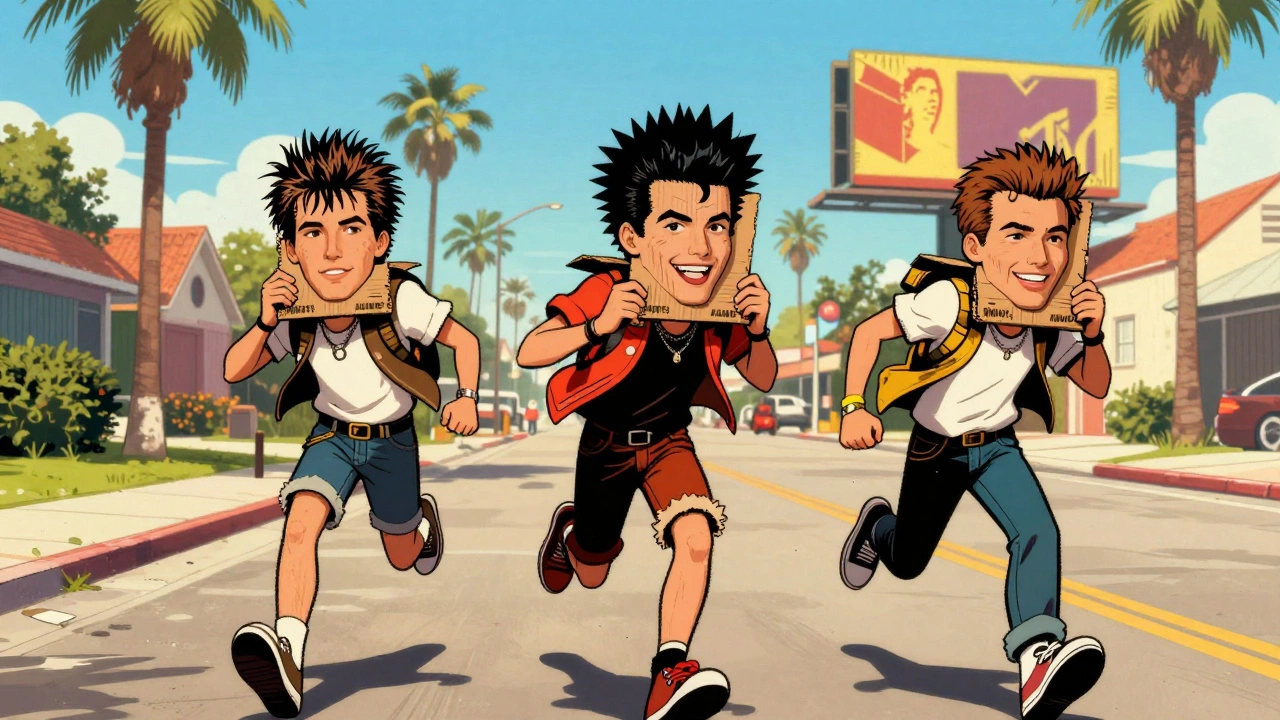

Picture this: it’s summer 1999. You’re sitting in your bedroom, staring at the glowing screen of MTV. On Total Request Live, a countdown of the most requested videos plays out, and suddenly, three guys in oversized shorts and sneakers run naked through the streets of Los Angeles. It’s chaotic, it’s funny, and it’s undeniably catchy. This wasn’t just a music video; it was the moment pop punk a genre blending fast-paced punk rock with accessible pop melodies stopped being a niche subculture for skaters and became the soundtrack for an entire generation.
The band behind that viral stunt? Blink-182 an American rock band formed in Poway, California in 1992. While Green Day and The Offspring had paved the way in the early '90s, it was Blink-182’s 1999 album, Enema of the State, that truly dragged the genre out of skate shops and into mainstream living rooms. But how did a trio from San Diego manage to redefine youth culture? Let’s break down the specific ingredients that turned them into the kings of pop punk.
The Perfect Storm: Jerry Finn and Travis Barker
You can’t talk about Blink-182’s rise without talking about two people who weren’t originally in the band: producer Jerry Finn and drummer Travis Barker. Before 1999, Blink-182 had released two albums, Cheshire Cat (1995) and Dude Ranch (1997). They were good, raw, and very much rooted in the local Southern California skate scene. But they sounded like everyone else on the Warped Tour circuit.
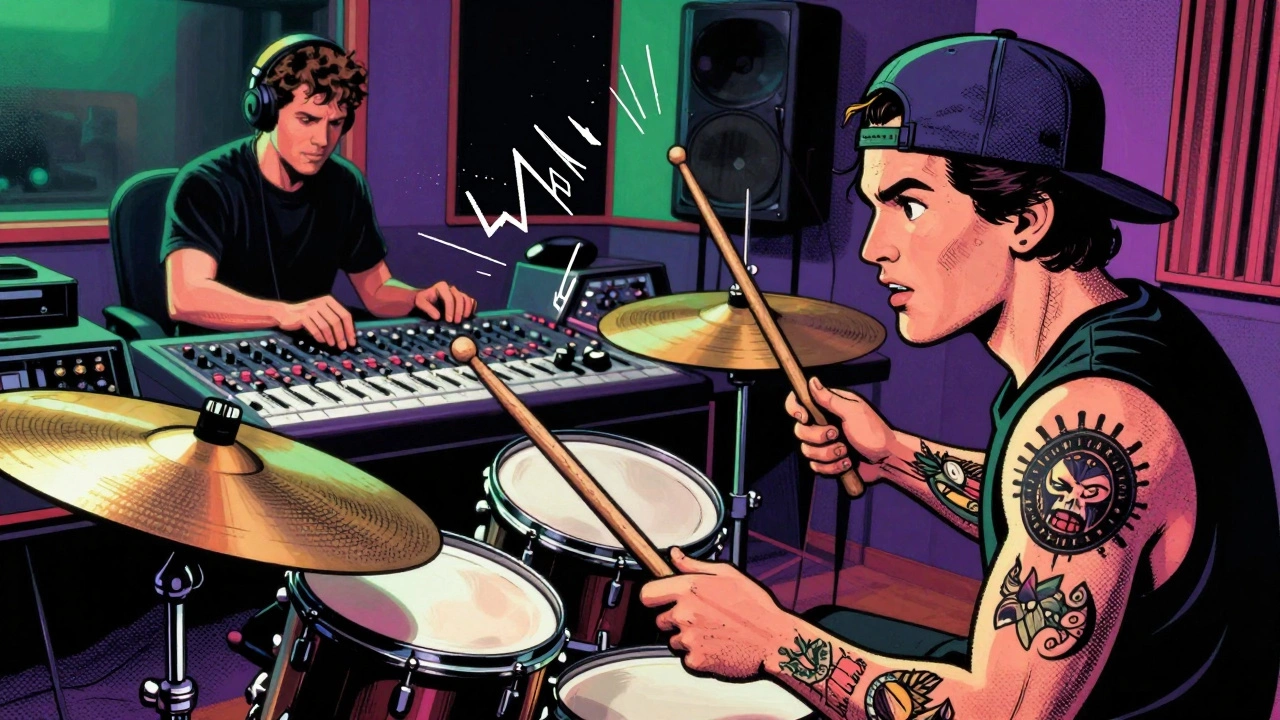
Then came Travis Barker drummer known for his complex fills and influence on pop punk rhythm. He replaced original drummer Scott Raynor about a year before recording began. Barker brought a different energy-complex jazz-influenced drumming mixed with hardcore punk speed. His ability to play rapid-fire beats at tempos often reaching 180-200 beats per minute gave the songs a driving force that earlier recordings lacked.
But the real magic happened in the studio with Jerry Finn record producer who defined the polished pop-punk sound of the late 90s. Finn didn’t want the gritty, lo-fi sound of traditional punk. He wanted clarity. He spent three months tightening every track, layering vocal harmonies, and compressing the guitars until they popped off the speakers. The result was a sound that was still fast and aggressive but incredibly clean and radio-ready. This production style became the template for almost every pop-punk band that followed in the 2000s.
Enema of the State: More Than Just an Album
Released on June 1, 1999, by MCA Records, Enema of the State is widely considered the definitive pop-punk album. It runs about 35 minutes and features 12 tracks that perfectly balance juvenile humor with genuine teenage angst. Songs like "What’s My Age Again?" and "All the Small Things" are built on simple, infectious hooks designed for maximum sing-along appeal. Meanwhile, "Adam’s Song" showed a softer, more vulnerable side, proving the band could handle emotional depth alongside the bathroom jokes.
| Song Title | Theme/Vibe | Cultural Impact |
|---|---|---|
| What’s My Age Again? | Playful rebellion, arrested development | Iconic naked running video; defined the band's prankster image |
| All the Small Things | Relationship anxiety, catchy melody | Became their signature anthem; massive radio rotation |
| Adam’s Song | Mental health, depression, introspection | Showed emotional range; resonated deeply with fans struggling with similar issues |
| Dumpweed | Toxic relationships, self-deprecation | Highlighted the genre's focus on suburban teen drama |
The album sold approximately 15 million copies worldwide, with around 5 million in the United States alone. That’s not just success; that’s dominance. For context, this was a time when boy bands and solo teen pop acts ruled the charts. Blink-182 proved that a "real" band playing electric guitars could compete directly with manufactured pop stars if they understood the mechanics of hit-making.
The Marketing Machine: MTV, TRL, and Teen Movies
Talent gets you noticed, but strategy keeps you there. Blink-182’s manager, Rick DeVoe, and MCA Records executed a marketing campaign that was ahead of its time. They didn’t just release an album; they launched a cultural event timed perfectly with the end of the school year. By dropping Enema of the State in early June, they targeted students heading into summer break-the prime demographic for music discovery.
MTV was the engine of this explosion. The band saturated Total Request Live (TRL), appearing frequently on the countdown shows. Their videos were big-budget affairs compared to typical punk clips. The video for "What’s My Age Again?" featured the band members running through LA streets with minimal clothing, holding placards with faces on them to cover themselves. It was shocking, memorable, and exactly what MTV loved. By 2026, that video has garnered over 300 million views online, showing its lasting power.
They also leveraged the teen comedy boom of the late '90s. Films like American Pie (released July 1999) shared the same audience and sensibility as Blink-182. The band’s music fit seamlessly into these movies’ soundtracks, reinforcing the connection between their sound and the lifestyle of suburban teenagers. It wasn’t accidental; it was a coordinated effort to position pop punk as the essential soundtrack for high school life.
Fashion as Identity: Dickies Shorts and PUMA Suedes
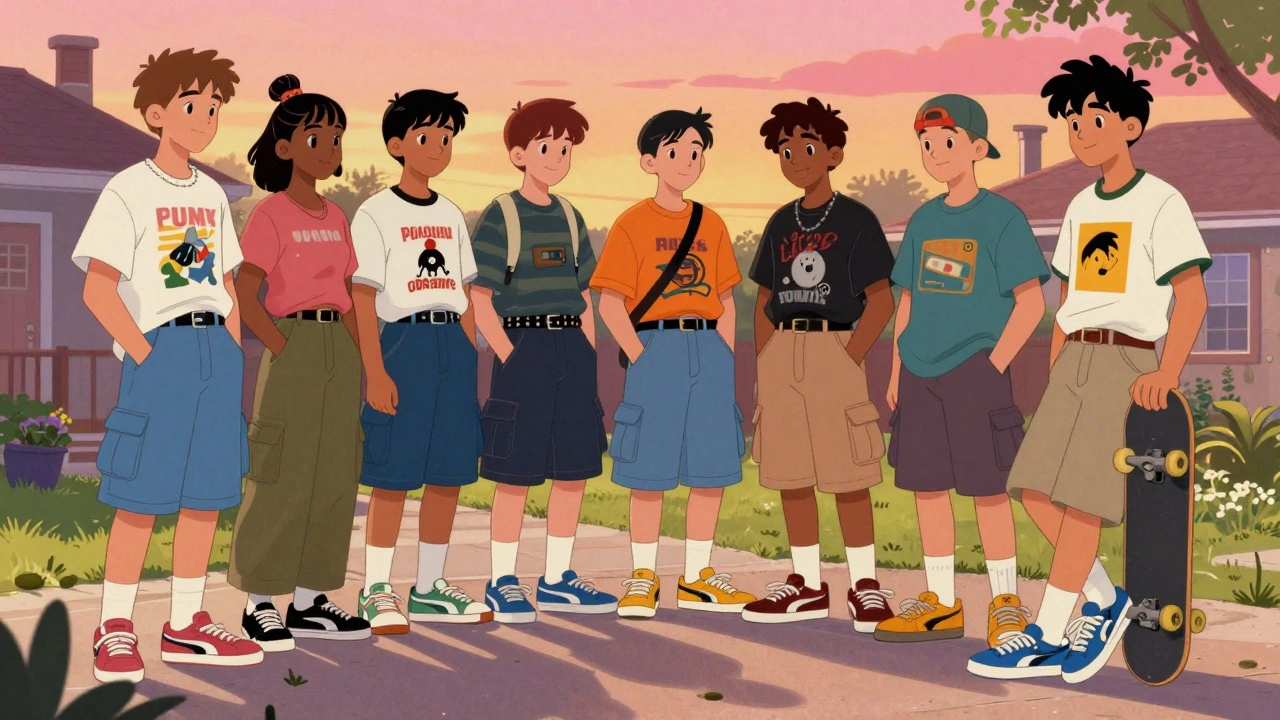
Pop punk isn’t just about the music; it’s about the look. Blink-182 codified a fashion aesthetic that became instantly recognizable and easy for fans to replicate. Think oversized Dickies cargo shorts, graphic skate t-shirts, studded belts, and pulled-up white socks. But the centerpiece of their style was footwear.
Mark Hoppus and Travis Barker famously wore PUMA Suede sneakers classic canvas sneakers that became iconic in skate and punk cultures. At the 1999 Billboard Music Awards, where the band co-hosted nearly naked, Hoppus and Barker were wearing only their PUMA Suedes. Tom DeLonge wore black canvas shoes. This stunt cemented their image as pranksters but also elevated those shoes into subcultural icons. If you wanted to be part of the pop-punk crowd in 2000, you needed those shoes. It was low-cost entry into a high-symbolism identity.
Why It Lasted: Beyond the Fads
Many critics dismiss pop punk as shallow or trivial. And sure, there’s plenty of bathroom humor and jokes about girls. But that’s missing the point. Blink-182 tapped into a very real feeling: the awkwardness, boredom, and anxiety of growing up in suburbia. Their rebellion wasn’t political like earlier punk movements; it was personal. It was about escaping the monotony of high school, dealing with crushes, and figuring out who you were.
This approach made the genre accessible. Hardcore punk can be intimidating with its aggression and politics. Pop punk, as refined by Blink-182, was inviting. It allowed teens to feel rebellious without having to confront serious societal issues. It was safe rebellion. That’s why it spread so quickly. It offered an outlet for frustration that felt authentic yet manageable.
Even today, in 2026, the influence is undeniable. New bands cite Blink-182 as a direct inspiration. Festivals sell out featuring pop-punk revival acts. The "Golden Age" of pop punk in the early 2000s was built on the foundation laid by Enema of the State. When we look back at the late '90s, it’s clear that Blink-182 didn’t just ride the wave-they created the tide.
Who produced Enema of the State?
The album was produced by Jerry Finn, a renowned producer known for his work with The Offspring and No Doubt. His polished production style was crucial in making the album radio-friendly while retaining punk energy.
When did Travis Barker join Blink-182?
Travis Barker joined the band in 1998, replacing original drummer Scott Raynor. He recorded all drums for Enema of the State, which was released in 1999.
How many copies did Enema of the State sell?
Enema of the State sold approximately 15 million copies worldwide, including about 5 million in the United States, earning it a 5x Platinum certification.
What role did MTV play in Blink-182's success?
MTV, particularly Total Request Live (TRL), was instrumental. Heavy rotation of their music videos and frequent appearances helped expose the band to a massive teen audience, turning them into household names.
Why is pop punk considered different from traditional punk?
Traditional punk often focuses on political anger and raw, unpolished sounds. Pop punk emphasizes catchy melodies, cleaner production, and lyrics about teenage life, relationships, and suburban boredom, making it more accessible to mainstream audiences.