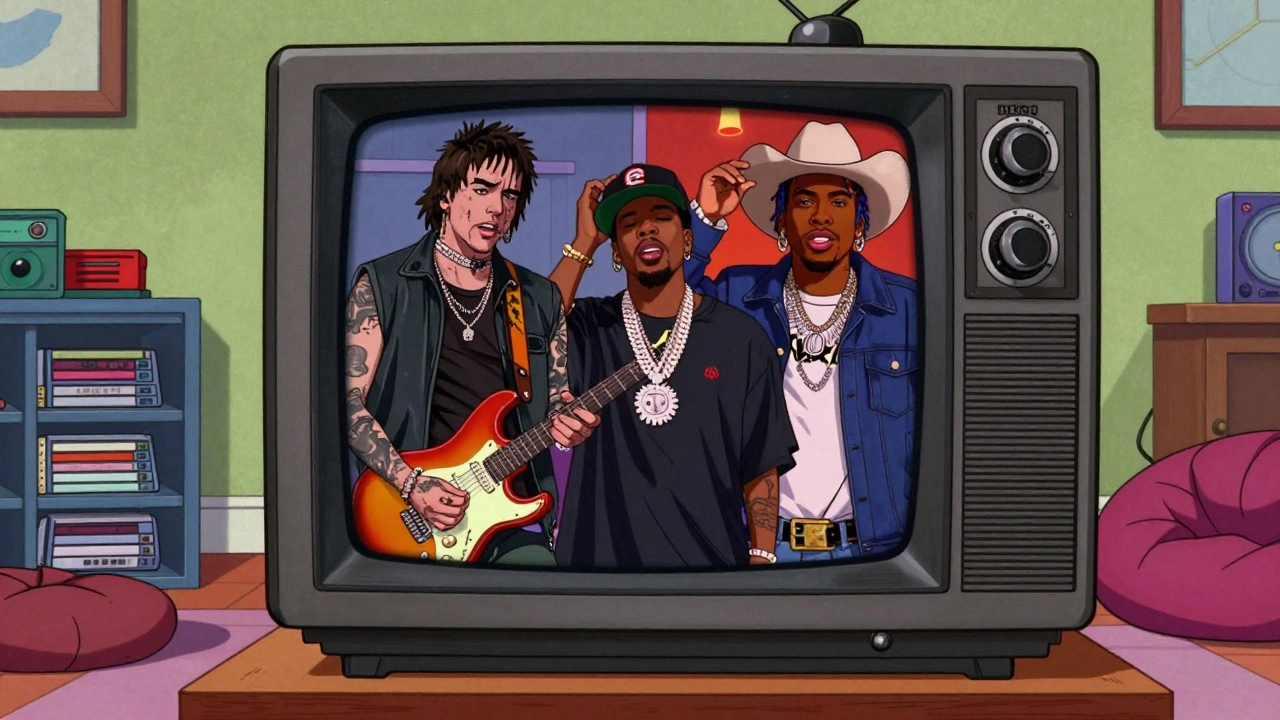

Imagine a world where you could watch a gritty grunge video from Seattle, flip a few minutes forward to see a flashy hip-hop act from New York, and then end the hour with a polished country star-all on the same channel. For a brief window in the 1990s, this wasn't just possible; it was the norm. The decade didn't just produce hits; it fundamentally changed how we discovered music by smashing the walls between genres that had been strictly separated for decades. But while we remember the era as a peak of variety, the reality was a tug-of-war between creative explosion and corporate control.
The MTV Engine: Programming Diversity by Design
In the early 90s, MTV is a cable music channel that evolved from a video jukebox into a global cultural tastemaker. It didn't just play hits; it curated entire musical ecosystems. The network used a clever strategy: they created dedicated spaces for marginalized sounds, which paradoxically helped those sounds leak into the mainstream.
If you wanted heavy metal, you tuned into Headbangers Ball. If you were looking for indie or weird experimental tracks, 120 Minutes was your sanctuary. For those craving the beats of the street, Yo MTV Raps provided the essential platform. By giving these genres their own "homes," MTV actually made them safer for the general public to explore. When a viewer stayed tuned through a rotation, they were exposed to a sequence of sounds they would never have found on a traditional radio dial.
Then came MTV Unplugged is a stripped-down acoustic performance series that removed the electronic artifice of studio recordings. This show was a game-changer because it stripped away the genre markers. Seeing a rapper or a metal guitarist play acoustic instruments humanized the artists and made their music accessible to people who usually avoided those genres. It proved that a great song is a great song, regardless of whether it's backed by a turntable or a distorted amplifier.
The Big Three: Grunge, Hip-Hop, and Country
The 90s saw a massive power shift as three previously "outsider" genres stormed the charts. First, there was the Grunge is a subgenre of alternative rock that emerged from Seattle, blending punk and heavy metal. This movement was a rare moment of organic growth. It started in college radio and basement shows in Seattle, far from the corporate boardrooms of New York or LA. When Nirvana is the seminal grunge band led by Kurt Cobain whose hit "Smells Like Teen Spirit" shifted the direction of rock music. hit the screen, it didn't just climb the charts-it wiped out the glitz of 80s hair metal overnight.
Simultaneously, hip-hop was moving from a regional urban phenomenon to a global language. Through the visibility of MTV and the rise of the "super-producer," artists like Biggie and Naughty by Nature became household names. They weren't just playing for rap fans anymore; they were playing for everyone with a television.
Country music also hit a tipping point. The decade saw the rise of crossover stars who could bridge the gap between Nashville and the pop charts. The result was a musical landscape that felt incredibly wide, where a single listener could be a passionate fan of 2Pac, Garth Brooks, and Kurt Cobain all at once.
| Genre | Key Driver | Mainstream Result | Legacy |
|---|---|---|---|
| Grunge | Seattle Indie Scene | Death of Hair Metal | Alternative Rock dominance |
| Hip-Hop | Yo MTV Raps / Videos | Global Cultural Hegemony | Foundation of modern Pop |
| Country | Crossover Production | Massive Suburban Appeal | Stadium-sized tours |
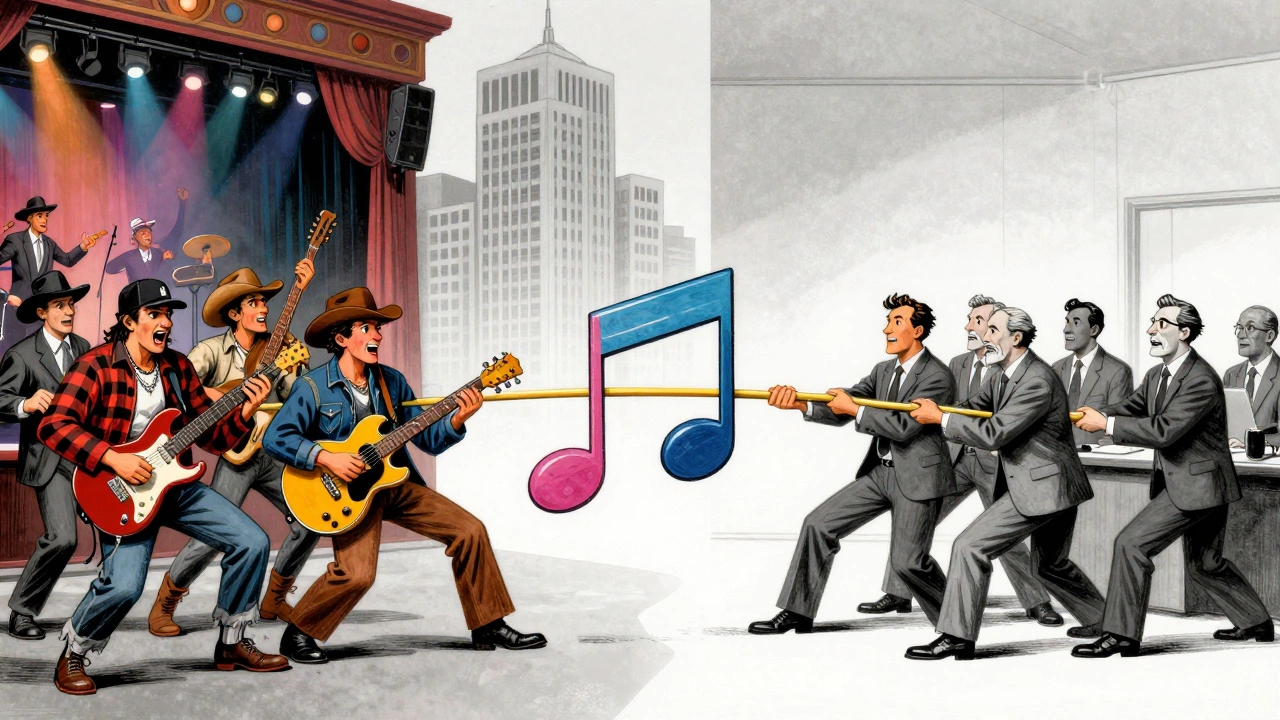
The Paradox of Incompatibility
Here is where things get weird. While we have these three massive genres, they didn't actually "mix" well. In the 80s, you could play Michael Jackson and Bryan Adams back-to-back, and nobody would even blink because they shared a similar pop-rock DNA. In the 90s, however, the genres became "silos."
If you tried to start a radio station that played Nirvana, 2Pac, and Garth Brooks in a random shuffle, it would likely fail. Why? Because the sonic gap between a distorted guitar and a country fiddle is too wide. There was no "center-lane" pop music to act as a bridge for most of the decade. It wasn't until the very end of the 90s-with the arrival of the teen pop wave featuring Britney Spears and Christina Aguilera-that a unifying, polished sound emerged to glue these disparate tastes back together.
To cope with this, the industry started creating "watered-down" versions of these genres. They pushed artists like Matchbox 20 (a poppier version of alternative) or Shania Twain (a poppier version of country) to create a middle ground that wouldn't alienate the average listener.
1996: The Year Radio Diversity Died
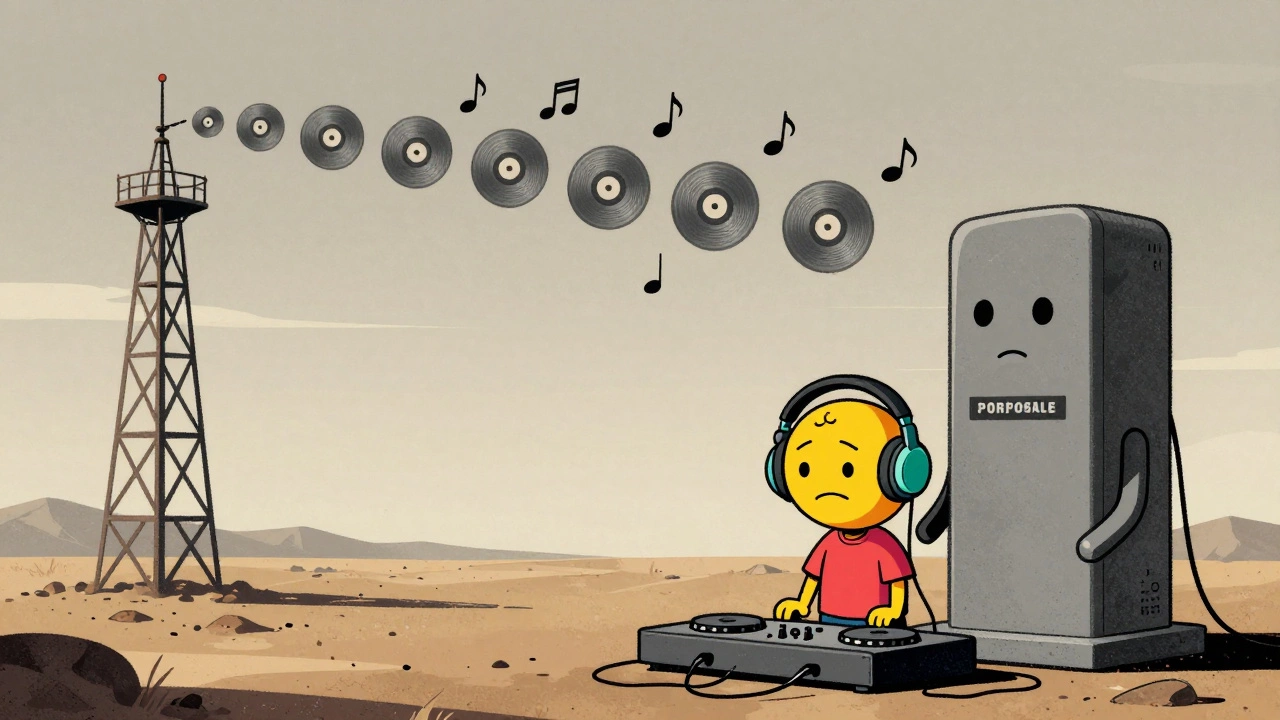
While MTV was opening doors, the radio industry was slamming them shut. For years, the government limited how many stations one company could own. This kept the airwaves diverse because local DJs had a say in what got played. That all changed in 1996.
Congress removed the ownership caps, and Clear Channel is a massive media conglomerate that aggressively consolidated US radio stations after 1996 deregulation. stepped in. They bought up hundreds of stations across the country. Almost overnight, the "local" feel of radio vanished. Instead of a DJ picking a song they loved, playlists were now managed by a corporate office.
The result was a repetitive loop of the same 20 songs. If a song wasn't a guaranteed hit, it didn't get played. This killed the "discovery" aspect of radio and effectively reversed the progress MTV had made in exposing listeners to weird, new, or diverse sounds. The airwaves became a mirror of corporate safety rather than artistic bravery.
The Pivot to Reality and the End of an Era
As the 90s closed, MTV itself began to change. The network realized that producing high-quality music videos was expensive and risky. Censorship was also becoming a nightmare; the National Coalition Against Censorship noted that by 1994, about 33% of videos were being edited for content, up from just 10% a decade prior.
To avoid the headache of music censorship and the cost of artist promotion, MTV shifted toward reality TV. Shows like Road Rules, True Life, and FANatic started eating up the schedule. By the mid-2000s, music was practically gone from the channel that was named after it. The platform that had successfully broken genre barriers had essentially abandoned its mission in favor of cheaper, high-drama programming.
This shift, combined with the radio consolidation of 1996, meant that the "golden age" of cross-genre exposure was short-lived. The industry had proven that people would listen to diverse sounds if they were presented together, but the corporate structure eventually decided that predictability was more profitable than variety.
Did MTV actually help indie artists?
Yes, for a while. Through shows like 120 Minutes and the sheer volume of video rotation, smaller artists could reach a national audience without the need for massive radio promotion budgets. However, as the network shifted toward reality TV and corporate consolidation grew, this window of opportunity closed.
What happened to the 'payola' system in the 90s?
Payola-the practice of paying DJs to play specific songs-didn't disappear; it just evolved. Record companies began using independent radio promoters as middlemen. This added a layer of separation that made the process less transparent and allowed corporate interests to continue controlling the airwaves.
Why was 1996 such a bad year for radio?
The 1996 Telecommunications Act removed limits on how many stations one company could own. This allowed companies like Clear Channel to buy up local stations and replace unique local programming with standardized, corporate-mandated playlists, killing musical diversity on the radio.
Was Grunge really independent?
It started that way. The Seattle scene grew out of college radio and independent labels, blending punk and metal. But once it became a global trend, major labels quickly absorbed the movement, turning a counter-cultural explosion into a commercial product.
How did censorship affect MTV's music content?
Censorship increased dramatically in the 90s, with roughly one in three videos requiring edits by 1994. This created operational stress and legal liabilities for the network, contributing to its decision to pivot toward reality television over music videos.